Generate More Organic Traffic and Leads with SEO in 2026

Modest Mitkus · February 16, 2026
The ability to generate more organic traffic, leads, and revenue stands as the ultimate objective for businesses investing in digital marketing. Yet many organizations struggle to maintain the consistent content output required to build meaningful search engine visibility. With AI-powered SEO platforms transforming how businesses approach content creation, the opportunity to generate more results with less manual effort has never been more accessible. Understanding the strategic frameworks behind sustainable traffic growth enables companies to build predictable pipelines that compound over time.
Understanding the Foundation to Generate More Organic Results
The fundamental principle behind organic growth lies in creating a sustainable content ecosystem that consistently attracts, engages, and converts your target audience. Traditional SEO approaches required significant time investments, with content teams spending weeks developing individual pieces. Modern AI SEO platforms have revolutionized this process by automating research, writing, and optimization phases.
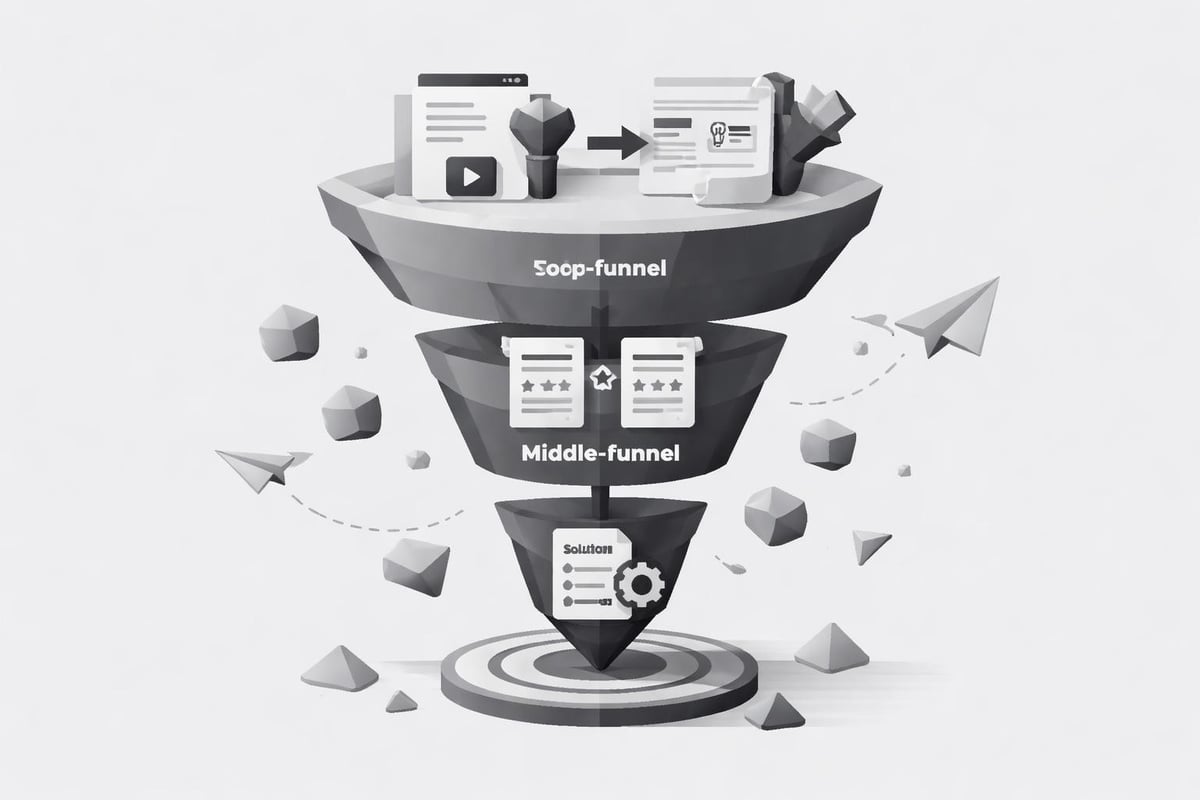
Businesses seeking to generate more traffic must first establish clear objectives. Are you targeting top-of-funnel awareness keywords, middle-funnel consideration terms, or bottom-funnel conversion phrases? Each category serves distinct purposes within your customer acquisition strategy.
Building Your Content Infrastructure
Creating systems that generate more consistent output requires strategic infrastructure development. Start by establishing these foundational elements:
- Keyword research framework that identifies high-opportunity search terms
- Content calendar mapping topics to publishing schedules
- Quality standards ensuring every piece meets brand expectations
- Distribution channels amplifying reach beyond organic search
- Performance tracking measuring which content drives actual results
These components work together to create a repeatable process. Rather than approaching content creation as isolated tasks, successful businesses build assembly lines that systematically produce optimized materials.
| Infrastructure Element | Primary Benefit | Implementation Complexity |
|---|---|---|
| Keyword Research | Identifies opportunities | Medium |
| Content Calendar | Ensures consistency | Low |
| Quality Standards | Maintains credibility | Medium |
| Distribution System | Amplifies reach | High |
| Analytics Framework | Guides optimization | High |

Strategic Approaches to Generate More Qualified Traffic
Volume without quality delivers minimal business value. The objective isn't simply to generate more traffic-it's to attract visitors who convert into customers. This requires precision in targeting and messaging alignment throughout your content strategy.
Competitor Keyword Analysis for Market Share Capture
Understanding where competitors rank reveals immediate opportunities to capture market share. When you analyze competitor keywords, you identify gaps in their coverage and strengths in your positioning. This competitive intelligence enables you to generate more traffic by targeting underserved search terms where you possess unique advantages.
Advanced platforms now automate this analysis, scanning thousands of competitor pages to extract keyword targets. This eliminates weeks of manual research while providing deeper insights than human analysis could practically achieve.
Long-Tail Keywords That Generate More Conversions
While competitive head terms attract attention, long-tail keywords often deliver superior conversion rates. These specific phrases indicate higher purchase intent and face less competition. A visitor searching for "project management software" demonstrates general interest, while someone seeking "project management software for remote construction teams under $50/month" shows clear buying intent.
Effective strategies incorporate both head terms for awareness and long-tail variations to generate more conversions. The best AI SEO software solutions identify these opportunities systematically, building comprehensive keyword portfolios that capture traffic across the entire customer journey.
Content Creation Velocity That Drives Sustainable Growth
Consistency separates businesses that generate more traffic from those experiencing sporadic results. Publishing cadence directly impacts search engine rankings, with regular content updates signaling active, authoritative domains.
Scaling Production Without Sacrificing Quality
Traditional content creation imposed trade-offs between volume and quality. Businesses could either produce limited high-quality pieces or generate more content at reduced standards. AI-powered platforms eliminate this false choice by maintaining quality benchmarks while dramatically increasing output.
Modern AI blog post generators analyze top-ranking content for target keywords, identify semantic patterns search engines reward, and create comprehensive articles addressing user intent. This enables teams to generate more content while ensuring each piece meets optimization requirements.
- Define target keywords based on business objectives and search volume
- Analyze competitor content to understand ranking requirements
- Generate comprehensive outlines covering all relevant subtopics
- Create optimized drafts incorporating keywords naturally
- Review and refine maintaining brand voice and accuracy
- Publish consistently following predetermined schedules
- Monitor performance tracking rankings and engagement
Maintaining Authentic Voice at Scale
One common concern with automation involves preserving authentic brand voice. Successfully generating more content requires establishing clear brand guidelines that AI systems can follow. This includes tone specifications, terminology preferences, formatting standards, and messaging frameworks.
Humanizing AI content involves strategic oversight rather than complete manual rewriting. Reviewers focus on ensuring accuracy, adding unique perspectives, and refining transitions rather than recreating entire pieces. This approach enables teams to generate more output while maintaining quality standards that resonate with target audiences.
Converting Traffic Into Tangible Business Results
Generating more visitors delivers no value unless those visitors convert into customers. The content that attracts traffic must align with conversion objectives, guiding readers toward specific actions.
Structuring Content for Conversion Optimization
Effective SEO content serves dual purposes: satisfying search engine algorithms and persuading human readers. To generate more conversions, structure articles with clear calls-to-action positioned at natural decision points. These might include newsletter signups, free tool trials, consultation bookings, or product purchases.
Consider visitor intent when designing conversion pathways. Someone reading "what is content marketing" seeks education, not immediate purchase. Offering a comprehensive guide as a lead magnet aligns with their current stage. Conversely, readers searching "best content marketing platform pricing" demonstrate buying readiness and warrant direct product promotion.
Lead Generation Tactics That Compound Over Time
Content marketing delivers compounding returns as published pieces continue generating traffic and leads indefinitely. A well-optimized article published today may generate more leads next year than this month as it accumulates authority and rankings improve. According to research on proven strategies to generate high-quality leads, consistent content publication ranks among the most effective long-term acquisition channels.
Strategies to maximize lead generation include:
- Gated premium content offering in-depth resources in exchange for contact information
- Strategic internal linking guiding visitors to conversion-optimized pages
- Email capture mechanisms building owned audiences for ongoing engagement
- Retargeting pixel installation enabling paid remarketing to engaged visitors
- Progressive profiling gathering additional information from returning visitors
Leveraging Automation to Generate More Efficiency
Manual SEO processes consume enormous resources while delivering inconsistent results. Automation transforms content marketing from cost center to profit engine by dramatically reducing per-piece investment while maintaining output quality.
Automated Research and Planning
Keyword research traditionally required hours analyzing search volumes, competition levels, and ranking difficulty. Automated systems now perform these analyses instantly, identifying opportunities humans might overlook. These tools evaluate thousands of keyword variations, assess ranking potential, and prioritize targets based on business objectives.
SEO automation software extends beyond research into content planning, automatically suggesting topics, creating outlines, and scheduling publication dates. This systematic approach ensures comprehensive coverage of target keyword territories.
| Manual Process | Time Required | Automated Process | Time Required |
|---|---|---|---|
| Keyword Research | 8-12 hours | Automated Analysis | 5 minutes |
| Competitor Analysis | 6-10 hours | Automated Scanning | 3 minutes |
| Content Outlining | 2-4 hours | Automated Generation | 2 minutes |
| Draft Writing | 4-8 hours | AI Creation | 5 minutes |
| Image Sourcing | 1-2 hours | Automated Integration | 1 minute |
Content Distribution and Promotion Automation
Creating excellent content represents only half the equation. Distribution determines whether that content reaches target audiences and delivers business results. Automation enables teams to generate more reach by systematically sharing content across multiple channels without manual posting.
Smart distribution systems automatically publish to social platforms, email newsletters, and syndication networks. They optimize posting times based on audience engagement patterns and adjust messaging for platform-specific requirements. This ensures maximum visibility for every piece while freeing teams to focus on strategic initiatives.
Measuring Performance to Generate More Strategic Insights
Data-driven optimization separates businesses generating more results from those plateauing at average performance. Comprehensive analytics reveal which strategies drive actual business outcomes versus vanity metrics that look impressive but lack commercial value.
Key Metrics for Traffic Generation
Monitor these essential indicators to understand content performance:
- Organic sessions measuring total search-driven traffic
- Keyword rankings tracking visibility for target terms
- Click-through rates indicating title and meta description effectiveness
- Engagement metrics showing content quality and relevance
- Conversion rates connecting traffic to business outcomes
Advanced AI keywords analysis reveals not just which terms drive traffic but which generate revenue. This enables resource allocation toward highest-value opportunities rather than pursuing vanity metrics.
Continuous Optimization Cycles
Performance measurement means nothing without responsive action. Successful businesses establish continuous improvement cycles, regularly reviewing analytics, identifying underperformance, testing hypotheses, and implementing optimizations.
This iterative approach enables teams to generate more results from existing content. Small improvements compound significantly over time. A 10% conversion rate improvement across all content doubles marketing ROI without creating additional pieces.
Advanced Strategies for Competitive Differentiation
As content marketing matures, basic execution no longer guarantees results. Businesses must implement advanced strategies to generate more competitive advantages within increasingly crowded markets.
Content Clusters and Topic Authority
Rather than creating isolated articles, strategic businesses develop comprehensive content clusters addressing topics exhaustively. This approach signals subject matter expertise to search engines while providing superior user experiences. When visitors find complete information on your site, they require no competitor research.
Building topic authority requires SEO content creation across pillar pages, supporting articles, case studies, and resources. This interconnected content network helps generate more rankings as internal linking distributes authority while demonstrating comprehensive coverage.
Multi-Format Content Experiences
Text-based articles remain foundational, but multi-format experiences generate more engagement and accessibility. Some audiences prefer video explanations, while others favor infographics or podcasts. Repurposing core content across formats maximizes reach without proportional effort increases.
Modern platforms automatically integrate visual elements into articles, enhancing engagement without manual design work. This capability enables businesses to generate more professional content experiences regardless of in-house creative resources.
Implementation Roadmap for Immediate Results
Understanding strategies matters little without execution frameworks. Businesses seeking to generate more traffic should follow systematic implementation approaches rather than sporadic efforts.
Month One: Foundation Building
Week 1-2: Research and Planning
- Conduct comprehensive keyword research identifying 50-100 target opportunities
- Analyze top competitors documenting their content strategies
- Define brand voice guidelines for consistent output
- Establish quality standards and review processes
Week 3-4: Initial Content Creation
- Publish 8-12 foundational articles targeting priority keywords
- Implement internal linking structure connecting related topics
- Set up analytics tracking for performance measurement
- Begin building email capture mechanisms
Month Two: Scaling Production
Expand content output to 15-20 pieces monthly while maintaining quality standards. Focus on building comprehensive coverage within 2-3 core topic areas rather than scattered single articles across unrelated subjects.
According to effective ways to generate more leads, consistent publishing schedules significantly impact lead generation performance. Establish predictable cadences that audiences can anticipate.
Month Three and Beyond: Optimization and Expansion
Begin analyzing performance data to identify winning topics and underperforming areas. Double down on successful content types while adjusting or eliminating ineffective approaches. Implement advanced tactics like getting recommended by ChatGPT to generate more visibility in AI-powered search experiences.
Integration With Broader Marketing Initiatives
Content marketing delivers maximum value when integrated with broader business strategies rather than operating as isolated initiatives. To generate more comprehensive results, align SEO efforts with:
- Product development creating content that addresses actual customer needs
- Sales enablement providing resources that overcome objections and educate prospects
- Customer success developing materials that improve onboarding and retention
- Public relations establishing thought leadership through authoritative content
- Paid advertising creating landing pages that convert paid traffic efficiently
This holistic approach ensures content investments compound across multiple business functions rather than serving singular objectives.
Cross-Channel Promotion Strategies
Published content provides raw material for promotional campaigns across every marketing channel. Resources on strategies to boost lead generation emphasize the importance of multi-channel distribution for maximum impact.
Transform blog articles into:
- Social media post series expanding reach
- Email newsletter content nurturing subscribers
- Sales presentation materials supporting conversations
- Webinar foundations demonstrating expertise
- Podcast episode topics engaging auditory learners
This repurposing enables teams to generate more marketing assets from each content investment, dramatically improving efficiency.
Technical Optimization for Maximum Visibility
Even brilliant content fails without proper technical implementation. Search engines must effectively crawl, index, and understand your materials to generate more rankings.
On-Page Optimization Essentials
Every published piece requires fundamental technical optimization:
- Title tags incorporating primary keywords naturally
- Meta descriptions compelling clicks from search results
- Header hierarchy organizing content logically
- Image optimization including descriptive alt text and compression
- Internal linking connecting related content strategically
- Schema markup helping search engines understand content type
Free AI SEO tools can automate many technical optimizations, ensuring consistent implementation without manual configuration for every article.
Site Architecture for Scalability
As content libraries grow, strategic architecture becomes increasingly important. Organize materials into logical categories that help both users and search engines understand relationships. This structure enables visitors to generate more value from your content by easily discovering related materials.
Implement breadcrumb navigation, related content suggestions, and topic-based hub pages that consolidate authority. These elements create superior user experiences while distributing ranking signals throughout your domain.
Budget Allocation for Maximum ROI
Resources remain finite even as ambitions expand. Strategic budget allocation ensures investments generate more returns by focusing on highest-impact activities.
Cost-Benefit Analysis of Content Creation Methods
| Creation Method | Cost Per Article | Monthly Output | Quality Level | Best For |
|---|---|---|---|---|
| Freelance Writers | $200-500 | 10-20 | Variable | Niche expertise |
| In-House Team | $150-300 | 20-40 | Consistent | Brand control |
| AI Platform | $20-50 | 50-200 | High | Scale and efficiency |
| Hybrid Approach | $50-150 | 30-100 | Very High | Balance |
AI-powered platforms enable businesses to generate more content within fixed budgets by dramatically reducing per-piece costs. This efficiency allows companies to compete with larger competitors despite resource disparities. Insights from lead management and generation strategies emphasize that consistent content output often matters more than per-piece perfection.
Calculating Content Marketing ROI
Measure true return by tracking:
- Content investment including creation, distribution, and optimization costs
- Traffic generated from organic search to published pieces
- Lead capture from content-driven visitors
- Customer acquisition tracing closed deals to content touchpoints
- Customer lifetime value calculating long-term revenue impact
This comprehensive view reveals which content types and topics generate more profitable outcomes, enabling data-driven resource allocation.
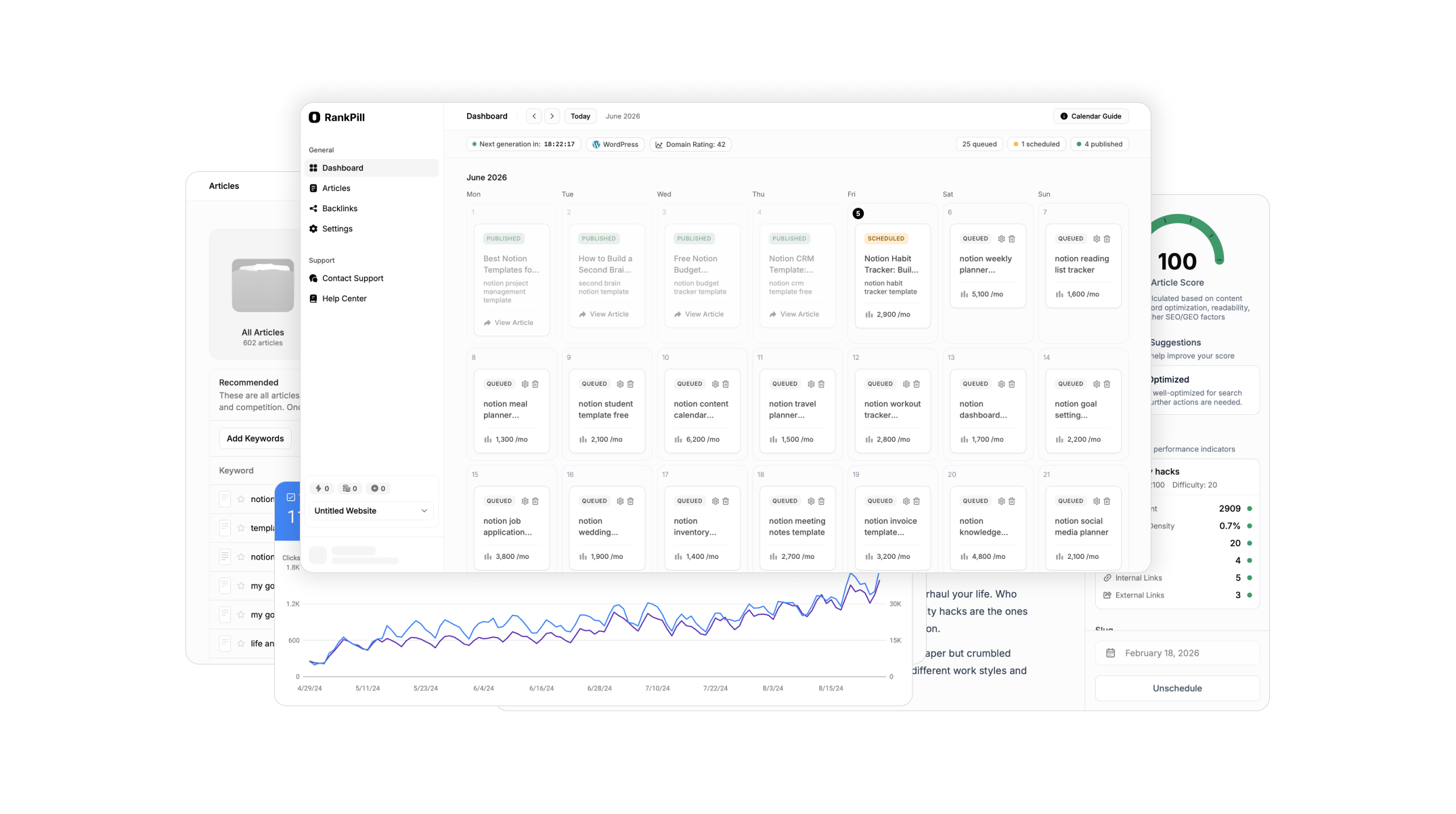
The ability to generate more organic traffic, leads, and revenue depends on systematic approaches that combine strategic planning with efficient execution. By leveraging automation, maintaining consistent publishing schedules, and continuously optimizing based on performance data, businesses build compounding advantages that deliver results for years. If you're ready to transform your SEO content strategy and generate more qualified traffic without the manual effort, RankPill provides the AI-powered platform to automate your entire content creation process, from keyword research through publication, helping you achieve sustainable organic growth.
Unlock Traffic on Autopilot
Grow organic traffic on autopilot. RankPill will research, write, optimize, and publish articles to your website daily.