GEO: The Essential Guide to Geographic SEO Optimization

Modest Mitkus · February 15, 2026
The digital landscape has evolved beyond simple keyword placement and backlink building. Geographic optimization, commonly abbreviated as geo, represents a fundamental shift in how businesses approach search engine visibility. This location-based strategy integrates physical location data with digital content, creating powerful connections between businesses and their target audiences. Understanding the prefix "geo-" meaning earth or ground provides context for how this approach roots content in specific physical locations, making it more relevant for local and regional searches. For companies leveraging AI-powered content platforms, mastering geo optimization opens new pathways to connect with customers who are actively searching for location-specific solutions.
Understanding Geographic Optimization in Modern SEO
Geographic optimization fundamentally changes how search engines interpret and rank content. The relationship between physical location and digital visibility creates opportunities for businesses to dominate specific markets through targeted strategies.
The Evolution of Location-Based Search
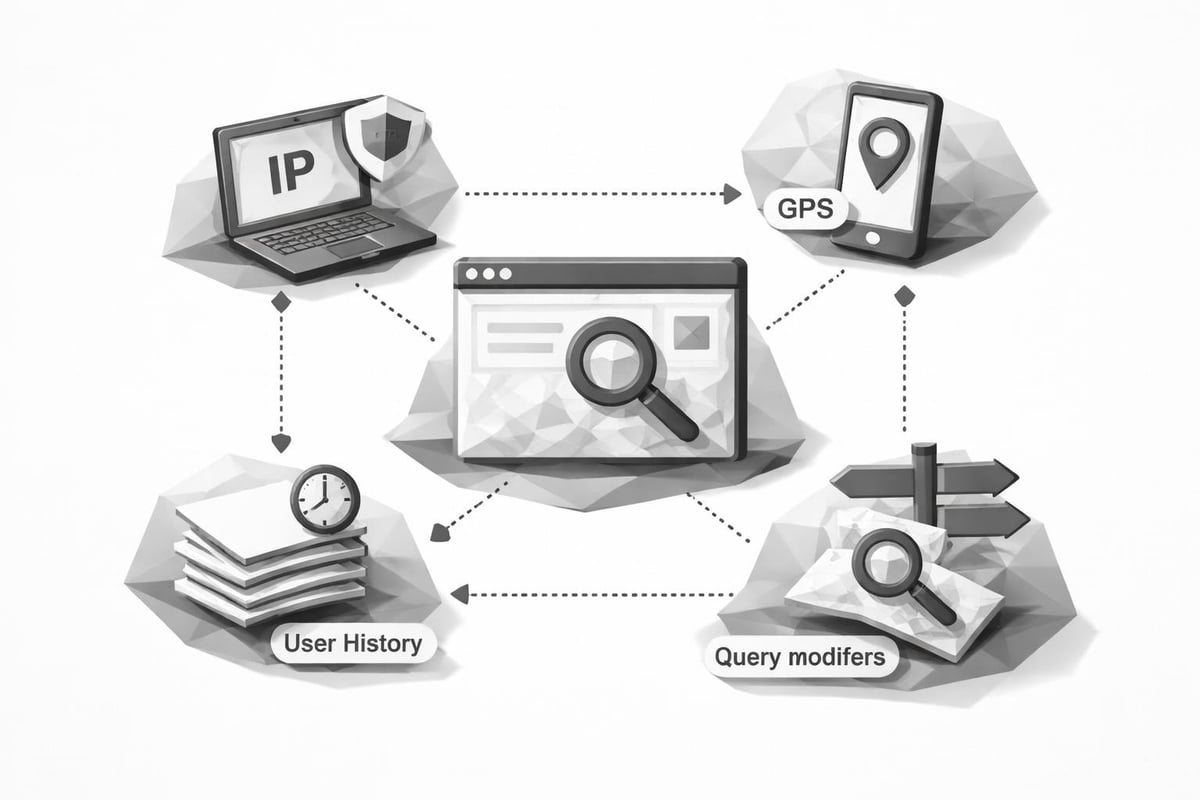
Search algorithms have become increasingly sophisticated at understanding user intent behind location-specific queries. When someone searches for a service or product, search engines analyze multiple signals to determine whether geographic relevance matters. These signals include the user's physical location, search history, device type, and the explicit or implicit location indicators within the query itself.
Key components of geographic search signals:
- IP address and GPS coordinates
- Browser language and regional settings
- Search query location modifiers
- User search and browsing history
- Business location data from verified listings
The emergence of Generative Engine Optimization has added another dimension to this landscape. As AI-powered search systems become more prevalent, optimizing content for geo-specific queries in generative responses requires new approaches that combine traditional SEO with conversational, location-aware content structures.
Geographic Data Structures in Web Content
The technical implementation of geographic information in web content follows specific protocols and standards. The geo microformat provides a standardized method for embedding geographical coordinates directly into HTML, enabling search engines to accurately identify and index location-based information.
Modern geo implementations extend beyond simple coordinate embedding. Structured data markup using Schema.org vocabulary allows businesses to provide comprehensive location information including addresses, service areas, operating hours, and regional variations in offerings.
| Geographic Data Type | Implementation Method | SEO Benefit |
|---|---|---|
| Coordinates | Geo microformat | Precise location identification |
| Business Address | LocalBusiness schema | Enhanced local pack visibility |
| Service Area | GeoCircle/GeoShape | Regional targeting capability |
| Multi-location | Multiple LocalBusiness entities | Individual location ranking |
Strategic Implementation of Geographic Targeting
Implementing effective geo strategies requires more than technical markup. The content itself must naturally incorporate location-specific elements that resonate with both search algorithms and human readers.
Content Localization Techniques
Creating geo-optimized content involves adapting messaging, examples, and references to specific geographic contexts. This goes beyond simply inserting city names into existing content. Authentic localization considers regional dialects, cultural references, local events, economic conditions, and community-specific pain points.
For businesses using platforms like RankPill's AI SEO platform, the challenge lies in maintaining consistency across multiple locations while ensuring each piece of content feels genuinely local. The solution involves creating templates that allow for regional customization without requiring complete rewrites.
Effective localization strategies include:
- Regional keyword variations and colloquialisms
- Local case studies and success stories
- Area-specific statistics and data points
- References to local landmarks and geography
- Community events and seasonal considerations
- Regional regulatory and compliance information
Keyword Research for Geographic Markets
Geographic keyword research reveals how different regions search for identical products or services. A coffee shop in Seattle might optimize for "artisan coffee roastery" while the same business in Nashville targets "craft coffee house." Understanding these nuances drives more qualified traffic.
The process begins with identifying primary service keywords, then expanding them with location modifiers. However, effective AI keywords research for geo optimization goes deeper, analyzing search volume, competition levels, and user intent across different geographic markets.
Advanced geo keyword strategies segment audiences by:
- Proximity-based intent - "near me" and immediate location searches
- Regional identifiers - neighborhood, district, or landmark-based queries
- Service area terms - "serving [region]" or "[area] specialists"
- Competitive displacement - targeting competitor locations with superior offerings
Technical Architecture for Multi-Location SEO
Building a technical foundation for geo optimization requires careful consideration of site structure, URL organization, and content management systems.
URL Structure and Location Hierarchies
The debate between subdirectories and subdomains for location-based content continues, but subdirectories generally provide better SEO value by consolidating domain authority. A structure like domain.com/locations/city-name/ allows each location to benefit from the main domain's overall authority while maintaining distinct geographic identity.
For businesses with numerous locations, hierarchical structures become essential. A national chain might implement domain.com/state/city/neighborhood/ to capture searches at multiple geographic levels. This architecture supports both broad regional campaigns and hyper-local targeting.
| Structure Type | Format Example | Best For |
|---|---|---|
| Simple subdirectory | /city-name/ | Single-region businesses |
| State-city hierarchy | /state/city/ | Multi-state operations |
| Service-location matrix | /service/city/ | Multi-service providers |
| Neighborhood targeting | /city/neighborhood/ | Urban markets |
Schema Markup for Geographic Entities
Proper schema implementation transforms how search engines understand location-based businesses. The LocalBusiness schema type includes properties for geo coordinates, address, telephone, opening hours, price range, and accepted payment methods. When implemented correctly, this data feeds directly into local pack results and knowledge panels.
For organizations operating across multiple locations, each physical location requires separate LocalBusiness markup with unique identifying information. This granular approach allows each location to compete independently in local search results while maintaining connection to the parent brand.

Advanced implementations combine LocalBusiness with other schema types. A restaurant chain might layer Menu, Event, and Review schemas onto their location pages, creating rich snippets that dominate search results for geo-specific queries.
Content Strategies for Geographic Market Penetration
Creating content that ranks across multiple geographic markets requires balancing scale with authenticity. The goal involves producing location-specific content efficiently without sacrificing quality or relevance.
Location Page Optimization Framework
Every location page serves as a landing page for geo-specific searches. These pages must satisfy both SEO requirements and user expectations, providing complete information while encouraging conversion actions.
Essential elements of high-performing location pages:
- Unique, descriptive title tags incorporating city and primary service keywords
- Compelling meta descriptions highlighting location-specific value propositions
- H1 headings that clearly state location and primary offering
- Comprehensive address information with embedded maps
- Location-specific service descriptions and pricing variations
- Customer reviews and testimonials from local clients
- Locally relevant images showing actual location, team, or projects
- Clear calls-to-action with location-specific contact methods
The challenge of creating unique content for numerous locations becomes manageable through strategic templating. Rather than duplicating identical content across locations, writing articles for SEO with modular components allows customization of key sections while maintaining consistency in brand messaging and value propositions.
Geographic Content Hub Development
Beyond individual location pages, creating geographic content hubs establishes topical authority for specific regions. These hubs consist of interconnected content pieces that comprehensively cover topics relevant to particular geographic markets.
A real estate platform might create a content hub for Portland, Oregon including:
- Neighborhood guides and market analyses
- Local school district comparisons
- Portland-specific buying and selling guides
- Market trend reports and forecasts
- Local real estate news and development updates
- Community amenity and lifestyle content
This hub approach positions the business as the authoritative source for location-specific information, earning rankings for informational queries that eventually convert into transactional opportunities.
Competitive Analysis for Geographic Markets
Understanding the competitive landscape within specific geographic markets reveals opportunities and informs strategy development. Geo-focused competitive analysis examines both traditional local competitors and national brands targeting the same markets.
Identifying Geographic Competitors
Geographic competitors fall into several categories, each requiring different strategic approaches. Direct local competitors operate in the same market offering similar services. National competitors target multiple markets including yours through scalable content strategies. Adjacent competitors serve related needs and might capture searches from your potential customers.
Competitor analysis SEO for geographic markets involves examining how competitors structure their location-based content, which keywords they target for each market, and how they build local authority through citations and backlinks.
| Competitor Type | Analysis Focus | Strategic Response |
|---|---|---|
| Local specialists | Local citations, review volume | Differentiation, service expansion |
| National chains | Content scale, brand authority | Local expertise emphasis |
| Adjacent services | Keyword overlap, audience targeting | Content diversification |
| Online-only | Digital presence, content quality | Local presence advantages |
Gap Analysis for Geographic Opportunities
Geographic gap analysis identifies underserved markets and keyword opportunities where competitors have weak presence. This analysis reveals cities, neighborhoods, or service combinations where demand exists but quality content remains scarce.
Tools for gap analysis examine search volume for location-specific keywords, competitive density scores, and market saturation indicators. Markets with high search volume but low competition represent prime opportunities for early entry and market dominance.
Local Link Building and Citation Management
Building authoritative backlinks and consistent citations across geographic markets strengthens local search performance. These signals validate business legitimacy and reinforce geographic relevance to search algorithms.
Strategic Citation Development
Citations represent online mentions of business name, address, and phone number across directories, review sites, and local platforms. Consistency across these citations builds trust with search engines, while inconsistencies create confusion that damages rankings.
Priority citation platforms by market type:
- All markets: Google Business Profile, Bing Places, Apple Maps
- Service businesses: Yelp, Angi, HomeAdvisor, Thumbtack
- Retail locations: Facebook, Yelp, Yellow Pages, Foursquare
- Professional services: Better Business Bureau, industry associations
- Healthcare: Healthgrades, Vitals, ZocDoc
- Hospitality: TripAdvisor, OpenTable, Booking.com
Managing citations across multiple locations requires systematic processes and often specialized tools. Regular audits ensure information accuracy, identify duplicate listings, and correct inconsistencies that develop over time.
Geographic Link Acquisition Strategies
Building location-specific backlinks requires creative outreach and genuine community engagement. Links from local news outlets, community organizations, educational institutions, and regional business associations carry particular weight for geo-targeted rankings.
Effective local link building tactics include:
- Sponsoring local events and organizations - Creates natural link opportunities from community websites
- Contributing expert commentary to local news - Establishes authority while earning editorial links
- Participating in local business associations - Generates directory links and networking opportunities
- Creating location-specific resources - Attracts links from local bloggers and news sites
- Partnering with complementary local businesses - Builds reciprocal visibility and referral relationships

Measuring Geographic SEO Performance
Tracking the effectiveness of geo optimization efforts requires monitoring location-specific metrics and understanding how geographic factors influence overall performance.
Key Performance Indicators for Geographic Campaigns
Standard SEO metrics take on new dimensions when analyzed through geographic lenses. Organic traffic segmented by location reveals which markets drive the most qualified visitors. Ranking positions tracked for location-specific keywords show competitive standing in each market. Conversion rates compared across locations identify high-performing and underperforming markets.
Critical metrics for geo performance monitoring:
- Local pack rankings for primary keywords in target cities
- Organic visibility scores by geographic market
- Click-through rates on location-specific search results
- Geographic traffic distribution and trends
- Location-based conversion rates and revenue
- Review volume and rating averages by location
- Citation accuracy scores across directories
Attribution and ROI Analysis
Connecting geographic SEO efforts to business outcomes requires sophisticated attribution modeling. Understanding which location-targeted keywords and content pieces drive conversions allows for optimization of high-performing approaches and adjustment of underperforming strategies.
For businesses with physical locations, tracking online-to-offline attribution becomes essential. Tools that connect online research behaviors to in-store visits provide complete pictures of how geo-optimized content influences customer journeys.
Advanced Geographic Targeting Techniques
As geo optimization matures, advanced techniques emerge that leverage emerging technologies and sophisticated data analysis.
Hyper-Local Targeting Strategies
Moving beyond city-level optimization, hyper-local strategies target neighborhoods, districts, or even specific blocks within urban markets. This granular approach captures extremely specific searches and positions businesses as neighborhood specialists rather than general city-wide providers.
Implementing hyper-local strategies involves creating content around neighborhood-specific keywords, building citations in neighborhood directories and groups, and developing relationships with micro-influencers and community leaders within target areas.
International Geographic Optimization
For businesses operating across countries, international geo optimization introduces additional complexity. Language variations, cultural differences, regional search engine preferences, and technical implementation requirements all factor into successful international strategies.
The best AI SEO software for international geo optimization must handle multiple languages, understand cultural contexts, and adapt content strategies for different regional search behaviors. Technical considerations include hreflang implementation, international schema markup, and proper URL structure for country and language targeting.
| International Element | Implementation Approach | Common Challenges |
|---|---|---|
| Language targeting | Hreflang tags, translated content | Literal vs. cultural translation |
| Search engine preferences | Platform-specific optimization | Baidu, Yandex, Naver differences |
| Currency and units | Dynamic display based on location | Conversion accuracy, pricing |
| Legal compliance | Regional privacy and data laws | GDPR, CCPA, regional variations |
Automation and Scaling Geographic Content
Creating and maintaining geo-optimized content across numerous locations presents operational challenges that automation helps address.
AI-Powered Geographic Content Creation
Modern AI blog post generators can produce location-specific content at scale when properly configured with geographic parameters and local data sources. The key lies in providing sufficient local context, regional keyword variations, and market-specific information that allows AI systems to generate genuinely relevant content rather than simple template fills.
Effective automation strategies for geo content involve:
- Creating comprehensive location data databases with unique attributes
- Developing content templates with variable fields for local customization
- Implementing review workflows that verify local accuracy and relevance
- Establishing quality controls that prevent duplicate or thin content
- Scheduling publication to maintain consistent freshness across all locations
Content Calendar Management for Multiple Markets
Managing content publication across numerous geographic markets requires systematic planning and coordination. SEO automation software with geographic capabilities enables scheduling location-specific content, monitoring performance across markets, and adjusting strategies based on regional performance data.
A well-structured content calendar for geographic markets balances evergreen location content with timely, seasonal, and event-driven pieces. This combination ensures consistent presence while capitalizing on temporal opportunities unique to each market.
Mobile and Voice Search Implications
The dominance of mobile search and the rise of voice queries have transformed how users conduct location-based searches, requiring adaptation of geo optimization strategies.
Optimizing for "Near Me" Searches
"Near me" queries represent some of the highest-intent searches in local SEO. These searches indicate immediate need and often occur when users are already in shopping or service-seeking mode. Optimizing for these queries requires ensuring accurate location data, maintaining up-to-date business hours, and creating content that answers immediate questions.
Technical requirements for "near me" visibility include:
- Verified and optimized Google Business Profile
- Accurate NAP (name, address, phone) across all platforms
- Mobile-responsive website with fast loading speeds
- Clear location indicators in title tags and headers
- Embedded maps and driving directions
- Click-to-call functionality for immediate contact
Voice Search and Conversational Queries
Voice searches tend toward longer, more conversational queries with natural language patterns. Rather than typing "dentist Seattle," voice users ask "where is the best dentist near me?" or "what dentist is open now in Seattle?"
Optimizing content for these patterns involves incorporating question-based headers, natural language in content, and FAQ sections that directly address common voice queries. The conversational nature of voice search aligns well with AI-generated content that mimics natural speech patterns when properly trained.
Industry-Specific Geographic Strategies
Different industries face unique challenges and opportunities in geographic optimization, requiring tailored approaches.
Service Area Businesses
Businesses serving customers across broad geographic areas without fixed retail locations require different geo strategies than storefront businesses. These service area businesses must balance targeting specific service locations while maintaining flexibility about exact service boundaries.
Strategies for service area optimization include creating location pages for each served city, developing content around service-area specific problems and solutions, and using GeoShape schema to define service areas precisely. These businesses benefit from positioning as regional specialists rather than trying to compete in every neighborhood.
Multi-Location Retail and Franchises
Retail chains and franchise systems face the challenge of maintaining brand consistency while allowing individual locations to compete in local markets. The balance involves creating standardized frameworks that permit local customization.
Successful franchise geo strategies establish corporate-level brand content, provide location-level pages with unique local elements, enable individual locations to generate local content within brand guidelines, and implement review management systems that aggregate ratings while preserving location-specific feedback.
Professional Services and B2B
Professional services firms and B2B companies often struggle with geo optimization because their target audiences aren't always location-constrained. However, many professional searches still include geographic qualifiers, particularly for services requiring in-person interaction or local market knowledge.
These businesses benefit from creating thought leadership content tied to geographic markets, developing case studies highlighting work in specific regions, participating in local business communities and associations, and optimizing for "[service] in [city]" patterns even when serving clients remotely.
Future Trends in Geographic Optimization
The landscape of geo optimization continues evolving as technology advances and user behaviors shift.
Augmented Reality and Location-Based Experiences
Augmented reality applications increasingly integrate with search and discovery, creating new opportunities for businesses to connect with customers through location-based experiences. Optimizing for AR discovery requires ensuring accurate spatial data, creating AR-compatible content assets, and positioning businesses for inclusion in AR navigation and discovery applications.
Privacy and Location Data Regulations
Growing concerns about privacy and data usage are reshaping how location information can be collected and utilized. Regulations like GDPR and CCPA impose restrictions on location data usage, requiring transparent disclosure of how geographic information is gathered and applied.
Businesses must balance effective geo targeting with privacy compliance through obtaining explicit consent for location tracking, providing clear privacy policies explaining data usage, allowing users to control their location data sharing, and implementing data minimization practices that collect only necessary information.
AI and Predictive Geographic Targeting
Machine learning algorithms increasingly predict where and when users will need specific services, enabling proactive targeting before explicit searches occur. These systems analyze historical patterns, seasonal trends, event schedules, and personal behaviors to anticipate needs.
Positioning content for predictive algorithms involves maintaining consistent publishing schedules, developing comprehensive coverage of seasonal and cyclical topics, creating content addressing needs across customer journey stages, and ensuring technical accessibility for AI crawlers and processors.
Geographic optimization represents a critical component of modern SEO strategy, particularly for businesses serving specific markets or operating across multiple locations. By implementing comprehensive geo targeting through technical optimization, localized content creation, strategic link building, and systematic performance measurement, organizations can dominate local search results and connect with customers at the precise moment they're searching for solutions. RankPill streamlines this complex process through AI-powered content creation that incorporates geographic targeting automatically, enabling businesses to scale their local SEO efforts across unlimited markets while maintaining the quality and relevance that drives rankings and conversions.
Unlock Traffic on Autopilot
Grow organic traffic on autopilot. RankPill will research, write, optimize, and publish articles to your website daily.