
EEAT Google Guidelines: Build Trust & Authority in 2026

Modest Mitkus · June 13, 2026
Understanding eeat google guidelines has become essential for anyone creating content online in 2026. Google's framework for evaluating content quality through Experience, Expertise, Authoritativeness, and Trustworthiness shapes how search engines assess the credibility of web pages. While not a direct ranking factor, EEAT serves as the backbone of Google's Quality Rater Guidelines and influences how human evaluators judge content across the web. For businesses leveraging SEO automation and content creation at scale, grasping these principles ensures that automated processes still deliver the authentic, valuable content Google rewards.
What Are EEAT Google Guidelines
EEAT stands for Experience, Expertise, Authoritativeness, and Trustworthiness. These four pillars represent Google's approach to evaluating content quality across its search results. The framework expanded from the original EAT in December 2022 when Google added "Experience" as a crucial first element.
The Four Pillars Explained
Each component of eeat google guidelines serves a distinct purpose in content evaluation:
- Experience: First-hand knowledge or direct involvement with the topic being discussed
- Expertise: Demonstrated skill, knowledge, or credentials in a specific field
- Authoritativeness: Recognition as a go-to source within an industry or subject area
- Trustworthiness: Accuracy, transparency, and legitimacy of both content and website
The trustworthiness element holds particular weight. Google emphasizes that trust underpins all other EEAT components, making it the foundation upon which experience, expertise, and authoritativeness are built.
Why Google Introduced EEAT
Google developed these guidelines to help quality raters assess search results more consistently. The framework emerged as a response to problematic content that technically optimized for keywords but provided little genuine value to users.
Quality raters use EEAT criteria to evaluate whether pages meet user needs effectively. While these human evaluations don't directly change individual page rankings, they inform Google's broader algorithmic improvements. The system creates a feedback loop where rater assessments help refine ranking systems over time.

EEAT and Your Search Rankings in 2026
Many content creators misunderstand the relationship between eeat google guidelines and search rankings. The distinction matters significantly for anyone developing content strategies.
Google has confirmed that EEAT is not a direct ranking factor you can simply add to web pages. You cannot optimize for EEAT the way you optimize for specific keywords or technical SEO elements. Instead, EEAT represents a quality framework that indirectly influences rankings through multiple algorithmic signals.
How EEAT Influences Organic Performance
The impact works through several interconnected mechanisms:
- Content quality signals that Google's algorithms detect and reward
- User engagement metrics reflecting trust and value perception
- Natural backlink acquisition from authoritative sources
- Brand recognition and direct search volume
- Reduced bounce rates and increased time on page
When your content genuinely demonstrates EEAT qualities, these positive signals accumulate naturally. Search engines recognize patterns associated with high-quality, trustworthy content, even without explicitly measuring EEAT itself.
| EEAT Component | Ranking Signal Examples | Measurement Approach |
|---|---|---|
| Experience | Content depth, unique insights, practical examples | User engagement, content uniqueness |
| Expertise | Author credentials, content accuracy, citation quality | Entity recognition, backlink analysis |
| Authoritativeness | Brand mentions, citation frequency, industry recognition | Link equity, brand search volume |
| Trustworthiness | Site security, contact information, review ratings | Technical signals, user behavior |
The YMYL Connection
EEAT standards apply most stringently to "Your Money or Your Life" (YMYL) content. These pages impact users' financial security, health, safety, or well-being.
Medical advice, financial guidance, legal information, and news content all fall under heightened EEAT scrutiny. Understanding how Google's updated rater guidelines target fake EEAT content reveals that Google actively works to identify and demote content that falsely claims expertise in these sensitive areas.
Building Experience Into Your Content
The addition of "Experience" to create EEAT from EAT represented a significant shift in how Google evaluates content quality. This component rewards first-hand knowledge and practical involvement with topics.
Demonstrating Real Experience
Experience manifests through specific content characteristics:
- Personal anecdotes that illustrate points with real-world context
- Case studies showcasing actual implementations and results
- Original research or data collection from direct observation
- Product testing with detailed usage reports and comparisons
- Process documentation from hands-on implementation
A review of project management software that includes screenshots from actual daily use carries more weight than one compiled from manufacturer specifications. Travel guides written by someone who visited the destination outrank those assembled from other articles.
When creating content at scale through AI SEO tools, incorporating genuine experience becomes crucial. While automation handles research and structure, human oversight ensures that real-world insights and practical knowledge permeate the content.
Experience vs. Expertise
These terms overlap but represent distinct concepts under eeat google guidelines. Expertise involves formal knowledge, credentials, or deep study. Experience stems from practical involvement and hands-on engagement.
A medical doctor possesses expertise in health topics. A patient managing a chronic condition for ten years has experience with that specific disease. Both perspectives offer value, but they serve different user needs.
Content strategy should identify which type of authority matters most for each topic. Product reviews benefit from experience. Technical explanations require expertise. Comprehensive content often combines both elements.
Establishing Expertise and Authority
Expertise and authoritativeness work together to position content creators as credible sources within their fields. These elements require long-term investment but yield sustainable competitive advantages.
Building Recognized Expertise
Demonstrating expertise involves multiple strategic approaches:
- Author credentials prominently displayed with relevant qualifications
- Bylines that link to comprehensive author bio pages
- Consistent publishing within specific topic areas
- Citation of sources that demonstrates research depth
- Technical accuracy verified by subject matter experts
The comprehensive guide to EEAT quality standards emphasizes that expertise must be genuine and verifiable. Google's algorithms increasingly detect patterns associated with authentic expertise versus surface-level topic coverage.

Cultivating Authoritativeness
Authoritativeness extends beyond individual expertise to encompass broader recognition within an industry or topic area.
Key authority signals include:
- References and citations from other authoritative sources
- Backlinks from reputable websites within the same field
- Media mentions and press coverage
- Speaking engagements and conference presentations
- Industry awards or recognition
For businesses using automated SEO services, the challenge lies in building authority signals while scaling content production. The solution involves combining automated content creation with strategic relationship building and genuine thought leadership.
Trustworthiness as the Foundation
Among all eeat google guidelines components, trustworthiness serves as the most fundamental. Without trust, experience, expertise, and authoritativeness lose their value and impact.
Technical Trust Signals
Website-level factors communicate trustworthiness before users even read your content:
| Trust Element | Implementation | Impact |
|---|---|---|
| HTTPS encryption | SSL certificate properly configured | Baseline security requirement |
| Contact information | Physical address, phone, email clearly displayed | Accessibility and transparency |
| Privacy policy | Comprehensive, legally compliant policy page | Data protection commitment |
| About page | Detailed company or author information | Identity verification |
| Terms of service | Clear user agreements and expectations | Professional operation |
These elements represent table stakes for any website seeking to rank competitively in 2026. Their absence raises immediate red flags that undermine other EEAT efforts.
Content-Level Trust Factors
Individual articles and pages build trust through specific practices:
- Source attribution with links to original research and data
- Date stamps showing when content was published and updated
- Fact-checking with verification of claims and statistics
- Balanced perspectives acknowledging limitations and alternative viewpoints
- Corrections transparently noted when errors are discovered
Google's approach to EEAT quality standards makes clear that trustworthiness cannot be faked through superficial additions. The signals must reflect genuine commitment to accuracy and user value.
Author Transparency
Who creates content matters enormously for trust evaluation. Anonymous content or vague authorship undermines credibility.
Strong author transparency includes:
- Full names with professional headshots
- Detailed biographical information
- Links to social media profiles and professional networks
- Track records of published work
- Contact methods for reader questions
When leveraging AI for content generation, maintaining clear authorship becomes even more critical. Readers and search engines need to understand who takes responsibility for the content's accuracy and quality.
Common EEAT Mistakes to Avoid
Understanding what undermines eeat google guidelines helps content creators avoid counterproductive practices that damage their credibility and search performance.
Fake Expertise Signals
Google's updated rater guidelines specifically target fake EEAT content, making this a high-risk area in 2026. Common mistakes include:
- Fabricated credentials claiming qualifications authors don't possess
- Stock photo authors using generic images instead of real team members
- Purchased bylines adding famous names without their actual involvement
- Exaggerated experience claiming hands-on knowledge from secondary research
- Citation manipulation referencing sources without genuine verification
These tactics not only fail to improve rankings but actively harm them when detected. The algorithmic sophistication for identifying fake signals continues to advance.
Thin Content at Scale
Automated content creation presents particular EEAT challenges. Publishing hundreds of shallow articles might generate keyword coverage but fails to build the depth and authority that eeat google guidelines reward.
Warning signs of problematic scale include:
- Repetitive content structures across multiple topics
- Lack of unique insights or original research
- Generic advice available on dozens of competing pages
- Missing practical examples or specific implementation details
- Absence of author expertise in topic areas covered
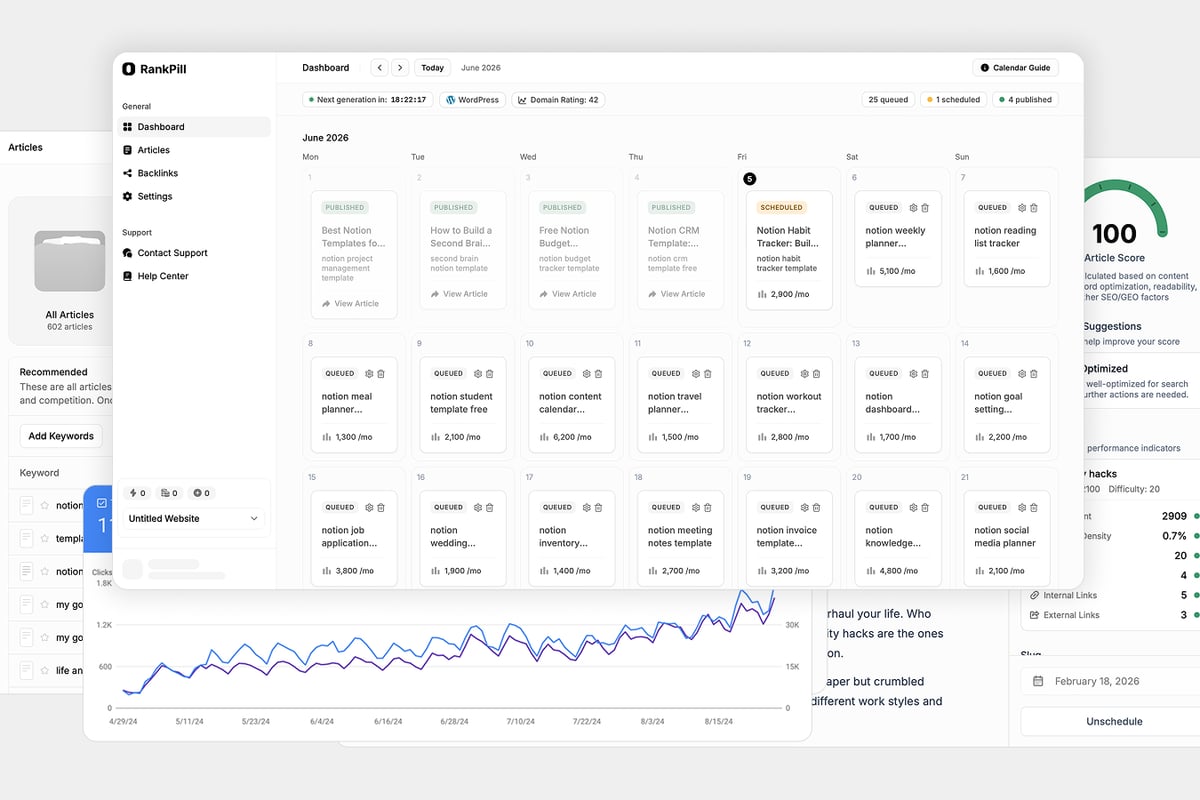
The solution involves strategic focus rather than unlimited expansion. RankPill's SEO Content Writer addresses this challenge by creating comprehensive, well-researched articles designed to demonstrate genuine value and insight, not just keyword targeting. This approach ensures that scaled content production maintains the quality signals Google's algorithms seek.
Neglecting User Experience
EEAT extends beyond content to encompass the complete user experience. Sites that demonstrate expertise through articles but frustrate users with poor design or navigation send mixed trust signals.
Critical UX considerations include:
- Page load speed affecting both satisfaction and technical SEO
- Mobile responsiveness ensuring accessibility across devices
- Ad placement that doesn't overwhelm or mislead users
- Navigation clarity helping users find related content easily
- Readability with appropriate formatting and typography
Implementing EEAT in Content Strategy
Translating eeat google guidelines into practical content operations requires systematic approaches that embed these principles into everyday workflows.
Content Planning with EEAT
Strategic planning should evaluate topics through an EEAT lens before content creation begins:
- Authority assessment: Do we have genuine expertise in this topic area?
- Experience evaluation: Can we provide first-hand insights or original research?
- Competition analysis: What EEAT signals do ranking competitors demonstrate?
- Resource requirements: What research, interviews, or testing will strengthen EEAT?
- Author matching: Which team members or contributors have relevant credentials?
This upfront evaluation prevents wasted effort on topics where you cannot establish sufficient authority to compete effectively.
Author Development Programs
Building a roster of credible authors strengthens your overall EEAT profile:
- Expert recruitment bringing in specialists for key topic areas
- Credential highlighting ensuring qualifications appear prominently
- Byline consistency building individual author recognition over time
- Social presence developing author platforms beyond your website
- Guest contributions establishing expertise through external publications
Implementing AI SEO platforms works best when combined with strong author programs that ensure human expertise guides and validates automated content production.

Continuous Improvement Cycles
EEAT optimization represents ongoing work rather than one-time implementation:
| Phase | Activities | Frequency |
|---|---|---|
| Audit | Review existing content for EEAT gaps | Quarterly |
| Update | Refresh outdated information and add new insights | Monthly |
| Expand | Add depth to thin content with examples and research | Ongoing |
| Link | Build internal connections between related expertise | Weekly |
| Monitor | Track authority metrics and competitor EEAT signals | Monthly |
This systematic approach ensures that your EEAT profile strengthens over time rather than stagnating after initial optimization efforts.
EEAT for Different Content Types
The application of eeat google guidelines varies across content formats and purposes. Understanding these nuances helps optimize each content type appropriately.
Educational Content and Tutorials
How-to guides and educational resources require clear expertise and practical experience. Users seek reliable information they can implement successfully.
Strengthening EEAT for educational content:
- Step-by-step instructions based on actual implementation
- Screenshots or videos demonstrating processes
- Troubleshooting sections addressing common challenges
- Links to additional resources and further reading
- Author credentials establishing teaching authority
Product Reviews and Comparisons
Review content especially benefits from demonstrated experience. Users want insights from genuine product usage, not marketing materials.
Essential elements include:
- Detailed testing methodology explanations
- Original photos or videos of products in use
- Specific performance metrics and measurements
- Honest discussion of limitations and drawbacks
- Comparison criteria based on real-world use cases
News and Industry Commentary
Timely content requires established authoritativeness to differentiate from countless other sources covering the same events.
Building authority in news content involves:
- Original reporting with unique sources or data
- Expert analysis rather than event summarization
- Historical context connecting current events to patterns
- Author credentials in relevant subject areas
- Quick publication of breaking developments
Measuring Your EEAT Progress
Tracking EEAT improvements presents challenges since Google provides no direct EEAT score. However, proxy metrics reveal whether your efforts are working.
Authority and Trust Metrics
Monitor these indicators of growing EEAT:
- Branded search volume showing increased direct recognition
- Backlink quality measured by domain authority of linking sites
- Citation frequency tracking how often others reference your content
- Social media engagement reflecting audience trust and interest
- Return visitor rates indicating user satisfaction and loyalty
These metrics collectively suggest whether your content demonstrates increasing authority and trustworthiness in your field.
Content Performance Indicators
Individual content pieces reveal EEAT impact through:
- Average position improvements for target keywords
- Click-through rates from search results
- Time on page and other engagement metrics
- Conversion rates for monetization or lead generation
- Social sharing and external linking
Content that genuinely demonstrates EEAT qualities typically outperforms similar pieces with weaker authority signals.
Competitive Benchmarking
Regular competitive analysis reveals whether your EEAT efforts match or exceed industry standards:
Compare your content against top-ranking competitors for:
- Author credential visibility and depth
- Content comprehensiveness and unique insights
- Update frequency and freshness
- Backlink profile quality and diversity
- Site-wide trust signals and technical implementation
Understanding AI search optimization becomes increasingly important as search engines incorporate more sophisticated EEAT evaluation into their algorithms.
EEAT and the Future of Search
The trajectory of eeat google guidelines points toward increasingly sophisticated evaluation of content quality and creator credibility as we progress through 2026 and beyond.
AI Detection and Authenticity
Search engines continue refining their ability to distinguish between genuinely authoritative content and artificially optimized material. The challenge for automated content creation lies in maintaining authentic EEAT signals while scaling production.
Future developments likely include:
- More sophisticated author entity recognition across platforms
- Improved detection of first-hand experience versus compiled research
- Enhanced evaluation of content depth and originality
- Stronger correlation between user satisfaction signals and EEAT
- Integration of cross-platform reputation signals
The Rise of Transparent AI Content
Rather than hiding AI involvement in content creation, the trend moves toward transparency about creation processes combined with clear human expertise and oversight.
Sustainable approaches include:
- Clear disclosure of AI assistance in content production
- Prominent human expert review and validation
- Author credentials demonstrating subject matter expertise
- Original research and insights that AI cannot replicate
- Strategic implementation of AI content for SEO that prioritizes value over volume
Personalization and Context
EEAT evaluation may become more contextual, recognizing that different users need different types of authority depending on their intent and situation.
A beginner seeking basic information might value clear educational credentials. An expert looking for advanced insights might prioritize demonstrated industry experience and original research. Search engines increasingly attempt to match EEAT signals with user needs.
Building genuine experience, expertise, authoritativeness, and trustworthiness into your content strategy represents the most sustainable path to search visibility in 2026 and beyond. While eeat google guidelines cannot be gamed through superficial optimization, they reward authentic value creation that serves user needs. RankPill helps businesses scale content production while maintaining the quality signals that search engines reward, combining automated efficiency with the strategic depth that EEAT demands. By automating research, structure, and optimization while preserving space for genuine expertise and insight, you can build authority at scale without sacrificing the authenticity that Google's guidelines increasingly require.
Unlock Traffic on Autopilot
Grow organic traffic on autopilot. RankPill will research, write, optimize, and publish articles to your website daily.
 WordPress