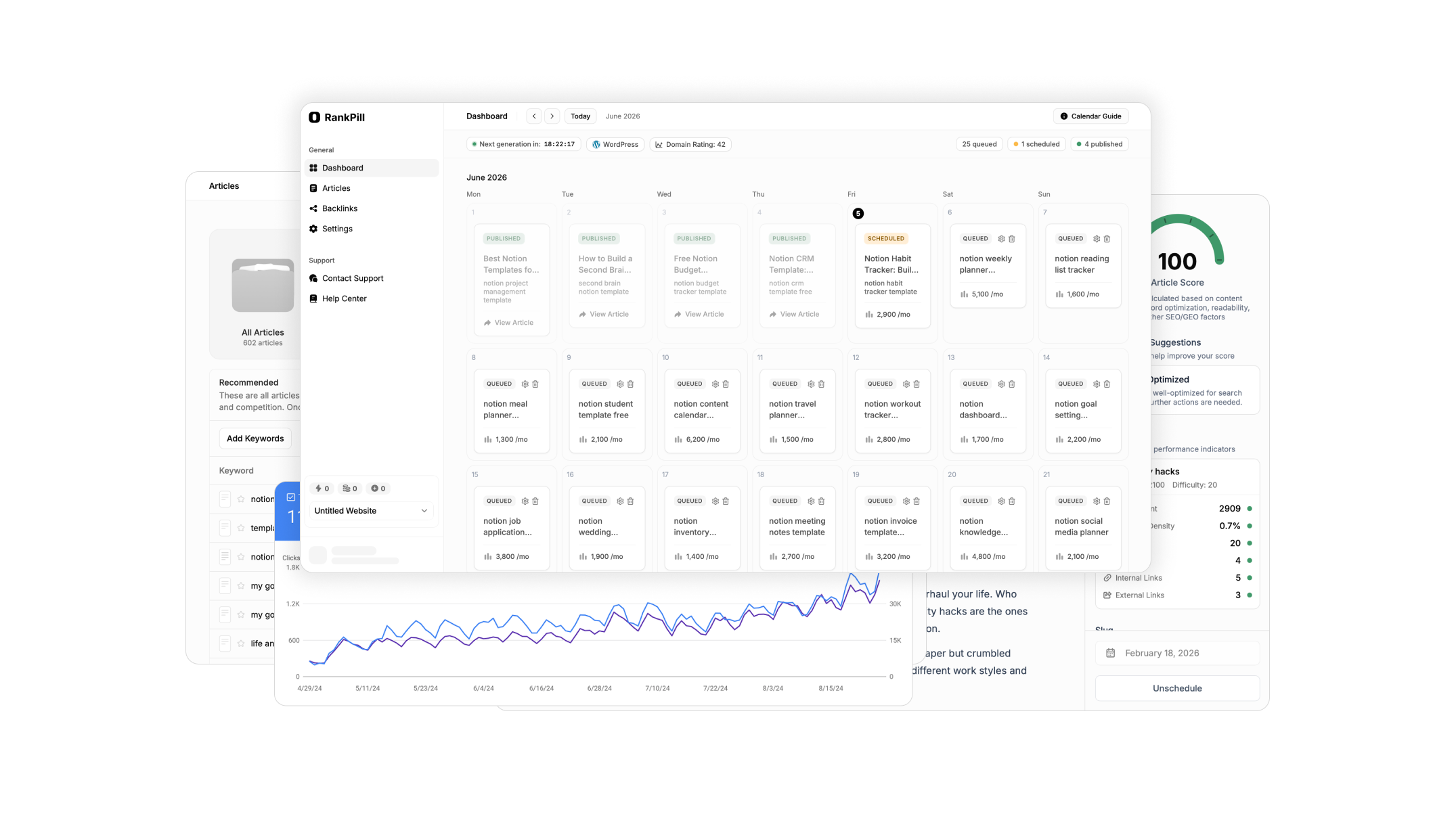
SEO Content Writer
AI-powered SEO content writer that researches the SERP, drafts the article, and optimizes every detail before it ships. Built for blogs that need to scale ranking content without hiring writers or editing every draft by hand.
Professional teeth whitening costs anywhere from $300 to $1,000 per session, and most dentists quietly admit you can get 80% of the result at home for under $60. The catch is knowing which products actually work, and which ones just bleach your gums while doing nothing to the staining underneath.
Why teeth stain in the first place
Stains fall into two categories: extrinsic (surface stains from coffee, tea, and wine) and intrinsic (deeper, from antibiotics, trauma, or aging). At-home whitening only works on extrinsic stains, which is where 95% of discoloration actually lives.
The good news is that most people are fighting the surface-level kind, which means a proper at-home routine can usually get you 80% of the way to a dentist-grade result in about two weeks.
The four methods that actually work
Every method below has been tested in peer-reviewed clinical trials, ranked by visible result after 14 days of consistent use.
- Whitening strips, 10 to 14% peroxide, 30 minutes per day for 14 days. 3 to 5 shades lighter. Around $45.
- Custom trays, dentist-fitted for overnight wear. Best for uneven staining. Around $150.
- LED whitening kits, a tray plus blue-light device. Works faster than strips but the gels are weaker.
- Hydrogen peroxide rinses, 1.5% solution swished for 60 seconds twice daily. Cheapest option at around $8, but slowest visible result.
What to avoid
Skip anything involving lemon juice, baking soda pastes, activated charcoal, or DIY peroxide concentrations above 10%. These strip enamel, irritate gums, and usually leave teeth looking worse within a few months.
An SEO content writer that ships ranking-ready articles. Most AI writers give you a draft. RankPill gives you a fully optimized article with the SEO work already done: research, structure, meta tags, schema, images, and internal links.
Real SERP research built in
Before writing a single word, RankPill pulls the live top-10 for your keyword, extracts the sub-topics that rank, and builds an outline that actually matches search intent.
Citations from real sources
Facts, stats, and quotes are pulled from real pages and cited inline. Your articles stop reading like AI filler and start reading like a research-backed blog.
Proper SEO structure
Every article ships with a keyword-optimized H1, semantically related H2s, short paragraphs, and a natural internal linking pattern. No more manual formatting passes.
Meta titles and descriptions
Every post gets a compelling meta title under 60 characters and a meta description under 155 characters, both written to maximize CTR in the SERP.
Internal links from your own site
RankPill maps your existing pages and weaves 3 to 5 contextual internal links into every article, so each new post strengthens the cluster instead of standing alone.
Feature images and alt text
Every article gets a unique AI-generated hero image, optional in-content visuals, and descriptive alt text. Accessible, visual, and SEO-complete without extra tools.
From keyword to published article in minutes. The entire path from keyword to live post runs in the background. You pick the cadence, RankPill handles the pipeline.
Step 01
Pick or auto-pick a keyword
Feed RankPill a keyword directly, or let the system suggest keywords based on your site's existing topical authority and unclaimed SERP opportunities.
Step 02
AI writer drafts the article
RankPill analyzes the SERP, outlines the article, drafts it with real citations, and formats it with proper headings, internal links, and schema.
Step 03
Review or auto-publish
Approve drafts in the review queue, or flip the site to autopilot and articles ship straight to your live blog on the cadence you set.
Step 04
Auto-publish on a daily cadence
Connect WordPress, Shopify, Wix, Webflow, or a webhook once and articles ship to your live blog on the schedule you choose. Up to one article per day on autopilot.
Built for teams that publish for a living. RankPill works for any site that earns customers through search, but the writer module is most valuable when content is your primary growth channel.
Bootstrapped founders
Skip the $500-per-article freelance SEO writers. Publish 5x more content at a flat subscription cost while you focus on shipping product.
Content marketing teams
Move from writing articles yourself to editing AI drafts. Triple your output without adding headcount or cutting quality.
SEO agencies
Deliver more articles per client at better margins. RankPill becomes the content engine while your team handles strategy and client work.
Ecommerce blogs
Build category-adjacent content that brings buyers to your product pages. Every post internally links to the right collections automatically.
The gap between “AI wrote it” and “AI ranked it”. Why most AI writers produce fluent drafts that never rank, and what RankPill does differently.
Most AI writing tools share the same workflow: you type a prompt, the model produces prose, you copy it into your CMS. The content comes out fluent, but it is disconnected from the SERP, the keyword is not properly integrated, there are no citations, no schema, no internal links, and no understanding of what Google is actually rewarding for that query. The result is content that reads well and ranks badly.
A real SEO content writer does something different. Before writing, it studies the top-ranking pages for the target keyword. It sees what sub-topics Google rewards, what angles are missing, what depth the SERP expects, and what supporting entities and terms get surfaced. Only then does it draft an article designed to fit the winning pattern while adding unique value on top.
RankPill is built as that second kind of writer. Every article starts with a live SERP scrape, a topical gap analysis against your site, and a matched search-intent classification (informational, commercial, transactional). The draft is written to hit the length, depth, and structure that the top 10 share, with real external links from web research and internal links that strengthen your topical cluster. Then it ships with the meta work already done and publishes to your CMS.
The outcome is the one that matters: articles that earn rankings, build authority, and compound into organic traffic without you in the loop.
SEO content writer questions. Common questions about how the writer drafts and optimizes ranking-ready articles.
What is an SEO content writer?
Is AI SEO content writing actually good enough to rank in 2026?
How is RankPill different from ChatGPT or Jasper?
Will Google penalize me for AI-written SEO content?
How long is each SEO article?
Can I edit the articles before they go live?
What does the SEO content writer cost per article?
More features. More ways RankPill automates your SEO.
SEO Automation
Automate keyword research, content creation, internal linking, and publishing so your site ranks on Google without manual work. RankPill runs the full pipeline in the background while you focus on the business.
Keyword Research Tool
Automated keyword research that finds high-volume, low-competition keywords tailored to your business, audience, and competitors. Every suggestion is scored against your real ranking chance, so you only see opportunities you can actually win.
Backlink Exchange
Trade high-quality backlinks with verified sites in your niche to grow your domain authority ethically, without buying links or running cold outreach. Every match is filtered for relevance, traffic, and spam risk before it reaches your inbox.
Reddit Marketing
Find high-intent Reddit threads where your brand belongs and reach potential customers. Rank in Google's Reddit results, get cited by ChatGPT, and turn one well-placed comment into months of compounding traffic.
Unlock Traffic on Autopilot
Grow organic traffic on autopilot. RankPill will research, write, optimize, and publish articles to your website daily.