
How to Get Traffic to Shopify Store in 2026

Modest Mitkus
May 10, 2026
Building a beautiful Shopify store is only half the battle. Without a steady stream of visitors, even the most polished product pages and compelling offers will sit unseen. Understanding how to get traffic to shopify store requires a strategic approach that combines organic discovery, paid advertising, and community engagement. The landscape in 2026 demands more than basic tactics because competition has intensified across every channel, from search engines to social platforms. This guide explores actionable methods that drive qualified visitors who actually convert into paying customers.
Understanding Your Traffic Foundation
Before implementing any traffic generation strategy, you need to establish a solid foundation. Your Shopify store must be technically sound, mobile-responsive, and optimized for speed. Search engines prioritize user experience, and a slow-loading store will sabotage your traffic efforts regardless of how much you invest in promotion.
Start by conducting a comprehensive audit of your current traffic sources. Install Google Analytics and Facebook Pixel to track where visitors come from and how they behave on your site. This baseline data reveals which channels already generate interest and which products resonate with your audience.
Setting Clear Traffic Goals
Define specific, measurable objectives for your traffic generation efforts:
- Monthly visitor targets based on your revenue goals
- Traffic source diversification to avoid over-reliance on a single channel
- Conversion rate benchmarks that connect traffic quality to sales
- Customer acquisition cost limits for paid channels
- Engagement metrics like time on site and pages per session
These goals create accountability and help you allocate resources effectively across different strategies.
SEO Optimization for Long-Term Growth
Search engine optimization remains one of the most valuable approaches for learning how to get traffic to shopify store because it generates compounding returns over time. Unlike paid advertising that stops when your budget runs out, organic search traffic continues flowing once you achieve rankings.
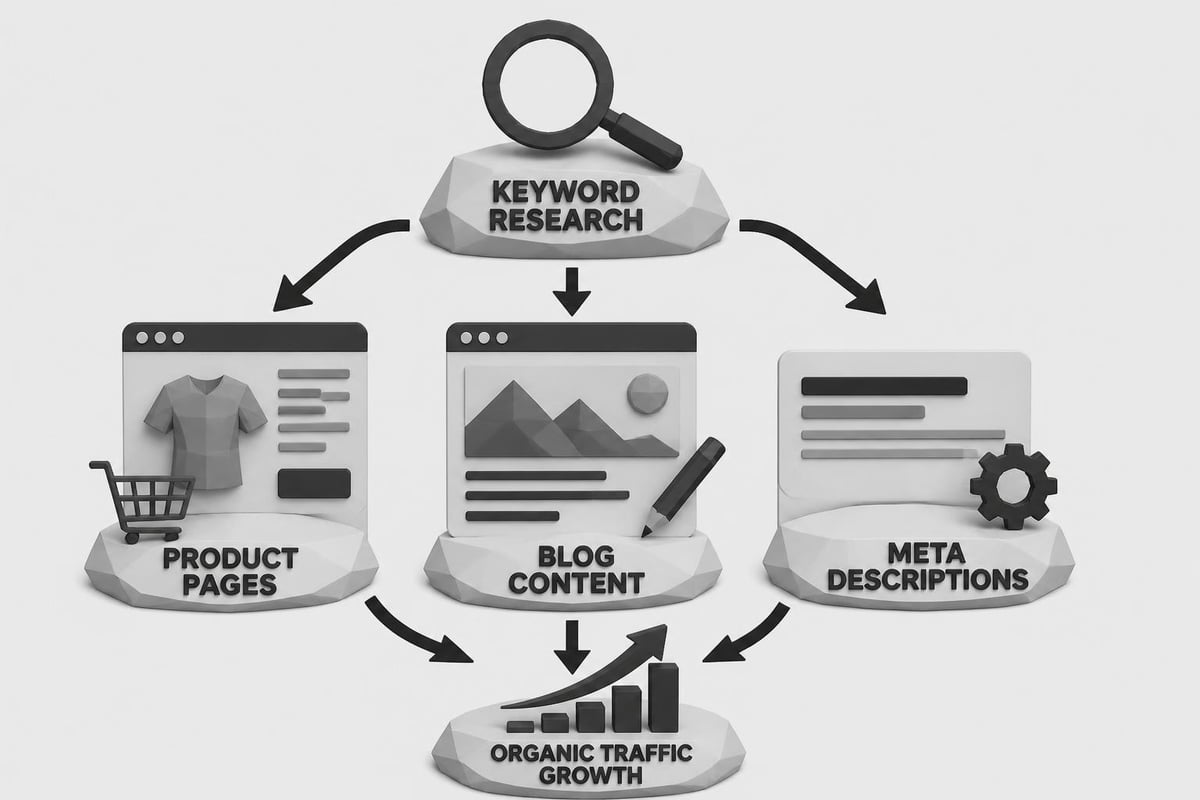
Focus on product page optimization first. Each product page should target a specific keyword phrase that matches buyer intent. Include detailed descriptions that answer common questions, incorporate relevant keywords naturally, and use high-quality images with descriptive alt text.
Building a Content Strategy
Creating valuable content positions your store as an authority while capturing search traffic from informational queries. Develop a blog that addresses customer pain points, comparison guides, how-to tutorials, and industry trends. This comprehensive approach to driving traffic creates multiple entry points for potential customers at different stages of their buying journey.
| Content Type | Purpose | Traffic Potential | Conversion Rate |
|---|---|---|---|
| Product comparisons | Decision-stage buyers | Medium | High |
| How-to guides | Educational searches | High | Medium |
| Industry news | Awareness building | Medium | Low |
| Customer stories | Trust building | Low | High |
Consistency matters more than perfection. Publishing two well-researched articles weekly outperforms sporadic bursts of content. Tools like RankPill's SEO automation can maintain this publishing cadence without overwhelming your team, automatically researching keywords and creating optimized content that matches your brand voice.
Leveraging Paid Advertising Channels
While organic strategies build sustainable traffic, paid advertising delivers immediate results. The key is selecting channels where your target audience actively spends time and structuring campaigns for profitability rather than vanity metrics.
Google Shopping Campaigns
Google Shopping ads place your products directly in search results with images, prices, and ratings. These visual ads capture high-intent shoppers already searching for products like yours. Structure your campaigns around product categories, set competitive bids for your best-sellers, and use negative keywords to filter out irrelevant traffic.
Monitor your return on ad spend (ROAS) closely. A campaign generating traffic but losing money needs refinement, not more budget. Test different product images, adjust pricing strategies, and refine your target keywords based on conversion data.
Facebook and Instagram Advertising
Social media advertising excels at reaching audiences based on interests, behaviors, and demographics. Create compelling visual content that stops scrolling and tells a story. Instead of hard-selling products immediately, consider a nurturing approach with carousel ads showcasing lifestyle imagery and retargeting campaigns for abandoned carts.
The proven methods outlined by e-commerce experts emphasize the importance of testing ad creative, audience segments, and placements systematically. What works for one store may flop for another, so data-driven iteration separates profitable campaigns from money pits.
Social Media and Community Building
Understanding how to get traffic to shopify store through social media requires thinking beyond broadcast marketing. Modern consumers want authentic connections with brands, not constant sales pitches. Build communities around shared interests related to your products.
Choose platforms strategically based on where your customers congregate:
- Instagram for visually-driven products and younger demographics
- Pinterest for home decor, fashion, and DIY niches
- TikTok for trend-focused products and viral potential
- LinkedIn for B2B products and professional audiences
- YouTube for complex products requiring demonstrations
Creating Shareable Content
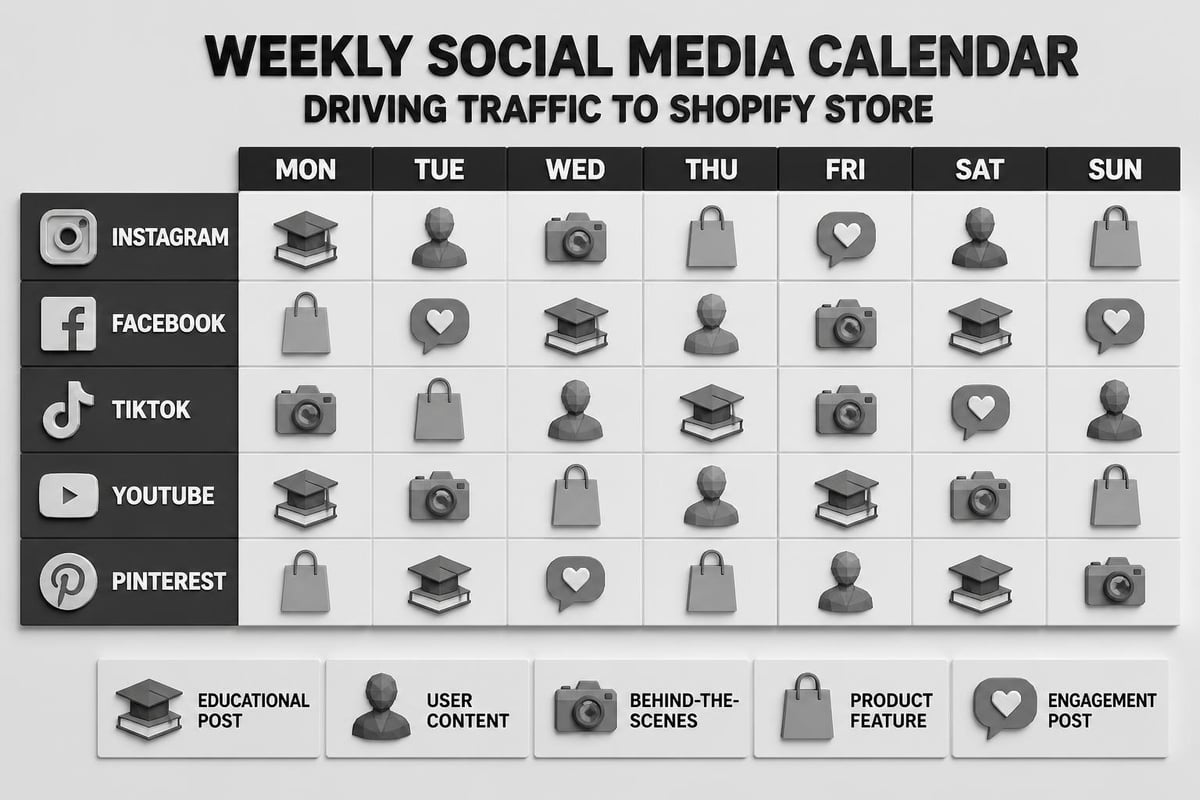
The most effective social content provides value independent of product promotion. Educational posts, entertainment, inspiration, and user-generated content all drive engagement and shares. When followers share your content, their networks discover your brand organically.
Develop a content calendar that balances promotional posts with value-driven content. The 80/20 rule works well, with 80% of posts focused on engaging your audience and 20% directly promoting products. This approach builds trust and keeps followers engaged rather than tuning out constant sales messages.
Email Marketing That Converts
Email remains one of the highest-converting traffic sources for e-commerce. Building a subscriber list gives you a direct communication channel that you control, unlike social platforms where algorithm changes can tank your reach overnight.
Implement strategic capture mechanisms across your store:
- Welcome popups offering first-purchase discounts
- Exit-intent popups preventing abandoned sessions
- Post-purchase emails encouraging reviews and repeat purchases
- Browse abandonment sequences reminding visitors about viewed products
- Back-in-stock notifications for popular items
Segment your email list based on purchase history, browsing behavior, and engagement levels. Sending targeted campaigns to specific segments dramatically outperforms generic blasts to your entire list. A customer who bought hiking boots wants different content than someone who purchased formal shoes.
Influencer and Affiliate Partnerships
Collaborating with influencers and affiliates extends your reach into established audiences. Instead of building audiences from scratch, you tap into communities that already trust specific creators. This strategy works particularly well for driving meaningful traffic that converts because influencer recommendations carry more weight than traditional advertising.
Selecting the Right Partners
Follower count matters less than engagement and audience alignment. A micro-influencer with 5,000 highly engaged followers in your exact niche often delivers better results than a celebrity with millions of disinterested followers. Evaluate potential partners based on:
- Audience demographics matching your customer profile
- Engagement rates indicating active, responsive followers
- Content quality aligning with your brand standards
- Previous partnerships and their disclosed results
- Values alignment ensuring authentic promotion
Structure affiliate programs with tiered commission rates that reward top performers. Provide affiliates with unique discount codes, custom landing pages, and promotional assets that make their job easier. The more successful your affiliates become, the more traffic flows to your store.
Content Marketing and SEO Synergy
Deep content marketing creates lasting assets that continue generating traffic years after publication. Instead of superficial blog posts, develop comprehensive guides, original research, and interactive tools that become go-to resources in your industry.
Conduct keyword research to identify high-value topics with search demand but manageable competition. Look for question-based queries, comparison searches, and "how to" phrases related to your products. These informational searches attract early-stage buyers who eventually convert as they progress through their buying journey.
Building Topical Authority
Google increasingly favors websites that demonstrate comprehensive expertise in specific topics. Rather than scattering content across unrelated subjects, develop topic clusters that interlink and establish your authority. For example, a fitness equipment store might create clusters around home gym setup, exercise techniques, and nutrition guidance.
| Topic Cluster | Pillar Content | Supporting Articles | Internal Links |
|---|---|---|---|
| Home Gym Setup | Complete home gym guide | Equipment reviews, space planning, budget options | 8-12 related posts |
| Exercise Techniques | Exercise form tutorials | Muscle group guides, workout plans, injury prevention | 10-15 related posts |
| Nutrition for Fitness | Nutrition fundamentals | Meal plans, supplement guides, dietary strategies | 6-10 related posts |
This structured approach helps search engines understand your expertise while keeping visitors engaged with related content. Each article you publish strengthens your topical authority and improves rankings across your entire cluster.
Video Marketing and YouTube SEO
Video content dominates consumer attention in 2026, with YouTube functioning as the world's second-largest search engine. Creating video content opens entirely new traffic channels while deepening engagement with existing audiences. Product demonstrations, unboxing videos, tutorials, and behind-the-scenes content all attract viewers who may become customers.
Optimize videos for search by conducting keyword research specifically for YouTube. Video search queries often differ from traditional web searches, with users asking more conversational questions. Include target keywords in your title, description, and tags while creating compelling thumbnails that earn clicks.
Repurposing Video Content
Maximize your video investment by repurposing content across multiple platforms. A single YouTube video can become:
- Instagram Reels featuring key highlights
- TikTok clips optimized for trending formats
- Pinterest Pins linking to the full video
- Blog posts with embedded videos and transcripts
- Email content driving subscribers to watch
This multi-platform approach dramatically increases the traffic generation potential of each piece of content you create.
Analyzing and Optimizing Traffic Sources
Implementing traffic strategies without measuring results wastes resources and misses optimization opportunities. Establish regular reporting cadences that track performance across all channels. The methods for checking Shopify store traffic provide benchmarking insights that reveal whether your efforts match industry standards.
Set up custom dashboards in Google Analytics that display your most important metrics at a glance. Track not just visitor numbers but quality indicators like bounce rate, average order value by source, and conversion rates by channel. This data reveals which traffic sources deliver profitable customers versus tire-kickers who never buy.
Attribution Modeling
Modern customer journeys rarely follow linear paths. A customer might discover your brand through Instagram, research products via Google, sign up for your email list, and finally purchase after receiving a promotional email. Understanding these multi-touch journeys helps you allocate marketing budget effectively.
Experiment with different attribution models:
- Last-click attribution credits the final touchpoint
- First-click attribution values initial discovery
- Linear attribution distributes credit equally
- Time-decay attribution gives more weight to recent interactions
- Position-based attribution emphasizes first and last touches
No single model provides perfect truth, but comparing multiple models reveals which channels play important roles in your customer journey.
Mobile Optimization and App Integration
Over 70% of e-commerce traffic now comes from mobile devices, making mobile optimization non-negotiable for anyone learning how to get traffic to shopify store successfully. A desktop-optimized store that fails on mobile loses the majority of potential customers before they even see your products.
Test your store on multiple devices and browsers regularly. Check page load speeds using Google's PageSpeed Insights, ensuring mobile performance scores above 90. Simplify navigation for thumb-friendly browsing, enlarge buttons and form fields, and minimize the steps required to complete purchases.
Consider developing a mobile app for your most engaged customers. Apps enable push notifications, streamlined checkout experiences, and offline browsing that web stores cannot match. While apps require additional development investment, they create owned channels for reaching customers directly.
Partnerships and Cross-Promotion
Strategic partnerships with complementary businesses multiply your traffic potential without proportionally increasing costs. A coffee equipment store might partner with specialty coffee roasters, a yoga apparel brand with fitness studios, or a pet supply shop with dog training services.
Structure mutually beneficial arrangements where both businesses promote each other to their audiences. This might include:
- Co-branded content like joint webinars or guides
- Bundle offers combining products from both stores
- Newsletter swaps introducing each brand to new audiences
- Social media takeovers showcasing partner businesses
- Referral programs rewarding customers who introduce friends
These partnerships work best when audiences overlap significantly but products don't compete directly. The goal is accessing established customer bases that already trust similar brands.
Seasonal and Trend-Based Traffic Spikes
Capitalizing on seasonal shopping patterns and trending topics creates predictable traffic surges throughout the year. Plan campaigns around major shopping holidays like Black Friday, but also identify niche opportunities specific to your products.
Develop a promotional calendar twelve months in advance that includes:
- Major holidays with widespread shopping activity
- Industry-specific events relevant to your niche
- Seasonal transitions when customers need new products
- Cultural moments that align with your brand values
- Product launch cycles in your category
Start preparing content and advertising at least six weeks before major events. The brands that capture seasonal traffic invest in preparation, not last-minute scrambling. Create gift guides, holiday-themed content, and special promotions that give shoppers compelling reasons to visit your store during high-traffic periods.
Technical Performance and User Experience
All the traffic in the world means nothing if visitors encounter a broken, slow, or frustrating store experience. Technical performance directly impacts both search rankings and conversion rates, making it foundational to sustainable traffic growth.
Conduct regular technical audits checking for:
- Broken links that frustrate visitors and hurt SEO
- Slow-loading pages causing abandonment
- Mobile usability issues blocking the majority of traffic
- Security concerns like missing SSL certificates
- Checkout friction creating unnecessary purchase barriers
Use tools like Google Search Console to identify crawl errors and indexing issues. Fix technical problems immediately rather than letting them accumulate. Small issues compound over time, eventually tanking your traffic and conversion rates.
Retargeting and Recovering Lost Traffic
Most visitors leave without purchasing on their first visit. Retargeting campaigns bring these visitors back by displaying your ads as they browse other websites and social platforms. This reminder effect significantly increases conversion rates by keeping your brand top-of-mind.
Segment retargeting audiences based on behavior:
| Audience Segment | Behavior | Retargeting Strategy | Expected Conversion |
|---|---|---|---|
| Cart abandoners | Added products, didn't buy | Showcase cart items, offer small discount | 15-25% |
| Product viewers | Viewed specific products | Show viewed products, related items | 8-15% |
| Homepage visitors | Landed but didn't engage | Brand awareness, bestsellers | 3-8% |
| Past customers | Purchased previously | New arrivals, complementary products | 20-35% |
Set frequency caps to avoid annoying potential customers with excessive ad exposure. The goal is gentle reminders, not stalking customers across the internet until they block your ads.
Driving consistent traffic to your Shopify store requires combining multiple strategies that work together synergistically. No single tactic delivers sustainable results, but a diversified approach creates resilient growth across changing market conditions. RankPill automates the content creation and SEO optimization that forms the foundation of long-term organic traffic growth, letting you focus on paid channels and customer relationships while your content library generates compounding returns. Start implementing these strategies systematically, measure results rigorously, and optimize based on data rather than assumptions.