Is GEO Replacing SEO? Understanding the Shift in 2026

Modest Mitkus · April 3, 2026
The search landscape has undergone a seismic transformation with the rise of AI-powered answer engines like ChatGPT, Perplexity, and Google's AI Overviews. As these generative AI tools reshape how users discover information, a critical question emerges for digital marketers and business owners: is GEO replacing SEO? The short answer is nuanced. Generative Engine Optimization (GEO) represents a new frontier in search visibility, but it doesn't render traditional Search Engine Optimization obsolete. Instead, these two disciplines are evolving together, creating a more complex optimization landscape that demands strategic adaptation from content creators and marketing teams.
Understanding the Fundamental Differences Between SEO and GEO
Search Engine Optimization has been the cornerstone of digital marketing for over two decades. It focuses on improving website visibility in traditional search engine results pages (SERPs) through keyword optimization, backlink building, and technical website improvements. SEO targets indexed web pages and aims to drive organic traffic to websites where conversions happen.
Generative Engine Optimization takes a fundamentally different approach. As explained by experts at TechTarget, GEO optimizes content specifically for AI-generated responses in tools like ChatGPT, Perplexity, Claude, and Google's AI-powered features. Rather than appearing as a blue link in search results, GEO-optimized content gets synthesized into AI-generated answers that users receive directly.
How User Behavior Is Driving This Shift
The way people search for information has evolved dramatically. Users increasingly turn to AI chatbots for quick, conversational answers rather than clicking through multiple search results. According to recent data, conversational AI platforms now handle billions of queries monthly, representing a significant shift in search behavior.
This behavioral change creates new opportunities and challenges:
- Direct answers reduce click-through rates to traditional websites
- AI synthesizes information from multiple sources without attribution
- Users trust AI-generated summaries for quick decision-making
- Traditional organic traffic patterns are becoming less predictable

Why SEO Remains Essential Despite GEO's Rise
While GEO captures significant attention, declaring that SEO is dead would be premature and inaccurate. Traditional search engines still dominate the digital landscape, with Google processing over 8.5 billion searches daily in 2026. The differences between GEO and SEO highlight why both matter.
SEO continues to deliver measurable business value through multiple channels:
- Brand discovery: New customers still find businesses through traditional search
- Commercial intent: High-intent searches ("buy," "best," "near me") predominantly occur on search engines
- Website traffic: Organic search remains a primary traffic source for most websites
- Conversion optimization: Controlled website experiences convert better than AI recommendations
The Data Supporting SEO's Continued Relevance
| Metric | 2026 Performance | Strategic Importance |
|---|---|---|
| Daily Google searches | 8.5+ billion | Primary discovery channel |
| Organic click-through rate | 27-35% for top 3 positions | Direct website traffic |
| Search ad revenue | $200+ billion annually | Proves search engine value |
| Mobile search queries | 63% of all searches | Growing mobile commerce |
Traditional SEO tactics like adding keywords to your website and building quality backlinks maintain their effectiveness. These foundational practices ensure visibility across multiple search platforms, including traditional engines and emerging AI systems.
How GEO and SEO Work Together Strategically
Rather than viewing the question "is geo replacing seo" as an either-or proposition, forward-thinking marketers recognize these as complementary strategies. The most successful content strategies in 2026 integrate both approaches seamlessly.
Content Optimization for Dual Visibility
Creating content that performs well in both traditional search and AI-generated responses requires strategic adjustments:
For SEO focus:
- Target specific long-tail keywords with commercial intent
- Build authoritative backlink profiles
- Optimize page speed and Core Web Vitals
- Create comprehensive topic clusters
- Implement structured data markup
For GEO focus:
- Provide clear, concise answers to common questions
- Use natural language and conversational tone
- Include statistics, data, and credible sources
- Structure content with clear hierarchies
- Add context and explanations for complex topics
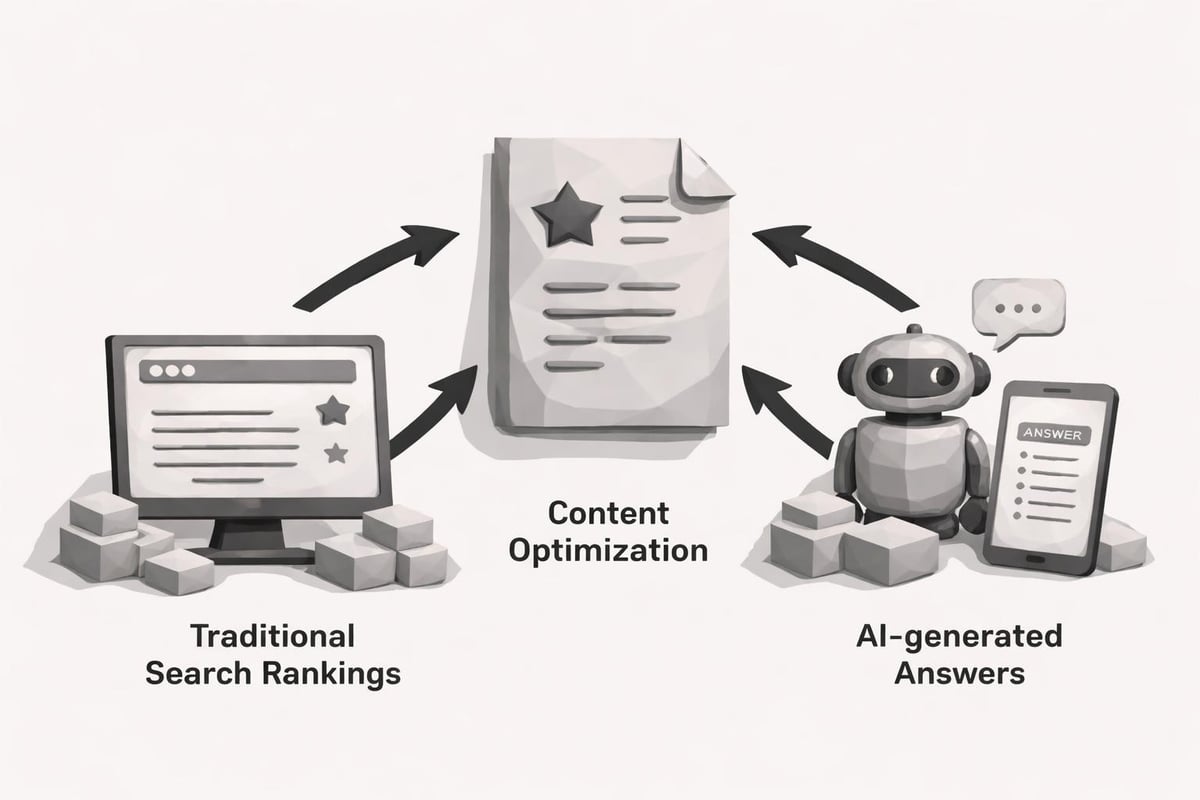
According to Marion's analysis, the overlap between these strategies is substantial. Quality content that answers user questions comprehensively tends to perform well in both environments.
Practical Implementation: Adapting Your Content Strategy
Businesses questioning whether GEO is replacing SEO should instead focus on strategic adaptation rather than wholesale replacement. This means evolving content creation processes to capture visibility across all search platforms.
Building a Hybrid Optimization Framework
The most effective approach combines traditional SEO fundamentals with GEO-specific enhancements. Modern AI SEO platforms now offer capabilities to optimize for both channels simultaneously, reducing the manual effort required.
Implementation steps for integrated optimization:
- Conduct comprehensive keyword and question research across traditional search and AI platforms
- Create authoritative, in-depth content that serves as source material for AI synthesis
- Structure information hierarchically with clear headings, bullet points, and summaries
- Include verifiable facts, statistics, and citations that AI systems can reference
- Optimize technical elements including site speed, mobile responsiveness, and structured data
- Monitor performance across both traditional SERPs and AI answer appearances
Resource Allocation and Budget Considerations
One critical question businesses face is how to allocate resources between SEO and GEO efforts. The answer depends on your target audience's search behavior and business objectives.
| Strategy Component | SEO Investment | GEO Investment | Combined Benefit |
|---|---|---|---|
| Content research | High | Medium | Unified keyword/question database |
| Content creation | High | High | Repurpose for multiple platforms |
| Technical optimization | High | Low | Foundation supports both |
| Link building | High | Medium | Authority signals for both |
| Performance monitoring | Medium | Medium | Comprehensive visibility tracking |
For businesses looking to maximize efficiency, SEO automation tools can handle repetitive tasks while allowing teams to focus on strategic GEO adaptations.
The Role of AI in Modern Search Optimization
Artificial intelligence doesn't just power generative search engines; it's also transforming how we optimize content for discovery. The relationship between AI and SEO has evolved from theoretical to practical application.
AI-powered content optimization offers several advantages:
- Faster content production at scale without sacrificing quality
- Competitive analysis that identifies gaps in current content
- Keyword clustering that maps topics to user intent
- Performance prediction before publishing
- Continuous optimization based on real-time data
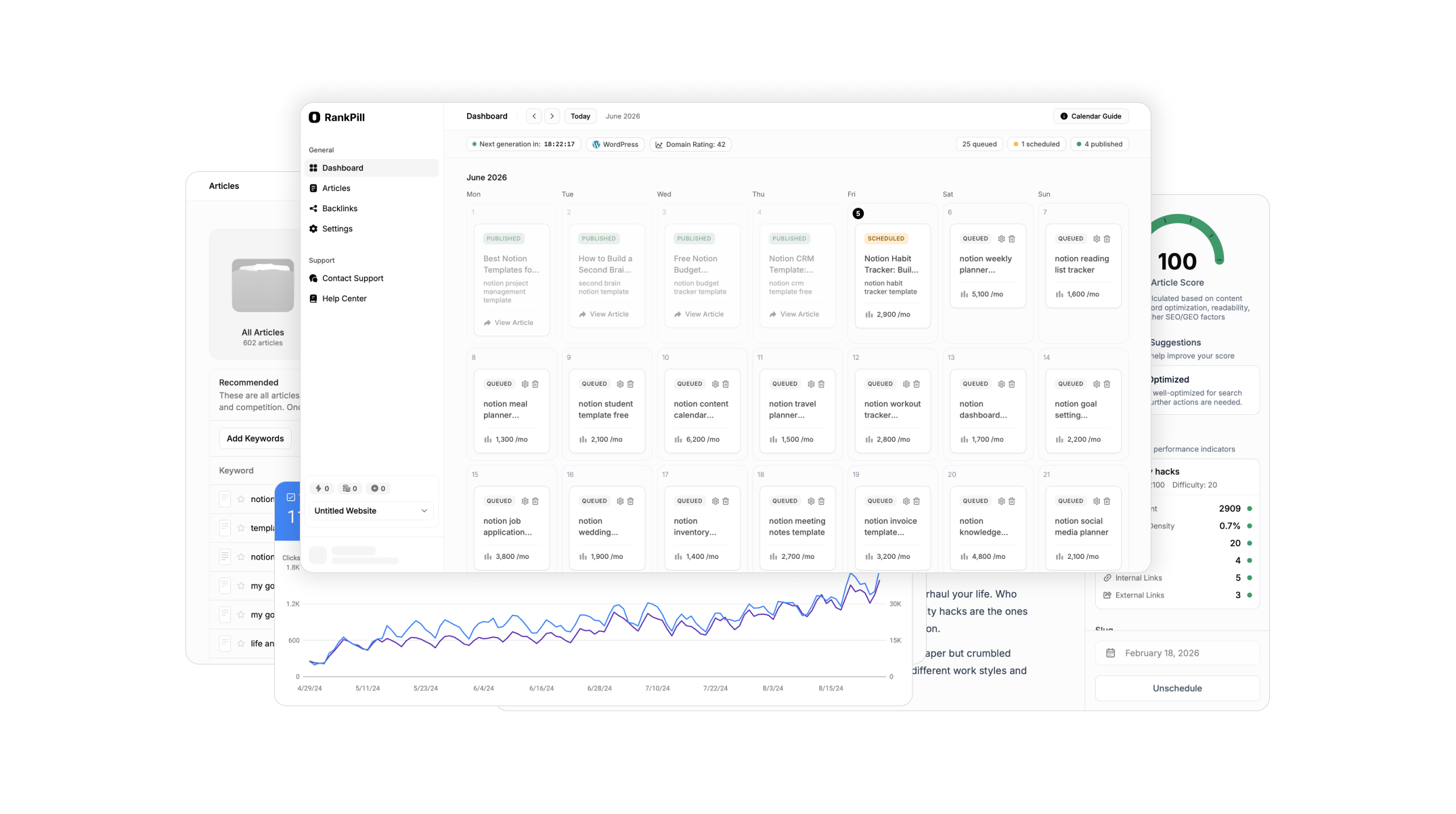
RankPill exemplifies this evolution by automating the entire content creation pipeline from keyword research through publishing. By generating optimized content that targets both traditional search engines and AI platforms, businesses can maintain visibility across all discovery channels without exponentially increasing workload.
Understanding AI Detection and Content Authenticity
One concern about using AI for content creation is whether Google can detect AI SEO content and penalize it. The reality is more nuanced. Search engines evaluate content based on helpfulness, expertise, and user satisfaction rather than its origin.
Key principles for AI-assisted content success:
- Focus on providing genuine value to readers
- Include unique insights and perspectives that pure AI can't generate
- Verify factual accuracy and cite credible sources
- Maintain brand voice consistency across all content
- Update regularly to reflect current information and trends
The question of whether GEO is replacing SEO becomes less relevant when content quality remains the ultimate ranking factor across all platforms.
Measuring Success Across Both SEO and GEO
Traditional SEO metrics focus on rankings, organic traffic, and conversions. GEO introduces new performance indicators that require different tracking approaches.
SEO Performance Metrics
Standard SEO measurement continues to rely on established KPIs:
- Organic search traffic volume from Google, Bing, and other engines
- Keyword ranking positions for target terms
- Click-through rates from search results
- Conversion rates from organic visitors
- Backlink quality and quantity
- Domain authority growth
These metrics remain valuable for understanding your traditional search presence and can be tracked through platforms like Google Search Console and analytics tools.
GEO Performance Indicators
Measuring GEO success requires new approaches since AI-generated answers don't always drive direct traffic:
- Brand mention frequency in AI-generated responses
- Citation appearances when AI tools reference your content
- Source attribution in conversational AI answers
- Topic authority recognition across multiple AI platforms
- Indirect traffic from users who discover your brand through AI
The evolving relationship between GEO and SEO means that success metrics must account for both direct website traffic and broader brand visibility across AI platforms.
Industry-Specific Considerations for SEO and GEO
Different industries experience varying impacts from the SEO-to-GEO transition. Understanding your sector's specific dynamics helps determine the optimal strategy mix.
E-commerce and Product-Based Businesses
For online retailers, traditional SEO remains critical because purchase transactions occur on websites, not within AI chat interfaces. While GEO can drive product discovery, the conversion typically requires visiting the actual e-commerce platform.
E-commerce optimization priorities:
- Maintain strong product page SEO for commercial keywords
- Optimize product descriptions for AI understanding
- Build comprehensive buying guides that AI can reference
- Ensure technical SEO supports seamless mobile transactions
- Leverage automated SEO approaches for large product catalogs
Information and Service-Based Industries
Professional services, B2B companies, and information publishers face different challenges. AI-generated answers may satisfy user queries without driving traffic to the source website.
Service business strategies:
- Create thought leadership content that establishes expertise
- Develop comprehensive resources AI can't fully synthesize
- Include unique case studies and proprietary research
- Build personal brand authority across platforms
- Offer interactive tools and calculators requiring website visits
Future Trends: Where Search Optimization Is Heading
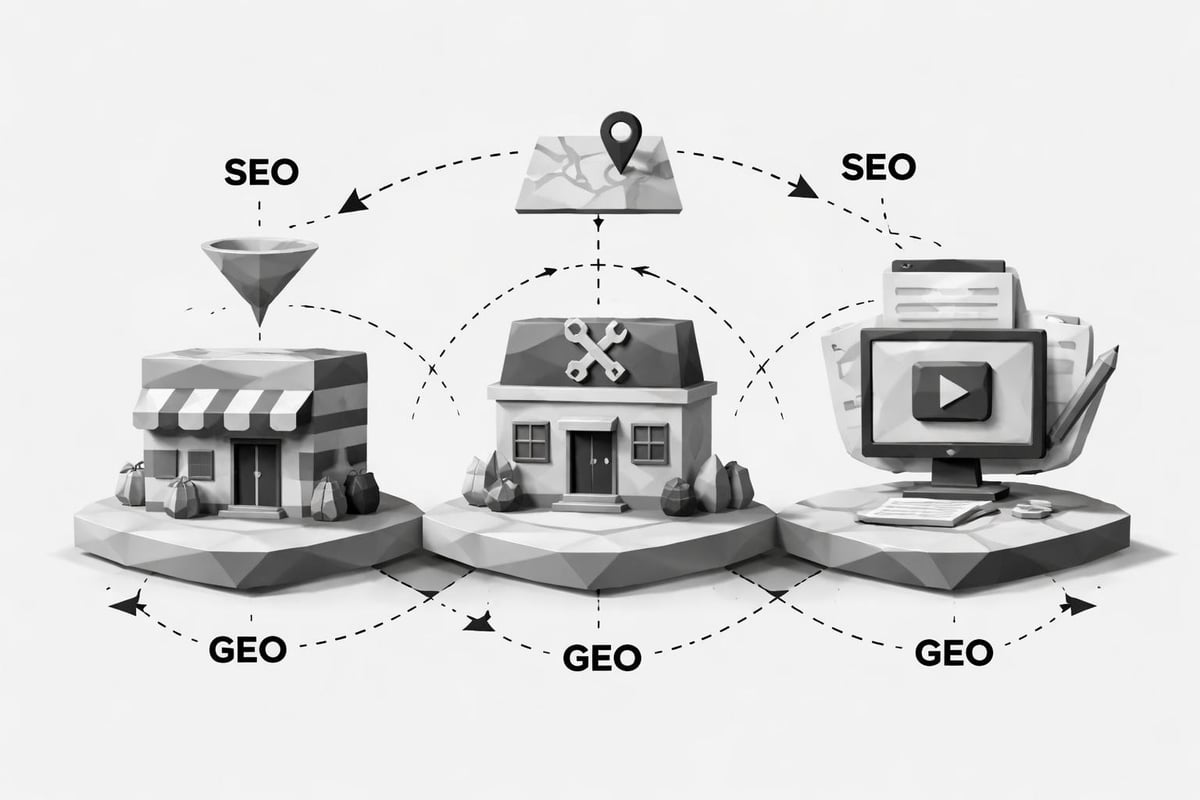
While the question "is geo replacing seo" dominates current discussions, the future likely involves further integration and new optimization paradigms entirely.
Emerging Search Platforms and Behaviors
The search ecosystem continues expanding beyond Google and ChatGPT:
- Voice search optimization for smart speakers and virtual assistants
- Visual search through image recognition technology
- Video search as YouTube and TikTok become answer engines
- Social search with platforms like Instagram and LinkedIn offering discovery
- Industry-specific AI trained on specialized knowledge bases
Each platform requires tailored optimization strategies while maintaining core content quality principles.
The Convergence of SEO and GEO
Rather than replacement, we're witnessing convergence between traditional and generative search optimization. According to Reboot Online's analysis, the fundamental goal remains unchanged: appearing when potential customers seek information related to your expertise.
Convergence indicators include:
| Trend | Impact on SEO | Impact on GEO | Strategic Response |
|---|---|---|---|
| Google AI Overviews | Reduced traditional clicks | Increased AI visibility importance | Optimize for featured snippets and AI inclusion |
| Multi-modal search | Visual and voice queries | Context-rich content demand | Diverse content formats |
| Personalized results | Individual search histories | Contextual AI responses | Broader topic coverage |
| Real-time information | Fresh content priority | Current data emphasis | Regular content updates |
Building Long-Term Search Visibility Strategy
Creating sustainable search visibility requires looking beyond the SEO versus GEO debate to build comprehensive digital presence.
Content Quality as the Foundation
Regardless of platform, exceptional content remains the common denominator for search success. This means:
- Answering questions thoroughly and accurately
- Providing unique insights not available elsewhere
- Maintaining factual accuracy and citing sources
- Writing clearly for human readers first
- Updating content to reflect current information
These principles apply whether you're optimizing for Google's algorithm or training ChatGPT to reference your content.
Technical Infrastructure That Supports All Platforms
Strong technical foundations benefit both SEO and GEO:
- Fast-loading websites improve user experience and search rankings
- Mobile-responsive design accommodates how users access information
- Structured data markup helps both search engines and AI understand content
- Secure HTTPS connections build trust across platforms
- Clean site architecture facilitates content discovery and indexing
Investing in technical excellence creates a rising tide that lifts all optimization efforts.
Distribution and Amplification Strategies
Content visibility extends beyond initial publication. Strategic distribution ensures your content reaches target audiences through multiple channels:
- Email marketing to engaged subscribers
- Social media promotion across relevant platforms
- Industry partnerships and guest posting
- Backlink building from authoritative sources
- Content syndication to expand reach
These activities support both traditional SEO through backlinks and signals, while also increasing the likelihood of AI systems encountering and referencing your content.
Practical Tools and Resources for Integrated Optimization
Successfully managing both SEO and GEO requires the right technology stack and knowledge resources.
Essential Tools for Modern Search Optimization
For traditional SEO:
- Google Search Console for performance monitoring
- Keyword research platforms for topic discovery
- Backlink analysis tools for competitive insights
- Technical SEO auditors for site health
- Analytics platforms for traffic analysis
For GEO:
- AI chat platforms for query testing
- Content optimization tools focused on AI readability
- Citation tracking for AI mention monitoring
- Natural language processing analysis
- Question research tools for conversational queries
Many modern platforms, including solutions highlighted in guides to the best AI SEO software, now offer integrated capabilities that address both optimization approaches simultaneously.
Staying Current With Search Evolution
The pace of change in search technology demands continuous learning. Resources for staying informed include:
- Industry blogs focused on search marketing trends
- Professional conferences covering SEO and AI developments
- Testing and experimentation with new platforms
- Peer networks and professional communities
- Platform-specific documentation and guidelines
Regular knowledge updates ensure your optimization strategies remain effective as the search landscape evolves.
Making the Strategic Decision for Your Business
For business owners and marketing leaders asking "is geo replacing seo," the answer requires context-specific analysis rather than universal declarations.
Evaluating Your Audience's Search Behavior
Understanding where your target audience seeks information guides resource allocation:
Questions to answer:
- What percentage of your audience uses AI chat tools versus traditional search?
- Do your target keywords trigger AI overviews in Google results?
- Are your competitors investing in GEO optimization?
- How does your industry's buying journey align with different search types?
- What content formats resonate most with your audience?
Analyzing these factors helps determine the optimal balance between SEO and GEO investment.
Calculating ROI for Different Optimization Approaches
Both SEO and GEO require investment, but their returns manifest differently:
SEO ROI typically includes:
- Direct organic traffic to your website
- Lead generation through owned properties
- Conversion opportunities in controlled environments
- Long-term asset value in ranking content
- Measurable traffic-to-revenue attribution
GEO ROI often involves:
- Brand awareness through AI mentions
- Thought leadership positioning
- Indirect traffic from brand searches
- Reduced paid advertising needs
- Competitive differentiation
The most effective strategies leverage both to create multiple pathways to customer acquisition and retention.
The answer to whether GEO is replacing SEO isn't about choosing sides but rather embracing evolution in search visibility. Both traditional search engine optimization and generative engine optimization serve critical roles in comprehensive digital marketing strategies, with their importance varying based on industry, audience, and business objectives. RankPill helps businesses navigate this complex landscape by automating content creation that performs well across traditional search engines and AI platforms, ensuring consistent visibility without exponentially increasing workload. Start optimizing for the future of search today with intelligent, automated content that adapts to wherever your audience seeks information.
Unlock Traffic on Autopilot
Grow organic traffic on autopilot. RankPill will research, write, optimize, and publish articles to your website daily.