Organic Traffic for Ecommerce: Complete 2026 Guide

Modest Mitkus · May 19, 2026
Ecommerce businesses that master organic search unlock a competitive advantage that compounds over time. Unlike paid advertising that stops delivering results the moment you pause spending, organic traffic for ecommerce builds sustainable momentum that drives revenue 24/7. With organic search dominating as a traffic source for online stores, understanding how to capture and convert these visitors has become essential for long-term profitability in 2026.
Understanding Organic Traffic in Ecommerce Context
Organic traffic for ecommerce refers to visitors who discover your online store through unpaid search engine results. These shoppers find your products by searching for terms related to what you sell, clicking through from Google, Bing, or other search platforms without any paid promotion driving that click.
The value proposition differs fundamentally from paid channels. Where paid traffic requires continuous investment, organic visitors arrive based on your content's relevance and authority. This creates a compounding effect where each optimized product page, category description, and blog post continues attracting qualified shoppers months or years after publication.
Why Organic Matters More for Online Stores
Research shows that organic search generates higher conversion rates than most other channels. Shoppers who find products through search typically have higher purchase intent compared to social media browsers or display ad viewers.
The economics favor organic growth as well. While the initial investment in SEO requires time and expertise, the cost per acquisition drops significantly as your rankings improve. A product page ranking in position three for a high-intent keyword delivers customers at near-zero marginal cost compared to paying $2-5 per click through advertising.

Product Page Optimization Fundamentals
Your product pages represent the most critical real estate for capturing organic traffic for ecommerce sites. Each page targets specific buyer intent and competes directly with both competitors and marketplace platforms.
Start with keyword research focused on product-specific search terms. Tools like RankPill's keyword research platform help identify the exact phrases potential customers use when searching for items you sell. Target both product names and descriptive long-tail variations that indicate purchase readiness.
Title Tags and Meta Descriptions That Convert
Craft title tags following this proven formula: Primary Keyword + Secondary Benefit + Brand Name. Keep total length under 60 characters to avoid truncation in search results.
Meta descriptions should expand on the value proposition while incorporating target keywords naturally. Focus on unique selling points that differentiate your offering from competitors appearing in the same search results.
Essential product page elements include:
- Unique, detailed product descriptions (minimum 300 words for competitive niches)
- High-quality images with descriptive alt text containing relevant keywords
- Schema markup for product data (price, availability, reviews)
- Customer reviews prominently displayed
- Clear calls-to-action above the fold
- Related product recommendations with internal linking
The technical foundation matters equally. Ensure page load speed stays under three seconds, implement mobile-responsive design, and maintain clean URL structures that include target keywords.
Category and Collection Page Strategies
Category pages often outperform individual product pages for broader search terms. A well-optimized category page targeting "leather messenger bags" can rank for dozens of related queries while showcasing your full product selection.
Write substantial category descriptions that provide value beyond simply listing products. Include buying guides, material explanations, use cases, and comparison information that helps shoppers make informed decisions.
| Element | Best Practice | Impact on Rankings |
|---|---|---|
| Header Content | 400-600 words of unique educational content | High |
| Product Count | 12-48 items per page with pagination | Medium |
| Filtering Options | Faceted navigation with crawlable parameters | High |
| Internal Links | Link to related categories and subcategories | High |
| Image Optimization | Optimized thumbnails with descriptive filenames | Medium |
Implement breadcrumb navigation throughout your site architecture. This helps both users and search engines understand your site hierarchy while distributing link authority effectively across category levels.
Content Marketing for Ecommerce Growth
Blog content expands your keyword footprint beyond transactional product searches. Educational articles capture shoppers early in their research phase, building trust before they're ready to purchase.
Focus content topics on buyer questions, product comparisons, how-to guides, and industry trends. A sporting goods store might create content around "best hiking boots for beginners" that links to relevant product categories while providing genuine value.
Building a Sustainable Content Calendar
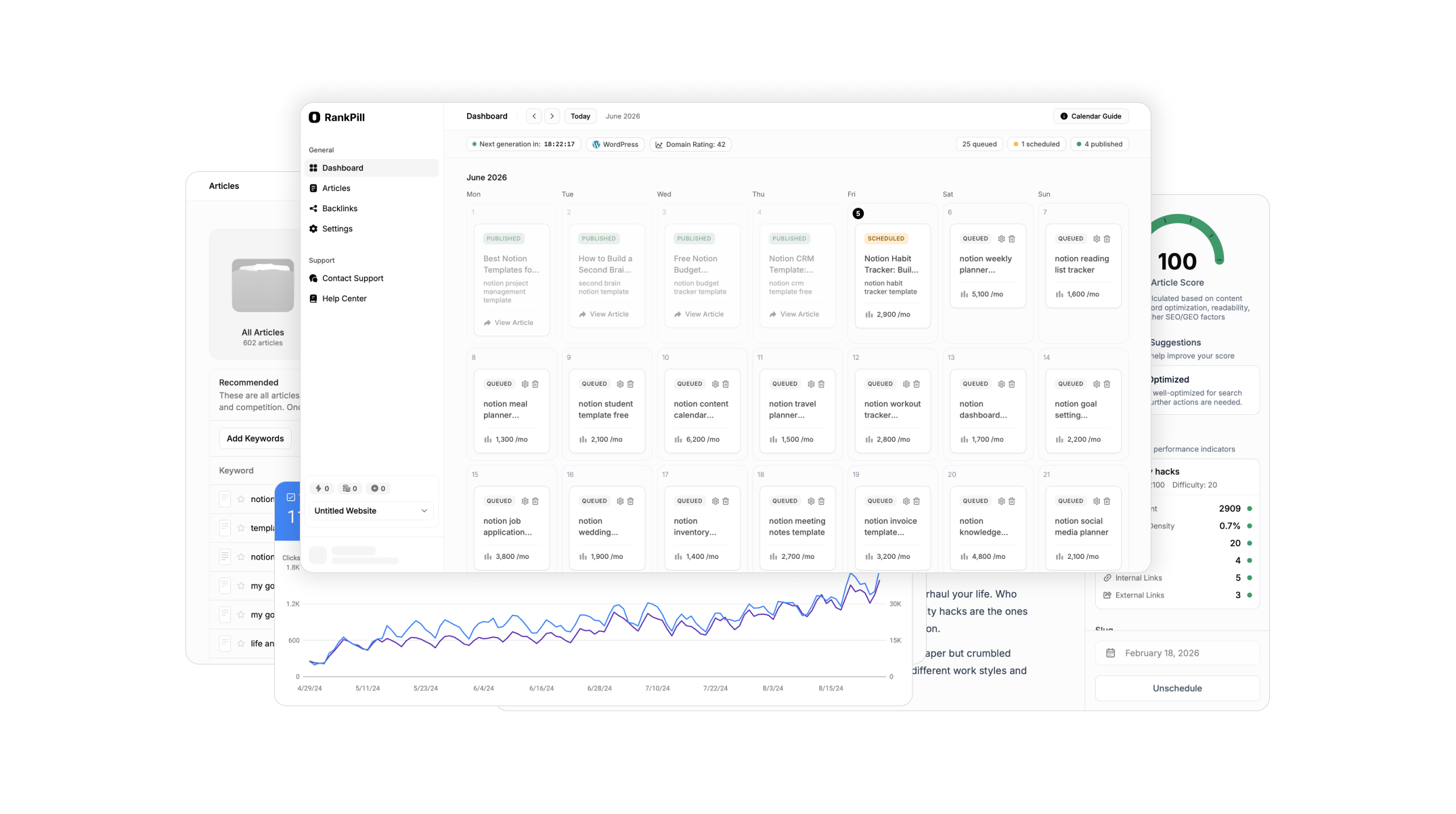
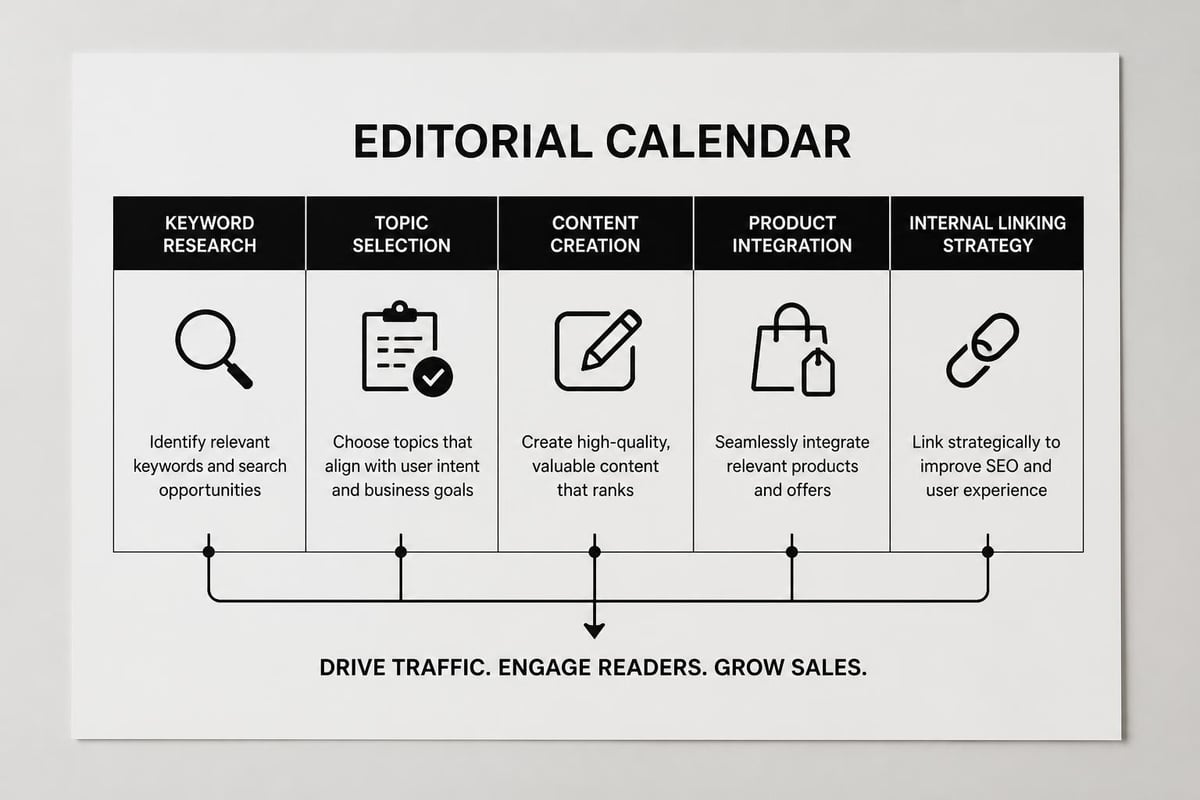
Planning content systematically prevents the feast-or-famine publishing pattern that undermines organic growth. Tools like SEO automation platforms help maintain consistent output without overwhelming small teams.
Effective content types for ecommerce include:
- Product comparison guides targeting "[Product A] vs [Product B]" searches
- Buying guides for product categories you sell
- How-to tutorials demonstrating product applications
- Industry trend analysis establishing thought leadership
- Customer success stories and case studies
Each piece should target specific keywords while linking strategically to relevant product and category pages. This internal linking structure signals topical authority to search engines while guiding readers toward conversion opportunities.
Understanding how to add keywords naturally throughout content ensures search engines recognize relevance without triggering over-optimization penalties. The goal remains creating genuinely helpful content that happens to be optimized rather than keyword-stuffed pages that provide minimal value.
Technical SEO for Online Stores
Technical foundations determine whether search engines can effectively crawl, understand, and rank your ecommerce site. Even perfectly optimized content fails when technical issues prevent proper indexing.
Site architecture should follow a logical hierarchy: homepage → category pages → subcategory pages → product pages. Limit critical pages to within three clicks from the homepage to ensure adequate crawl depth.
Handling Duplicate Content Challenges
Ecommerce sites naturally generate duplicate content through product variants, filtered URLs, and pagination. Implement canonical tags correctly to consolidate ranking signals toward your preferred versions.
For products appearing in multiple categories, specify a primary category page as the canonical URL. Use parameter handling in Google Search Console to indicate which URL parameters should be ignored during crawling.
Critical technical elements include:
- XML sitemap prioritizing product and category pages
- Robots.txt file that allows crawler access to important sections
- Structured data markup for products, breadcrumbs, and organization
- HTTPS implementation across entire site
- Mobile-first responsive design meeting Core Web Vitals thresholds
- Proper redirect chains for discontinued products
Monitor crawl errors regularly through Search Console. Address 404 errors on previously indexed URLs by either restoring content or implementing 301 redirects to relevant alternative pages.
Link Building Strategies That Scale
Backlinks remain a critical ranking factor, particularly for competitive ecommerce keywords. Quality links from relevant websites signal authority and trustworthiness to search engines.
Product-focused link building differs from standard content marketing approaches. Strategies that work effectively include digital PR campaigns around new product launches, industry roundup participation, and supplier/manufacturer relationship leveraging.
Creating Linkable Assets
Develop content specifically designed to attract natural backlinks. Industry reports with original research, comprehensive buying guides, and interactive tools provide value that other sites want to reference.
Partner with complementary businesses for mutually beneficial linking opportunities. A backlink exchange approach allows strategic partnership development while building domain authority through relevant, contextual links.
Consider these proven link acquisition tactics:
- Guest posting on industry blogs with product mentions
- Sponsoring relevant industry events or associations
- Creating shareable infographics based on product data
- Contributing expert quotes to journalist requests
- Building relationships with industry influencers for product reviews
Quality consistently outperforms quantity in link building. A single link from an authoritative industry publication delivers more ranking impact than dozens of low-quality directory listings.
Measuring and Analyzing Performance
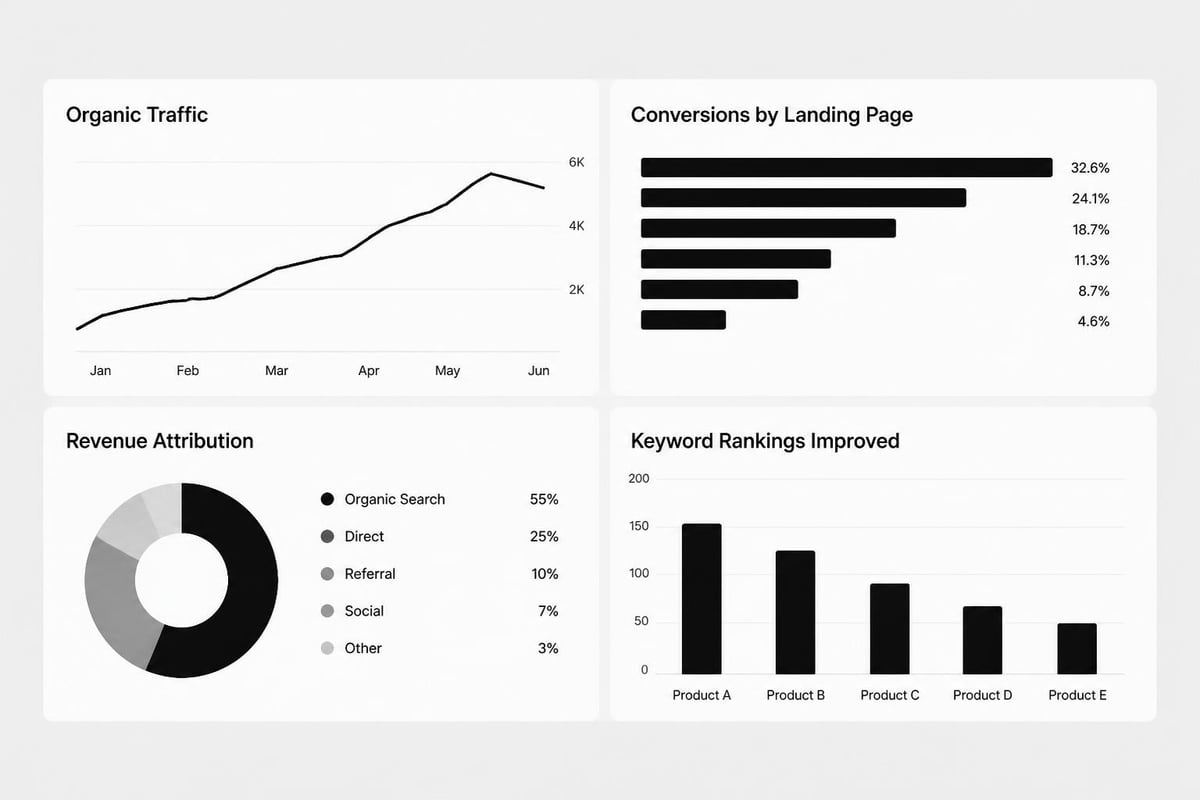
Tracking organic traffic for ecommerce requires monitoring metrics beyond simple visitor counts. Focus on measurements that directly correlate with business outcomes: revenue from organic search, conversion rate by landing page type, and keyword ranking improvements for money terms.
Google Analytics 4 provides robust tracking for ecommerce-specific metrics including product performance, checkout behavior, and attribution modeling. Set up enhanced ecommerce tracking to understand which organic landing pages drive the highest revenue per session.
Key Performance Indicators to Monitor
| Metric | What It Measures | Optimization Opportunity |
|---|---|---|
| Organic Revenue | Total sales from organic traffic | Primary business outcome |
| Landing Page Conversions | Which pages convert visitors to customers | Page optimization priority |
| Keyword Rankings | Position for target search terms | Content gap identification |
| Pages per Session | Engagement depth | Internal linking effectiveness |
| Time on Site | Content relevance and engagement | Content quality assessment |
Segment organic traffic by new versus returning visitors. New visitor behavior indicates top-of-funnel content effectiveness, while returning visitor patterns reveal brand strength and repeat purchase potential.
Compare performance across device types. Mobile-first indexing makes mobile experience critical, yet desktop visitors often convert at higher rates for certain product categories.
Advanced Tactics for Competitive Markets
Highly competitive ecommerce niches require sophisticated approaches beyond basic optimization. International expansion through multilingual SEO opens untapped markets with lower competition levels for identical products.
Voice search optimization targets conversational queries that differ from traditional typed searches. Optimize for question-based keywords and featured snippet opportunities that voice assistants frequently reference.
Leveraging User-Generated Content
Customer reviews provide fresh, keyword-rich content that search engines value. Encourage detailed reviews through post-purchase email campaigns and incentive programs that maintain authenticity.
Question-and-answer sections on product pages address specific buyer concerns while naturally incorporating long-tail keyword variations. These sections often rank for highly specific queries that product descriptions miss.
Video content increasingly influences search visibility. Product demonstration videos, unboxing content, and tutorial videos embedded on product pages improve engagement metrics while providing additional ranking opportunities through video search results.
Seasonal Optimization and Planning
Ecommerce organic traffic patterns fluctuate with seasonal demand cycles. Proactive optimization ahead of peak seasons captures maximum visibility when search volume increases.
Begin seasonal content creation 8-12 weeks before anticipated demand spikes. This lead time allows newly published pages to gain indexing, initial rankings, and link accumulation before competition intensifies.
Seasonal optimization timeline:
- 12 weeks out: Keyword research and content planning for seasonal terms
- 10 weeks out: Create and publish seasonal category pages and buying guides
- 8 weeks out: Build supporting blog content linking to seasonal pages
- 6 weeks out: Launch link building campaigns for seasonal content
- 4 weeks out: Optimize existing pages with seasonal keywords
- Peak season: Monitor and adjust based on performance data
Historical data reveals which products and categories drive organic traffic during specific periods. Analyze previous year performance to predict upcoming opportunities and allocate optimization resources accordingly.
Strategies for maintaining consistent organic traffic for ecommerce growth require adapting to search engine algorithm updates while focusing on fundamental user experience improvements. The platforms evolve, but core principles of relevance, authority, and technical excellence remain constant drivers of long-term success.
Understanding that AI and SEO work together in 2026 means optimizing for both traditional search engines and AI-powered answer engines that increasingly influence how shoppers discover products. Content that thoroughly addresses buyer questions positions your store favorably across all search interfaces.
Growing organic traffic for ecommerce demands consistent execution across technical optimization, content creation, and authority building. The compounding returns make it one of the most valuable investments for sustainable online store growth. RankPill automates the heavy lifting of keyword research, content publishing, and link building so your store captures organic visibility while you focus on product development and customer experience. Start building your organic traffic engine today with automated SEO that runs 24/7.
Unlock Traffic on Autopilot
Grow organic traffic on autopilot. RankPill will research, write, optimize, and publish articles to your website daily.