
SEO for Software Companies: A Complete 2026 Guide

Modest Mitkus
March 19, 2026
Software companies face unique challenges in the digital landscape. Unlike traditional businesses, they must explain complex technical products, target highly specific buyer personas, and compete in saturated markets where every competitor is equally tech-savvy. Mastering SEO for software companies requires a sophisticated approach that balances technical excellence with compelling content, strategic keyword targeting, and a deep understanding of the buyer's journey. In 2026, the most successful software companies aren't just optimizing for search engines-they're creating comprehensive digital experiences that convert visitors into paying customers while establishing thought leadership in their respective niches.
Understanding the Software Company SEO Landscape
SEO for software companies operates differently than traditional industries. Your potential customers are researching solutions to specific problems, comparing features across multiple platforms, and conducting extensive due diligence before making purchase decisions.
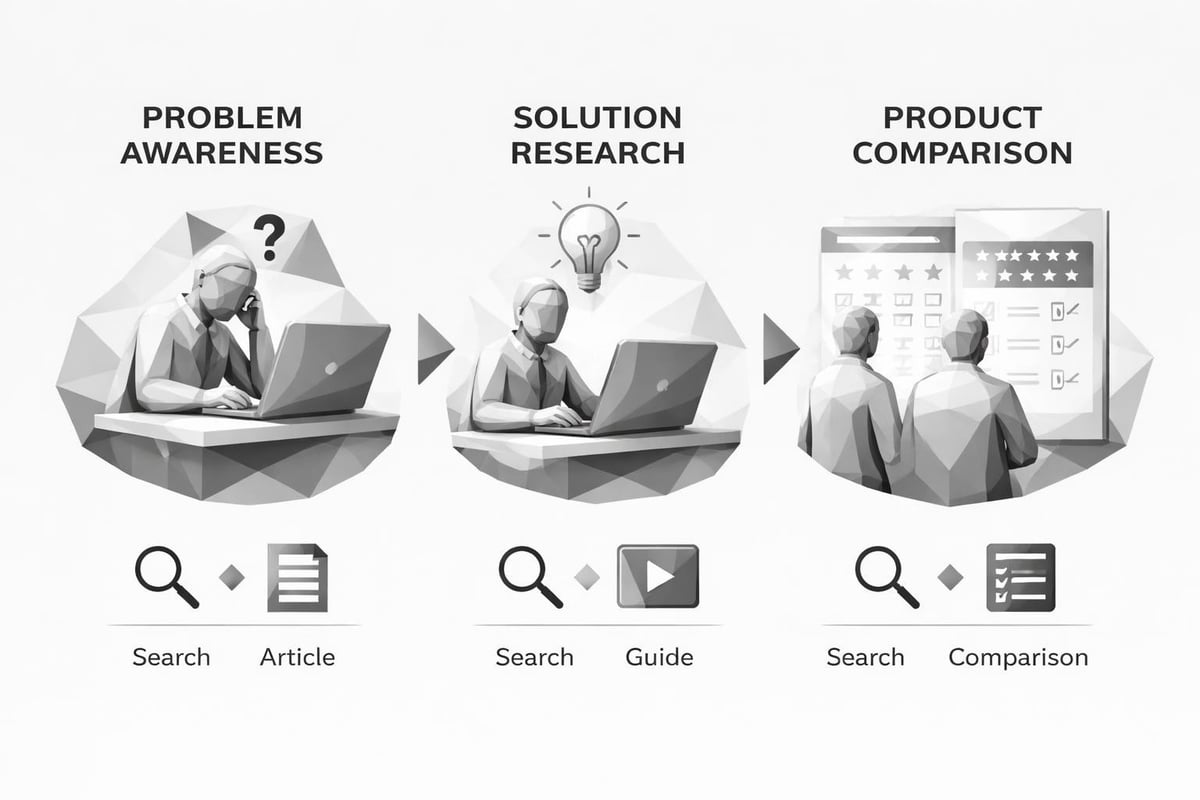
The software buying cycle typically spans weeks or months, requiring multiple touchpoints across different stages. Top-of-funnel content attracts problem-aware prospects, middle-funnel resources educate solution-aware buyers, and bottom-funnel assets convert product-aware leads. Each stage demands tailored content optimized for specific search intent.
The Technical Foundation
Technical SEO forms the bedrock of any successful software company strategy. Page speed directly impacts user experience and rankings, with Google prioritizing sites that load in under 2.5 seconds. Software companies often struggle with heavy JavaScript frameworks, dynamic rendering, and complex product configurators that slow performance.
Critical technical elements include:
- Mobile-first indexing optimization with responsive product demos
- Structured data markup for software applications and reviews
- XML sitemap management for product documentation and feature pages
- Clean URL architecture reflecting product hierarchy
- HTTPS security across all pages and subdomains
Core Web Vitals have become non-negotiable ranking factors. Largest Contentful Paint (LCP), First Input Delay (FID), and Cumulative Layout Shift (CLS) directly influence how search engines evaluate your site's quality. Many software companies lose rankings despite strong content because their product pages load slowly or shift unexpectedly during rendering.
Keyword Research for Software Products
Identifying the right keywords separates successful software SEO from wasted effort. Generic terms like "project management software" attract massive search volume but convert poorly due to intense competition and vague intent.
Long-tail keywords drive better results for software companies because they capture specific use cases and buyer intent. Instead of targeting "CRM software," successful companies optimize for "CRM for real estate teams under 10 people" or "CRM with automated lead scoring for B2B sales."
Strategic Keyword Categories
| Keyword Type | Example | Search Intent | Conversion Potential |
|---|---|---|---|
| Problem-based | "how to track customer interactions" | Informational | Low |
| Solution-based | "customer relationship management tools" | Commercial Investigation | Medium |
| Comparison | "Salesforce vs HubSpot for startups" | Commercial Evaluation | High |
| Product-specific | "[YourProduct] pricing and features" | Transactional | Very High |
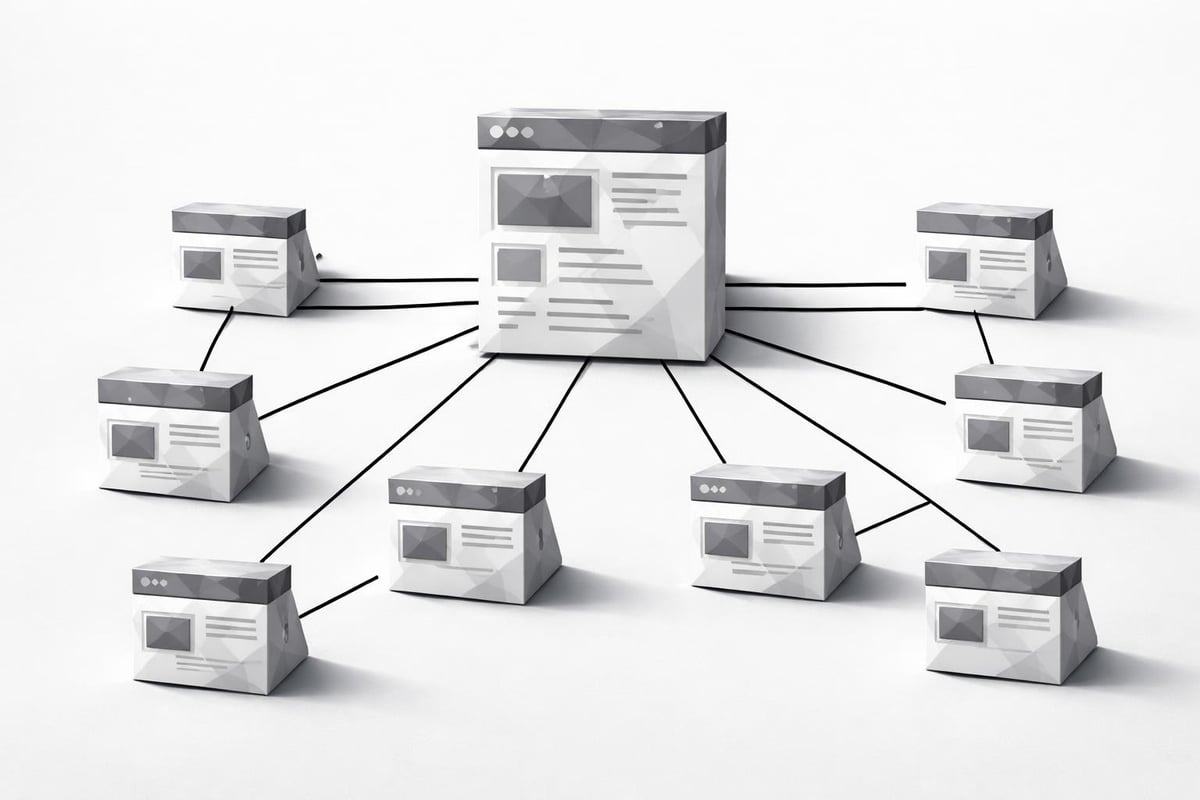
Software companies should build keyword clusters around product features, use cases, integrations, and competitor comparisons. Each cluster supports a pillar page strategy where comprehensive guides link to detailed feature pages, creating topical authority that search engines reward.
Keyword research tools reveal what prospects actually search for, which often differs dramatically from industry terminology. Your engineering team might call it "asynchronous data synchronization," but customers search for "real-time updates across devices." Bridge this gap through strategic content that uses customer language while establishing technical credibility.
Content Strategy That Converts
Creating high-quality content remains central to software company SEO. However, generic blog posts about industry trends rarely drive meaningful results. Winning content addresses specific problems, demonstrates product value, and guides prospects through decision-making.
Effective content types for software companies:
- Feature deep-dives explaining how specific functionality solves real problems
- Integration guides showing how your software works with popular tools
- Use case studies demonstrating ROI in specific industries or scenarios
- Comparison pages positioning your product against competitors honestly
- Template libraries providing downloadable resources that showcase product capabilities
The most successful software companies create content that ranks well while moving prospects toward conversion. Educational blog posts should naturally lead to product pages, free trials, or demo requests without feeling pushy or sales-heavy.
Building Topical Authority
Search engines increasingly prioritize comprehensive topical coverage over keyword stuffing. Software companies should dominate their niche by creating exhaustive resources covering every aspect of their solution category.
For example, a project management software company shouldn't just write about project management. They should publish authoritative content about agile methodologies, team collaboration, resource allocation, timeline planning, stakeholder communication, and risk management. This comprehensive approach signals expertise and relevance to search algorithms.
Best practices for SaaS SEO emphasize creating content tailored to different customer journey stages. Early-stage content builds awareness and captures informational queries, while later-stage content focuses on product-specific searches with higher commercial intent.
On-Page Optimization Techniques
Every page on your software company website should be meticulously optimized for both search engines and human visitors. Title tags, meta descriptions, header tags, and body content all require strategic keyword placement without sacrificing readability.
Software product pages present unique optimization challenges. They must explain technical functionality while remaining accessible to non-technical decision-makers. Balance detailed specifications with benefit-driven copy that resonates with business stakeholders who control purchasing decisions.
Optimizing Product Pages
Product pages should follow this structure for maximum SEO impact:
- H1 headline incorporating primary keyword and clear value proposition
- Opening paragraph explaining who the product serves and what problem it solves
- Feature sections using H2 tags for individual capabilities with descriptive subheadings
- Integration showcase highlighting compatibility with popular tools
- Social proof section including customer testimonials and case study snippets
- FAQ section addressing common questions with natural keyword variations
Internal linking between product pages, feature explanations, and related blog content creates a web of relevance that search engines recognize. Link from high-authority pages to newer content that needs ranking boosts, and ensure every page is reachable within three clicks from the homepage.
Link Building for Software Companies
Quality backlinks remain a critical ranking factor, but software companies must earn links through value creation rather than manipulative tactics. The most effective link-building strategies leverage your existing expertise and resources.
Guest posting on industry-relevant publications positions your company as a thought leader while earning authoritative backlinks. Focus on contributing genuinely useful insights to high-quality sites rather than churning out low-value content on link farms.
Effective link-building tactics for software companies:
- Publishing original research and industry surveys that attract citations
- Creating free tools or calculators that other sites naturally reference
- Developing comprehensive guides that become go-to resources in your niche
- Building relationships with industry influencers and technology journalists
- Sponsoring or participating in relevant industry events and conferences
Software review sites, comparison platforms, and technology directories provide valuable backlinks when you actively maintain accurate listings. Sites like G2, Capterra, and Software Advice not only pass link equity but also drive qualified traffic from users actively researching solutions.
Technical SEO for SaaS Platforms
Software companies operating SaaS platforms face additional technical challenges. User dashboards, application interfaces, and dynamic content require careful handling to avoid indexing issues that could harm rankings.
Technical SEO for software products demands attention to crawlable architecture, proper use of robots.txt, and strategic implementation of canonical tags. Many SaaS companies accidentally allow search engines to index customer portals or generate thousands of duplicate pages through filtering and sorting functions.
Managing Dynamic Content
JavaScript-heavy applications can pose indexing challenges if search engines can't properly render content. Implement server-side rendering or dynamic rendering to ensure critical content is accessible to crawlers. Test rendering using Google Search Console's URL Inspection tool to verify that search engines see your intended content.
Pagination and filtering on product catalogs or documentation sites require careful implementation:
| Challenge | Solution | SEO Impact |
|---|---|---|
| Duplicate content from filters | Canonical tags pointing to main category | Prevents dilution |
| Infinite scroll breaking crawls | Implement "Load More" with paginated URLs | Ensures full indexing |
| JavaScript-rendered content | Server-side rendering for critical pages | Improves crawlability |
| Session-based URLs | Clean, static URLs with proper parameters | Better indexing |
Competitor Analysis and Positioning
Understanding competitor SEO strategies reveals opportunities and gaps in your own approach. Analyze which keywords competitors rank for, what content they produce, and where they earn backlinks to identify strategic advantages.
Many software companies discover that competitors dominate certain keyword spaces while completely ignoring others. These gaps represent low-hanging fruit where you can establish authority before competition intensifies. Analyzing competitor keywords helps identify these opportunities and inform content strategy.
Differentiation Through Content
Avoiding generic messaging separates successful software SEO from mediocre efforts. Instead of creating another generic "10 Tips for Better Productivity" post, focus on specific insights that only your company can provide based on customer data, product capabilities, or technical expertise.
Position your content to address questions competitors ignore or answer superficially. Deep technical explanations appeal to implementation teams, while ROI calculators and business case templates attract executive decision-makers. Cover both angles comprehensively to capture the full buying committee.
Local SEO for Software Companies
Even if your software sells globally, local SEO matters for companies with physical offices or those targeting specific geographic markets. Local visibility helps attract talent, build partnerships, and establish regional credibility.
Local SEO elements for software companies:
- Optimized Google Business Profile with accurate company information
- Local citations on business directories and chamber of commerce sites
- Location-specific landing pages for companies serving multiple regions
- Local backlinks from regional business publications and tech communities
- Event participation and sponsorships that generate local press coverage
Software companies expanding into new markets should create location-specific content addressing regional business challenges, compliance requirements, or industry trends. This targeted approach captures local search traffic while demonstrating market understanding.

Measuring SEO Success
Tracking the right metrics separates meaningful progress from vanity metrics. Software companies should focus on measurements directly tied to business outcomes rather than superficial indicators like total traffic or keyword rankings alone.
Key Performance Indicators
| Metric | What It Measures | Why It Matters |
|---|---|---|
| Organic traffic to product pages | Qualified visitors reaching conversion points | Direct revenue impact |
| Keyword rankings for commercial intent | Visibility for high-value searches | Pipeline potential |
| Trial signups from organic | Conversion effectiveness | Marketing efficiency |
| Organic traffic from target personas | Audience quality | Fit and relevance |
| Pages per session for organic visits | Content engagement | Journey progression |
Monitor these metrics monthly while tracking year-over-year growth to account for seasonality. Effective SEO strategies for software companies require patience, as significant results typically emerge after 4-6 months of consistent effort.
Attribution modeling helps understand how organic search contributes to the customer journey. Many software purchases involve multiple touchpoints across channels, and organic search often plays an early research role before prospects convert through direct traffic or paid channels.
Automating Content Creation at Scale
Creating the volume of content required for comprehensive SEO coverage challenges most software companies. Limited resources, competing priorities, and the need for technical accuracy slow content production to a crawl.
Modern AI-powered platforms address this bottleneck by automating research, writing, and optimization while maintaining quality standards. These tools analyze competitor content, identify keyword opportunities, and generate comprehensive articles that establish topical authority without requiring extensive manual effort.
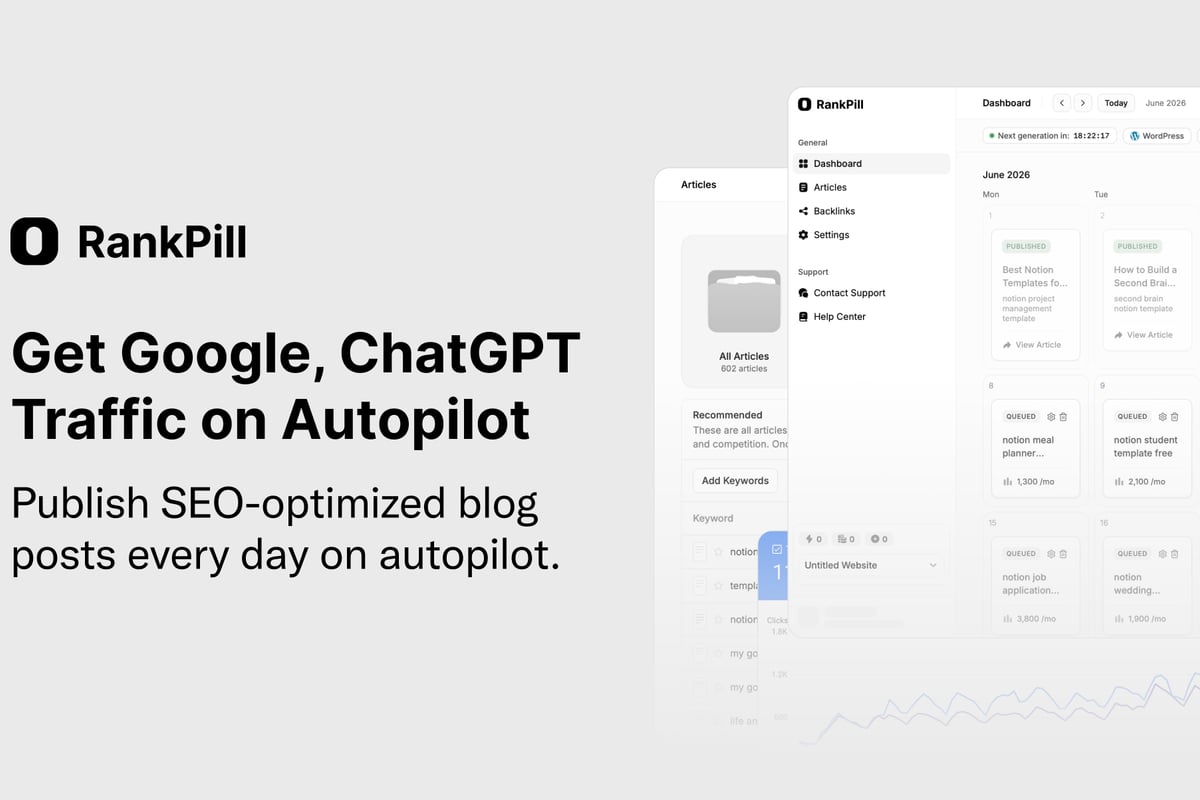
RankPill automates the entire content creation process, from keyword research through publishing, allowing software companies to maintain consistent content calendars without hiring large editorial teams. By generating optimized articles that target specific keywords and automatically incorporating relevant images and links, the platform enables small teams to compete with well-resourced competitors in search rankings.
Mobile Optimization for Software Sites
Mobile-first indexing means Google primarily uses the mobile version of your site for ranking and indexing. Optimizing for mobile devices is no longer optional-it's fundamental to SEO success.
Software companies often struggle with mobile optimization because their products feature complex interfaces, detailed specification tables, and comprehensive documentation that doesn't translate easily to small screens. Responsive design solves layout issues, but true mobile optimization requires rethinking content presentation.
Mobile optimization priorities:
- Simplified navigation with clear hierarchy and easy access to key pages
- Condensed product information with expandable sections for details
- Touch-friendly buttons and interactive elements with adequate spacing
- Fast-loading images optimized for mobile bandwidth constraints
- Readable text without requiring pinch-to-zoom
Test mobile usability regularly using real devices across different screen sizes and operating systems. Google's Mobile-Friendly Test identifies issues, but actual user testing reveals friction points that automated tools miss.
Voice Search and AI Optimization
Voice search and AI-powered answer engines are transforming how users discover software solutions. Optimizing for conversational queries and featured snippets positions your content to appear in voice search results and AI-generated responses.
Voice queries tend to be longer and more conversational than typed searches. Instead of "project management software," users ask "what's the best project management software for remote teams?" Structure content to directly answer these question-based queries with concise, authoritative responses.
Optimizing for AI search engines requires clear, structured content that AI models can easily parse and cite. Use descriptive headings, bulleted lists, and straightforward language that facilitates content extraction and attribution.
Schema Markup for Software Products
Structured data helps search engines understand your software's features, pricing, reviews, and capabilities. Implementing schema markup can trigger rich snippets in search results, increasing click-through rates and visibility.
Relevant schema types for software companies:
- SoftwareApplication schema for product pages with version, OS requirements, and pricing
- Review and AggregateRating schema for customer testimonials
- HowTo schema for tutorial content and implementation guides
- FAQ schema for common questions on product and support pages
- Organization schema for brand identity and corporate information
Rich snippets showcase pricing, ratings, and key features directly in search results, helping your listings stand out from competitors. While schema doesn't directly influence rankings, the increased click-through rate from enhanced listings can indirectly boost performance through improved user signals.
Content Calendar and Consistency
Consistent publishing drives traffic growth by regularly adding fresh content that targets new keywords while reinforcing topical authority. Software companies should maintain editorial calendars that balance evergreen content with timely industry commentary.
Plan content around product releases, industry events, seasonal trends, and customer pain points. A strategic calendar ensures comprehensive topic coverage while avoiding redundant content that competes with itself for rankings.
Monthly content planning framework:
- 2-3 pillar articles establishing thought leadership on core topics
- 4-6 feature-specific posts targeting mid-funnel keywords
- 2-3 comparison or alternative pages capturing bottom-funnel searches
- 1-2 data-driven pieces showcasing original research or insights
- Ongoing updates to existing content based on performance data
Publishing frequency matters less than consistency and quality. A weekly schedule sustained over time outperforms sporadic bursts of daily posts followed by long silences. Set realistic publishing goals aligned with available resources and maintain them month over month.
International SEO Considerations
Software companies serving global markets must address international SEO through proper site structure, language targeting, and regional content strategies. Hreflang tags signal to search engines which language versions to show users in different countries.
Consider whether to use country-specific domains (.co.uk, .de), subdomains (uk.yoursite.com), or subdirectories (yoursite.com/uk/) for international content. Each approach has SEO implications regarding authority distribution and management complexity.
Translate more than just words-adapt content to regional business practices, compliance requirements, and cultural preferences. A software solution marketed to German enterprises requires different messaging than the same product pitched to American startups, even when both audiences speak English.
Successful SEO for software companies in 2026 requires balancing technical excellence with strategic content creation, comprehensive keyword targeting, and continuous optimization based on performance data. By implementing these strategies systematically and maintaining consistency over time, software companies can build sustainable organic traffic that drives qualified leads and reduces customer acquisition costs. RankPill streamlines this entire process through AI-powered automation that researches keywords, creates optimized content, and publishes consistently-allowing your team to focus on product development while your organic presence grows on autopilot.