
AI Powered Content Creation Tools for SEO in 2026

Modest Mitkus · October 29, 2026
AI powered content creation tools promised to solve the SEO content bottleneck. Some delivered. Most created new problems. By 2026, the market split into two camps: tools that generate generic filler and tools that actually help you rank. The difference comes down to how much they understand search intent, how well they cite sources, and whether they integrate into your publishing workflow. This article walks through what separates useful AI content tools from expensive content spinners, which features matter for SEO, and what founders and small teams should look for when choosing one.
What AI Powered Content Creation Tools Actually Do
Most ai powered content creation tools follow the same basic process. They take a keyword or topic, pull data from the live search results, build an outline, and write a draft. The better ones add internal links, external citations, and images. The best ones publish directly to your site and track performance.
The workflow usually looks like this:
- Keyword input: you enter a target keyword or upload a list
- Research phase: the tool scrapes top-ranking pages for that keyword
- Outline generation: it builds headings based on what currently ranks
- Content writing: it drafts paragraphs under each heading
- Optimization: it adds meta tags, links, and images
- Publishing: it pushes the finished article to your CMS
Some tools stop at step four and hand you a Google Doc. Others automate the entire pipeline and publish daily without you touching anything.
The core trade-off is control versus speed. Manual editing gives you full control but limits how many articles you can publish. Full automation scales infinitely but requires trust in the tool's quality. Most teams land somewhere in the middle: they automate research and first drafts, then edit before publishing.

Why Most AI Content Fails at SEO
Google's guidance on generative AI content is clear: quality and helpfulness matter, not how the content was created. But most AI content fails the helpfulness test. Google's Search Central documentation warns against scaled, low-value AI content that doesn't serve users.
Here's what goes wrong:
- No original research or data: the tool summarizes existing content without adding new insight
- Generic structure: every article follows the same template regardless of search intent
- Weak sources: citations link to low-authority sites or don't match the claim
- No internal linking: the article doesn't connect to related content on your site
- Keyword stuffing: the tool forces keywords into every paragraph to hit arbitrary density targets
The result is content that reads like a summary of summaries. It technically covers the topic but doesn't answer the specific question the searcher asked. Google's algorithms caught up to this pattern in late 2024 and 2025, and rankings for generic AI content dropped across most verticals.
The fix isn't to avoid AI. It's to use tools that prioritize search intent over word count, cite real sources, and integrate into your existing content strategy. That means checking whether the tool analyzes live SERP data, validates links before inserting them, and lets you customize brand voice and instructions.
Features That Separate Good Tools from Content Spinners
Not all ai powered content creation tools are built the same. The gap between a useful tool and an expensive spinner comes down to six features.
| Feature | Why It Matters | What to Look For |
|---|---|---|
| SERP Analysis | Matches search intent instead of guessing | Scrapes live top-10 results, not cached data |
| Citation Quality | Builds trust and avoids misinformation | Links to authoritative sources with context |
| Internal Linking | Distributes page authority and keeps users on site | Scans your existing content and suggests relevant links |
| Brand Voice | Sounds like your team, not a generic bot | Lets you upload style guides or sample content |
| Publishing Integration | Removes manual copy-paste steps | Direct API connections to WordPress, Shopify, Webflow, Wix, Framer |
| Performance Tracking | Shows what's working so you can iterate | Monitors rankings, traffic, and indexing status |
Tools that skip SERP analysis write articles in a vacuum. They guess what should be included instead of checking what already ranks. That leads to mismatched content: you get an introductory guide when searchers want a comparison, or a listicle when they need a how-to.
Citation quality is harder to spot until you read the finished article. Poor tools insert links without checking whether the source actually supports the claim. Good tools validate URLs, check domain authority, and summarize the linked content so you can verify relevance before publishing.
Internal linking separates SEO-focused tools from general writing assistants. If the tool doesn't scan your existing content and suggest relevant links, you're leaving authority on the table. Every new article should connect to at least three related pages on your site. Building those internal connections distributes link equity and helps users discover related content.
SERP Analysis and Search Intent Matching
The best AI content tools don't write in isolation. They study what currently ranks for your target keyword, analyze the common elements, and build an outline that matches intent.
Search intent falls into four categories:
- Informational: the user wants to learn something (how does X work?)
- Navigational: the user wants to find a specific page or brand
- Transactional: the user wants to buy or sign up
- Commercial investigation: the user is comparing options before buying
Most ai powered content creation tools default to informational content because it's easiest to generate. But if your keyword has transactional intent and you publish a 3,000-word explainer, you won't rank. The tool needs to detect intent from the SERP and structure the article accordingly.
Transactional keywords need product details, pricing, comparisons, and clear calls to action. Commercial investigation keywords need side-by-side tables, pros and cons, and use cases. Informational keywords need definitions, step-by-step guides, and cited sources.
Check whether the tool shows you which intent it detected and lets you override it. Automatic detection works most of the time, but some keywords have mixed intent and need manual adjustment.
Integration with Your Publishing Workflow
AI content only helps if it reaches your site. Tools that export to Google Docs or require manual copy-pasting add friction and slow down your publishing cadence. The best tools publish directly to your CMS via API or webhook.
Here's what seamless publishing looks like:
- The tool queues an article based on your content calendar
- It writes the draft, adds images and links, and generates meta tags
- You review it in the built-in editor or approve it for auto-publishing
- It pushes the article live with the correct publish date, categories, and featured image
- It tracks indexing status and notifies you when Google picks it up
This workflow eliminates the copy-paste loop and lets you scale to daily publishing without hiring a writer or VA. You still control what goes live, but the tool handles formatting, image uploads, and scheduling.
Most modern CMS platforms offer API access. WordPress has the REST API, Shopify has the Admin API, Webflow has webhooks, and Wix supports external integrations. If your tool doesn't support direct publishing, you're stuck with manual exports and imports.
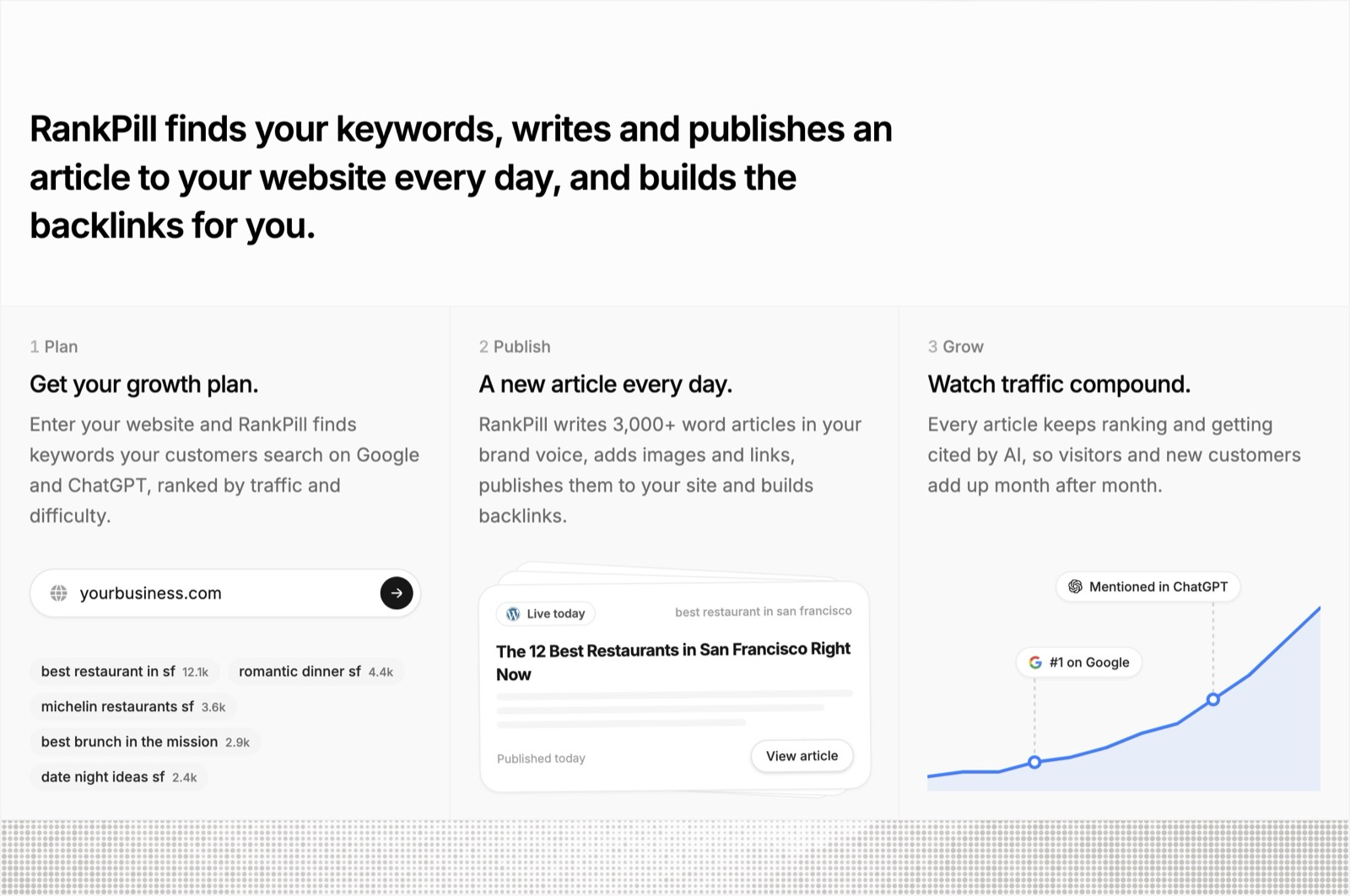
Auto-publishing works best when you trust the tool's quality. Start by reviewing every article manually for the first month. Once you're confident in the output, you can approve articles in batches or let the tool publish on a schedule. SEO automation platforms are built for this workflow: they research keywords, write articles, and publish daily without manual intervention.

How to Evaluate Output Quality Before Committing
Every ai powered content creation tool offers a free trial or demo. Use it to run real tests before paying for a subscription. Here's a quality checklist to run through during your trial.
Run These Tests
- Pick three keywords with different intent: one informational, one commercial, one transactional
- Generate articles for all three: check whether the structure matches intent
- Verify citations: open five external links and confirm they support the claims
- Check internal links: see if the tool found relevant pages on your site
- Read the intro and conclusion: do they sound like your brand or generic AI?
- Review the meta description: does it summarize the article or repeat the keyword?
If the tool passes all six tests, it's worth keeping. If it fails on citations or internal links, move on. Those are core SEO features, not nice-to-haves.
Pay attention to how the tool handles edge cases. What happens if the keyword has low search volume or no SERP data? Does it refuse to write, or does it generate a generic article anyway? Good tools adapt. Bad tools churn out filler.
Also test the editing workflow. Can you rewrite sections without starting over? Can you add custom instructions like "include a table in every article" or "avoid passive voice"? The more flexible the tool, the better it fits into your existing process.
Pricing Models and What You Actually Get
AI content tools use three pricing models: per-article, per-word, or flat monthly subscription. Each model has trade-offs.
| Pricing Model | Best For | Watch Out For |
|---|---|---|
| Per-Article | Low-volume publishers, agencies testing niches | Costs spike if you scale; no incentive to optimize |
| Per-Word | Teams with unpredictable volume | Hard to budget; encourages longer articles than needed |
| Flat Subscription | Daily or weekly publishing schedules | Unused articles don't roll over; need consistent volume |
Flat subscriptions make the most sense for SEO. You know exactly what you'll spend each month, and the tool incentivizes quality over length. Per-word pricing pushes tools to write longer articles whether they need to be long or not.
Most tools charge between $50 and $200 per month for 10 to 30 articles. Add-ons like backlink building, multilingual content, or premium integrations cost extra. Compare pricing tiers carefully and check what's included in the base plan versus paid add-ons.
Watch for hidden costs. Some tools charge separately for images, for publishing to multiple sites, or for team seats. Others include everything in one price. The all-in-one model is cleaner and easier to budget.
Backlinks and Off-Page SEO
Content alone doesn't rank. You need backlinks. Some ai powered content creation tools now include backlink building as part of their platform. They either automate outreach, run link exchanges, or build links through content syndication.
Link exchanges work like this: you publish an article on your site with a link to another site in the network, and they publish an article linking back to you. The tool matches sites by niche, traffic, and spam score to keep links relevant and safe.
This approach is faster than cold outreach and safer than buying links from link farms. You control which sites you link to, and every link is earned through reciprocal content. Backlink exchanges filter by Domain Rating so you're not wasting credits on low-authority sites.
Earned links matter more in 2026 than they did five years ago. Google's algorithms prioritize natural link profiles over manufactured ones. A few high-quality, relevant links beat dozens of spammy directory submissions.
If your AI content tool doesn't include backlink building, you'll need a separate outreach tool or agency. That adds cost and complexity. Tools that bundle content creation, publishing, and link building into one platform simplify the workflow and reduce the number of logins you need to manage.

Common Pitfalls and How to Avoid Them
Even good tools produce bad results if you misuse them. Here are the most common mistakes and how to fix them.
Publishing without editing: AI drafts are starting points, not finished products. Always review for accuracy, tone, and relevance. Budget at least 10 minutes per article for a quick edit.
Ignoring analytics: if you publish daily but never check rankings or traffic, you're flying blind. Set up Google Search Console and track which articles drive clicks. Double down on what works.
Targeting impossible keywords: AI can't beat domain authority. If you're a new site targeting keywords dominated by Forbes and HubSpot, you'll waste credits. Start with long-tail keywords and low competition.
Skipping brand voice setup: generic AI content sounds generic. Upload sample articles or style guides so the tool learns your voice. The more context you give, the better the output.
Over-optimizing for keywords: keyword density targets are outdated. Write for humans first, search engines second. If the article sounds awkward because you forced the keyword in, rewrite it.
The other common mistake is treating AI content as free. It's not. You're trading money for time. If the tool saves you 20 hours a month but produces content that doesn't rank, you didn't save anything. Choosing the right AI content approach means balancing cost, quality, and publishing velocity.
Legal and Ethical Considerations in 2026
Using ai powered content creation tools raises questions about copyright, disclosure, and originality. The legal landscape is still forming, but here's where things stand in 2026.
Copyright: AI-generated content is not automatically copyrightable in the U.S. unless a human made substantial creative contributions. The U.S. Copyright Office requires human authorship for protection. That means editing and structuring the article yourself, not just hitting "generate."
Disclosure: Google doesn't require you to disclose that content was AI-generated, but some publishers choose to for transparency. The decision depends on your brand and audience expectations.
Training data: most AI models were trained on copyrighted content. Legal challenges are ongoing. Using the tool doesn't make you liable, but be aware that the training data issue is unresolved and may affect future regulations.
Plagiarism and originality: AI tools sometimes reproduce passages from their training data. Run every article through a plagiarism checker before publishing. If large sections match existing content, rewrite them.
Harvard Business Review's analysis of AI in marketing strategy recommends treating AI as a co-pilot, not a replacement. You stay responsible for accuracy, tone, and legal compliance. The tool speeds up drafting but doesn't absolve you of editorial oversight.
What to Look for in 2026 and Beyond
The AI content market is moving fast. Features that were cutting-edge in 2024 are table stakes in 2026. Here's what separates the next generation of tools from legacy platforms.
Emerging Features
- Multimodal content: tools that generate video scripts, social posts, and long-form articles from the same keyword
- Real-time SERP updates: tools that re-optimize articles automatically when rankings drop
- AI-powered A/B testing: tools that publish two versions of an article and promote the one that ranks better
- Voice and brand consistency scoring: tools that measure how well each article matches your style guide
- ChatGPT optimization: tools that track whether your content appears in AI-generated answers, not just Google
Research from Stanford's Center for Research on Foundation Models shows that AI content quality improves when the model receives more context about the publisher's goals, audience, and existing content. Tools that let you upload past articles and train on your brand voice produce better results than generic one-size-fits-all platforms.
Also watch for watermarking and detection. Recent research on robust watermarking for language models shows that AI-generated content can be reliably tagged without degrading quality. Some tools may start including watermarks for transparency or compliance. That won't affect SEO but could matter for disclosure policies.
Choosing the Right Tool for Your Team
The best ai powered content creation tool depends on your publishing volume, budget, and SEO maturity. Here's a decision framework.
If you publish 1-5 articles per month: use a tool with per-article pricing or a low-tier subscription. You don't need automation. Focus on citation quality and editorial control.
If you publish daily or weekly: use a flat subscription with auto-publishing. The time saved on formatting and uploading justifies the cost. Look for tools that integrate with your CMS and include backlink building.
If you're an agency managing multiple clients: use a white-label platform or a tool with team seats and project switching. You need client-specific brand voices and separate content calendars.
If you're in a regulated industry (finance, health, legal): use a tool that lets you review and edit before publishing. Accuracy matters more than speed. Avoid full automation until you've verified output quality over several months.
Start with a 30-day trial. Publish 10 articles and track their performance for 60 days. If they rank and drive traffic, keep the tool. If they don't, switch. The trial period is long enough to see early ranking signals but short enough that you haven't wasted months on bad content.
Also consider whether the tool offers a refund policy. Some platforms guarantee traffic growth within 90 days or refund your money. That reduces risk and shows the vendor is confident in their product.
Measuring ROI and Success Metrics
Publishing content is easy. Measuring whether it works is harder. Track these metrics to evaluate your ai powered content creation tool.
Organic traffic growth: compare visitors from Google month-over-month. Use Google Analytics with UTM parameters to separate organic from paid and social.
Keyword rankings: track positions for your target keywords weekly. Tools like Google Search Console show average position and click-through rate for each query.
Indexed pages: check how many of your published articles Google has indexed. If the tool publishes daily but Google only indexes 50% of articles, something is wrong.
Backlinks earned: measure how many external sites link to your AI-generated content. If no one links to it, the content may not be providing unique value.
Time to first ranking: track how long it takes new articles to appear in the top 100 results. Faster indexing and ranking means better content quality and site authority.
Set benchmarks before you start. If you currently publish three articles per month and get 500 organic visitors, aim for 1,500 visitors after three months of daily publishing. Adjust based on your niche and competition.
Don't expect instant results. SEO takes 60 to 90 days to show impact. Content automation platforms typically show ranking movement in month two and traffic growth in month three.
AI powered content creation tools work when they match search intent, cite real sources, and integrate into your workflow. The best tools automate research, drafting, and publishing while letting you control quality and brand voice. If you're ready to scale content without hiring a team, RankPill publishes one 3,000-word SEO article to your site every day, finds keywords you can rank for, and builds backlinks through its exchange. Built for founders and small teams who want traffic from Google without managing writers or agencies.
Unlock Traffic on Autopilot
Grow organic traffic on autopilot. RankPill will research, write, optimize, and publish articles to your website daily.
 WordPress