
AI Search Strategy: Optimize for AI-Powered Search in 2026

Modest Mitkus
March 31, 2026
The digital landscape has undergone a seismic shift as artificial intelligence reshapes how users discover content online. Traditional search engines have evolved into sophisticated AI-powered platforms that understand context, intent, and user preferences with unprecedented accuracy. Developing an effective ai search strategy is no longer optional for businesses seeking to maintain competitive visibility in 2026. This comprehensive guide explores how to adapt your content approach, optimize for AI-driven search algorithms, and position your brand for success in an era where machine learning dictates search results.
Understanding the AI Search Revolution
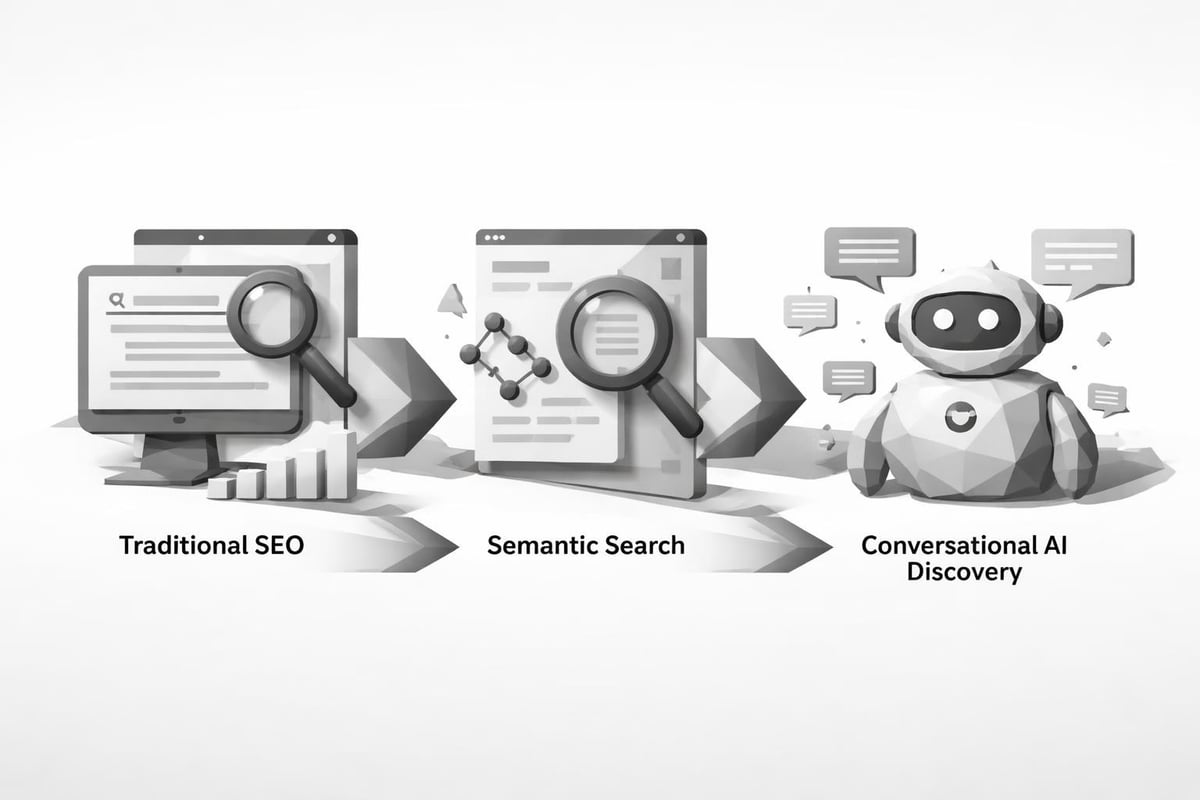
Search technology has transformed dramatically over the past few years. Modern search engines leverage natural language processing, machine learning models, and semantic analysis to deliver results that align precisely with user intent. Google's AI Mode is changing how users interact with search, introducing conversational queries and context-aware responses that demand a new content optimization approach.
AI-powered search platforms like ChatGPT, Google Gemini, and Perplexity AI have introduced a paradigm shift in information discovery. These systems don't just match keywords-they comprehend complex questions, synthesize information from multiple sources, and generate comprehensive answers. Your ai search strategy must account for these intelligent systems that prioritize content quality, relevance, and authority over traditional ranking signals.
The implications extend beyond algorithm updates. Users now expect immediate, accurate, and contextually appropriate answers. They're moving away from scrolling through ten blue links and toward interactive dialogues with AI assistants. This behavioral shift requires businesses to fundamentally rethink content creation and optimization.
Core Components of an Effective AI Search Strategy
Semantic Content Structure
AI algorithms excel at understanding relationships between concepts, entities, and topics. Your content must reflect this semantic sophistication through comprehensive topic coverage and logical information architecture. Rather than targeting isolated keywords, develop content clusters that address user intent holistically.
Key elements of semantic optimization include:
- Topic modeling that covers primary concepts and related subtopics
- Entity recognition through proper nouns, brands, and industry terminology
- Contextual relationships that connect ideas logically
- Natural language patterns that mirror how users actually speak
Structure your content to answer both explicit questions and implied follow-up queries. AI systems analyze content depth and breadth, rewarding comprehensive resources that eliminate the need for multiple searches. HubSpot's AI search strategy guide emphasizes the importance of clarity and structured data in helping AI systems parse and recommend your content.
Data Formatting and Schema Markup
Machine-readable data serves as the foundation for AI discoverability. Implement structured data markup to help AI systems understand your content's purpose, organization, and key information points. Schema.org vocabulary provides standardized formats that AI platforms recognize and prioritize.
| Schema Type | Purpose | AI Search Benefit |
|---|---|---|
| Article | Defines blog posts and news content | Helps AI extract publication date, author, headline |
| FAQ | Marks question-answer pairs | Enables direct answers in AI responses |
| HowTo | Outlines step-by-step instructions | AI can summarize processes accurately |
| Product | Describes offerings with specs | Facilitates product recommendations |
| Organization | Details business information | Builds entity recognition and authority |
Beyond schema markup, maintain consistent formatting throughout your content. Use clear headings, bullet points, and tables to create scannable structures that AI algorithms can efficiently process. Understanding how AI search algorithms work helps you recognize why well-structured content performs better in AI-driven search results.
Authority and Trust Signals
AI systems evaluate content credibility through multiple trust indicators. Building authority requires demonstrating expertise, establishing authoritativeness, and maintaining trustworthiness-principles commonly known as E-A-T. These factors influence whether AI platforms recommend your content in response to user queries.
Strengthen your authority profile through:
- Author credentials - Display expertise through detailed author bios, credentials, and track records
- Citation practices - Reference authoritative sources and link to reputable research
- Fact verification - Ensure accuracy in all claims and update outdated information promptly
- User engagement - Foster genuine interactions, reviews, and community participation
- Brand mentions - Build recognition through consistent presence across platforms
AI platforms increasingly reference established brands and recognized experts when generating answers. Investing in thought leadership and brand visibility pays dividends in AI search performance.
Optimizing Content for AI Discovery
Conversational Query Optimization
The rise of voice search and AI assistants has shifted query patterns toward natural language. Users ask complete questions rather than typing fragmented keywords. Your ai search strategy must anticipate these conversational queries and provide direct, comprehensive answers.
Analyze common questions in your industry and create content that addresses them explicitly. Use question-based headings and provide immediate answers before elaborating with context and detail. This approach aligns with how AI systems extract information for featured snippets and voice responses.
Consider the difference between traditional and conversational optimization:
Traditional: "best AI SEO tools"
Conversational: "What are the most effective AI-powered SEO tools for small businesses in 2026?"
Your content should satisfy both query types while prioritizing the conversational format that AI platforms favor. Optimizing for AI SEO requires understanding these nuanced differences in user behavior and search patterns.
Content Depth and Comprehensiveness
AI algorithms reward thorough coverage that eliminates the need for additional searches. Superficial content that merely scratches the surface of a topic won't achieve AI search visibility. Develop comprehensive resources that explore topics from multiple angles, address potential objections, and provide actionable insights.
Aim for content that functions as a definitive resource. This means:
- Covering related subtopics within the main subject
- Anticipating follow-up questions and addressing them proactively
- Including diverse content types (text, data, examples, case studies)
- Updating regularly to maintain accuracy and relevance
The most effective AI SEO platforms recognize that content depth directly correlates with AI search performance. Tools that generate comprehensive, well-researched articles provide significant advantages in this competitive landscape.

Measuring AI Search Strategy Performance
Essential KPIs for AI Search Success
Traditional SEO metrics remain relevant, but AI search strategy requires additional performance indicators. Tracking AI search strategy KPIs helps you understand how AI platforms interact with and recommend your content.
Primary metrics to monitor:
- AI platform visibility - Track mentions and citations in ChatGPT, Gemini, and similar platforms
- Zero-click search performance - Measure how often your content appears in direct answers
- Featured snippet acquisition - Monitor snippet ownership across target queries
- Semantic ranking - Evaluate rankings for topic clusters, not just individual keywords
- Brand mention velocity - Track the frequency of your brand appearing in AI-generated responses
These metrics provide insights into AI search performance that traditional rankings don't capture. Use specialized monitoring tools to track AI platform citations and adjust your strategy based on actual AI behavior.
Attribution and Traffic Analysis
AI search introduces complexity to traffic attribution. Users may discover your brand through AI platform recommendations without clicking through immediately. They might research your company name after receiving an AI recommendation, creating indirect traffic patterns.
Implement comprehensive tracking that captures:
- Direct traffic spikes following AI feature launches
- Branded search increases after topic-related AI responses
- Referral patterns from AI platforms when attribution is available
- Engagement metrics showing content depth consumption
- Conversion paths that begin with AI-assisted discovery
Understanding these patterns helps you connect AI search strategy investments with business outcomes. The relationship between SEO and traffic becomes more nuanced when AI platforms serve as discovery intermediaries.
Advanced AI Search Techniques
Competitor Intelligence and Gap Analysis
AI search strategy demands sophisticated competitor keyword research that extends beyond traditional gap analysis. Examine how competitors appear in AI-generated responses, what topics they own, and where opportunities exist to provide superior content.
Modern platforms enable you to get competitor keywords and analyze their AI search visibility systematically. This intelligence reveals content gaps where your expertise could establish authority in AI recommendations.
Competitive analysis framework:
| Analysis Area | Traditional SEO | AI Search Strategy |
|---|---|---|
| Keyword targets | Individual keyword rankings | Topic cluster ownership |
| Content gaps | Missing keywords | Unanswered user questions |
| Backlink profile | Link quantity and quality | Authority network strength |
| SERP features | Snippet and featured position | AI platform citation frequency |
| User intent | Search query analysis | Conversational query patterns |
This expanded analysis provides the strategic insights needed to outperform competitors in AI-driven search environments.
Multi-Platform Optimization
Your ai search strategy must address multiple AI platforms simultaneously. Different systems prioritize different content characteristics, requiring adaptable optimization approaches. While Google's AI focuses on traditional authority signals, ChatGPT emphasizes recency and comprehensiveness, and Perplexity AI weights citation networks heavily.
Develop platform-specific content variations where appropriate, but maintain core quality standards across all formats. The fundamentals of accurate, comprehensive, well-structured content apply universally. Platform-specific optimization should enhance rather than replace these basics.
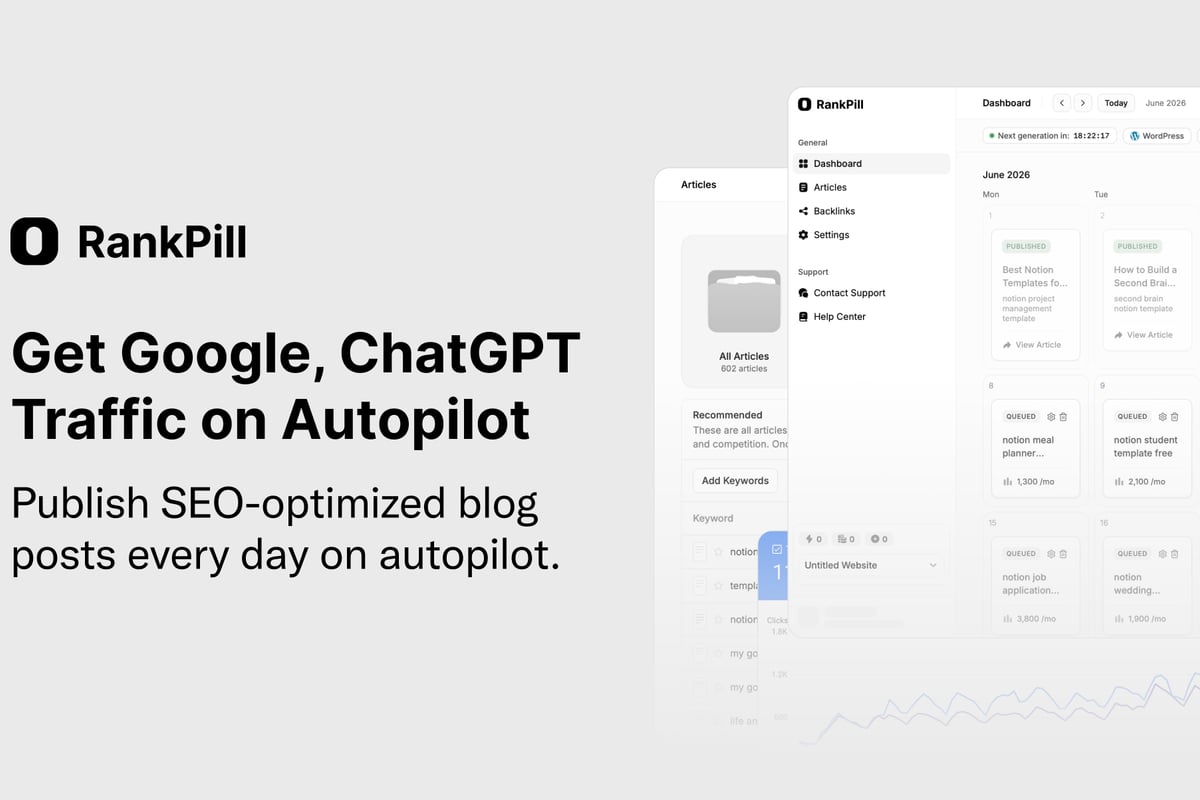
RankPill automates much of this multi-platform optimization by generating content that satisfies both traditional search engines and AI platforms. With features like automatic keyword research, comprehensive 2,000+ word articles, and intelligent linking strategies, the platform helps businesses maintain consistent visibility across diverse search environments-all for just $99 monthly for 30 articles compared to thousands spent on agency services.
Content Freshness and Update Strategies
AI platforms increasingly prioritize recent information, particularly for time-sensitive topics. Implement systematic content review and update protocols to maintain accuracy and relevance. Google and AI content guidelines emphasize freshness as a critical quality signal.
Establish update schedules based on content type:
- Time-sensitive content - Review monthly, update as industry changes occur
- Evergreen resources - Audit quarterly, refresh data and examples annually
- Technical guides - Monitor for product changes, update immediately when relevant
- Statistical content - Replace outdated data as new research becomes available
Implement "last updated" timestamps and change logs to signal content freshness to both users and AI systems. This transparency builds trust while demonstrating your commitment to accuracy.
Creating AI-Friendly Content at Scale
Automation Without Sacrificing Quality
Producing enough high-quality content to compete in AI search presents significant resource challenges. Strategic automation enables scale while maintaining the depth and accuracy AI platforms demand. SEO automation tools have evolved to handle research, drafting, and optimization tasks that previously required extensive manual effort.
The key is selective automation that enhances rather than replaces human expertise. Automate research aggregation, outline development, and initial draft creation while maintaining human oversight for accuracy verification, brand voice alignment, and strategic positioning.
Modern automated SEO solutions can handle the heavy lifting of content production while you focus on strategic decisions and quality control. This division of labor maximizes efficiency without compromising the content quality that AI search strategy requires.
Balancing AI Detection Concerns
A common question businesses face is can Google detect AI SEO content, and does it matter? The reality is more nuanced than simple detection. Search engines and AI platforms prioritize content quality, accuracy, and usefulness over production method.
Focus on these quality indicators rather than detection avoidance:
- Factual accuracy verified through authoritative sources
- Original insights and perspectives unique to your brand
- Comprehensive coverage that addresses user needs thoroughly
- Natural language that flows logically and engages readers
- Regular updates that maintain accuracy and relevance
AI-assisted content creation tools have matured significantly. When properly implemented, they produce content indistinguishable from human writing in quality while dramatically reducing production time and costs. The emphasis should be on maintaining editorial standards regardless of production method.

Building Long-Term AI Search Visibility
Topical Authority Development
AI platforms increasingly organize information around topic clusters and entity relationships. Building topical authority requires systematic coverage of your industry's core concepts, creating interconnected content that demonstrates comprehensive expertise.
Authority building roadmap:
- Core pillar content - Develop comprehensive guides on primary industry topics
- Supporting cluster content - Create detailed articles on related subtopics
- Internal linking strategy - Connect related content to reinforce topical relationships
- External validation - Earn mentions and links from authoritative industry sources
- Consistent publishing - Maintain regular content production to expand topic coverage
This structured approach signals expertise to AI algorithms while creating the comprehensive resource library users seek. The investment in topical authority pays dividends across all search platforms, traditional and AI-powered alike.
Strategic Keyword Integration
While AI search transcends traditional keyword matching, strategic keyword use remains valuable for establishing topical relevance. The approach shifts from keyword density to semantic integration where terms appear naturally within comprehensive topic coverage.
Identify core concepts and related terms that define your expertise. Integrate them organically throughout content without forcing unnatural repetition. AI algorithms recognize semantic relationships, rewarding natural language over keyword manipulation.
Tools that help you get keywords from website analysis provide valuable competitive intelligence. Use this data to inform content strategy while maintaining focus on comprehensive user value rather than mechanical keyword targeting.
Distribution and Amplification
Creating excellent content represents only half the equation. Strategic distribution ensures AI platforms encounter and evaluate your content. While AI systems crawl the web systematically, proactive distribution accelerates discovery and builds the authority signals that influence AI recommendations.
Effective distribution channels:
- Social media platforms where your audience actively engages
- Industry forums and communities discussing relevant topics
- Email newsletters that drive direct engagement
- Content syndication to reputable industry publications
- Podcast appearances and multimedia content repurposing
Each distribution channel creates additional signals that validate your expertise and authority. AI platforms incorporate social signals, brand mentions, and engagement metrics when evaluating content quality and relevance.
Adapting to Continuous AI Evolution
The AI search landscape continues evolving rapidly. Google's upgraded AI Mode represents just one example of ongoing innovation that reshapes search interaction patterns. Successful ai search strategy requires flexibility and commitment to continuous adaptation.
Monitor AI platform updates and algorithm changes systematically. Test how changes affect your content's visibility and adjust strategies accordingly. What works today may require modification tomorrow as AI capabilities expand and user expectations evolve.
Consider establishing an essential checklist for AI search strategy basics that you review quarterly. Regular audits ensure your approach remains aligned with current best practices and emerging opportunities.
Emerging Opportunities and Risks
AI search creates new opportunities for businesses willing to adapt quickly. Early adoption of emerging platforms and features provides competitive advantages before markets become saturated. However, rapid change also introduces risks when strategies become too narrowly focused on specific platforms or techniques.
Balance innovation with diversification. Experiment with new AI platforms and optimization approaches while maintaining strong fundamentals across traditional channels. This hedged approach protects against sudden shifts while positioning you to capitalize on emerging opportunities.
The brands that thrive in AI search environments maintain curiosity about emerging technologies while grounding decisions in proven principles of content quality, user value, and authentic expertise. This balanced approach serves businesses well regardless of how specific AI platforms evolve.
Mastering ai search strategy in 2026 requires a fundamental shift from traditional SEO thinking to comprehensive content excellence that serves both AI algorithms and human users. The brands that succeed understand AI search as an opportunity to demonstrate genuine expertise through high-quality, comprehensive content that answers real user questions. RankPill streamlines this entire process by automating research, content creation, and optimization while maintaining the quality standards AI platforms demand, enabling businesses to scale their content production without sacrificing the depth and accuracy that drive AI search visibility.