AI Search Visibility: Essential Strategies for 2026

Modest Mitkus · April 5, 2026
The digital marketing landscape has transformed dramatically as artificial intelligence reshapes how users discover information online. Traditional search engine optimization focused exclusively on Google rankings, but today's businesses must optimize for an entirely new frontier: AI search visibility. As ChatGPT, Perplexity, Google AI Overviews, and similar platforms become primary research tools, understanding how these systems discover, process, and cite your content determines whether your brand appears in AI-generated responses or remains invisible to millions of potential customers.
Understanding AI Search Visibility in 2026
AI search visability represents your brand's presence and prominence within responses generated by AI-powered search platforms. Unlike traditional search engines that display ranked lists of links, AI systems synthesize information from multiple sources to provide direct answers. This fundamental shift means your content must be optimized not just for ranking algorithms, but for AI comprehension and citation.
The measurement of ai search visability requires entirely new approaches compared to conventional SEO metrics. Rather than tracking keyword positions on search engine results pages, businesses now monitor how frequently AI platforms mention their brand, whether they're cited as authoritative sources, and how accurately AI systems represent their products or services.
Key Differences Between Traditional and AI Search
Traditional search optimization and AI search visibility share some foundational principles but diverge significantly in execution. Understanding these differences is critical for developing effective strategies.
| Traditional SEO | AI Search Visibility |
|---|---|
| Focus on keyword rankings | Focus on citation and mention frequency |
| Optimize for crawlers and algorithms | Optimize for AI comprehension and synthesis |
| Success measured by SERP position | Success measured by answer inclusion |
| Link building drives authority | Content quality and structure drive authority |
| Meta tags heavily influence visibility | Content clarity and factual accuracy influence visibility |
AI platforms prioritize content that demonstrates expertise, provides clear answers, and maintains factual accuracy. The algorithms behind these systems evaluate semantic relationships, contextual relevance, and information trustworthiness differently than traditional search engines.

Measuring Your Current AI Search Visibility
Before implementing optimization strategies, you need baseline measurements of your current ai search visability. Several specialized tools and methodologies have emerged to track how AI platforms interact with your brand and content.
Essential Metrics to Monitor
- Citation frequency: How often AI platforms reference your brand or content when answering relevant queries
- Share of voice: Your brand's prominence compared to competitors in AI-generated responses
- Attribution accuracy: Whether AI systems correctly attribute information and expertise to your brand
- Response positioning: Where your brand appears within AI-generated answers (primary source versus supplementary mention)
- Topic coverage: Which subject areas trigger AI citations of your content
Tools like Ahrefs' free AI visibility checker provide snapshots of your brand's presence in AI search results from platforms like ChatGPT and Perplexity. These measurements reveal gaps between your traditional search performance and your ai search visability, highlighting optimization opportunities.
According to research on monitoring AI search visibility, brands must develop systematic approaches to track their presence across multiple AI platforms. Each system has unique training data, retrieval methods, and citation preferences that influence visibility.
Optimizing Content for AI Comprehension
Creating content that AI systems can effectively process, understand, and cite requires strategic adjustments to your content creation workflow. The fundamental principle is clarity: AI platforms favor content that directly answers questions, provides verifiable information, and maintains consistent factual accuracy.
Structural Elements That Enhance AI Visibility
Clear hierarchical organization helps AI systems understand your content's structure and extract relevant information. Use descriptive headings that signal topic shifts and maintain logical information flow throughout your articles.
Factual statements with supporting evidence increase the likelihood that AI platforms will cite your content as authoritative. When making claims, include data, research citations, or expert quotes that validate your information.
Concise, direct answers to common questions should appear early in your content. AI systems often extract information from opening paragraphs or sections that immediately address the query topic.
Your content should also incorporate structured data markup where appropriate, though AI platforms vary in how they utilize this information. The emphasis remains on human-readable clarity rather than technical optimization tricks.
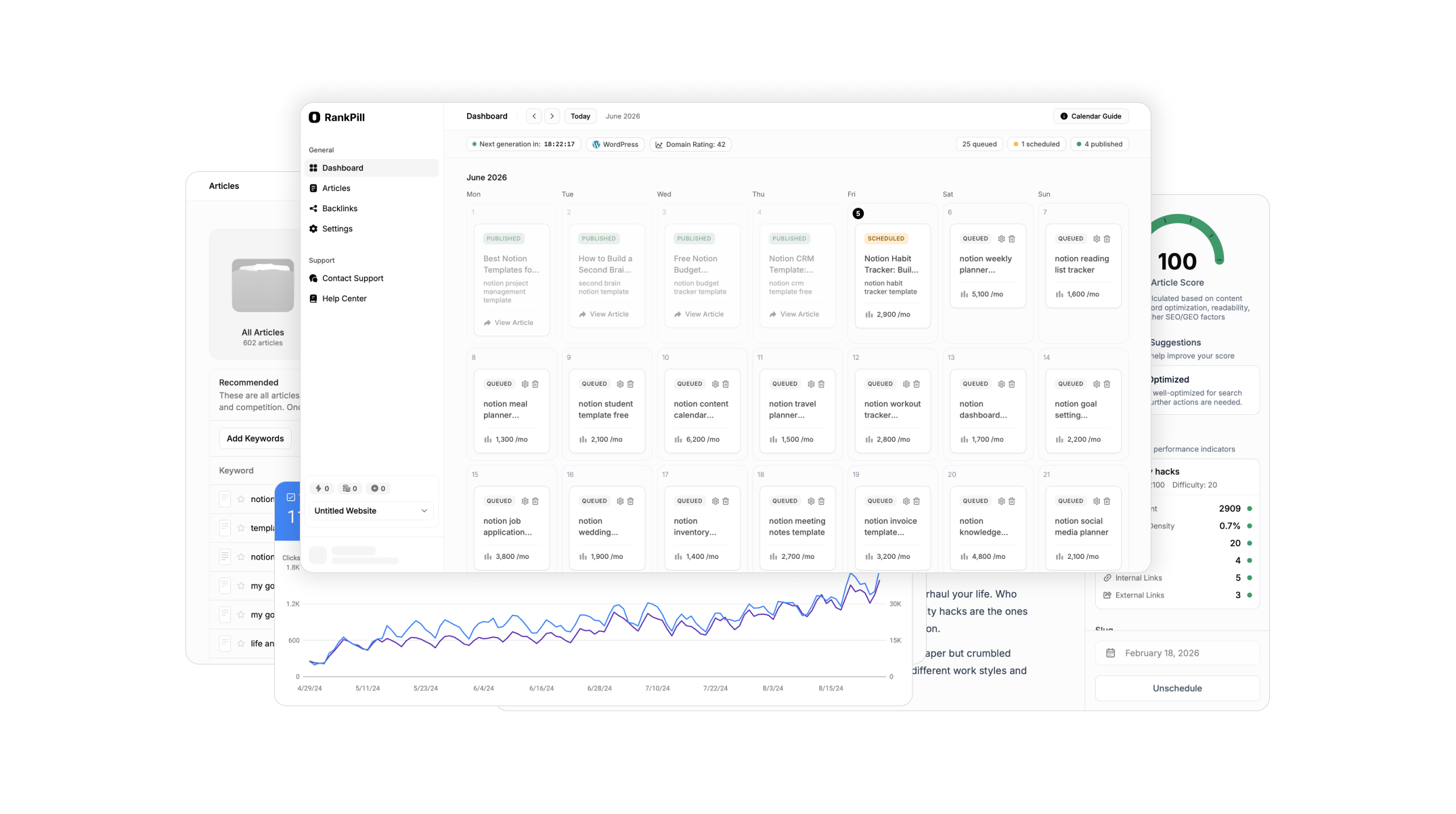
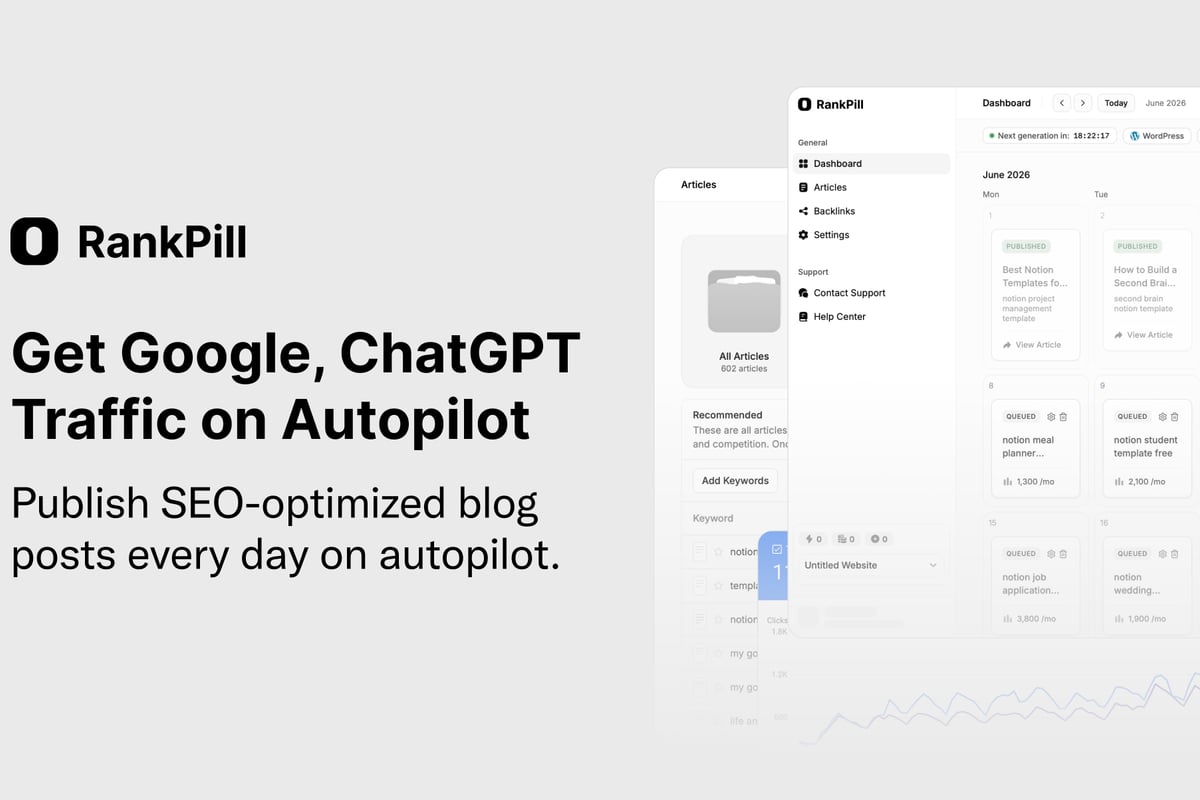
Platforms like RankPill automatically optimize content structure for both traditional search engines and AI platforms, ensuring your articles maintain the clarity and organization that enhances ai search visability while targeting relevant keywords and topics.
Building Authority Signals for AI Platforms
AI search systems evaluate content authority through different signals than traditional search engines, though some overlap exists. Understanding how these platforms assess trustworthiness helps you build stronger authority indicators.
Authority Factors in AI Search
- Author expertise: Clear author attribution with demonstrated credentials in the subject area
- Content depth: Comprehensive coverage that addresses topics thoroughly rather than superficially
- Factual consistency: Information that aligns with verified data across the web
- Source citation: Proper attribution when referencing other authorities or research
- Update frequency: Regular content refreshes that maintain current information
The relationship between AI and SEO continues evolving as AI platforms develop more sophisticated evaluation methods. Businesses that establish strong authority signals across their content ecosystem see substantially better ai search visability compared to those publishing sporadic or inconsistent information.

Strategic Approaches to Improve AI Search Visibility
Implementing effective ai search visability strategies requires coordinated efforts across content creation, technical optimization, and brand presence management. The following approaches deliver measurable improvements when applied consistently.
Content Strategy Adjustments
Transform your content calendar to prioritize topics where AI search queries are growing. Research questions users commonly ask AI platforms in your industry, then create comprehensive resources that directly address these queries. Tools that help you get competitor keywords can reveal gaps where your competitors are gaining AI visibility while you remain absent.
Question-focused content formats perform particularly well in AI search contexts. Create FAQ pages, how-to guides, and problem-solution articles that match the conversational nature of AI search queries.
Entity optimization ensures AI systems correctly understand and categorize your brand, products, and services. Consistent naming conventions, clear product descriptions, and explicit relationship definitions help AI platforms build accurate knowledge graphs about your business.
Technical Optimization Elements
| Optimization Area | Implementation Strategy | Impact on AI Visibility |
|---|---|---|
| Structured data | Implement Schema.org markup for products, articles, FAQs, and organization | Helps AI systems understand content types and relationships |
| Content freshness | Regular updates to existing high-value content | Signals current, relevant information to AI platforms |
| Internal linking | Strategic connections between related topics | Helps AI understand your content ecosystem and topic authority |
| Mobile optimization | Fast loading, responsive design | Ensures AI can efficiently access and process your content |
The technical foundation supporting your content directly influences how effectively AI systems can crawl, process, and cite your materials. Websites with clean architecture, fast loading times, and logical information hierarchies consistently achieve better ai search visability than those with technical barriers.
Monitoring and Adapting Your AI Search Strategy
AI search platforms evolve rapidly, introducing new features, changing citation preferences, and updating their information retrieval methods. Your visibility strategy must remain flexible and data-driven to maintain effectiveness.
Establishing Monitoring Systems
Set up regular audits of your ai search visability using available tracking tools. According to insights from AI visibility monitoring platforms, brands should check their presence across major AI search systems at least monthly, with weekly monitoring for high-priority topics or competitive keywords.
Competitive benchmarking reveals how your visibility compares to industry leaders and direct competitors. Track which competitors appear most frequently in AI-generated responses and analyze what content characteristics drive their visibility.
Query variation testing helps you understand which question phrasings trigger citations of your content. AI platforms interpret queries differently than traditional search engines, so testing multiple question formats for the same topic reveals optimization opportunities.
Resources like the AI Search Visibility platform provide comprehensive audits of how AI systems understand, trust, and cite your website content, offering actionable recommendations for improvement.
Content Formats That Maximize AI Citations
Different content formats achieve varying levels of success in AI search results. Understanding which formats AI platforms prefer when synthesizing answers helps you allocate resources effectively.
High-Performing Content Types
- Definitive guides: Comprehensive resources covering topics thoroughly from multiple angles
- Statistical reports: Original research and data that AI platforms cite as primary sources
- Process documentation: Step-by-step instructions for completing specific tasks
- Comparison articles: Detailed evaluations of alternatives that help AI answer "which is best" queries
- Expert interviews: Unique insights from recognized authorities in your field
These formats align with how AI systems construct answers to user queries. When an AI platform needs to explain a process, compare options, or cite statistics, it searches for content specifically structured to provide that information type.
The integration of AI SEO platforms into your workflow enables consistent production of these high-value formats at scale, ensuring your content library includes the diversity AI search systems favor when selecting citations.
Leveraging Automation for Consistent AI Visibility
Maintaining strong ai search visability requires publishing fresh, relevant content consistently. Manual content creation struggles to keep pace with the volume needed to cover topic variations and maintain currency across your subject areas.
Automation Advantages
Scalable production through AI-powered content creation tools allows businesses to publish comprehensive articles targeting both traditional search keywords and AI search query patterns. The key is maintaining quality standards while increasing output volume.
Keyword research automation identifies emerging topics where AI search queries are growing, allowing you to create content before competitors recognize the opportunity. Understanding how to add keywords to your website strategically improves both traditional and AI search performance.
Publication scheduling ensures consistent content freshness, which AI platforms interpret as a signal of active expertise. Regular publishing cadences demonstrate ongoing authority in your subject areas.
Modern SEO automation tools handle research, writing, optimization, and publishing workflows, dramatically reducing the time and cost required to maintain strong ai search visability across your topic ecosystem.
Building a Sustainable AI Search Strategy
Long-term success in AI search requires viewing visibility optimization as an ongoing program rather than a one-time project. AI platforms continuously evolve, and your strategy must adapt accordingly.
Program Components
- Continuous monitoring: Regular tracking of visibility metrics across all relevant AI platforms
- Content gap analysis: Systematic identification of topics where competitors appear but your brand doesn't
- Quality improvement cycles: Periodic enhancement of existing content based on performance data
- Experimental testing: Controlled trials of new content formats, structures, and optimization techniques
- Competitive intelligence: Ongoing analysis of which content characteristics drive competitor visibility
Businesses that establish systematic programs for ai search visability consistently outperform those taking ad-hoc approaches. The compound effect of regular optimization, content creation, and authority building creates increasingly strong visibility over time.
According to research on improving AI search performance, brands that treat AI visibility as a strategic priority and allocate dedicated resources see measurable improvements within three to six months, with continued gains as AI platforms better understand their expertise and authority.
Integrating your AI search strategy with traditional SEO efforts creates synergies where improvements in one area enhance performance in the other. Content optimized for AI comprehension typically performs well in traditional search as well, since both prioritize clarity, authority, and user value.
Optimizing for ai search visability has become essential as AI platforms reshape information discovery in 2026. By understanding how these systems evaluate, process, and cite content, businesses can ensure their expertise reaches audiences through both traditional search engines and emerging AI channels. RankPill automates the content creation and optimization processes necessary to maintain strong visibility across all search platforms, helping you consistently publish the high-quality, well-structured articles that both traditional algorithms and AI systems reward with prominent placement and frequent citations.
Unlock Traffic on Autopilot
Grow organic traffic on autopilot. RankPill will research, write, optimize, and publish articles to your website daily.