
AI Web Search: How It's Transforming SEO in 2026

Modest Mitkus
March 29, 2026
The landscape of online discovery has fundamentally shifted. Traditional search engines that relied on keyword matching and link analysis are rapidly being replaced by intelligent systems that understand context, predict intent, and deliver conversational answers. AI web search represents the most significant transformation in how people find information since Google first introduced PageRank in 1998. For businesses relying on organic traffic, this evolution demands a complete rethinking of content strategy, optimization techniques, and audience engagement approaches.
Understanding the AI Web Search Revolution
AI web search refers to search engines and platforms that leverage artificial intelligence, machine learning, and natural language processing to interpret queries, generate answers, and deliver results. Unlike traditional search engines that simply match keywords to indexed pages, these systems comprehend the meaning behind questions and synthesize information from multiple sources.
Google's AI integration into search has introduced features like AI Overviews and AI Mode, fundamentally changing how results appear. These systems don't just rank pages; they extract relevant information, summarize key points, and present direct answers before showing traditional blue links.
The Technology Behind Modern AI Web Search
The foundation of ai web search rests on several advanced technologies working in concert:
- Large Language Models (LLMs) that understand natural language and generate human-like responses
- Neural networks that learn from billions of search interactions to improve relevance
- Knowledge graphs that connect related concepts and entities across the web
- Semantic search algorithms that interpret context rather than just matching keywords
- Real-time data integration that pulls current information from verified sources
These technologies enable search systems to handle complex, multi-part questions that would have stumped traditional engines. When someone asks "What's the best content strategy for a startup in 2026 with a limited budget," modern ai web search can synthesize information about current trends, budget considerations, and actionable tactics.

How AI Web Search Differs From Traditional Search Engines
The fundamental difference lies in the approach to information retrieval and presentation. Traditional search engines index pages and rank them based on relevance signals like keywords, backlinks, and user engagement metrics. They present a list of links for users to explore.
AI web search platforms take a conversational approach. They interpret the underlying intent, access multiple sources, and generate comprehensive answers. This shift has profound implications for content creators and SEO professionals.
The Shift to Answer Engines
Yahoo recently launched Scout, an AI-powered answer engine designed to compete in this new search paradigm. Rather than showing ten blue links, these platforms provide direct answers, summaries, and synthesized information.
| Traditional Search | AI Web Search |
|---|---|
| Keyword matching | Context understanding |
| List of links | Direct answers |
| Static rankings | Dynamic synthesis |
| Click-through required | Information upfront |
| Single-query focus | Conversational flow |
This transformation affects how businesses should think about optimizing for AI SEO and structuring content to be discoverable and useful in this new environment.
Impact on Content Discovery and User Behavior
Research indicates that AI-generated content now appears frequently during web browsing, changing how Americans encounter and consume information online. This shift affects everything from how users phrase queries to their expectations for answer quality and format.
Users increasingly expect immediate, comprehensive answers rather than links to explore. They ask longer, more conversational questions and engage in multi-turn dialogues with search interfaces. A query like "best SEO tools" might evolve into a conversation about specific features, pricing, and implementation complexity.
Changing Search Patterns in 2026
The rise of ai web search has altered fundamental search behaviors:
- Longer, more natural queries that resemble spoken questions
- Follow-up questions that build on previous answers
- Multi-intent searches that combine several information needs
- Increased voice search usage across devices
- Expectation of personalization based on context and history
These patterns require content creators to think beyond simple keyword optimization and consider how their information fits into broader conversational contexts.
Optimizing Content for AI Web Search
Creating content that performs well in ai web search environments requires strategic adjustments to traditional SEO practices. The focus shifts from gaming algorithms to genuinely answering questions and providing comprehensive value.
Structured Information Architecture
AI systems excel at parsing well-organized information. Content should follow clear hierarchies with descriptive headings, logical flow, and explicit relationships between concepts.
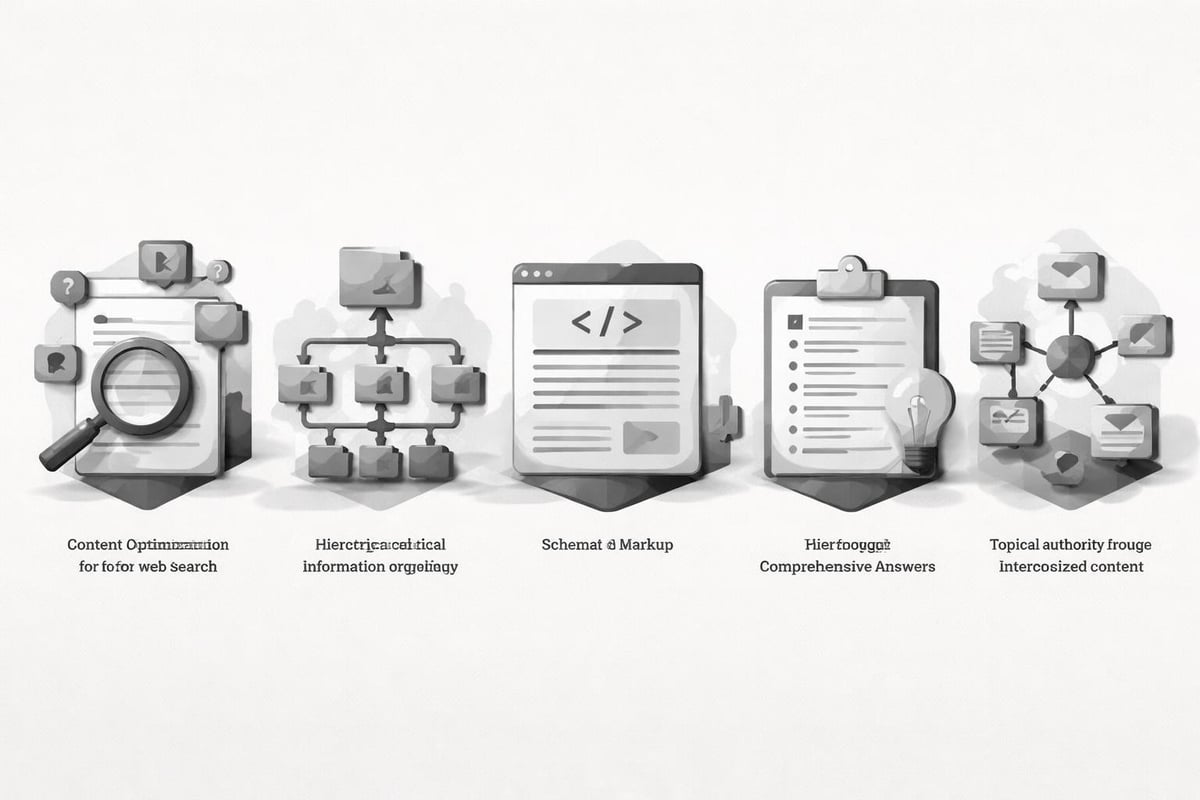
Key optimization strategies include:
- Using descriptive, question-based headings that match natural language queries
- Implementing schema markup to help AI understand content structure
- Creating comprehensive content that addresses related questions
- Incorporating data, statistics, and factual information that AI can extract
- Building topical authority through interconnected content clusters
Understanding how to get recommended by ChatGPT and similar AI platforms becomes crucial for visibility in this new search ecosystem.
Conversational Content Development
Traditional keyword-stuffed content fails in ai web search environments. Instead, content must address questions naturally and provide genuine value. This approach aligns with best practices for AI-generated content that Google and other platforms now favor.
Write content that answers the "why" and "how" behind topics, not just the "what." Provide context, explain implications, and connect concepts. AI systems reward depth and comprehensiveness over shallow keyword targeting.
The Role of AI Search in E-Commerce
For online retailers and service providers, AI search engines are transforming e-commerce by changing how customers discover products and make purchase decisions. Rather than browsing category pages, users can describe what they need in natural language and receive personalized recommendations.
This evolution affects everything from product descriptions to category architecture. E-commerce sites must ensure their content is structured so AI systems can accurately interpret product features, benefits, and use cases.
Product Content Optimization
Effective product optimization for ai web search involves:
- Detailed specifications in structured formats
- Use case descriptions that match how customers ask questions
- Comparison information that helps AI synthesize competitive insights
- Customer question patterns addressed in product content
- Rich media integration with descriptive alt text and captions
Businesses leveraging automated SEO tools can maintain consistency across large product catalogs while ensuring every item is optimized for AI discovery.
Real-Time AI Search Capabilities
Google's AI-powered conversational search tool now provides real-time answers in multiple languages, expanding the global reach of ai web search. This capability means content must be current, accurate, and frequently updated to maintain visibility.
The emphasis on freshness creates opportunities for businesses that publish regularly and maintain up-to-date information. A content calendar that ensures consistent publishing becomes a competitive advantage in AI search rankings.
Maintaining Content Freshness
To succeed in real-time AI search environments:
- Update existing content regularly with current data and examples
- Monitor trending questions in your industry and create timely responses
- Publish new content consistently to demonstrate topical expertise
- Remove or update outdated information that could mislead AI systems
- Track performance metrics to identify content that needs refreshing
RankPill addresses this challenge by automatically researching, writing, and publishing optimized content 24/7, ensuring your site maintains the freshness and consistency that AI search platforms reward. At $99/month for 30 articles, this automation provides a sustainable solution for maintaining topical authority without the overhead of traditional content teams.
The Debate: AI vs. Traditional Search
Not everyone embraces AI-enhanced search. DuckDuckGo has introduced an AI-free search option, catering to users who prefer traditional, non-AI-generated results. This development highlights an important segmentation in search preferences.
Some users value the transparency of traditional search, where they can see exactly which sources provide information and evaluate credibility themselves. Others appreciate the efficiency and synthesis that ai web search offers.
Balancing Traditional and AI Optimization
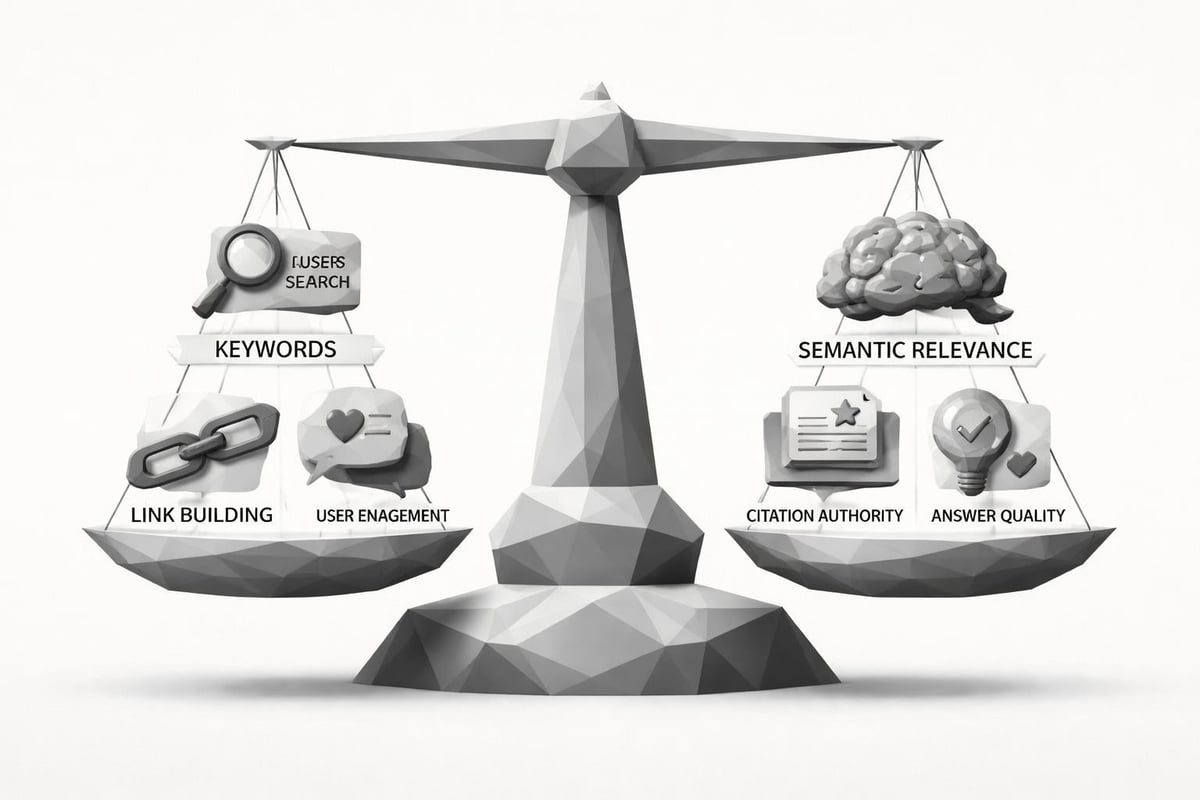
Smart SEO strategies in 2026 optimize for both paradigms:
| Strategy Component | Traditional SEO | AI Web Search |
|---|---|---|
| Keyword targeting | Exact match focus | Semantic relevance |
| Content length | Variable by intent | Comprehensive depth |
| Link building | Authority signals | Citation sources |
| User experience | Click engagement | Answer satisfaction |
| Technical optimization | Crawlability | Structured data |
This dual approach ensures visibility regardless of which search paradigm users prefer or platforms prioritize.
Technical Considerations for AI Search Visibility
Beyond content quality, technical factors significantly impact ai web search performance. AI systems rely on structured data to understand page content, relationships, and context.
Essential Technical Optimizations
Schema markup implementation helps AI systems accurately interpret your content. Use appropriate schema types for articles, products, FAQs, reviews, and other content formats. This structured data enables AI to extract specific information for synthesis in answers.
Site architecture should facilitate both crawling and comprehension. Clear hierarchies, logical internal linking, and topic clustering help AI systems understand your expertise areas and content relationships.
Performance optimization matters because AI systems consider user experience signals. Fast-loading pages, mobile responsiveness, and accessibility all contribute to overall visibility.
Understanding how AI models access web data through search APIs helps you structure content for optimal discovery and utilization across different platforms.
Future Implications and Strategic Considerations
The World Economic Forum has highlighted critical considerations around AI-based information access systems and their impact on traditional internet search models. These changes raise questions about attribution, authority, and the future of content monetization.
For businesses dependent on organic traffic, adapting to ai web search isn't optional. The platforms that synthesize information from your content may or may not drive traffic back to your site. This reality demands new approaches to increasing blog traffic and building audience relationships.
Building Direct Audience Relationships
As ai web search potentially reduces direct site traffic, businesses must:
- Develop owned channels like email lists and communities
- Create unique value that can't be synthesized from multiple sources
- Build brand recognition so users seek you out specifically
- Offer tools and experiences beyond information alone
- Engage in platforms where your audience congregates
The shift to ai web search accelerates the trend toward direct audience relationships rather than relying solely on search engine traffic.
Measuring Success in AI Search Environments
Traditional metrics like rankings and click-through rates become less meaningful as AI systems provide answers without requiring clicks. New measurement frameworks focus on visibility within AI-generated responses, citation frequency, and brand mentions.
Key Performance Indicators for AI Search
Monitor these metrics to gauge ai web search performance:
- Citation frequency in AI-generated answers across platforms
- Brand mention volume in synthesized content
- Traffic quality from AI search referrals when they occur
- Engagement depth from visitors who do click through
- Conversion rates as traffic becomes more intent-focused
Tools are emerging to track these new metrics, though the ecosystem remains immature compared to traditional SEO analytics.
Content Strategy Evolution
Successful content strategies for ai web search prioritize comprehensiveness over keyword density, authority over optimization tricks, and genuine value over SEO gaming. This evolution actually benefits users and rewards businesses that invest in quality.
The integration of AI in SEO platforms enables businesses to scale content production while maintaining quality. By automating research, writing, and optimization, companies can compete for visibility across thousands of relevant queries without proportional increases in content team size.
Competitive Intelligence in AI Search
Understanding competitor strategies becomes more complex but more important. Rather than simply tracking keyword rankings, analyze:
- Which topics competitors cover comprehensively
- How frequently they publish and update content
- Their structured data implementation quality
- Their citation frequency in AI-generated answers
- Their content depth and expertise signals
Competitor keyword analysis remains valuable but must expand to include topical coverage analysis and content gap identification.
Integration With Broader Marketing
AI web search doesn't exist in isolation. It integrates with voice assistants, smart devices, automotive systems, and emerging platforms. Your content must work across this ecosystem, not just in traditional search interfaces.
This expansion requires thinking about content in modular, reusable formats that AI systems can adapt to different contexts and devices. A comprehensive guide might be synthesized into a quick voice answer, a detailed visual presentation, or an interactive dialogue depending on the user's context.
The transformation to AI web search fundamentally reshapes how businesses approach content creation, optimization, and audience engagement. Success requires adapting strategies to prioritize comprehensive value, structural clarity, and genuine expertise over traditional keyword tactics. RankPill automates this complex process, continuously researching topics, generating optimized content, and publishing consistently to build the topical authority that AI search platforms reward. Start building your AI search visibility today with an approach that scales effortlessly while maintaining the quality and depth that modern search demands.