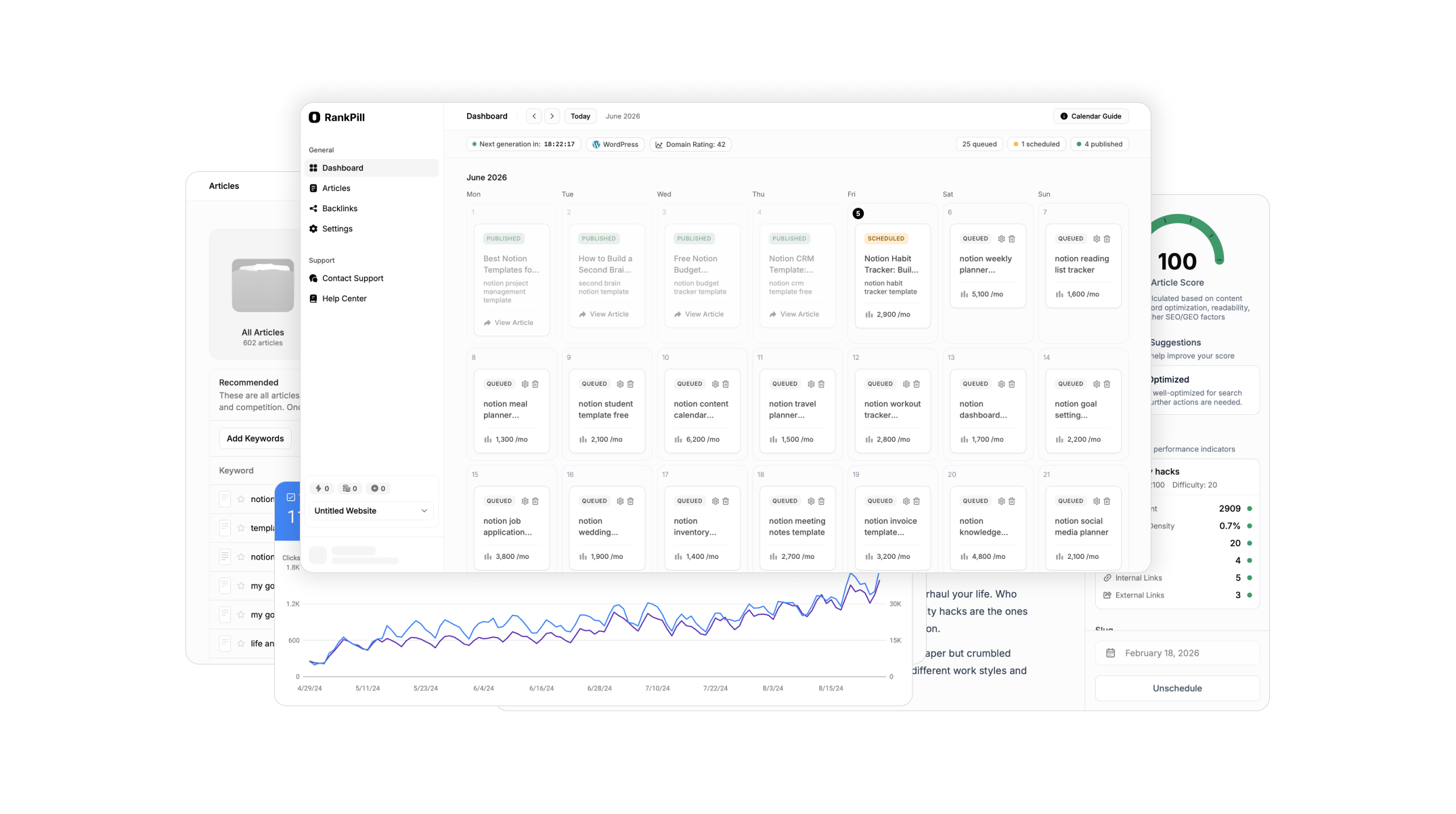
Best SEO Automation Tools to Scale Your Traffic in 2026

Modest Mitkus · August 26, 2026
SEO has evolved from manual spreadsheets and sporadic content updates to sophisticated automated workflows that run 24/7. The best SEO automation tools in 2026 handle everything from keyword discovery to content publishing, freeing up time for strategic decisions while maintaining the consistency search engines reward. As AI-driven search visibility becomes essential, automation isn't just convenient-it's a competitive necessity for businesses that want to scale organic traffic without scaling their team proportionally.
Why SEO Automation Matters in 2026
Manual SEO workflows create bottlenecks. When every keyword needs hand-picked vetting, every article requires multiple rounds of editing, and every backlink demands individual outreach, growth stalls. Teams spend hours on repetitive tasks that automation handles in minutes.
The shift toward AI SEO has changed what's possible. Modern tools don't just speed up existing processes-they introduce capabilities that manual workflows can't match at scale. Consider these advantages:
- Consistency: Automated systems publish content on schedule, whether it's Monday morning or Saturday night
- Data processing: Tools analyze thousands of keywords simultaneously, identifying opportunities human researchers would miss
- Speed: What takes a content team days to research, write, and optimize happens in hours
- Cost efficiency: Automation replaces expensive agency retainers with predictable monthly subscriptions
According to survey data on SEO team adoption, more than 60% of marketing teams now use some form of automation in their SEO workflows. That number continues climbing as tools become more sophisticated and results more measurable.
Content Creation and Optimization Tools
AI-Powered Content Writers
The best SEO automation tools for content production combine natural language generation with search intent analysis. These platforms don't just spin articles-they research topics, structure content for readability, and optimize for both traditional search engines and answer engines.
Modern AI writers analyze top-ranking pages to understand what makes content competitive. They identify semantic keywords, structure headers logically, and maintain consistent tone across hundreds of articles. When choosing an AI content writer, look for these features:
| Feature | Why It Matters | What to Check |
|---|---|---|
| Search intent matching | Content aligns with what users actually want | Sample outputs match top-ranking pages |
| Internal linking | Strengthens site architecture automatically | Tool identifies relevant existing content |
| Image integration | Enhances engagement and visual appeal | Automatic image sourcing and optimization |
| Multi-language support | Expands reach to global markets | Native content quality, not just translation |
The difference between basic AI writing and SEO-optimized automation shows in the details. Quality tools incorporate AI content optimization practices like schema markup suggestions, meta description generation, and readability scoring. They understand that ranking isn't just about keywords-it's about delivering comprehensive answers that satisfy search intent.
For businesses that need to increase SEO traffic without hiring full content teams, automated writers provide the volume needed to compete in crowded niches. The key is choosing tools that maintain quality standards while scaling output.
Content Workflow Automation
Beyond individual article creation, the best SEO automation tools orchestrate entire content calendars. These systems handle:
- Keyword queue management: Automatically prioritize which topics to write based on search volume, competition, and business relevance
- Content scheduling: Distribute publishing across optimal days and times
- Update cycles: Refresh existing content when it starts declining in rankings
- Quality control: Flag content that needs human review before publication
This level of automation transforms content marketing from a reactive scramble into a predictable system. Instead of wondering what to write next, teams focus on strategy while automation handles execution.
Keyword Research and Analysis Platforms
Automated Keyword Discovery
Manual keyword research means opening spreadsheets, checking search volumes one by one, and guessing at competition levels. The best SEO automation tools flip this process entirely.
Automated keyword platforms continuously scan search trends, identify emerging opportunities, and cluster related terms into topic groups. They don't wait for you to think of keywords-they suggest what your competitors are missing.
When evaluating keyword automation, consider whether the platform offers:
- Real-time search volume data without monthly limits
- Competition analysis that goes beyond basic metrics
- Question-based keyword discovery for featured snippet opportunities
- Long-tail variations that manual research overlooks
A solid keyword research tool should show you not just what people search for, but what they're trying to accomplish. This intent classification lets you prioritize content that converts, not just ranks.
Competitive Gap Analysis
The smartest keyword automation doesn't just find keywords-it finds the gaps in your content strategy. These tools compare your existing content against competitors' rankings and highlight:
- Topics your competitors rank for that you haven't covered
- Keywords where you're on page two that could reach page one with optimization
- Content clusters where you're missing supporting articles
- Semantic variations your existing content doesn't address
This competitive intelligence transforms keyword research from guesswork into strategic targeting. You're not blindly chasing search volume-you're systematically capturing market share from competitors who haven't automated their discovery process.

Link Building and Backlink Management
Automated Outreach Systems
Traditional link building requires spreadsheets of prospects, manual email drafts, and constant follow-ups. Automation streamlines this without sacrificing the personalization that earns responses.
The best SEO automation tools for link building handle:
- Prospect discovery: Identify relevant websites based on topic, authority, and linking patterns
- Email sequences: Send personalized outreach with automatic follow-ups
- Relationship tracking: Remember previous interactions and tailor messaging accordingly
- Response management: Alert you when prospects reply or take action
Quality matters more than quantity in link building. Automated systems should filter out low-authority sites, spam domains, and irrelevant prospects before you waste time reaching out. Look for platforms that verify domain authority, check spam scores, and analyze existing backlink profiles.
Link Exchange Networks
Manual backlink exchanges often devolve into random link swaps that hurt more than help. Automated exchange platforms match websites based on relevance, authority, and mutual benefit. They operate like professional networking for domains-connecting sites that should logically reference each other.
When using exchange automation, prioritize:
- Relevance matching: Only swap links with topically related sites
- Quality thresholds: Set minimum authority requirements for partners
- Natural integration: Links should fit contextually, not appear forced
- Monitoring: Track link health and remove broken partnerships
These systems work best when they're selective rather than aggressive. The goal isn't hundreds of backlinks-it's dozens of high-quality, contextually appropriate links that search engines value.
Technical SEO Automation
Site Auditing Tools
Technical issues kill rankings before content quality ever matters. The best SEO automation tools monitor site health continuously, alerting you to problems like:
- Broken internal links that waste crawl budget
- Missing meta descriptions that reduce click-through rates
- Slow page speeds that hurt user experience
- Mobile usability issues that trigger ranking penalties
Automated audits don't just find problems-they prioritize fixes based on impact. A critical issue affecting your homepage gets flagged differently than a minor warning on an old blog post.
Modern site auditors integrate with CMS platforms to automate fixes. When they detect a broken link, they can suggest replacements or automatically redirect the URL. When image alt text is missing, they can generate appropriate descriptions based on image content and page context.
Schema and Structured Data
Search engines understand content better when it's properly structured. Schema markup tells Google whether your content is a recipe, product review, event listing, or FAQ. The best SEO automation tools add schema automatically based on content type.
| Schema Type | What It Enables | Automation Benefit |
|---|---|---|
| Article | Enhanced snippets with publish date and author | Auto-applied to blog posts |
| Product | Rich results with price and availability | Syncs with e-commerce inventory |
| FAQ | Expandable answers in search results | Generated from heading structure |
| How-To | Step-by-step featured snippets | Created from numbered lists |
Manual schema implementation requires technical knowledge and constant updates. Automated tools maintain markup as content changes, ensuring structured data stays current without developer intervention.

Analytics and Reporting Automation
Performance Tracking
The best SEO automation tools don't just execute tasks-they measure results. Automated analytics platforms track:
- Ranking changes: Monitor keyword positions across search engines daily
- Traffic patterns: Identify which content drives visits and conversions
- Backlink growth: Track new links and measure their impact
- Content performance: Compare articles to find what resonates with your audience
Real-time dashboards replace manual report building. Instead of spending hours compiling metrics, teams access live data that updates automatically. Custom alerts notify you when rankings drop, traffic surges, or technical issues emerge.
AI Search Optimization Metrics
Traditional SEO metrics focus on Google rankings and organic clicks. As generative search engines emerge, the best SEO automation tools track new signals:
- Citation frequency: How often AI platforms reference your content
- Answer inclusion: Whether your content appears in AI-generated responses
- Source attribution: When AI tools link back to your domain
- Query coverage: Which questions your content helps AI engines answer
These AI search optimization metrics require different tracking methods than traditional SEO. Automated platforms monitor AI platform behavior, measure content visibility across answer engines, and identify optimization opportunities specifically for generative search.
Workflow Integration and Automation Platforms
CMS Integration
The best SEO automation tools connect directly with your content management system. This native integration enables:
- One-click publishing: Content moves from creation to live site without manual uploads
- Automatic formatting: Styles, headers, and images apply consistently across articles
- Internal linking: Tools scan existing content and add relevant cross-references
- Update management: Modified content publishes automatically on schedule
Whether you use WordPress, Shopify, Webflow, or custom platforms, integration quality determines how smoothly automation flows. Look for tools with robust API connections, webhook support, and error handling that prevents publishing failures.
End-to-End SEO Automation
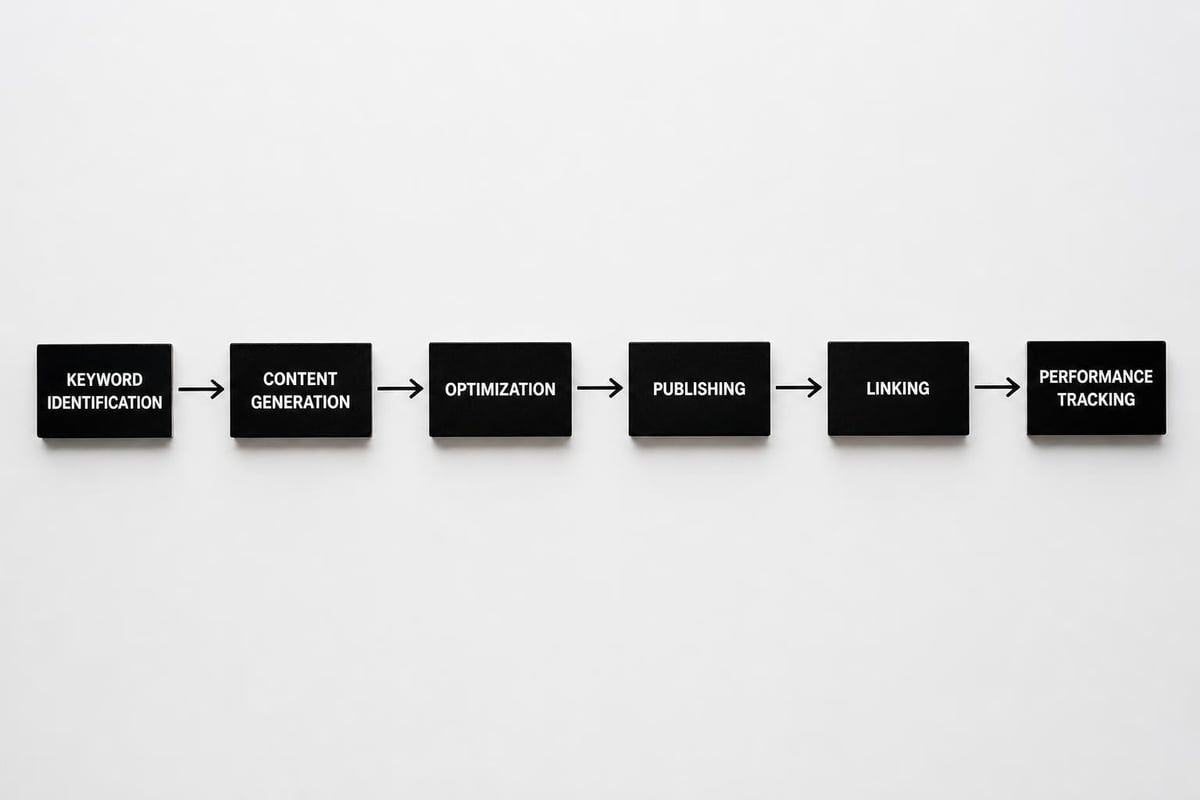
The most powerful approach combines multiple functions into unified workflows. Rather than cobbling together separate tools for keywords, content, links, and analytics, integrated platforms handle everything in one system.
SEO automation platforms coordinate:
- Keyword research that feeds directly into content briefs
- Article generation that incorporates discovered keywords naturally
- Publishing workflows that schedule and distribute content automatically
- Link building that promotes new content to relevant sites
- Performance tracking that measures impact and refines strategy
This coordination eliminates the gaps where manual handoffs typically fail. When keyword research automatically triggers content creation, which automatically schedules publishing, which automatically initiates link outreach, the entire SEO engine runs without constant oversight.
For businesses committed to organic marketing, this level of automation transforms SEO from a periodic project into a continuous growth system. Traffic compounds as automated systems consistently execute proven strategies.
Choosing the Right Automation Stack
Evaluating Tool Capabilities
Not all SEO automation tools deliver equal value. When comparing options, assess:
Feature completeness: Does the tool handle your specific needs, or will you need multiple subscriptions to cover all bases?
Data accuracy: Are keyword volumes, competition scores, and ranking data reliable and current?
Scalability limits: What happens when you grow from 10 articles monthly to 100? Do costs scale linearly or exponentially?
Customization options: Can you tailor workflows to match your brand voice, content standards, and business goals?
The best approach often combines specialized tools for specific functions with broader platforms for overall coordination. A dedicated keyword tool might outperform an all-in-one suite for research, while integrated platforms excel at workflow automation.
Cost-Benefit Analysis
SEO automation replaces labor costs with software subscriptions. The financial math is straightforward:
- Agency retainers: $5,000–$15,000 monthly for comprehensive SEO services
- Freelance writers: $100–$500 per article for quality SEO content
- In-house team: $60,000–$120,000 annually for a single SEO specialist
- Automation platforms: $99–$500 monthly for tools handling multiple functions
When evaluating costs, consider total workflow expenses, not just individual tool prices. An automation platform at $300 monthly that handles keyword research, content creation, and publishing might cost less than three separate tools at $100 each if those tools don't integrate smoothly.
The research on content-centric automation frameworks demonstrates that integrated systems produce better results than fragmented toolsets. Coordination between research, creation, and optimization stages matters more than individual tool sophistication.
Implementation Strategy
Successful automation adoption follows a deliberate path:
- Audit current workflows: Document what's manual, what's slow, and where bottlenecks occur
- Prioritize automation: Start with highest-impact, most time-consuming tasks
- Test incrementally: Implement one workflow at a time, measure results, refine processes
- Scale gradually: Expand automation as you validate quality and effectiveness
- Maintain oversight: Automation runs tasks, but humans still guide strategy
This staged approach prevents the chaos of replacing entire systems overnight. Teams maintain quality control while progressively reducing manual workload.
Common Pitfalls and How to Avoid Them
Over-Automation Risks
Automation done poorly creates more problems than it solves. Common mistakes include:
Publishing without review: Fully automated content that goes live without human oversight can include factual errors, awkward phrasing, or off-brand messaging. Build in quality checkpoints before final publication.
Ignoring context: Automated internal links sometimes connect unrelated content when algorithms miss semantic nuance. Review suggested links before they go live.
Template fatigue: When every article follows identical structure, content becomes predictable and engagement drops. Vary automation parameters to maintain freshness.
Keyword stuffing: Aggressive automation can over-optimize, creating unnatural content that triggers quality filters. Set density limits and prioritize readability over keyword frequency.
The solution isn't abandoning automation-it's implementing with appropriate guardrails. HubSpot's framework for AI SEO workflows emphasizes human oversight at critical decision points while automating repetitive execution.
Maintaining Content Quality
The best SEO automation tools enhance quality rather than sacrificing it for speed. Quality maintenance requires:
- Editorial guidelines: Establish clear standards for tone, structure, and depth
- Sample review cycles: Periodically audit automated output to catch quality drift
- Feedback loops: Use performance data to refine content parameters
- Human expertise: Reserve complex topics or sensitive content for manual writing
Automation should handle the heavy lifting while human judgment guides direction and validates results. This hybrid approach combines AI efficiency with human creativity and strategic thinking.
Selecting Your Best SEO Automation Tools
The landscape of SEO automation continues expanding with new capabilities emerging monthly. Success comes from matching tool capabilities to your specific workflow needs rather than chasing every new feature.
When building your automation stack, prioritize:
- Integration quality over feature quantity
- Proven results over experimental capabilities
- Workflow coordination over individual tool power
- Long-term scalability over immediate cost savings
The best SEO automation tools become invisible infrastructure-working reliably in the background while you focus on strategy, relationships, and business growth. They don't just save time; they unlock growth that manual processes couldn't achieve at any scale.
Whether you're managing a local service business or scaling a content empire, automation transforms SEO from a labor-intensive grind into a strategic advantage. The question isn't whether to automate, but which workflows to prioritize first and which tools deliver the most reliable results for your specific situation.
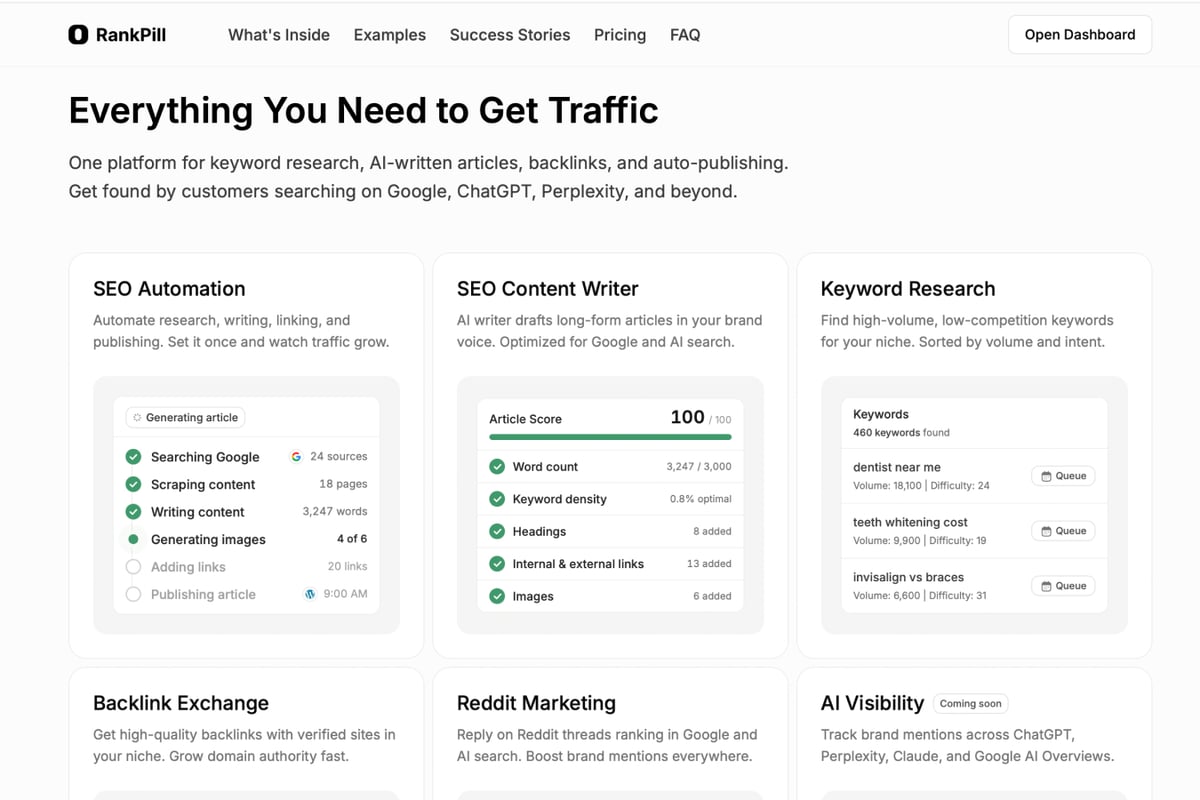
The best SEO automation tools work together to create systems that research, write, optimize, and promote content continuously without constant oversight. Rather than managing dozens of manual tasks, successful businesses coordinate automated workflows that compound results over time. RankPill handles this entire automation stack-from keyword research through daily publishing to backlink building-letting you grow organic traffic while focusing on what makes your business unique.
Unlock Traffic on Autopilot
Grow organic traffic on autopilot. RankPill will research, write, optimize, and publish articles to your website daily.