Digital Marketing Automation: Scale Your Strategy in 2026

Modest Mitkus · May 17, 2026
Digital marketing automation has fundamentally transformed how businesses approach their marketing strategies. By automating repetitive tasks and creating intelligent workflows, companies can now scale their marketing efforts while maintaining personalization and relevance. This shift allows marketing teams to focus on strategy and creative development rather than manual execution, leading to improved efficiency, better customer experiences, and measurable ROI growth.
Understanding the Core Components of Digital Marketing Automation
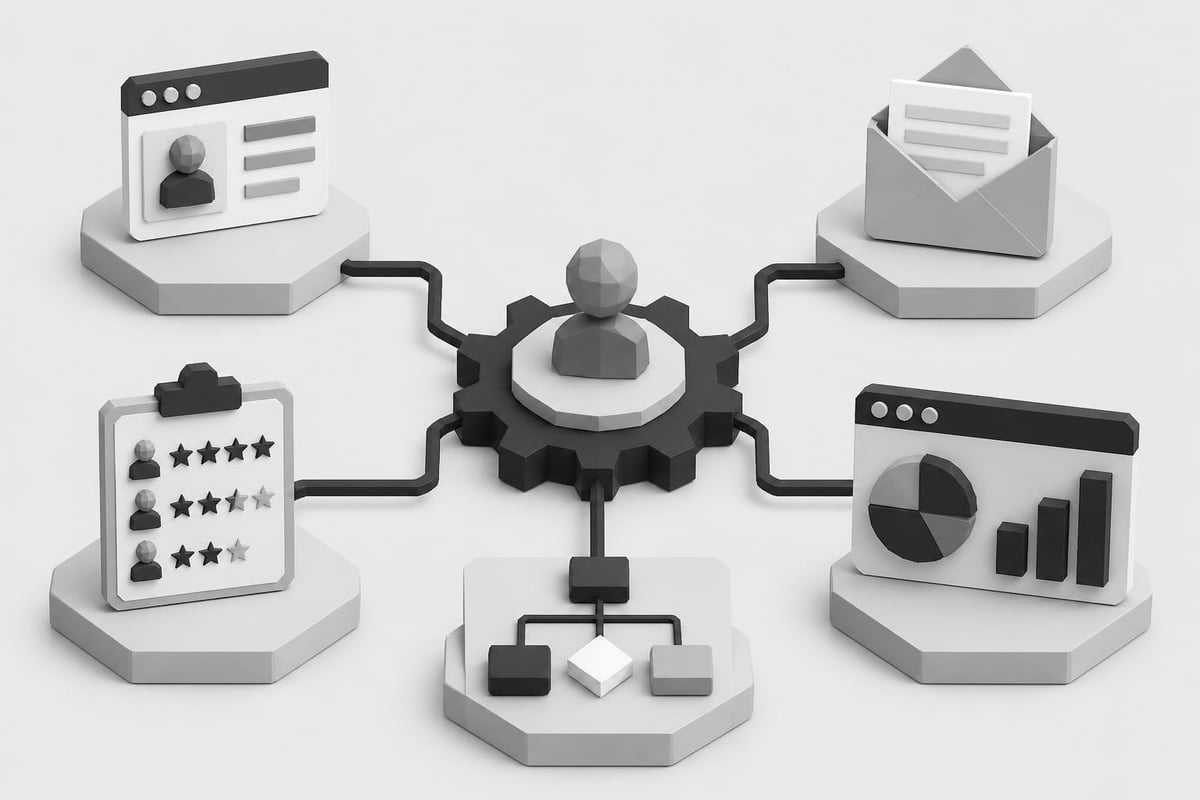
Digital marketing automation encompasses a broad range of technologies and strategies designed to streamline marketing operations. At its foundation, automation platforms integrate with existing business systems to create seamless data flow and execution.
Essential Automation Features
Modern automation platforms provide several critical capabilities that drive marketing success:
- Lead scoring and qualification that identifies high-value prospects automatically
- Behavioral tracking that monitors customer interactions across channels
- Dynamic content personalization that adapts messaging based on user data
- Multi-channel campaign orchestration that coordinates touchpoints across email, social, and web
- Analytics and attribution that measure campaign performance and ROI
The American Marketing Association's research on marketing automation demonstrates how these features work together to create cohesive customer journeys. When properly implemented, automation doesn't just save time-it creates marketing experiences that would be impossible to deliver manually.
Data Integration and Platform Architecture
The technical foundation of digital marketing automation relies on robust data architecture. Customer data platforms (CDPs) aggregate information from multiple sources, creating unified customer profiles that power personalized campaigns. This integration connects CRM systems, website analytics, social media platforms, and transaction data into a single source of truth.
Modern automation platforms use APIs and webhooks to enable real-time data synchronization. When a prospect downloads a whitepaper, attends a webinar, or abandons a shopping cart, the automation system instantly updates their profile and triggers appropriate follow-up sequences. This responsiveness creates timely, relevant interactions that drive conversion rates significantly higher than batch-and-blast approaches.
Building Effective Automation Workflows
Creating successful automation workflows requires strategic planning and continuous optimization. The most effective digital marketing automation implementations start with clear objectives and well-defined customer segments.
Mapping the Customer Journey
Every automation strategy begins with understanding how customers move through awareness, consideration, and decision stages. Mapping these journeys reveals critical touchpoints where automation can deliver value:
- Awareness stage: Educational content delivery, social media engagement, and blog subscriber nurturing
- Consideration stage: Product comparison emails, case study distribution, and demo scheduling
- Decision stage: Pricing information, trial extensions, and sales handoff protocols
- Retention stage: Onboarding sequences, usage tips, and renewal campaigns
According to Digital Marketing Institute's comprehensive guide, successful journey mapping identifies not just what to automate, but when automation serves the customer relationship better than manual intervention.
Segmentation and Personalization Strategies
Generic messaging fails in modern marketing. Digital marketing automation enables sophisticated segmentation based on demographics, behavior, engagement history, and predictive scoring. Creating meaningful segments allows marketers to craft messages that resonate with specific audience subsets.
| Segment Type | Data Sources | Use Case Example |
|---|---|---|
| Demographic | CRM, signup forms | Age-specific product recommendations |
| Behavioral | Website analytics, email engagement | Cart abandonment recovery |
| Lifecycle | Purchase history, subscription status | Renewal and upsell campaigns |
| Engagement | Email opens, content downloads | Re-engagement sequences |
Advanced platforms leverage machine learning to identify patterns humans might miss. These systems automatically create micro-segments and test messaging variations, continuously improving campaign performance without manual intervention.
Email Marketing Automation Excellence
Email remains the highest-ROI channel in digital marketing, and automation amplifies its effectiveness dramatically. Automated email sequences deliver the right message at the right time, nurturing relationships systematically.
Triggered Email Campaigns
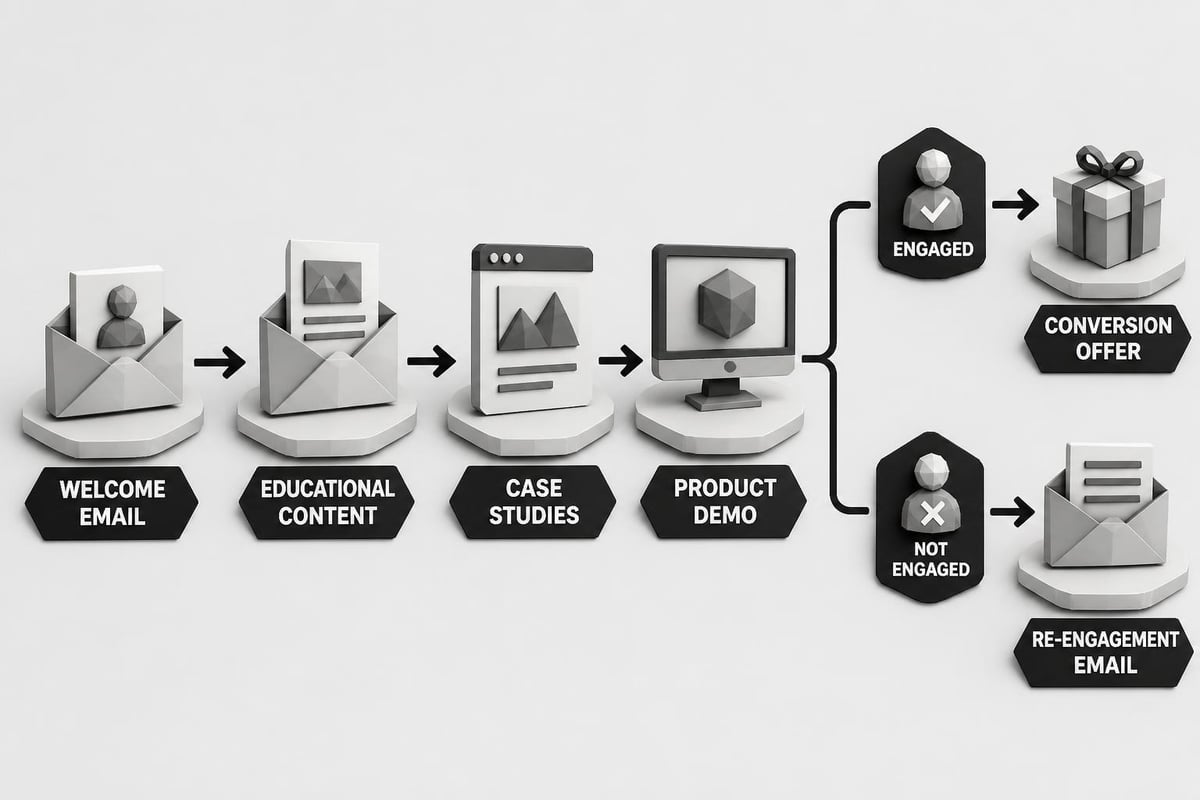
Behavioral triggers create timely, relevant email experiences. When a prospect takes a specific action, the system responds instantly with appropriate content:
- Welcome series for new subscribers
- Abandoned cart reminders for e-commerce shoppers
- Re-engagement campaigns for inactive contacts
- Post-purchase follow-ups and review requests
- Event-based messages tied to anniversaries or milestones
These triggered campaigns typically achieve open rates 2-3 times higher than broadcast emails because they align with the recipient's current needs and context. The automation ensures no opportunity slips through due to timing delays or human oversight.
Drip Campaigns and Lead Nurturing
Drip campaigns deliver a series of educational emails over time, gradually building trust and moving prospects toward conversion. The most successful drip sequences balance education with subtle promotion, providing genuine value while advancing business objectives.
For content-heavy strategies, integrating automated SEO content creation ensures a steady stream of valuable assets to distribute through nurture sequences. This combination of automation tools creates a self-sustaining content marketing engine that attracts, educates, and converts prospects with minimal manual intervention.
Social Media and Content Distribution Automation
Social media automation extends marketing reach without requiring constant manual posting. Scheduling tools, content calendars, and cross-platform distribution systems maintain consistent social presence efficiently.
Strategic Content Scheduling
Effective social automation goes beyond simple scheduling. Modern platforms analyze audience engagement patterns to identify optimal posting times for each network. They also suggest content variations tailored to platform-specific best practices-what works on LinkedIn differs from Instagram or Twitter.
Content libraries store evergreen posts for automatic recycling, ensuring valuable content reaches new audience members over time. Smart queuing systems prevent repetition while maximizing the value of existing content assets. For e-commerce businesses, insights from communities like Talk Shop can inform social content strategies that resonate with specific merchant audiences.
User-Generated Content and Engagement Automation
Monitoring brand mentions, responding to comments, and curating user-generated content traditionally consumed significant resources. Automation tools now handle initial screening and categorization, flagging important interactions for human response while automatically acknowledging routine comments.
Review request automation sends perfectly timed solicitations after positive customer experiences, building social proof systematically. These automated requests, when properly designed, achieve response rates far exceeding manual outreach efforts.
SEO and Content Marketing Automation
Content creation and optimization represent significant time investments for marketing teams. Digital marketing automation brings efficiency to these traditionally manual processes while maintaining quality and relevance.
Automated Keyword Research and Content Planning
AI-powered keyword research tools identify content opportunities by analyzing search volume, competition, and topical relevance. These systems monitor competitor strategies, highlighting gaps in your content coverage and suggesting topics with high ranking potential.
Automated content calendars balance keyword targeting with seasonal relevance and business priorities. They ensure consistent publishing schedules without requiring constant planning meetings or last-minute scrambles to fill editorial gaps.
Content Creation and Optimization at Scale
Auto SEO software streamlines the entire content production workflow, from research through publication. These platforms generate SEO-optimized articles, incorporate relevant images and internal links, and publish directly to content management systems.
For businesses managing multiple content streams, automation ensures each piece aligns with target keywords, maintains brand voice consistency, and includes proper technical optimization. This systematic approach delivers higher search rankings and more organic traffic than sporadic manual efforts.
The relationship between AI and SEO continues evolving, with automation platforms becoming increasingly sophisticated at understanding search intent and creating content that satisfies both algorithms and human readers.
Lead Management and Sales Enablement
Digital marketing automation bridges the traditional gap between marketing and sales teams. By automating lead qualification and handoff processes, organizations ensure high-quality prospects receive appropriate attention at the right time.
Intelligent Lead Scoring Models
Lead scoring assigns numerical values to prospects based on their characteristics and behaviors. Demographic factors (job title, company size, industry) combine with engagement signals (email opens, website visits, content downloads) to calculate overall lead quality.
Key scoring factors include:
- Job role alignment with ideal customer profile
- Budget authority indicators
- Engagement frequency and recency
- Content consumption patterns
- Firmographic fit with target markets
When leads reach predetermined score thresholds, automation triggers sales notifications or direct assignment to account representatives. This system eliminates premature sales outreach while ensuring hot prospects receive immediate attention.
Sales Intelligence and Notification Systems
Real-time alerts inform sales teams when high-value prospects exhibit buying signals. If a decision-maker views pricing pages multiple times, downloads case studies, or requests product information, the automation system notifies the appropriate sales representative immediately.
These alerts include relevant context-previous interactions, content consumed, pain points expressed-enabling informed, personalized sales conversations. The automation essentially provides sales teams with perfect timing and complete background information for every prospect interaction.

Analytics, Reporting, and Continuous Optimization
Measuring automation performance enables data-driven refinement. Comprehensive analytics reveal which campaigns drive results and where optimization opportunities exist.
Multi-Touch Attribution Modeling
Understanding which touchpoints contribute to conversions requires sophisticated attribution analysis. Digital marketing automation platforms track every interaction across channels, assigning credit appropriately to various campaign elements.
| Attribution Model | Best For | Key Advantage |
|---|---|---|
| First-touch | Brand awareness focus | Credits initial discovery |
| Last-touch | Direct response campaigns | Highlights conversion drivers |
| Linear | Complex sales cycles | Distributes credit evenly |
| Time-decay | Longer consideration periods | Weights recent interactions higher |
| Data-driven | Advanced analytics teams | Uses machine learning for accuracy |
Proper attribution prevents budget misallocation by revealing true campaign performance beyond last-click simplicity.
A/B Testing and Performance Optimization
Automation platforms enable systematic testing of subject lines, messaging, timing, and creative elements. Rather than relying on intuition, marketers can validate assumptions through controlled experiments.
The most effective testing programs run continuously, automatically implementing winning variations while testing new hypotheses. This iterative approach compounds improvements over time, delivering performance gains that manual campaigns rarely achieve.
Resources from DigitalMarketer provide frameworks for structuring testing programs that generate actionable insights rather than inconclusive data.
Implementation Challenges and Success Factors
Despite clear benefits, digital marketing automation implementations frequently encounter obstacles. Understanding common pitfalls helps organizations avoid costly mistakes.
Data Quality and Integration Issues
Automation systems are only as effective as the data they operate on. Incomplete contact records, duplicate entries, and disconnected systems undermine personalization and lead scoring accuracy. Successful implementations prioritize data hygiene and establish clear governance protocols.
Integration challenges often delay automation projects. When marketing platforms can't communicate with CRM systems, e-commerce platforms, or analytics tools, the promised efficiency gains remain unrealized. Planning for technical integration requirements from the project's inception prevents these roadblocks.
Content Creation as the Bottleneck
Even with sophisticated automation, many organizations struggle to produce enough quality content to populate their workflows. Forbes highlights content as the critical success factor for marketing automation, noting that technology without substance fails to deliver meaningful results.
Addressing this challenge requires either significant content production resources or automated content solutions that maintain quality while scaling output. The organizations seeing the greatest automation ROI invest in systematic content creation rather than treating it as an afterthought.
Balancing Automation with Human Touch
Over-automation creates robotic, impersonal experiences that damage brand relationships. The most successful implementations use automation for efficiency while preserving genuine human interaction at critical touchpoints.
High-value prospect conversations, complex customer service issues, and relationship-building activities benefit from personal attention. Automation should handle repetitive tasks and initial qualification, freeing humans to focus where they add unique value.
Future Trends in Marketing Automation
The digital marketing automation landscape continues evolving rapidly. Understanding emerging trends helps organizations prepare for upcoming opportunities.
AI and Predictive Analytics
Machine learning algorithms increasingly power automation platforms, predicting customer behavior and optimizing campaigns autonomously. These systems identify patterns across millions of interactions, generating insights human analysts would never discover manually.
Predictive lead scoring now forecasts not just likelihood to convert, but also potential customer lifetime value, churn risk, and optimal communication channels. This intelligence enables more sophisticated resource allocation and personalization strategies.
Conversational Marketing and Chatbot Integration
Chatbots and conversational interfaces extend automation into real-time dialogue. These systems qualify leads, answer common questions, and schedule meetings without human intervention, providing instant responses that modern customers expect.
Advanced implementations use natural language processing to understand intent and sentiment, adapting responses based on conversation context. The line between automated and human interaction continues blurring as these technologies improve.
Privacy Regulations and Consent Management
Evolving privacy regulations globally reshape how organizations collect and use customer data. Automation platforms must incorporate sophisticated consent management, ensuring compliance with GDPR, CCPA, and emerging legislation.
The most forward-thinking platforms treat privacy as a feature rather than a constraint, building trust through transparent data practices. According to CMSWire's analysis of marketing automation trends, privacy-first automation will differentiate leaders from laggards in coming years.
Industry-Specific Automation Strategies
Different industries require tailored automation approaches. What works for B2B SaaS differs significantly from e-commerce or professional services.
E-commerce Automation Tactics
Online retailers leverage automation for cart abandonment recovery, browse abandonment sequences, post-purchase upsells, and replenishment reminders. Product recommendation engines analyze browsing and purchase history to suggest relevant items automatically.
For Shopify merchants specifically, developing a strategic blog approach combined with automation creates content marketing that drives organic traffic and supports conversion optimization throughout the customer journey.
B2B Lead Nurturing Programs
Complex B2B sales cycles spanning months or years require sustained nurturing. Automation delivers educational content progressively, building expertise perception while staying top-of-mind throughout lengthy decision processes.
Account-based marketing (ABM) automation coordinates personalized campaigns across multiple stakeholders within target organizations, ensuring consistent messaging while adapting to individual roles and interests.
Service Business Appointment and Follow-up Automation
Professional service providers use automation for appointment scheduling, reminder sequences, intake form distribution, and post-service feedback collection. These workflows reduce no-shows, streamline operations, and improve customer satisfaction.
Local businesses like florists or yoga studios benefit from combining automation with local SEO strategies, attracting nearby customers through search while nurturing them through automated communications.
Measuring ROI and Proving Marketing Value
Demonstrating automation's business impact requires clear metrics and attribution. The Wikipedia overview of marketing automation notes that measurement capabilities represent one of automation's primary advantages over manual marketing.
Key Performance Indicators
Tracking the right metrics reveals automation effectiveness:
- Marketing qualified leads (MQLs) generated per campaign
- Sales qualified leads (SQLs) converted from automation workflows
- Customer acquisition cost (CAC) reduction through efficiency
- Email engagement rates across automated sequences
- Campaign attribution and revenue contribution
- Time savings in previously manual tasks
Establishing baseline metrics before automation implementation enables accurate before-and-after comparison, quantifying the investment's return.
Calculating Total Cost of Ownership
True automation ROI accounts for platform costs, implementation time, training requirements, and ongoing management. However, these expenses typically pale compared to the alternative costs of hiring additional marketing personnel or accepting lower campaign volume and effectiveness.
Organizations should also consider opportunity costs-what becomes possible when marketing teams redirect time from execution to strategy, from reporting to analysis, from maintenance to innovation.
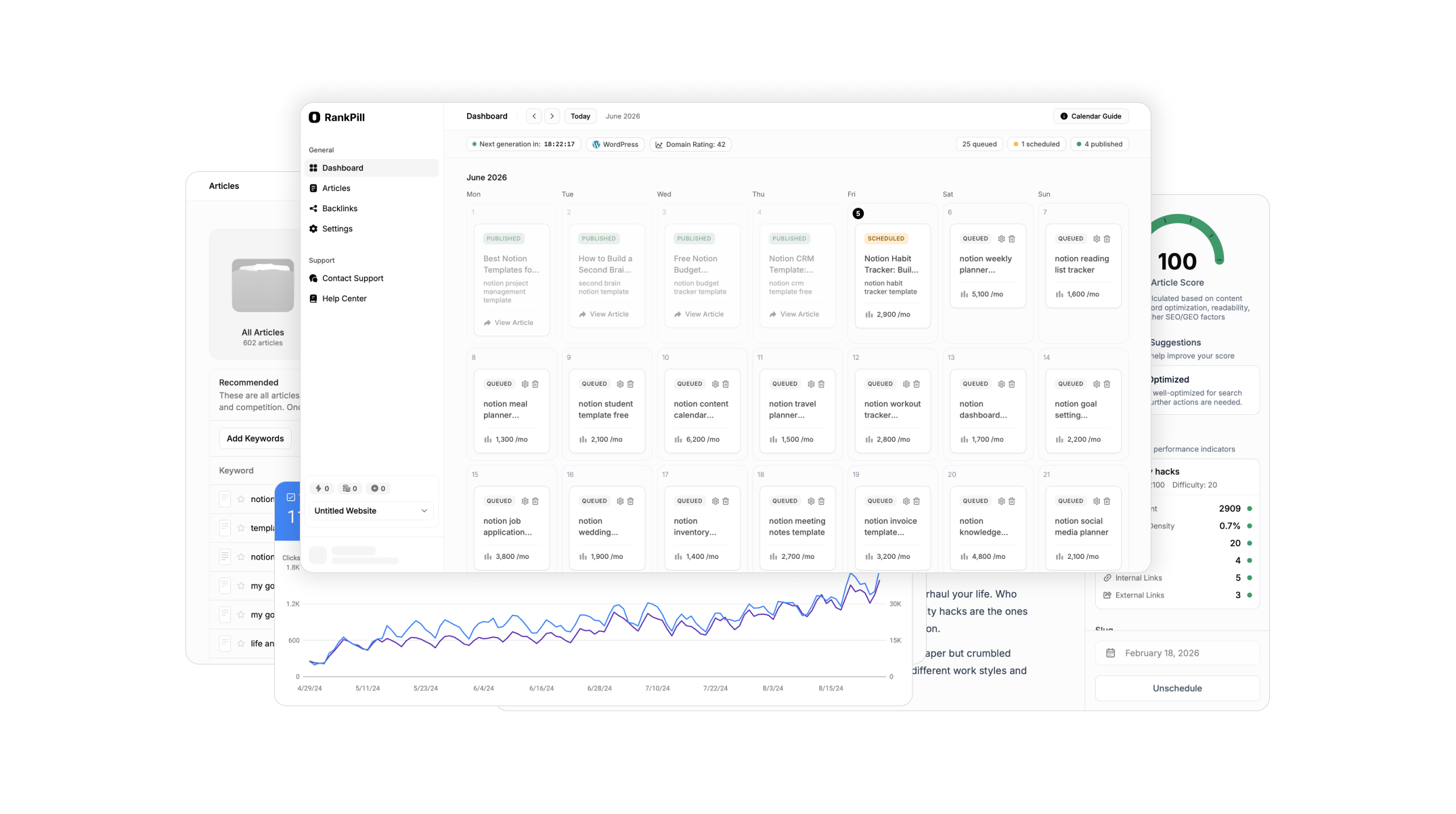
Digital marketing automation has evolved from a competitive advantage to a business necessity for organizations serious about scaling their marketing impact. The technology continues advancing rapidly, offering increasingly sophisticated capabilities for personalization, optimization, and efficiency. If you're looking to automate your content creation and SEO strategy while maintaining quality and relevance, RankPill provides an AI-powered platform that handles keyword research, content generation, and publishing automatically-letting you focus on strategic growth while your organic traffic scales effortlessly.
Unlock Traffic on Autopilot
Grow organic traffic on autopilot. RankPill will research, write, optimize, and publish articles to your website daily.