
Ecommerce Blog Ideas That Drive Traffic in 2026

Modest Mitkus
May 11, 2026
Finding the right ecommerce blog ideas can transform your online store from a static catalog into a traffic-generating machine. The challenge isn't just creating content; it's creating content that resonates with potential customers while satisfying search engines. With the right approach, your blog becomes a powerful acquisition channel that attracts qualified visitors, builds trust, and ultimately drives conversions. This guide explores the most effective ecommerce blog ideas for 2026, helping you build a content strategy that delivers measurable results.
Understanding the Purpose of Ecommerce Content
Ecommerce blog content serves multiple strategic purposes beyond simply filling up your website. Educational content positions your brand as an industry authority, while problem-solving articles address customer pain points before they even enter your sales funnel. When you publish valuable insights, you're not just competing for search rankings; you're building relationships with potential customers who will remember your brand when they're ready to buy.
The most successful ecommerce blogs balance three critical objectives: driving organic traffic, building customer trust, and supporting the purchasing journey. Each piece of content should serve at least one of these goals, though the best articles accomplish all three simultaneously.
Search intent matters more than ever in 2026. Google's algorithms have become increasingly sophisticated at understanding whether content truly matches what searchers need. Your ecommerce blog ideas must align with the questions your target audience is actively asking, not just the products you want to promote.
Product Education and How-To Guides
Product education content remains one of the most valuable ecommerce blog ideas because it directly addresses the information gap that prevents purchases. Customers want to understand not just what a product does, but how it solves their specific problems.
Creating In-Depth Product Guides
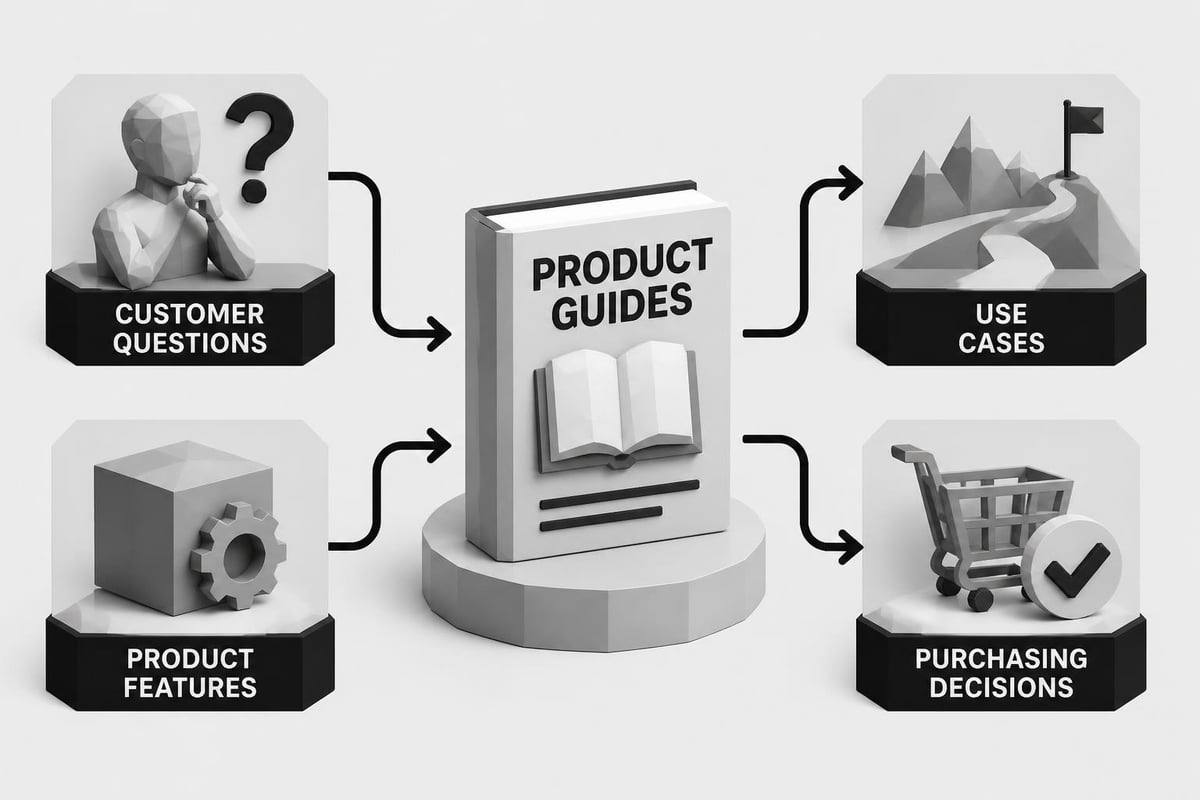
Comprehensive product guides go far beyond basic specifications. They explain use cases, application techniques, and expected outcomes in language that resonates with your audience's expertise level. A beauty brand might create guides on selecting foundation for different skin types, while a technology retailer could explain how to choose between laptop processors.
These guides naturally incorporate SEO-friendly keywords that potential customers use when researching products. By answering their questions comprehensively, you capture traffic at the critical research phase of the buying journey.
Tutorial Content That Demonstrates Value
Tutorial articles show customers how to get maximum value from products, either those you sell or complementary items. This approach works particularly well for complex products that require assembly, setup, or skill development.
- Step-by-step installation guides that reduce purchase anxiety
- Advanced technique tutorials that help customers master products
- Troubleshooting articles that solve common challenges
- Optimization guides that enhance product performance
According to e-commerce content strategies, product education content can significantly boost conversion rates by reducing uncertainty and building confidence in purchasing decisions.
Customer Stories and Social Proof
Customer success stories represent powerful ecommerce blog ideas that leverage social proof without appearing overtly promotional. Real experiences from actual customers carry far more weight than marketing claims, especially when presented authentically.
Crafting Authentic Customer Profiles
Customer profile articles showcase how real people use your products to solve genuine problems. These stories should include specific challenges, decision-making processes, and measurable outcomes that potential customers can relate to.
The best customer stories avoid generic testimonials in favor of detailed narratives. Instead of "This product is great," effective stories explain how a busy parent saved three hours per week or how a small business owner increased productivity by 40%.
| Story Element | Purpose | Example |
|---|---|---|
| Customer Background | Relatability | "Sarah runs a home-based consulting business with two young children" |
| Specific Challenge | Problem Identification | "She struggled to maintain professional organization while managing family chaos" |
| Product Discovery | Decision Journey | "After comparing five different planners, she chose our digital system for its mobile sync" |
| Implementation | Process Transparency | "She spent 30 minutes setting up her workspace categories and client tracking" |
| Measurable Results | Concrete Outcomes | "Within two weeks, she recovered 90 minutes daily and never missed a client deadline" |
User-Generated Content Integration
Featuring user-generated content in blog posts amplifies authenticity while encouraging community participation. This might include customer photos, creative product uses, or modification ideas that showcase your products in unexpected contexts.
User-generated content also provides fresh perspectives that your internal team might never consider. Customers often discover applications and combinations that reveal new market opportunities or content angles worth exploring further.
Seasonal and Trend-Based Content
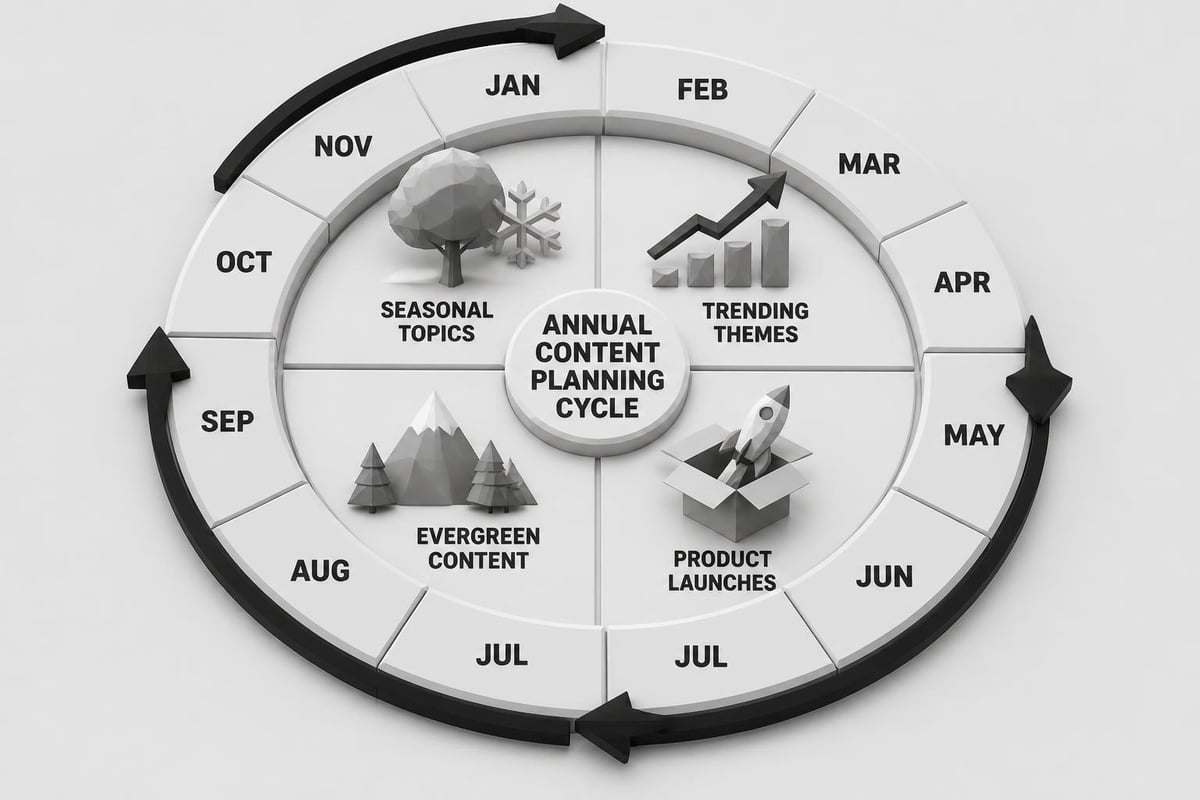
Seasonal ecommerce blog ideas capitalize on predictable search volume spikes while demonstrating your brand's relevance to current events and cultural moments. This content type requires advance planning but delivers concentrated traffic during peak periods.
Holiday Gift Guides and Buying Guides
Gift guides remain among the most effective seasonal ecommerce blog ideas, attracting high-intent shoppers actively seeking product recommendations. These guides should organize products by recipient type, price range, interest category, or problem solved rather than simply listing random items.
The key to successful gift guides lies in specificity. "Holiday Gift Guide" performs poorly compared to "Unique Gifts for Remote Workers Under $50" or "Anniversary Gifts for Coffee Enthusiasts." The more targeted your angle, the better your conversion rates.
Planning seasonal content requires working three to six months ahead. Start creating holiday content in summer, back-to-school articles in spring, and summer recreation content in winter. This lead time ensures your content ranks when search volume peaks.
Trend Analysis and Industry Insights
Trend-focused content positions your brand as a thought leader while capturing searches from curious customers exploring emerging topics. This might include analysis of design trends, technological innovations, sustainability movements, or lifestyle shifts relevant to your product categories.
When exploring blog content ideas, consider how industry trends affect customer purchasing decisions. A furniture retailer might analyze remote work's impact on home office design, while a fashion brand could examine sustainable fabric innovations.
Problem-Solving and FAQ Content
Problem-solving content directly addresses customer pain points, often capturing high-intent searches from people actively seeking solutions. These ecommerce blog ideas answer the "how do I fix" and "why does my" questions that indicate immediate needs.
Common Questions Transformed into Articles
Every customer service inquiry represents a potential blog article. Mining your support tickets, product reviews, and social media questions reveals exactly what information gaps exist in your market.
Transform frequently asked questions into comprehensive articles that address not just the surface question but the underlying concerns. If customers ask "How long does shipping take?", the real question might be "Will this arrive before my event?" Address both layers in your content.
Comparison and Decision-Making Content
Comparison articles help customers navigate choices, whether between your products or between different solution approaches. These guides might compare product models, feature sets, price points, or use cases to help buyers make informed decisions.
- Product A vs. Product B comparisons that highlight different customer needs
- Category comparisons explaining when to choose different product types
- Budget tier comparisons showing value at different price points
- Feature comparison tables that simplify complex specifications
Research from e-commerce SEO strategies shows that comparison content performs exceptionally well because it captures bottom-funnel traffic from buyers in active decision mode.
Behind-the-Scenes and Brand Story Content
Behind-the-scenes content humanizes your brand while differentiating you from competitors selling similar products. These ecommerce blog ideas build emotional connections that transcend transactional relationships.
Manufacturing and Sourcing Stories
Articles about how products are made, where materials come from, or who creates your items add depth to your brand narrative. This content particularly resonates with consumers increasingly concerned about ethical sourcing, sustainability, and supporting small producers.
Manufacturing stories work across industries. A coffee retailer might profile farming cooperatives, a clothing brand could showcase artisan workshops, and a technology company might explain quality control processes. The key is revealing aspects customers can't see from product pages alone.
Team Profiles and Expertise Sharing
Introducing the people behind your brand creates connection while demonstrating expertise. Feature product developers, customer service specialists, quality experts, or creative team members who bring unique perspectives to your business.
Team profiles can incorporate expertise sharing where team members discuss their specializations, offer professional advice, or explain decision-making processes. This positions individual employees as industry experts while building brand authority.
Industry News and Commentary
Commentary on industry developments establishes your brand as an active participant in your field rather than just a product seller. These ecommerce blog ideas demonstrate awareness of the broader context affecting your customers' lives.
Regulatory Changes and Consumer Impact
When regulations, standards, or industry practices change, explain how these developments affect your customers. This might include safety updates, certification changes, material restrictions, or shipping regulation modifications that impact product availability or characteristics.
Industry commentary should balance information delivery with customer relevance. Avoid insider jargon in favor of clear explanations of what changes mean for actual buyers and users.
Market Trends and Future Predictions
Analysis of where your industry is heading helps customers make informed purchasing decisions while positioning your brand as forward-thinking. Discuss emerging technologies, shifting consumer preferences, sustainability innovations, or design evolution relevant to your product categories.
Prediction content carries risks but rewards brands willing to take informed positions. Base predictions on market research, industry reports, and observed customer behavior rather than speculation, and update articles periodically as trends evolve.
Lifestyle and Inspiration Content
Lifestyle content connects products to aspirational outcomes, showing not just what items do but how they fit into desirable lifestyles. These ecommerce blog ideas work particularly well for brands with strong aesthetic identities or lifestyle associations.
Styling and Design Inspiration
Inspiration articles showcase products in context, helping customers visualize how items work together or integrate into existing spaces. This might include room designs, outfit combinations, table settings, or workspace layouts that feature your products naturally.
The most effective inspiration content provides actionable guidance alongside aspirational imagery. Explain why certain combinations work, offer alternatives at different price points, and provide shopping lists that make inspiration achievable.
Lifestyle Integration Guides
These guides explain how products support specific lifestyles, routines, or goals. A fitness retailer might create guides for building home gyms in small apartments, while a kitchenware brand could develop content around meal prep routines for busy professionals.
| Lifestyle Topic | Content Angle | Product Integration |
|---|---|---|
| Minimalist Living | Decluttering strategies and essential item selection | Highlight multi-functional products and quality over quantity |
| Remote Work Setup | Productivity optimization and ergonomic workspace design | Feature desk accessories, lighting, and organization systems |
| Sustainable Living | Reducing waste and making eco-conscious choices | Showcase durable, repairable, or recyclable products |
| Urban Gardening | Growing food in limited spaces | Present compact growing systems and space-efficient tools |
Creating Consistent Content with AI Tools
Maintaining a consistent publishing schedule with fresh ecommerce blog ideas becomes significantly easier with modern AI content tools. Platforms designed for SEO automation can help research keywords, generate outlines, and even produce first drafts that human editors refine for brand voice and accuracy.
The challenge many ecommerce businesses face isn't lacking ideas but finding time to execute them. RankPill addresses this bottleneck by automating the research, writing, and publishing process while maintaining the quality standards necessary for ranking in 2026. This allows small teams to compete with larger competitors who have dedicated content departments.
AI tools excel at identifying content gaps, analyzing competitor strategies, and generating content variations that target different keyword opportunities. Understanding how AI and content marketing work together helps ecommerce businesses scale their content production without proportionally scaling their teams or budgets.

Optimizing Content for Search and Conversion
Publishing ecommerce blog ideas without optimization wastes the effort invested in creation. Every article should include target keywords, internal links, clear calls-to-action, and conversion opportunities that guide readers toward purchasing decisions.
Keyword Integration and Search Intent
According to keyword research best practices, effective ecommerce content targets specific search queries that indicate buying intent or information needs. Match content format to search intent: how-to queries need tutorials, comparison searches require evaluation content, and problem statements demand solution-focused articles.
Keyword integration should feel natural rather than forced. Modern search algorithms prioritize content quality and relevance over keyword density, meaning truly helpful content that naturally uses related terminology outperforms keyword-stuffed articles.
Internal Linking Strategies
Strategic internal links connect blog content to product pages, category pages, and other relevant articles. This structure helps search engines understand your site architecture while guiding visitors toward conversion opportunities.
- Link from problem-solving articles to products that solve those problems
- Connect related blog posts to keep visitors engaged longer
- Guide readers from educational content to buying guides
- Reference product categories within lifestyle and inspiration content
Consider how agencies approach SEO when building internal link structures that support both ranking improvements and user experience goals.
Conversion-Focused Content Design
Every blog article should offer clear next steps, whether that's exploring product categories, signing up for newsletters, downloading resources, or reading related articles. Position these calls-to-action naturally within content rather than only at the end.
Visual elements like product callouts, comparison tables, and highlighted recommendations make conversion opportunities visible without disrupting content flow. Test different placements and formats to identify what resonates with your specific audience.
Measuring Content Performance and Iteration
Tracking which ecommerce blog ideas generate results allows continuous optimization of your content strategy. Move beyond vanity metrics like page views to measure engagement time, conversion paths, assisted conversions, and organic ranking improvements.
Analytics That Matter for Ecommerce Content
Key performance indicators for ecommerce blog content differ from standard blog metrics. Track how many visitors move from blog articles to product pages, what percentage of blog readers eventually convert, and which content topics generate the highest-value traffic.
Tools like Google Search Console reveal which queries drive traffic to each article, helping identify opportunities to create related content targeting similar searches. Monitor ranking changes for target keywords to assess SEO effectiveness.
Content Refresh and Update Strategies
Ecommerce blog ideas don't become irrelevant just because you published them months ago. Regular updates keep evergreen content performing well while signaling to search engines that your site remains active and current.
- Review top-performing articles quarterly for accuracy and completeness
- Add new information, products, or perspectives to existing content
- Update statistics, links, and examples to reflect current conditions
- Expand thin content with additional sections or multimedia elements
- Optimize underperforming content by improving titles, meta descriptions, and keyword targeting
Content refresh strategies often generate better ROI than creating entirely new articles, especially for posts that already rank on page two or three of search results.
Scaling Your Content Production
Growing ecommerce businesses eventually hit content production bottlenecks where demand for new articles exceeds available resources. Understanding how to scale effectively separates successful content programs from those that stall after initial enthusiasm fades.
Building Repeatable Content Frameworks
Create templates and frameworks for your most successful content types. A standardized approach to gift guides, product comparisons, or customer stories ensures quality consistency while reducing per-article production time.
Document your content creation process including research steps, outline structure, minimum word counts, required sections, and quality standards. This documentation enables delegation to contractors or team members while maintaining brand voice.
Leveraging Multiple Content Formats
Repurpose successful ecommerce blog ideas across formats to maximize content investment. Transform popular articles into video scripts, infographics, social media series, email newsletters, or downloadable guides. This multi-format approach extends content reach while accommodating different learning preferences.
Video content particularly amplifies blog effectiveness, as video integration can increase engagement time and provide additional ranking opportunities in video search results.
Implementing diverse ecommerce blog ideas consistently builds organic traffic that compounds over time, creating a sustainable acquisition channel that reduces dependence on paid advertising. The key lies in balancing customer value with strategic business goals, ensuring every article serves both your audience and your growth objectives. RankPill can help you execute this strategy at scale by automating the research, creation, and publishing process while maintaining the quality and optimization standards that drive results.