
Geo Strategy: Optimizing for AI-Driven Search in 2026

Modest Mitkus · April 1, 2026
The digital landscape has undergone a fundamental transformation with the rise of AI-powered search engines and large language models. Traditional search engine optimization strategies no longer capture the full picture of how users discover content in 2026. A comprehensive geo strategy now addresses both conventional search rankings and visibility within generative AI platforms like ChatGPT, Perplexity, and Google's AI Overviews. This dual approach represents the evolution from purely algorithmic indexing to contextual content synthesis powered by artificial intelligence.
Understanding Geo Strategy in Modern SEO
The term "geo strategy" has expanded beyond its traditional geopolitical roots to encompass Generative Engine Optimization. This framework recognizes that AI-driven search engines don't simply rank pages-they synthesize information from multiple sources to generate comprehensive responses. According to research on Generative Engine Optimization, these systems prioritize content based on relevance, authority, and how effectively information answers complex queries.
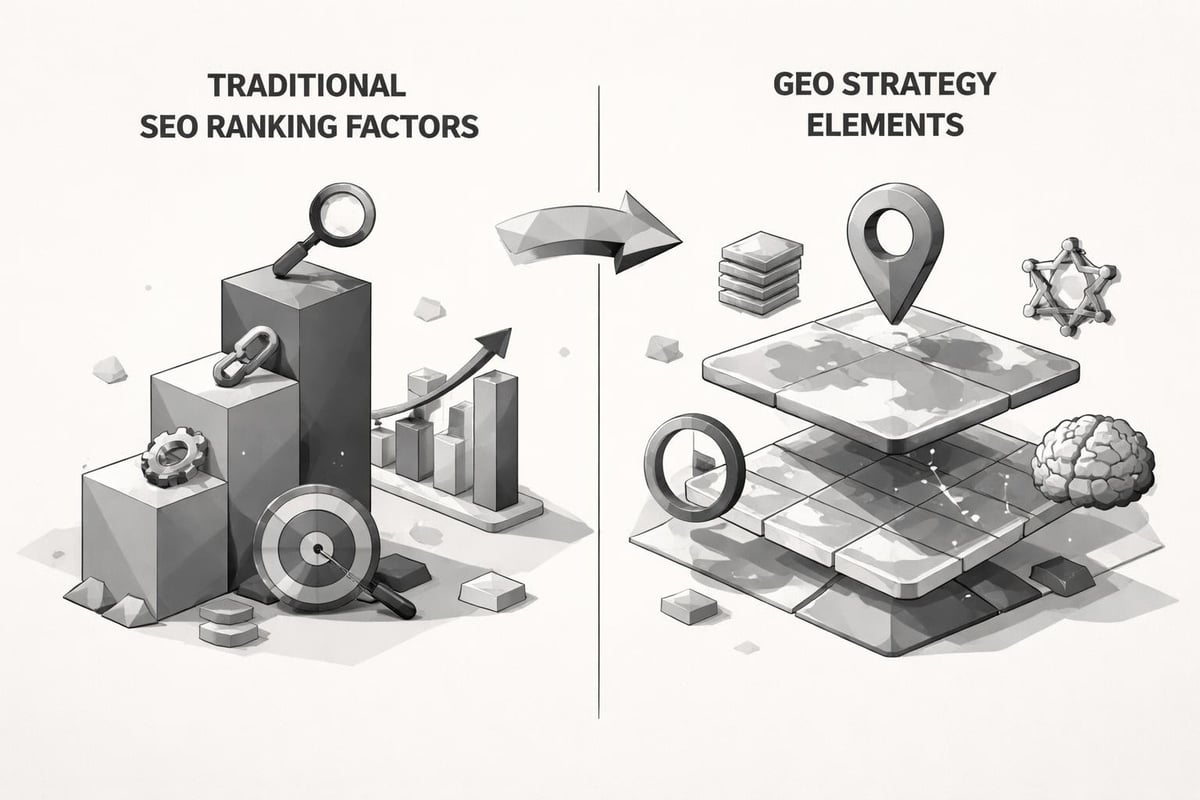
Traditional SEO focuses on:
- Keyword placement and density
- Backlink profiles and domain authority
- Technical site optimization
- Meta tags and structured data
Modern geo strategy incorporates:
- Content comprehensiveness and depth
- Natural language processing optimization
- Semantic relationship mapping
- Citation and reference quality
The shift requires content creators to think beyond ranking factors and consider how AI models interpret, extract, and present information to users.
The Mechanics of Generative Search Engines
Generative search engines operate fundamentally differently than traditional crawlers. They utilize large language models trained on vast datasets to understand context, relationships, and user intent. When a user asks a question, these systems don't just retrieve matching documents-they construct answers by synthesizing information from multiple authoritative sources.
This creates new opportunities for visibility. Content that appears in AI-generated responses gains exposure even without ranking first in traditional search results. A well-executed geo strategy ensures your content becomes a preferred source for these AI models when constructing responses in your domain.
Building Content for AI Visibility
Creating content optimized for generative engines requires a strategic approach that balances comprehensiveness with clarity. AI models favor content that demonstrates expertise, provides verifiable information, and connects concepts logically.
Depth Over Breadth
Generative engines reward thorough exploration of topics rather than superficial coverage of many subjects. When developing your geo strategy, prioritize creating comprehensive resources that address user questions from multiple angles.
| Content Type | Traditional SEO Value | Geo Strategy Value |
|---|---|---|
| 500-word articles | Moderate | Low |
| 1,500-word guides | High | Moderate |
| 2,000+ word resources | High | Very High |
| Multi-article topic clusters | Very High | Optimal |
Deep content allows AI models to extract nuanced information and cite your work as an authoritative source. This approach aligns perfectly with platforms like RankPill, which generates comprehensive 2,000+ word articles optimized for both traditional search and AI visibility. By automating the creation of in-depth content, businesses can maintain consistent publishing schedules while ensuring each piece meets the comprehensiveness standards that generative engines favor.
Structured Information Architecture
AI models parse content more effectively when information follows logical hierarchies. Implement clear heading structures, use descriptive subheadings, and organize related concepts in proximity. This semantic clustering helps generative engines understand relationships between ideas and extract relevant segments for specific queries.
Effective structural elements include:
- Descriptive H2 and H3 headings that preview content
- Bullet lists for features, benefits, and key points
- Tables for comparisons and specifications
- Short paragraphs that isolate distinct concepts
- Transitional phrases that connect related sections
Keyword Strategy for Generative Engines
The role of keywords evolves significantly in a geo strategy framework. While traditional keyword targeting remains important for discovery, generative engines prioritize semantic relevance over exact-match optimization. Understanding how to optimize for AI-driven search requires balancing conventional practices with new approaches.
Semantic Keyword Mapping
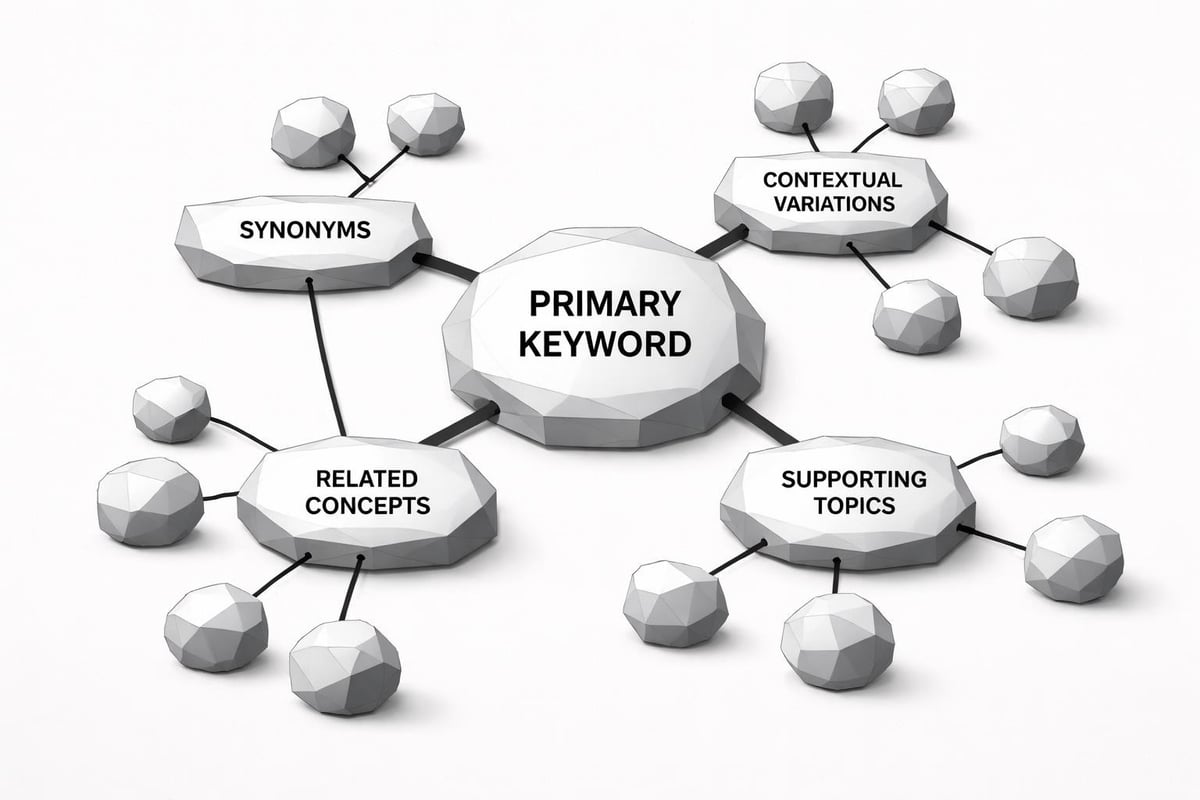
Rather than focusing solely on primary keywords, develop comprehensive semantic maps that include related concepts, synonyms, and contextual variations. AI models understand these relationships and reward content that naturally incorporates semantic diversity.
For example, an article about content marketing shouldn't just repeat that exact phrase. It should naturally discuss related concepts like audience targeting, distribution channels, engagement metrics, and conversion optimization. This semantic richness signals comprehensive coverage to generative engines.
Question-Based Optimization
Generative engines excel at answering questions. Structure content around the questions your audience asks, using natural language that mirrors how users phrase queries to AI assistants. This approach has become increasingly important as voice search and conversational AI platforms dominate user interactions.
Research common questions in your industry using:
- Customer support tickets and FAQs
- Social media discussions and forums
- Competitor content analysis
- Search suggestion tools
- Direct audience surveys
Incorporate these questions as subheadings and provide comprehensive answers that AI models can extract and present to users.
Technical Optimization for AI Crawlers
While generative engines process content differently than traditional crawlers, technical optimization remains crucial for a robust geo strategy. These systems still rely on accessible, well-structured data to train and update their models.
Structured Data Implementation
Schema markup helps AI systems understand content context and relationships. Implement appropriate schema types for your content, including Article, HowTo, FAQ, and Product schemas where relevant. This structured data provides explicit signals about content meaning and organization.
| Schema Type | Use Case | Geo Strategy Benefit |
|---|---|---|
| Article | Blog posts, news | Enhanced content attribution |
| FAQ | Question-answer pairs | Direct answer extraction |
| HowTo | Process guides | Step-by-step visibility |
| Product | Service pages | Feature highlighting |
Mobile Optimization and Performance
AI platforms increasingly prioritize content that delivers excellent user experiences. Page speed, mobile responsiveness, and accessibility directly impact how generative engines evaluate and recommend content. These factors signal quality and user-centricity to AI models.
Optimize technical performance through:
- Image compression and lazy loading
- Minimized JavaScript and CSS
- Content delivery networks
- Responsive design frameworks
- Accessible markup and ARIA labels
Content Distribution in a Geo Strategy Framework
Creating optimized content represents only half of an effective geo strategy. Distribution determines how quickly AI models discover and incorporate your content into their knowledge bases.
Multi-Platform Publishing
Extend content reach by publishing across multiple platforms where AI models train and update. This includes not only your primary website but also Medium, LinkedIn articles, industry-specific platforms, and community forums. Each platform provides additional signals about content authority and relevance.
When distributing content, maintain consistency in expertise and messaging while tailoring presentation to platform-specific audiences. This approach builds recognizable authority that generative engines associate with your brand across contexts.
Citation and Reference Building
Unlike traditional backlinks, citations in generative search refer to how often AI models reference your content when constructing answers. Building citability requires creating content that serves as a definitive source for specific topics within your niche.
Increase citation potential by:
- Publishing original research and data
- Creating comprehensive resource guides
- Maintaining up-to-date information
- Providing verifiable facts and statistics
- Establishing thought leadership positions
These elements make your content more valuable for AI models seeking authoritative sources to support generated responses. For businesses looking to establish this authority efficiently, AI-powered SEO platforms can maintain consistent publication schedules while ensuring each piece meets quality standards.
Measuring Geo Strategy Success
Tracking performance in generative search requires new metrics beyond traditional SEO indicators. While organic traffic and rankings remain important, they don't capture the full impact of AI visibility.
AI Search Visibility Metrics
Monitor how often your brand or content appears in AI-generated responses across different platforms. This requires manual checking of various AI assistants for industry-related queries, tracking brand mentions in generated content, and monitoring referral traffic from AI platforms.
Key metrics to track:
- AI Platform Citations: Frequency of content references in ChatGPT, Perplexity, and similar platforms
- Branded Query Responses: How often AI recommends your brand for relevant queries
- Answer Quality: Accuracy and completeness of AI-generated content about your business
- Referral Traffic: Visits originating from AI platform recommendations
- Engagement Patterns: User behavior from AI-driven traffic versus traditional search
Competitive Intelligence
Understanding how competitors appear in generative search provides strategic advantages. Analyze which competitors AI platforms cite for industry queries, identify content gaps in AI responses, and discover opportunities for authoritative positioning.
Tools for competitor keyword research help identify where competitors gain visibility, enabling strategic content creation that fills gaps and establishes superior authority.
Advanced Geo Strategy Tactics
As the field matures, sophisticated approaches emerge that leverage both established SEO principles and novel AI-specific tactics. The AgenticGEO framework represents one such evolution, introducing self-optimizing systems that adapt content based on AI response patterns.
Adaptive Content Optimization
Rather than static publication, implement systems that continuously refine content based on performance in both traditional and generative search. This involves monitoring how AI platforms interpret and present your content, identifying optimization opportunities through performance analysis, testing variations to improve AI citation rates, and updating content to maintain relevance in evolving AI models.
This adaptive approach requires robust content management systems and analytics infrastructure capable of tracking multidimensional performance metrics.
Conversational Content Design
Design content that anticipates follow-up questions and provides natural conversation flows. AI assistants often engage users in multi-turn conversations, and content structured to support these interactions gains preferential treatment.
Implement conversational design through:
- Anticipating logical follow-up questions
- Creating internal linking structures that mirror conversation flows
- Providing progressive information disclosure
- Using natural language that matches user queries
- Structuring content in easily extractable segments
Integration with Traditional SEO
Successful geo strategy doesn't replace traditional SEO-it extends and enhances it. The most effective approach integrates both methodologies into a cohesive framework that maximizes visibility across all search modalities.
Unified Content Strategy
Develop content that simultaneously serves traditional search rankings and generative engine visibility. This requires understanding how the same content performs across different discovery channels and optimizing for both without compromising either.
Unified optimization checklist:
- Target primary keywords while building semantic breadth
- Optimize meta tags for traditional search and social sharing
- Structure content for both crawler indexing and AI extraction
- Build backlinks that signal authority to all systems
- Monitor performance across traditional and AI-driven channels
Resource Allocation
Balance investment between traditional SEO tactics and geo strategy initiatives based on your audience's search behavior. Industries with high AI adoption rates may warrant heavier geo strategy investment, while sectors with established traditional search patterns benefit from balanced approaches.
Consider factors like audience demographics and technology adoption, competitive landscape in both search types, content production capabilities and resources, and existing SEO performance and opportunity areas when determining resource allocation.
Industry-Specific Geo Strategy Applications
Different industries require tailored geo strategy approaches based on how audiences discover information and the competitive dynamics within each sector.
B2B and Professional Services
Professional services benefit significantly from thought leadership content that generative engines cite when answering industry-specific questions. Establish expertise through comprehensive guides, original research, and detailed case studies that AI models recognize as authoritative sources.
Focus on creating content around professional challenges your audience faces, providing frameworks and methodologies that AI can reference, and building recognition as an industry expert through consistent quality. Understanding whether SEO is worth it for small businesses helps determine appropriate investment levels for these strategies.
E-commerce and Product-Based Businesses
Product businesses leverage geo strategy by creating comprehensive product guides, comparison resources, and educational content that helps AI assistants recommend appropriate solutions. Optimize product descriptions for natural language queries and ensure specifications are easily extractable for AI presentation.
Implement detailed product schema markup, create buying guides for product categories, provide comparative analysis across product lines, and optimize for voice commerce queries increasingly handled by AI assistants.
Content Publishers and Media
Publishers benefit from positioning as primary sources for news, analysis, and evergreen reference content. Geo strategy for publishers emphasizes citation-worthy original reporting, comprehensive background resources that AI models reference for context, and maintaining up-to-date information that generative engines prefer over outdated sources.
Implementing an effective geo strategy requires understanding how AI-driven search fundamentally changes content discovery while maintaining strong traditional SEO foundations. By optimizing for both algorithmic rankings and generative engine visibility, businesses position themselves for success across all search modalities. RankPill automates this dual optimization by generating comprehensive, AI-friendly content at scale, enabling businesses to maintain the consistent publishing and quality standards necessary for geo strategy success without overwhelming internal resources.
Unlock Traffic on Autopilot
Grow organic traffic on autopilot. RankPill will research, write, optimize, and publish articles to your website daily.