
SEO for Shopify Store: Complete Guide for 2026

Modest Mitkus
March 27, 2026
Running a successful eCommerce business requires more than just great products and attractive design. If customers can't find your store through search engines, you're missing out on valuable organic traffic. SEO for Shopify store success is a critical component that determines whether your products appear on page one of Google or get lost among thousands of competitors. With the right optimization strategy, you can transform your Shopify store into a traffic-generating machine that attracts qualified buyers actively searching for what you sell.
Understanding the SEO Fundamentals for Shopify
Shopify provides a solid foundation for search optimization, but the platform's built-in features only take you halfway to success. Understanding how search engines evaluate eCommerce sites helps you make informed decisions about content, structure, and technical implementation.
Search engines prioritize user experience, relevant content, and trustworthy signals when ranking Shopify stores. Your store needs to demonstrate expertise in your niche, provide valuable product information, and deliver a seamless browsing experience across all devices.
Why Shopify Store SEO Differs from Traditional Websites
eCommerce SEO presents unique challenges compared to informational websites. Product pages must balance persuasive sales copy with search-optimized content. Category pages need to rank for competitive commercial keywords while maintaining usability. Your store structure must accommodate hundreds or thousands of products without creating duplicate content issues.
The transactional nature of eCommerce searches means competition is fierce. Users searching for "buy leather wallet" or "best running shoes for women" represent high-intent traffic that every retailer wants to capture. Effective SEO for Shopify store operations requires understanding this competitive landscape and positioning your products strategically.
Technical SEO Foundation for Shopify Stores
Technical optimization ensures search engines can properly crawl, index, and understand your Shopify store. Without a solid technical foundation, even the best content and products won't rank effectively.

Site Speed and Core Web Vitals
Page speed directly impacts both search rankings and conversion rates. Shopify stores often struggle with speed due to heavy product images, multiple app integrations, and inefficient theme code.
Optimize images by compressing files before upload and using appropriate dimensions for each placement. Remove unused apps that inject unnecessary JavaScript into your pages. Choose a lightweight theme designed for performance rather than flashy animations.
Core Web Vitals metrics (Largest Contentful Paint, First Input Delay, and Cumulative Layout Shift) have become ranking factors. Test your store regularly using Google PageSpeed Insights and address issues affecting these measurements.
URL Structure and Navigation Hierarchy
Creating SEO-friendly URLs improves both user experience and search engine understanding. Shopify automatically generates URLs based on product and collection names, but you should customize these for optimal results.
Best practices for Shopify URL structure:
- Keep URLs short and descriptive
- Include target keywords naturally
- Use hyphens to separate words
- Avoid special characters and numbers
- Remove stop words when possible
- Maintain consistency across product categories
Your navigation should reflect a logical hierarchy that helps both users and search engines understand content relationships. Main categories should target broad keywords, while subcategories drill down into specific product types.
| URL Element | Good Example | Poor Example |
|---|---|---|
| Product | /leather-wallet-men | /product-12345 |
| Collection | /running-shoes | /collection/cat-1 |
| Blog Post | /how-to-clean-leather | /blog/post?id=567 |
Keyword Research for eCommerce Success
Identifying the right keywords separates profitable stores from struggling ones. eCommerce keyword research requires understanding user intent, search volume, and commercial value.
Product Page Keyword Strategy
Each product page should target a primary keyword representing what customers type when ready to purchase. These are typically product-specific terms with modifiers like "buy," "shop," or specific attributes.
Research competitors ranking for your target products and analyze their keyword usage. Tools that help you get competitor keywords reveal opportunities you might otherwise miss.
Consider these keyword types for product optimization:
- Brand + Product: "Nike Air Max 270"
- Generic + Modifier: "men's running shoes wide width"
- Problem-Solution: "shoes for plantar fasciitis"
- Feature-Based: "waterproof hiking boots Gore-Tex"
Collection and Category Keywords
Collection pages compete for broader, higher-volume keywords. These pages should rank for terms representing an entire product category rather than individual items.
Build comprehensive collection descriptions that naturally incorporate related keywords and answer common customer questions. Include 300-500 words of unique content explaining the category, highlighting key products, and providing buying guidance.
Long-tail variations often convert better than broad terms. "Organic cotton baby clothes" attracts more qualified traffic than just "baby clothes," even with lower search volume.
On-Page Optimization Techniques
Once you've identified target keywords, strategic on-page implementation determines whether those keywords actually drive rankings. Every element on your Shopify store pages contributes to search engine understanding.
Title Tags and Meta Descriptions
Title tags remain one of the most important ranking factors. Each product and collection page needs a unique title that includes the primary keyword while remaining under 60 characters.
Effective title tag formulas:
- Product: [Product Name] - [Key Feature] | [Brand]
- Collection: [Keyword Phrase] - [Modifier] | [Store Name]
- Content: [Topic] - [Benefit] | [Brand]
Meta descriptions don't directly impact rankings but significantly affect click-through rates. Write compelling descriptions between 140-150 characters that include keywords and persuasive calls to action.

Product Descriptions That Rank and Convert
Generic manufacturer descriptions create duplicate content issues and fail to engage customers. Writing unique, detailed product descriptions serves both SEO and conversion optimization.
Structure product descriptions with:
- Opening paragraph with primary keyword and main benefit
- Detailed features list highlighting specifications
- Use cases explaining who should buy this product
- Care instructions or usage guidelines
- Related product suggestions
Incorporate secondary keywords naturally throughout the description. Focus on answering questions customers ask during the consideration phase. The best product descriptions educate while they sell.
Image Optimization and Alt Text
Images carry significant SEO value when properly optimized. File names, alt text, and surrounding content all contribute to image search rankings and page relevance.
Rename image files descriptively before uploading. Instead of "IMG_1234.jpg," use "mens-leather-wallet-brown.jpg" that includes relevant keywords.
Alt text should describe the image content for accessibility while incorporating keywords when appropriate. Avoid keyword stuffing; write natural descriptions that help visually impaired users understand what the image shows.
Content Marketing for Shopify Stores
Blog content drives traffic for informational keywords that product pages can't target. A strategic content plan positions your store as an industry authority while capturing customers at earlier research stages.
Blog Topics That Drive eCommerce Traffic
Focus on topics that align with your products and answer customer questions. How-to guides, buying guides, product comparisons, and industry trends all attract qualified visitors who may eventually purchase.
According to Shopify's eCommerce SEO guide, content marketing helps stores rank for broader informational queries that product pages can't capture effectively.
Plan content around the customer journey:
- Awareness Stage: Educational content about problems your products solve
- Consideration Stage: Comparison guides and detailed product reviews
- Decision Stage: Specific product features and use case demonstrations
Many successful Shopify stores leverage AI SEO tools to maintain consistent publishing schedules and cover comprehensive keyword lists efficiently.
Internal Linking Strategy
Internal links distribute authority throughout your store and help search engines discover pages. Strategic linking from blog posts to product and collection pages drives traffic to commercial pages while improving rankings.
Link contextually from relevant anchor text rather than generic phrases. When discussing "waterproof hiking boots" in a blog post, link that exact phrase to your waterproof boots collection.
Create content hubs around major product categories. A comprehensive buying guide for your main category should link to relevant subcategories, featured products, and related blog posts, creating a topical authority cluster.
Link Building for eCommerce Authority
Backlinks remain a critical ranking factor, especially for competitive eCommerce keywords. Building high-quality links to your Shopify store requires creative outreach and value creation.
Effective Link Building Strategies
Product-based businesses have unique link building opportunities that service providers don't. Creative campaigns, data-driven content, and strategic partnerships all generate authoritative backlinks.
Consider these eCommerce-specific link building approaches:
- Product Reviews: Send products to bloggers and industry publications
- Data Studies: Analyze your sales data to reveal industry trends
- Expert Roundups: Feature industry experts discussing topics related to your products
- Scholarship Programs: Educational scholarships attract links from .edu domains
- Supplier Partnerships: Request links from manufacturers and distributors
Tools that help you build backlinks through automation can supplement manual outreach efforts, creating a comprehensive link profile more efficiently.
Local SEO for Physical Locations
Shopify stores with physical retail locations benefit from local SEO optimization. Claim and optimize your Google Business Profile, ensure NAP (Name, Address, Phone) consistency across directories, and create location-specific pages.
Local inventory listings connect your Shopify catalog with Google's local product results, displaying availability to nearby searchers. This integration captures high-intent local customers ready to purchase immediately.
Shopify Apps and SEO Tools
The Shopify App Store offers hundreds of SEO-related applications, but choosing the right ones prevents bloating your store with unnecessary code.
Essential SEO Apps for Shopify
| App Category | Purpose | Key Features |
|---|---|---|
| Technical SEO | Site audits and monitoring | Broken link detection, redirect management, sitemap generation |
| Schema Markup | Rich snippet implementation | Product reviews, pricing, availability structured data |
| Image Optimization | Automated compression | Bulk image resize, lazy loading, WebP conversion |
| Content Enhancement | SEO recommendations | Keyword density analysis, readability scores, meta tag optimization |
Avoid installing multiple apps that perform similar functions. Each additional app potentially slows your site and creates maintenance complexity.
Automation and AI-Powered SEO
Maintaining consistent SEO efforts across hundreds of products challenges even dedicated teams. Automation tools handle repetitive tasks while you focus on strategic initiatives.
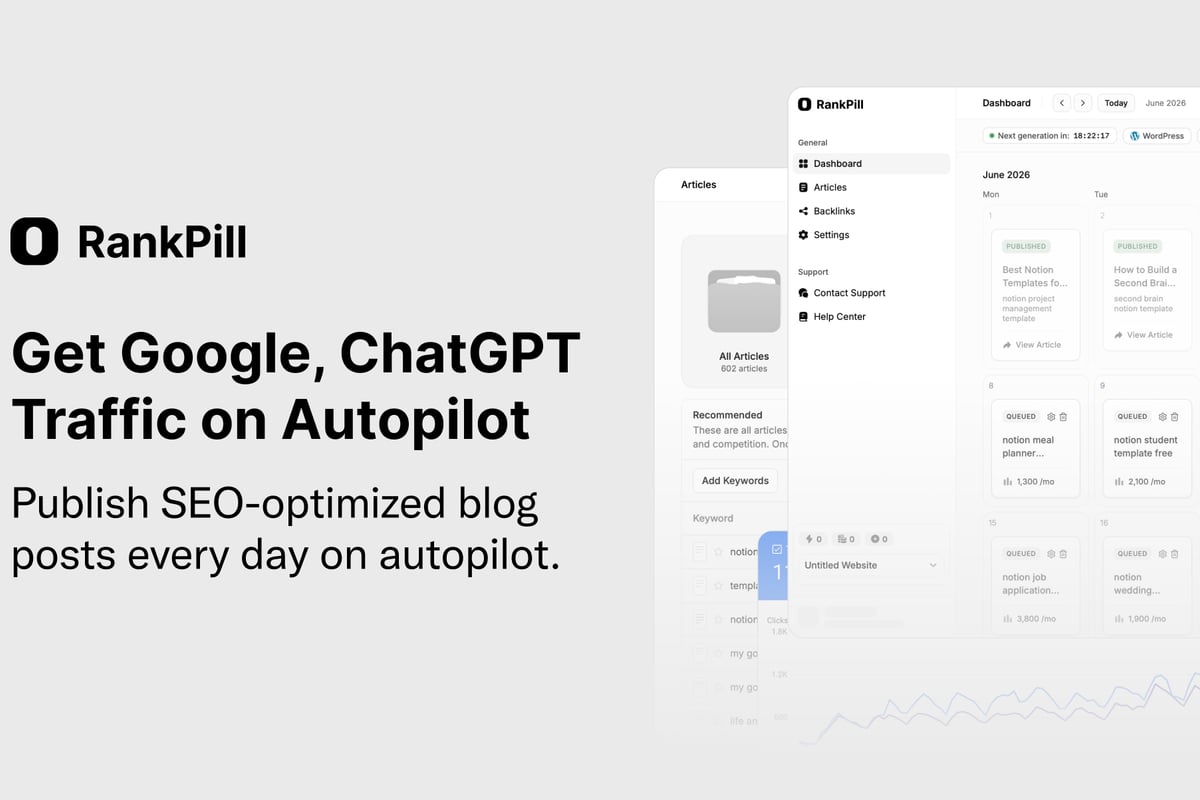
RankPill automates the complete content creation process for Shopify stores, researching keywords, writing optimized blog posts, and publishing consistently. At just $99 per month for 30 articles, it delivers the content volume necessary for competitive rankings at a fraction of traditional agency costs. The platform integrates directly with Shopify, ensuring seamless publishing without manual intervention.
Understanding SEO automation tools helps you identify which tasks benefit from automation versus requiring human expertise.
Mobile Optimization Requirements
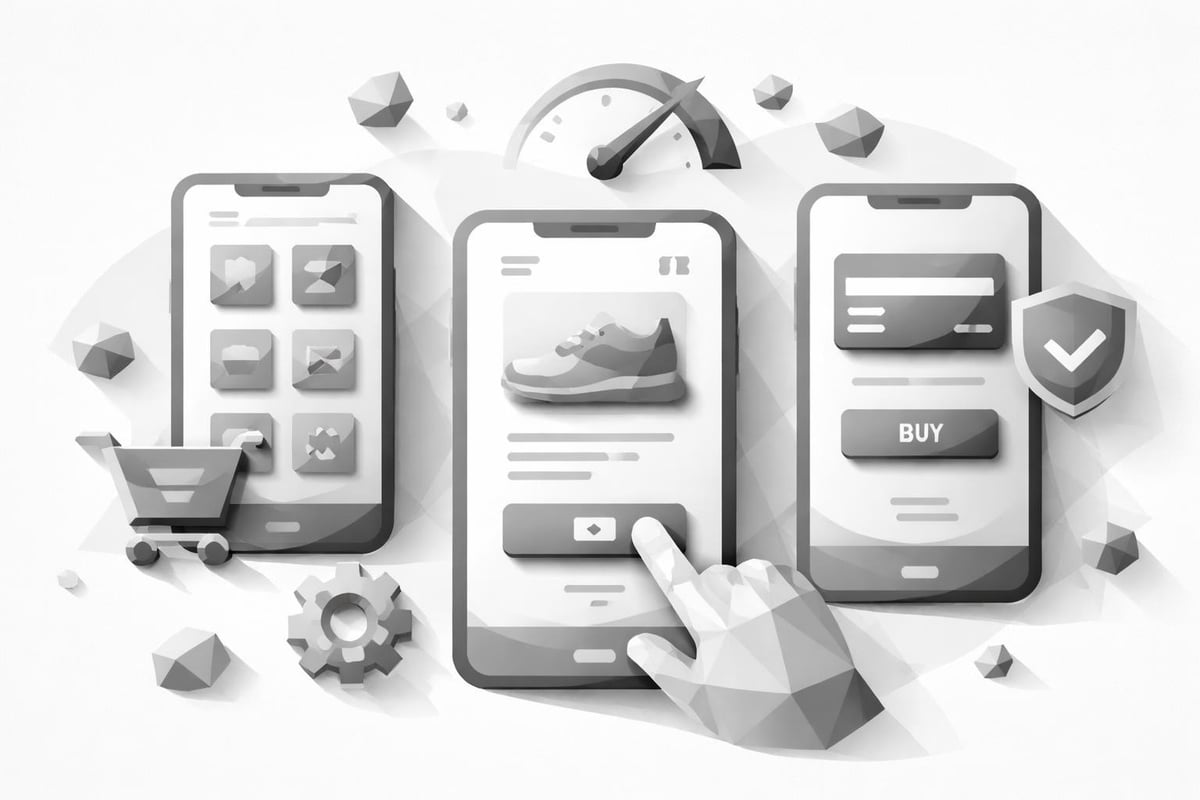
Mobile commerce continues growing, with over 70% of Shopify traffic coming from mobile devices. Mobile-friendly design isn't optional; it's fundamental to SEO for Shopify store success.
Responsive Design Best Practices
Shopify themes are generally mobile-responsive, but custom modifications can break mobile functionality. Test every page on multiple devices and screen sizes regularly.
Mobile optimization priorities include:
- Touch-friendly navigation with adequate spacing
- Readable text without zooming (minimum 16px font)
- Fast-loading images optimized for small screens
- Streamlined checkout process with minimal form fields
- Accessible mobile menus that don't hide important pages
Google's mobile-first indexing means the mobile version of your store determines rankings. Desktop performance matters, but mobile experience takes priority in search algorithms.
Mobile Site Speed
Mobile users expect instant page loads despite often using slower connections. Compress images aggressively for mobile delivery, implement lazy loading for below-fold content, and minimize JavaScript execution.
AMP (Accelerated Mobile Pages) provides lightning-fast mobile experiences but requires careful implementation to avoid content mismatches. Most Shopify stores achieve sufficient mobile speed without AMP through proper optimization.
Measuring and Tracking SEO Performance
Data-driven optimization requires consistent monitoring of key performance indicators. Understanding which metrics matter helps you focus improvement efforts effectively.
Essential SEO Metrics for eCommerce
Track these metrics to evaluate your SEO for Shopify store performance:
- Organic Sessions: Total traffic from search engines
- Keyword Rankings: Position for target keywords
- Conversion Rate: Percentage of organic visitors who purchase
- Revenue from Organic: Direct financial impact of SEO
- Page Load Time: Technical performance metric
- Crawl Errors: Technical issues preventing indexing
Google Analytics 4 and Google Search Console provide most necessary data. Set up eCommerce tracking in GA4 to attribute revenue to specific organic keywords and landing pages.
Competitive Analysis and Benchmarking
Regular competitor analysis reveals opportunities and threats. Monitor which keywords competitors rank for, what content they publish, and which backlinks they acquire.
Methods for effective competitor keyword research include analyzing their top-performing pages, identifying keyword gaps between your stores, and monitoring their content publishing frequency.
Benchmark your performance against competitors in key areas:
| Metric | Your Store | Competitor A | Competitor B | Industry Average |
|---|---|---|---|---|
| Domain Authority | 35 | 42 | 38 | 40 |
| Ranking Keywords | 1,200 | 2,400 | 1,800 | 1,500 |
| Monthly Organic Traffic | 15,000 | 35,000 | 22,000 | 18,000 |
| Average Position | 18.5 | 12.3 | 15.7 | 16.2 |
Common Shopify SEO Mistakes to Avoid
Even experienced store owners make SEO mistakes that limit growth. Recognizing these pitfalls helps you avoid costly errors.
Duplicate Content Issues
Shopify creates multiple URLs for the same product when it appears in multiple collections. Without proper canonicalization, this creates duplicate content that dilutes ranking potential.
Implement canonical tags pointing to the primary product URL. Shopify handles this automatically in most cases, but custom theme modifications sometimes break canonical implementation.
Avoid copying manufacturer descriptions across multiple product variations. Write unique descriptions for each product, even similar items, to prevent duplicate content penalties.
Thin Content on Product Pages
Minimal product descriptions with only a few sentences fail to provide sufficient content for ranking. Search engines need substantial, relevant content to understand page topics and determine ranking worthiness.
Aim for 300-500 words minimum on product pages for competitive keywords. Include detailed specifications, use cases, care instructions, and related information that helps customers make informed purchase decisions.
Ignoring Search Console Data
Google Search Console reveals exactly what search queries drive impressions and clicks. Many store owners set up Search Console but never review the data it provides.
Weekly Search Console reviews help you identify:
- Keywords ranking positions 11-20 (one optimization away from page one)
- Pages with high impressions but low clicks (opportunity for better meta descriptions)
- Crawl errors preventing indexation
- Mobile usability issues affecting rankings
- Manual actions or security issues
According to Shopify's beginner SEO guide, regularly monitoring Search Console data helps identify quick wins and emerging opportunities.
Advanced SEO Strategies for Growth
Once you've mastered fundamentals, advanced techniques accelerate growth and defend against competitors. These strategies require more effort but deliver substantial returns.
Structured Data Implementation
Schema markup helps search engines understand product information, prices, availability, and reviews. Rich snippets in search results improve click-through rates significantly.
Implement these schema types on Shopify:
- Product schema with price, availability, and SKU
- Review schema displaying star ratings
- Organization schema for brand information
- Breadcrumb schema showing navigation hierarchy
- FAQ schema for common product questions
Video Content Integration
Video content engages customers while providing additional ranking opportunities in video search results. Product demonstrations, unboxing videos, and how-to guides all enhance SEO performance.
Host videos on YouTube for maximum reach, then embed them on relevant product pages. Optimize video titles, descriptions, and tags with target keywords. Transcribe videos and include transcripts on product pages for additional text content.
Voice Search Optimization
Voice searches use conversational, question-based queries. Optimizing for voice requires natural language content that directly answers common questions.
Create FAQ sections addressing questions like "What's the best [product] for [use case]?" and "How do I choose [product category]?" These conversational queries increasingly drive traffic as voice assistants become more prevalent.
Understanding how to optimize for AI SEO prepares your store for emerging search behaviors beyond traditional Google queries.
Seasonal and Event-Based SEO
eCommerce traffic fluctuates with seasons, holidays, and events. Strategic preparation for these peaks maximizes revenue during high-intent periods.
Planning for Peak Seasons
Begin optimization 2-3 months before major shopping seasons. Create gift guides, holiday-specific collections, and seasonal buying guides that rank before peak traffic arrives.
Update existing seasonal content annually rather than creating new pages. Aged pages with established authority rank faster than brand-new content.
Seasonal keyword research reveals opportunities:
- "Christmas gifts for [audience]"
- "Back to school [product category]"
- "Summer [product] sale"
- "Black Friday deals [niche]"
Evergreen Content Strategy
Balance seasonal content with evergreen topics that drive consistent year-round traffic. Foundational guides, product comparisons, and educational content maintain traffic during off-peak periods.
Evergreen content compounds over time as it accumulates backlinks and authority. A comprehensive buying guide published today continues attracting traffic and conversions for years with periodic updates.
The most effective content strategy for increasing blog traffic combines timely seasonal pieces with permanent foundational content.
Mastering SEO for Shopify store success requires consistent effort across technical optimization, content creation, and strategic link building. The strategies outlined above provide a comprehensive roadmap for increasing organic traffic and revenue through search visibility. If maintaining this level of SEO effort seems overwhelming, RankPill automates the content creation process, researching keywords, writing optimized articles, and publishing consistently to drive organic growth while you focus on running your business.