
SEO Tools Comparison: The Complete 2026 Buyer's Guide

Modest Mitkus
June 23, 2026
Selecting the right SEO software can transform your organic traffic strategy, but the sheer number of platforms available in 2026 makes decision-making overwhelming. An effective seo tools comparison requires evaluating not just features and pricing, but also how each platform aligns with your specific workflow, team size, and growth objectives. This guide breaks down the major categories, key differentiators, and critical factors that help you choose tools that actually deliver measurable results.
Understanding the SEO Tools Landscape
The SEO software market has evolved dramatically over the past few years. What started as simple rank trackers has expanded into comprehensive platforms offering keyword research, backlink analysis, content optimization, technical audits, and competitive intelligence.
Modern SEO tools fall into several distinct categories, each serving different aspects of search optimization. All-in-one platforms like Semrush and Ahrefs attempt to cover every need under one subscription, while specialized tools focus on specific tasks like link building or content creation. Then there are emerging AI-powered platforms that automate entire workflows rather than just providing data.
Understanding these categories matters because your seo tools comparison should start with identifying which functions you actually need. A solo blogger has vastly different requirements than an enterprise SEO team managing dozens of clients.
Enterprise vs. Small Business Needs
Enterprise teams typically need collaboration features, white-label reporting, API access, and the ability to track thousands of keywords across multiple domains. These requirements justify premium pricing tiers that can exceed $500 per month.
Small businesses and solo marketers, on the other hand, benefit more from tools that offer strong core functionality without unnecessary complexity. The best SEO tools of 2026 now include options specifically designed for leaner budgets and smaller teams.
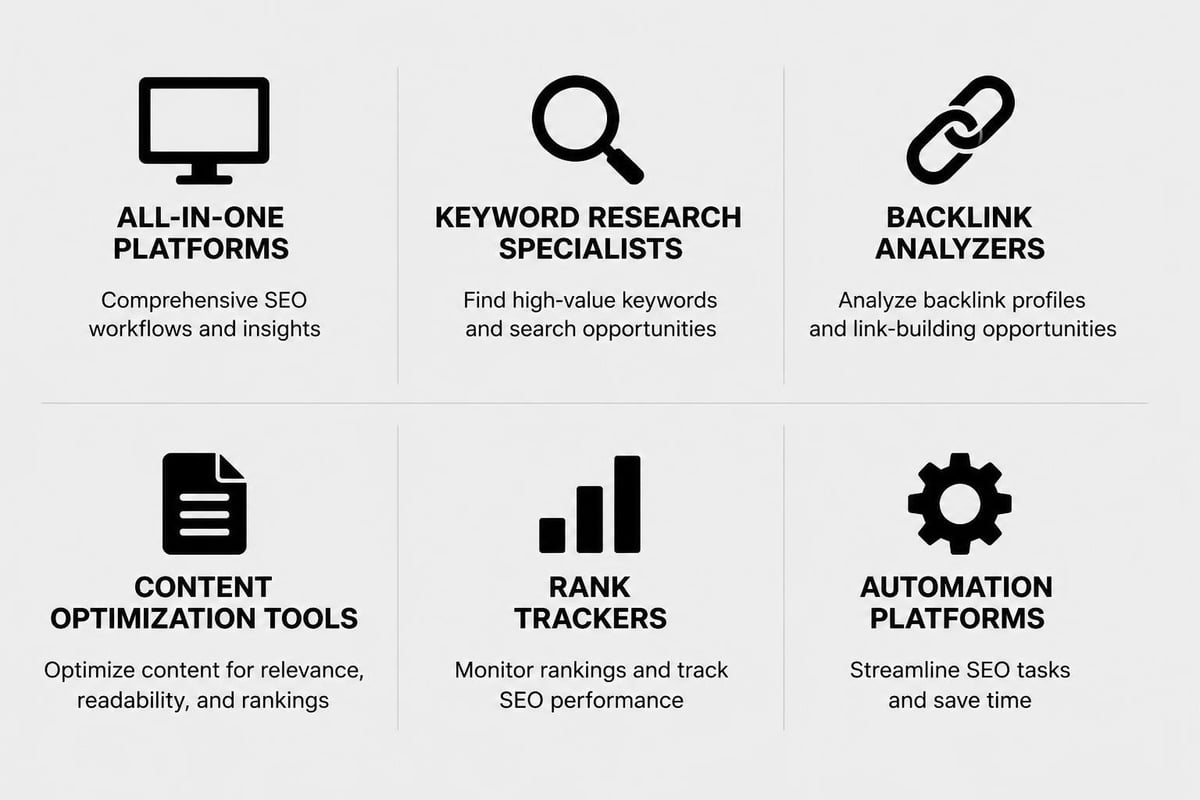
Core Features for SEO Tools Comparison
When conducting an seo tools comparison, certain features separate exceptional platforms from mediocre ones. These capabilities directly impact your ability to execute effective search optimization strategies.
Keyword Research Capabilities
Effective keyword research tools should provide more than basic search volume data. The best platforms in 2026 include:
- Search intent classification to understand what users actually want
- Keyword difficulty scores that reflect realistic ranking potential
- SERP feature tracking showing which results trigger featured snippets or other elements
- Question-based keyword discovery for content ideation
- Long-tail variations that competitors might miss
According to Buffer's comprehensive list of free SEO tools, many platforms now offer limited keyword research functionality at no cost, making it easier to test before committing to paid plans.
Backlink Analysis and Link Building
Backlink profiles remain one of Google's strongest ranking signals. Your seo tools comparison should evaluate how each platform handles link analysis:
| Feature | Why It Matters | Top Performers |
|---|---|---|
| Index size | Larger databases catch more links | Ahrefs, Semrush |
| Update frequency | Fresh data reveals new opportunities | Daily crawls preferred |
| Toxic link detection | Protects from penalties | Automated flagging |
| Competitor gap analysis | Finds link opportunities | Side-by-side comparison |
| Link prospecting | Builds new connections | Outreach integration |
The landscape of link building tools has expanded significantly, with platforms now offering automated outreach sequences and relationship management features that go beyond simple analysis.
For businesses seeking cost-effective link building strategies, exploring options like RankPill's free backlink exchange can complement data from traditional analysis tools. This white-hat approach connects quality websites for mutual benefit, offering 30 free monthly credits that roll over and accumulate.
Content Optimization and Analysis
Content remains the foundation of effective SEO. Modern platforms now include:
- Content gap analysis identifying topics competitors cover that you don't
- On-page SEO scoring evaluating individual pages against best practices
- Readability metrics ensuring content serves human readers, not just algorithms
- Topic clustering suggestions organizing content into strategic pillars
- Semantic keyword recommendations improving topical authority
Some advanced platforms like Semrush have integrated AI-powered content assistants that provide real-time optimization suggestions as you write, blurring the line between analysis and creation.
Pricing Models and Value Assessment
The financial aspect of your seo tools comparison extends beyond sticker prices. Understanding different pricing structures helps you calculate true cost-effectiveness.
Subscription Tiers and Limitations
Most SEO platforms use tiered pricing based on usage limits:
- Entry-level plans ($99-$199/month) typically include 500-5,000 keyword tracking, limited reports, and basic features
- Professional plans ($199-$399/month) expand limits and add advanced features like API access
- Enterprise plans ($399-$999+/month) offer unlimited usage and white-label options
These limits matter significantly. A tool might seem affordable until you hit keyword tracking caps or run out of monthly reports halfway through your work cycle.
Hidden Costs and Value Calculations
Your seo tools comparison should account for expenses beyond the base subscription. Additional users often cost $50-$100 each. Historical data access sometimes requires premium tiers. API usage may incur separate charges.
Calculate value by dividing monthly cost by the number of active projects you manage. A $399 tool serving 20 clients costs just $20 per client monthly, making it highly cost-effective for agencies. That same tool serving a single website represents substantial overhead for a small business.
Specialized Tools vs. All-in-One Platforms
This decision represents perhaps the most critical element of any seo tools comparison. Each approach offers distinct advantages depending on your situation.
When All-in-One Makes Sense
Comprehensive platforms consolidate your SEO technology stack, offering these benefits:
- Single dashboard for all SEO metrics eliminates context switching
- Integrated data allows cross-referencing between features
- Simplified billing with one subscription instead of multiple
- Unified learning curve rather than mastering several interfaces
- Better support from vendors invested in your complete success
Enterprise teams and agencies managing diverse clients typically benefit most from this approach, despite higher costs.
The Case for Specialized Tools
Best-of-breed specialized tools excel in specific areas that all-in-one platforms handle adequately but not exceptionally:
- Keyword research specialists often provide larger databases and more sophisticated filtering
- Backlink tools may offer more frequent updates and deeper analysis
- Content platforms integrate directly with content management systems
- Rank trackers provide more granular local search data
- Technical SEO crawlers identify issues that general platforms miss
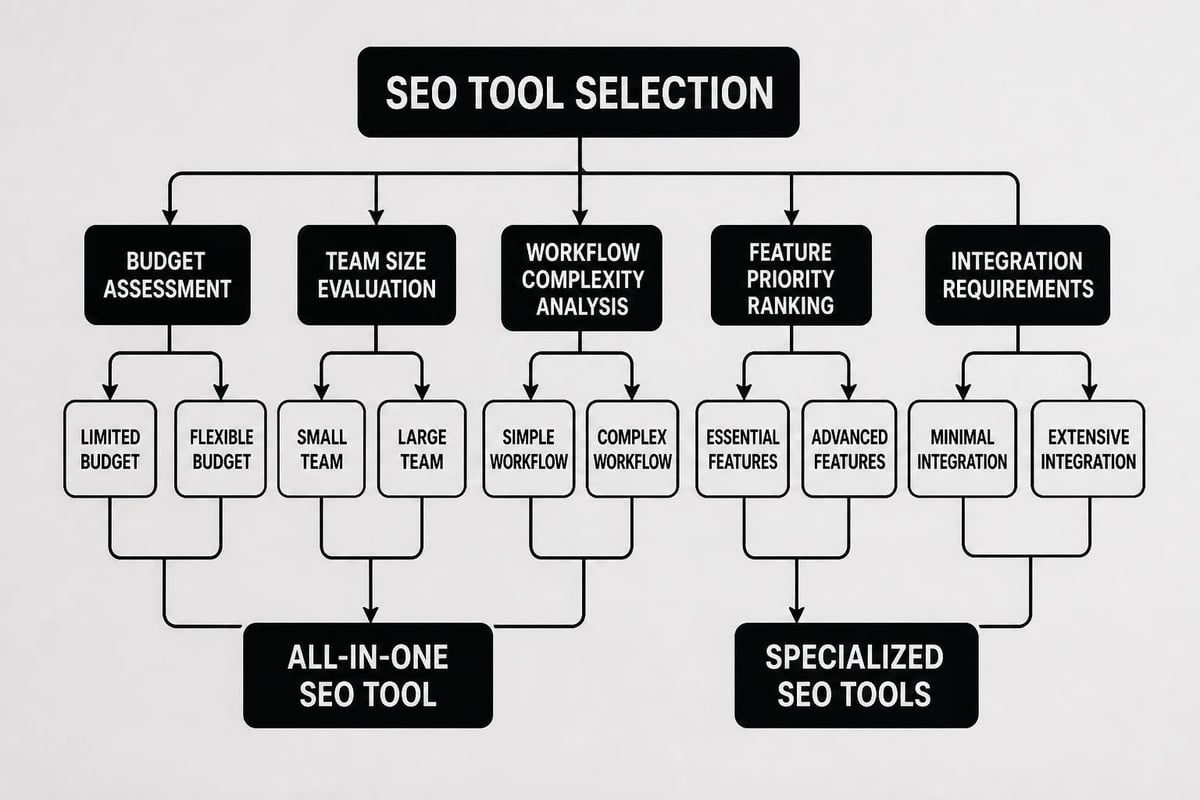
Emerging AI-Powered Automation Platforms
The 2026 SEO landscape includes a new category that transforms how tools are compared. Rather than simply providing data for manual analysis, AI-powered automation platforms execute entire workflows autonomously.
These platforms represent a fundamental shift in approach. Traditional tools tell you what to do. Automation platforms actually do it.
Automated Workflow Capabilities
Modern AI SEO platforms now handle:
- Autonomous keyword discovery that continuously finds new opportunities
- Automated content creation producing publish-ready articles
- Smart internal linking connecting related content automatically
- Scheduled publishing delivering content consistently without manual intervention
- Performance monitoring adjusting strategies based on results
This automation addresses the biggest challenge facing small teams: consistent execution. Even the best traditional tools require significant time investment to extract value from their data.
Integration with Content Management Systems
A critical factor in your seo tools comparison involves how platforms connect with your actual website. Direct integrations with WordPress, Shopify, Webflow, Wix, and Framer eliminate manual copy-paste workflows that introduce errors and consume time.
The best automation platforms publish directly to your CMS, maintaining proper formatting, image optimization, and meta data without human intervention. This capability becomes especially valuable when publishing frequently to maintain content freshness.
Competitor Analysis Features
Understanding competitor strategies provides your biggest strategic advantages. Your seo tools comparison should carefully evaluate how different platforms handle competitive intelligence.
Reverse Engineering Competitor Success
Top-tier platforms allow you to:
- Identify competitors' top-performing pages and the keywords driving traffic
- Track new content publication to spot emerging topic trends
- Monitor backlink acquisition revealing their link building sources
- Compare domain authority growth benchmarking your progress
- Analyze traffic patterns understanding seasonality and trends
SpyFu specializes particularly in competitor PPC and SEO analysis, offering historical data that reveals long-term strategic shifts competitors have made.
Gap Analysis and Opportunity Discovery
The most valuable competitive features don't just show what competitors do well. They identify specific opportunities where you can outperform them:
| Analysis Type | What It Reveals | Strategic Value |
|---|---|---|
| Keyword gaps | Terms they rank for that you don't | Quick win opportunities |
| Content gaps | Topics they cover comprehensively | Content calendar priorities |
| Backlink gaps | Sites linking to them but not you | Targeted outreach prospects |
| SERP feature gaps | Featured snippets they own | Structured content opportunities |
Technical SEO and Site Audit Capabilities
Your seo tools comparison must address technical optimization features, as technical issues often prevent even great content from ranking.
Crawling and Issue Detection
Comprehensive platforms should identify:
- Broken links and redirect chains that waste crawl budget
- Duplicate content issues causing keyword cannibalization
- Missing or poorly optimized meta tags
- Page speed problems affecting user experience
- Mobile usability issues
- Schema markup opportunities for rich results
- XML sitemap errors preventing proper indexing
The depth and accuracy of technical audits varies significantly between platforms. Some provide surface-level scans while others offer developer-grade analysis comparable to dedicated technical SEO tools.
Continuous Monitoring vs. On-Demand Scans
Consider whether you need ongoing monitoring or periodic audits. Large sites with frequent updates benefit from continuous crawling that immediately flags new issues. Smaller, more stable sites may only need weekly or monthly scans.
This decision impacts both pricing and practical usability within your workflow.
Reporting and Data Visualization
The ability to extract insights from data separates tools that inform strategy from those that merely collect metrics. Your seo tools comparison should evaluate how platforms present information.
Automated Reporting Features
Professional-grade tools should offer:
- Scheduled report generation delivering updates without manual creation
- Customizable dashboards highlighting metrics relevant to your goals
- White-label options for agencies presenting data to clients
- Trend visualization showing performance over time, not just snapshots
- Annotation capabilities marking changes that explain traffic fluctuations
Advanced platforms now include AI-generated insights that automatically identify significant changes and their likely causes, reducing the analytical burden on users.
Data Export and Integration Options
Your seo tools comparison should verify how easily you can extract data for further analysis or integration with other business systems. Look for:
- API access enabling custom integrations with internal tools
- CSV/Excel exports for offline analysis and reporting
- Google Analytics integration combining SEO and analytics data
- Google Search Console connection incorporating first-party Google data
- Data Studio compatibility for advanced visualization
Free Tools and Trial Periods
Budget-conscious users conducting an seo tools comparison should explore free SEO tools before committing to premium subscriptions. Many platforms offer limited-feature free versions that handle basic needs adequately.
What Free Versions Actually Provide
Free tiers typically include:
- Limited keyword research with reduced data points
- Basic rank tracking for 10-50 keywords
- Site audits for smaller websites
- Restricted backlink analysis showing top links only
- Limited historical data access
These limitations make free versions suitable for small blogs or businesses just beginning SEO efforts, but insufficient for competitive niches or professional work.
Making Trial Periods Count
Most premium platforms offer 7-14 day trials. Maximize their value by:
- Preparing questions beforehand to test specific capabilities you need
- Loading your actual projects rather than exploring with dummy data
- Testing support responsiveness to gauge ongoing assistance quality
- Comparing trial experiences across multiple tools simultaneously
- Documenting workflow efficiency to measure time savings
According to startup-focused SEO tool comparisons, trial periods provide the most accurate assessment of whether a tool fits your actual working style versus theoretical needs.
Making Your Final Decision
After conducting your comprehensive seo tools comparison, the decision ultimately depends on aligning tool capabilities with your specific situation.
Decision Framework
Consider these prioritized factors:
Budget constraints establish the upper boundary of feasible options. Don't stretch beyond sustainable monthly costs hoping to quickly recoup investments through improved rankings.
Team size and skill level determine whether you need simple, focused tools or comprehensive platforms with advanced features. A solo founder has different needs than a five-person agency team.
Current workflow gaps identify where tools provide maximum impact. If you're already strong in keyword research but weak in backlink analysis, prioritize tools excelling in that area.
Growth trajectory affects whether you should invest in enterprise features now or start with basic plans and upgrade later. Rapidly growing businesses benefit from platforms they won't quickly outgrow.
Testing in Real Workflows
The most effective seo tools comparison happens through actual use rather than feature checklist comparison. Implement tools in real projects during trial periods. Track specific metrics like:
- Time required to complete standard tasks
- Quality of insights generated
- Accuracy of predictions and recommendations
- Support response times when issues arise
- Actual impact on rankings and traffic
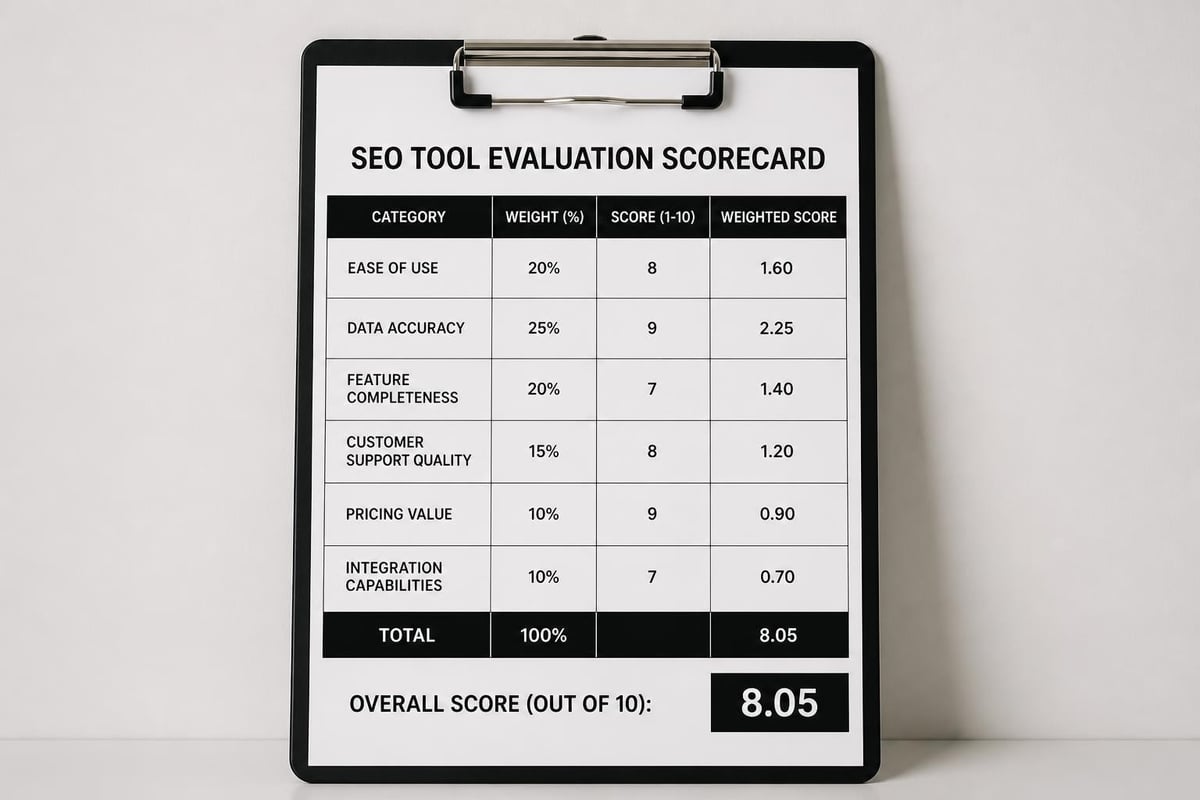
Industry-Specific Considerations
Different industries require different approaches to your seo tools comparison. E-commerce sites need tools emphasizing product keyword research and competitor price monitoring. Local businesses benefit from platforms with strong local SEO features.
Content-Heavy Businesses
Publishers, blogs, and content-focused businesses should prioritize:
- Content gap analysis identifying untapped topic opportunities
- Topic clustering organizing content strategically
- Internal linking suggestions maximizing existing content value
- Content performance tracking showing which formats and topics work best
- Automated content workflows maintaining publishing consistency
Platforms designed around AI content generation and SEO particularly suit businesses publishing frequently, as they automate the transition from keyword research through content creation to publishing.
Service-Based Local Businesses
Local service providers need different capabilities:
- Local keyword research showing city-specific variations
- Google Business Profile integration and monitoring
- Citation tracking across directories
- Review monitoring and response management
- Local pack ranking tracking
SE Ranking has developed particularly strong local SEO features suitable for agencies managing multiple local business clients.
Choosing the right SEO tools requires balancing features, pricing, and workflow compatibility against your specific business needs. Rather than seeking a universally "best" platform, effective seo tools comparison identifies which solution aligns with your budget, team capabilities, and growth objectives. If you're looking to automate your entire SEO workflow-from keyword research through content creation to publishing-RankPill handles everything on autopilot, delivering optimized articles daily while you focus on growing your business.