SEO White Labeling Tool: Complete Guide for 2026

Modest Mitkus · April 7, 2026
Digital marketing agencies face a persistent challenge: delivering comprehensive SEO services without maintaining massive in-house development teams. An seo white labeling tool solves this problem by allowing agencies to rebrand powerful SEO platforms as their own. These tools have evolved significantly by 2026, offering sophisticated automation, AI-powered insights, and seamless client management capabilities that help agencies scale their operations while maintaining brand consistency.
Understanding SEO White Labeling Tools
An seo white labeling tool functions as a turnkey solution that agencies can customize with their branding, logo, and color scheme. Instead of building proprietary SEO software from scratch, agencies license existing platforms and present them to clients as their own technology. This approach dramatically reduces development costs while providing immediate access to professional-grade SEO capabilities.
The fundamental concept behind white-label SEO involves partnership between technology providers and service agencies. The provider maintains the infrastructure, updates the software, and ensures reliability, while the agency focuses on client relationships and strategic implementation. This division of labor creates efficiency that benefits both parties.
Core Components of Modern White Label Platforms
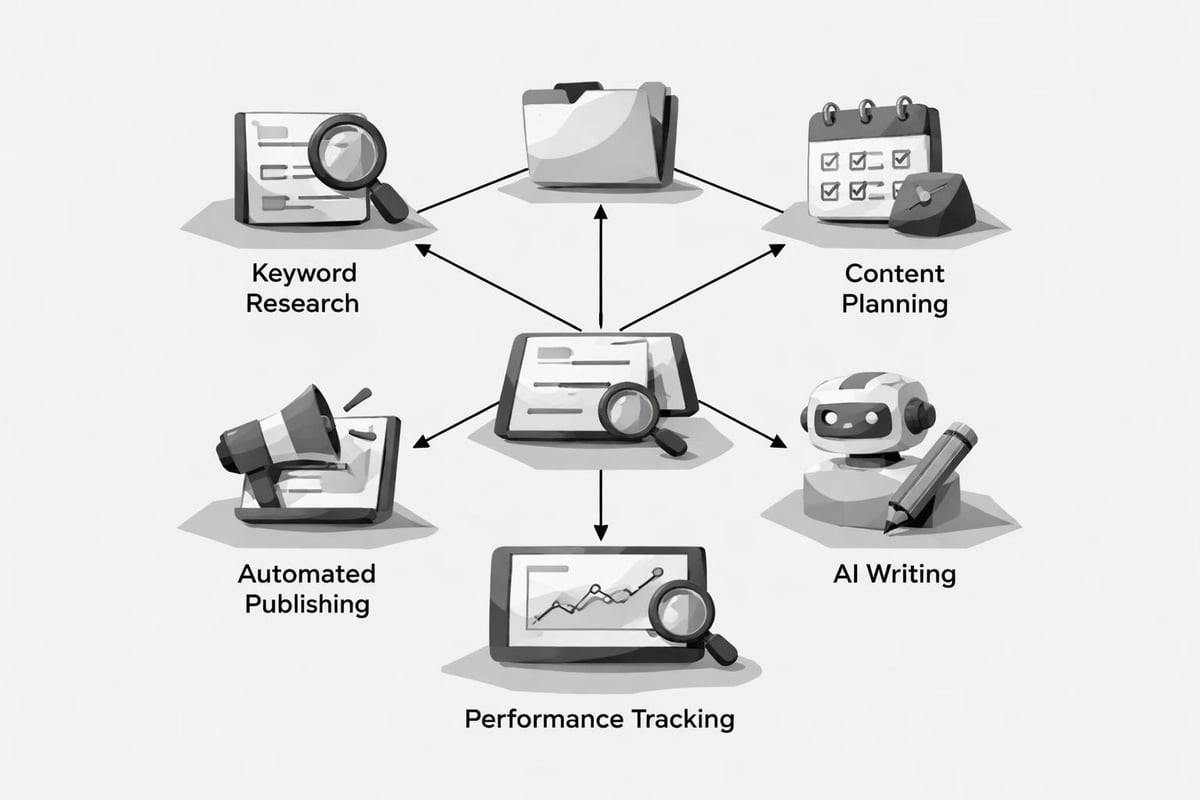
Today's white labeling tools extend far beyond basic rank tracking. They incorporate multiple dimensions of SEO analysis and reporting:
- Keyword research and tracking modules that monitor position changes across search engines
- Backlink analysis systems that evaluate link profiles and identify opportunities
- Site audit functionality that detects technical SEO issues automatically
- Competitor analysis features that benchmark performance against industry rivals
- Content optimization tools that guide on-page improvements
- Custom reporting dashboards that present data in client-friendly formats
These components work together to create a comprehensive SEO ecosystem. Best practices for white-label SEO reports emphasize the importance of integrating these features into cohesive client deliverables.
Strategic Advantages for Digital Agencies
Implementing an seo white labeling tool transforms how agencies operate and compete in the market. The strategic benefits extend across multiple business dimensions, from cost management to client retention.
Financial and Operational Efficiency
Building proprietary SEO software requires substantial investment. Development teams, infrastructure costs, ongoing maintenance, and feature updates can consume hundreds of thousands of dollars annually. White label solutions eliminate these expenses through a subscription model that provides predictable monthly costs.
Agencies redirect saved resources toward client acquisition and service delivery. This reallocation improves profit margins while maintaining service quality. The operational efficiency gains compound over time as the agency scales without proportional increases in technical overhead.
| Business Metric | In-House Development | White Label Solution |
|---|---|---|
| Initial Investment | $150,000 - $500,000 | $0 - $5,000 |
| Monthly Operating Cost | $20,000 - $50,000 | $200 - $2,000 |
| Time to Market | 12 - 24 months | Immediate |
| Maintenance Burden | High | Minimal |
| Feature Update Cycle | Quarterly | Continuous |
Brand Authority and Client Perception
Presenting sophisticated SEO technology under your agency brand strengthens market positioning. Clients perceive agencies with proprietary platforms as more established and technically capable. This perception justifies premium pricing and improves client retention rates.
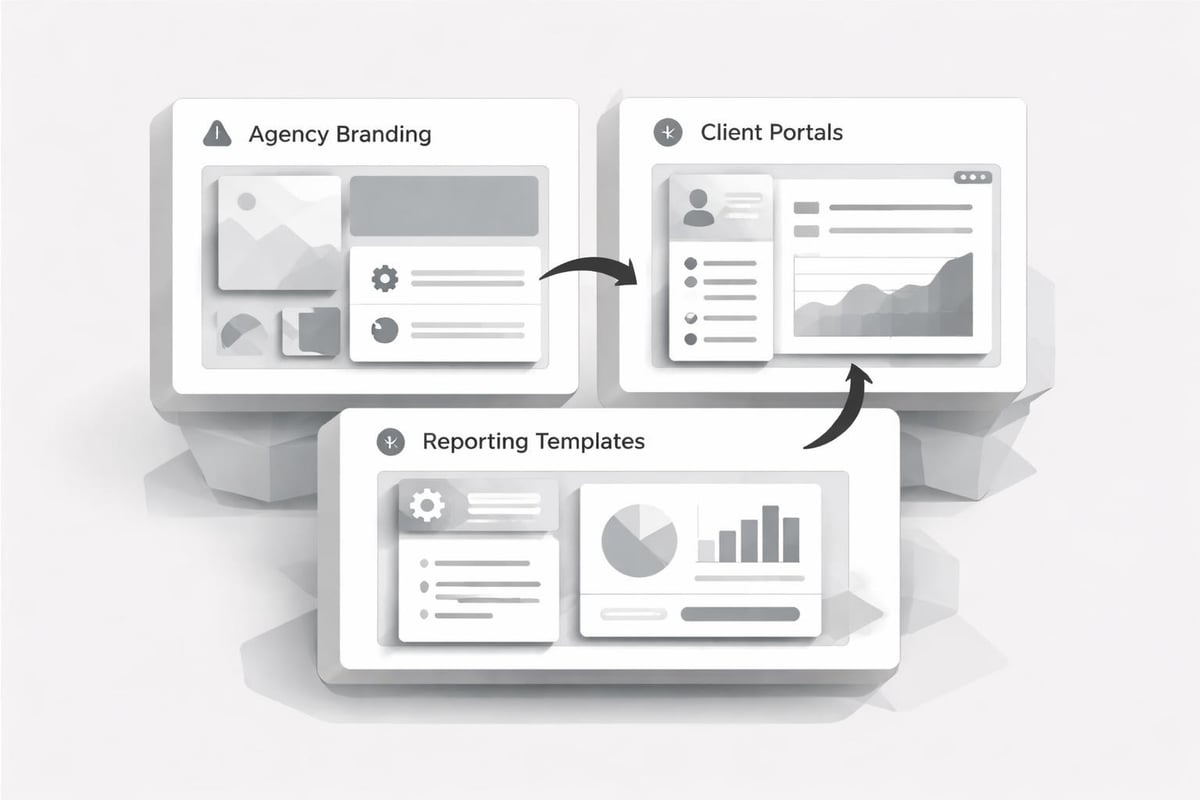
The branding consistency extends throughout the client experience. From login portals to PDF reports, every touchpoint reinforces your agency identity. This cohesive presentation builds trust and differentiates your agency from competitors using generic reporting tools.
When evaluating platforms, choosing the right white-label SEO tools requires careful assessment of customization depth and interface flexibility.
Essential Features to Evaluate
Not all white labeling tools offer equivalent capabilities. Agencies must assess specific features to ensure the platform aligns with their service offerings and client expectations.
Customization and Branding Depth
Surface-level branding that simply adds a logo proves insufficient for sophisticated clients. Comprehensive customization includes:
- Complete visual identity control over colors, fonts, and layout
- Custom domain mapping that hosts client portals on your subdomain
- Branded email notifications with your agency signature and styling
- Personalized reporting templates that match your presentation standards
- White-labeled mobile applications for client access on any device
The depth of customization directly impacts client perception. Platforms like SE Ranking's white-label software exemplify comprehensive branding capabilities that maintain agency identity throughout the user experience.
Automation and Integration Capabilities
Manual report generation consumes valuable agency time. Advanced automation features streamline workflows and improve efficiency:
- Scheduled report delivery that sends updates automatically to client inboxes
- API access for integration with existing agency management systems
- Webhook support for triggering actions based on specific events or thresholds
- Third-party integrations connecting to Google Analytics, Search Console, and advertising platforms
- Bulk operations that apply changes across multiple client accounts simultaneously
Understanding SEO automation tools helps agencies identify which processes benefit most from automated workflows.

Data Accuracy and Update Frequency
SEO data becomes stale quickly in competitive markets. The best seo white labeling tool provides:
Real-time rank tracking that monitors position changes as they occur, not days later. Daily updates represent the minimum acceptable frequency for most markets, while hourly tracking serves volatile or high-value keywords.
Comprehensive database coverage including local search results, mobile rankings, and featured snippet positions. Global agencies require multi-language support and regional search engine tracking beyond Google.
Historical data retention that preserves months or years of performance metrics. Trend analysis depends on longitudinal data that demonstrates progress over extended periods.
Implementation and Client Onboarding
Successfully deploying an seo white labeling tool requires strategic planning and systematic execution. The transition period determines whether the platform becomes a competitive advantage or an operational headache.
Initial Setup and Configuration
Start by establishing your agency's branded environment before adding any clients. This preparation includes:
- Configuring all visual elements to match your brand guidelines precisely
- Creating standardized report templates for different service tiers
- Establishing naming conventions for projects, campaigns, and reports
- Setting up automated workflows for common tasks and deliverables
- Training team members on platform functionality and best practices
The setup phase typically requires two to four weeks depending on platform complexity and team size. Rushing this stage creates inconsistencies that undermine the professional presentation you're trying to achieve.
Client Migration Strategies
Transitioning existing clients from previous tools to your new white label platform requires careful change management. Present the migration as an upgrade that enhances their service experience rather than a disruptive change.
| Migration Phase | Duration | Key Activities |
|---|---|---|
| Preparation | 1-2 weeks | Data backup, template creation, communication planning |
| Pilot Testing | 1 week | Test with 2-3 friendly clients, gather feedback |
| Gradual Rollout | 4-6 weeks | Migrate client segments, provide training, monitor issues |
| Full Deployment | Ongoing | Complete migration, optimize workflows, expand features |
Communication throughout the process prevents confusion and maintains client confidence. Highlight specific improvements they'll experience, such as more intuitive dashboards or faster data updates.
Content Creation Integration
Modern agencies recognize that SEO success requires consistent, high-quality content production. The most effective seo white labeling tool integrates content creation capabilities alongside traditional SEO metrics and reporting.
AI-Powered Content Generation
Artificial intelligence has transformed content creation from a manual bottleneck into an automated advantage. Platforms that incorporate AI writing capabilities enable agencies to deliver comprehensive content services without hiring large writing teams. This integration addresses a critical client need while expanding revenue opportunities.
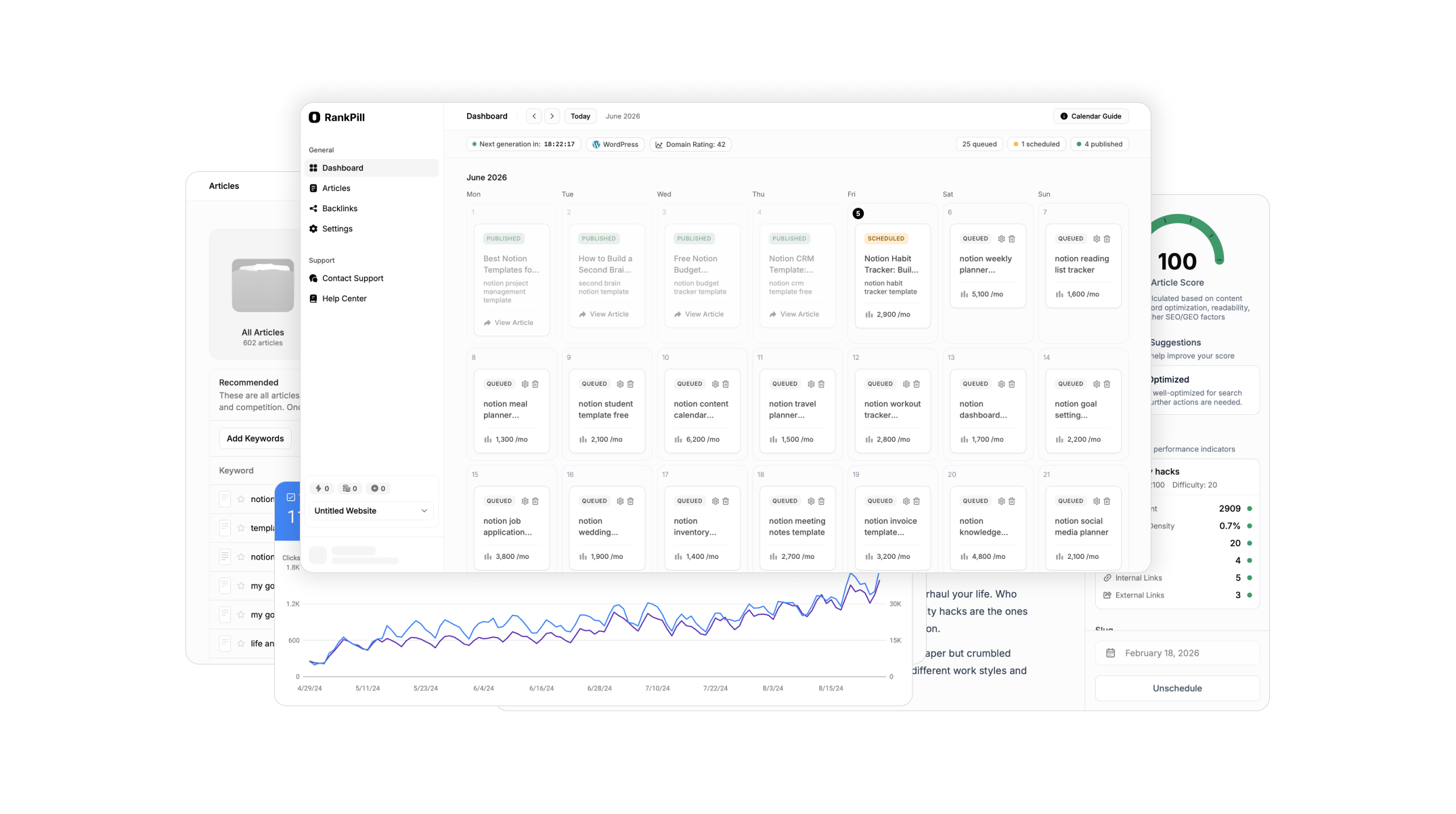
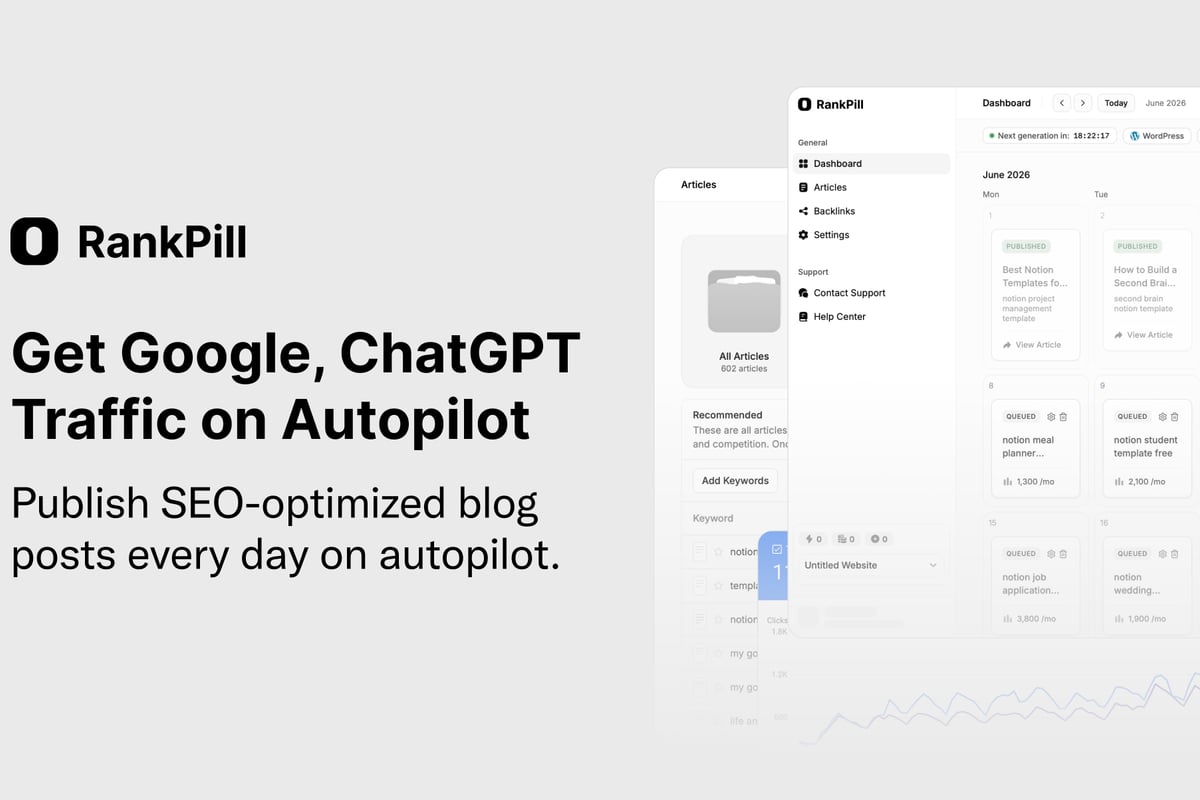
RankPill exemplifies this evolution by combining automated keyword research with AI-generated content that publishes directly to client websites. At $99 per month for 30 articles, agencies can offer content services at a fraction of traditional costs while maintaining quality standards. The platform handles research, writing, image incorporation, and publishing automatically, freeing agency resources for strategy and client management.
Understanding whether Google can detect AI SEO content helps agencies set appropriate quality standards and review processes for automated content generation.
Content Calendar Management
Consistent publishing schedules drive organic traffic growth, but maintaining editorial calendars across multiple clients proves challenging. White label platforms that include content planning features help agencies coordinate publication timing, topic selection, and keyword targeting.
The calendar functionality should support:
- Multi-client view showing all upcoming content across your portfolio
- Keyword assignment linking each article to target search terms
- Status tracking from ideation through publication and promotion
- Performance monitoring connecting published content to traffic and ranking improvements
- Collaboration tools enabling writers, editors, and clients to coordinate efficiently
Advanced Analytics and Reporting
Basic rank tracking satisfies entry-level clients, but sophisticated businesses demand deeper insights. An advanced seo white labeling tool provides analytical capabilities that demonstrate ROI and guide strategic decisions.
Custom Metric Dashboards
Different stakeholders care about different metrics. C-suite executives focus on traffic and conversions, while marketing managers track keyword positions and content performance. Customizable dashboards let agencies present relevant data to each audience.
Executive dashboards emphasize:
- Organic traffic trends and year-over-year growth
- Conversion metrics and revenue attribution
- Competitive position within the industry
- Return on SEO investment calculations
Tactical dashboards highlight:
- Individual keyword rankings and movement
- Page-level performance metrics
- Technical SEO issue detection and resolution status
- Backlink acquisition and quality assessment
The ability to create unlimited custom views ensures that every client receives data that aligns with their specific goals and reporting preferences.
Competitor Intelligence Features
Understanding how to get competitor keywords provides strategic advantages that inform content planning and optimization priorities. White label platforms with robust competitor analysis reveal:
- Gap analysis identifying keywords competitors rank for that your clients don't
- Content comparison showing how competitor pages differ in length, structure, and optimization
- Backlink opportunities highlighting sites linking to competitors but not your clients
- SERP feature capture tracking which competitors appear in featured snippets, local packs, or knowledge panels
- Traffic estimates approximating visitor volume competitors receive from organic search
This intelligence transforms SEO from reactive optimization into proactive strategy development. Agencies position themselves as strategic advisors rather than tactical executors.
Pricing Models and Profitability
Selecting an seo white labeling tool involves balancing platform costs against revenue potential. Different pricing structures suit different agency business models and growth stages.
Common Pricing Approaches
White label platforms typically offer several pricing tiers:
Per-client pricing charges based on the number of active client accounts. This model works well for agencies with stable client rosters who want predictable monthly costs. Rates typically range from $50 to $200 per client monthly depending on feature access.
Feature-based tiers provide different capability levels at different price points. Basic plans might include rank tracking and site audits, while premium tiers add competitor analysis, content optimization, and API access. Agencies start at lower tiers and upgrade as client needs expand.
Usage-based pricing charges for specific actions like keyword tracking, pages crawled, or reports generated. This flexibility benefits agencies with variable workloads but can create unpredictable monthly expenses.
Enterprise licensing offers unlimited usage for a flat monthly or annual fee. Large agencies with dozens of clients often find this most cost-effective, though initial investment runs higher.
Margin Calculation and Service Pricing
Successful agencies build healthy margins between platform costs and client fees. Consider this pricing framework:
| Service Tier | Platform Cost | Client Price | Monthly Margin | Annual Margin |
|---|---|---|---|---|
| Basic SEO | $75 | $500 | $425 | $5,100 |
| Professional | $150 | $1,500 | $1,350 | $16,200 |
| Enterprise | $300 | $3,500 | $3,200 | $38,400 |
These margins fund the additional services agencies provide beyond raw platform access: strategy development, content creation, technical implementation, and client communication. The platform represents infrastructure, not the complete deliverable.
Understanding SEO pricing in the broader market context helps agencies position their services competitively while maintaining profitability.
Training and Support Considerations
Platform capabilities mean nothing if your team can't utilize them effectively. Comprehensive training and ongoing support separate excellent white label providers from mediocre ones.
Onboarding Resources
Quality platforms provide structured learning paths that bring team members up to speed quickly:
- Video tutorials demonstrating common tasks and workflows
- Documentation libraries explaining features in detail with screenshots
- Live training sessions where platform experts walk through functionality
- Certification programs that validate team member proficiency
- Template libraries providing starting points for reports and dashboards
The initial learning curve impacts how quickly you can deliver value to clients. Platforms with superior educational resources reduce time-to-productivity and minimize implementation frustration.
Ongoing Technical Support
Issues arise even with well-designed software. Responsive support channels ensure problems get resolved before they impact client deliverables:
- Multiple contact methods including email, chat, and phone support
- Defined response times with SLAs guaranteeing issue acknowledgment
- Dedicated account managers who understand your specific implementation
- Priority support tiers for urgent issues affecting client deliverables
- Community forums where users share solutions and best practices
Reviews of platforms like SE Ranking often highlight support quality as a differentiating factor that influences long-term satisfaction.
Security and Data Protection
White label platforms handle sensitive client data including website credentials, analytics access, and competitive intelligence. Robust security measures protect both your agency and your clients.
Essential Security Features
Modern seo white labeling tool implementations must include:
Data encryption both in transit and at rest, protecting information from interception or unauthorized access. SSL/TLS protocols secure all communications between users and the platform.
Role-based access control limiting what different users can view and modify. This granularity prevents accidental changes and restricts sensitive data to appropriate team members.
Two-factor authentication adding an extra security layer beyond passwords. This feature prevents unauthorized access even if login credentials become compromised.
Regular security audits conducted by third-party firms that identify and address vulnerabilities. Transparent audit results demonstrate the provider's commitment to protection.
Compliance certifications including SOC 2, GDPR, and industry-specific standards. These validations provide assurance that the platform meets established security frameworks.
Data Ownership and Portability
Clarify data ownership before committing to any platform. Your agency should retain full ownership of client data, reports, and configurations. The contract should specify:
- Export capabilities allowing complete data extraction in standard formats
- Retention policies explaining what happens to data after subscription cancellation
- Backup procedures ensuring data survives technical failures or disasters
- Migration assistance helping transfer data if you switch platforms
These provisions protect your business investment and maintain client relationships independent of platform choices.
Integration with Broader Marketing Ecosystems
SEO doesn't exist in isolation. The most effective seo white labeling tool connects with other marketing technologies to provide comprehensive performance views.
Common Integration Requirements
Agencies typically need connections to:
Google products including Analytics, Search Console, and Google My Business. These integrations eliminate manual data collection and provide unified reporting that combines SEO metrics with broader website performance.
Social media platforms tracking how content performs across Facebook, LinkedIn, Twitter, and Instagram. Social signals don't directly impact rankings but influence visibility and traffic.
CRM systems like HubSpot, Salesforce, or Pipedrive that track lead generation and customer journeys. Connecting SEO data to revenue attribution demonstrates concrete business impact.
Advertising platforms including Google Ads and Microsoft Advertising. Cross-channel analysis reveals how organic and paid search interact and identifies optimization opportunities.
Content management systems such as WordPress, Shopify, or Webflow. Direct integrations enable automated content publishing and on-page optimization recommendations.
Understanding different website builders for agencies helps identify which integrations matter most for your client base.
API Access and Custom Development
Agencies with technical capabilities benefit from robust API access that enables custom integrations and automated workflows. API functionality should support:
- Data retrieval pulling reports, rankings, and metrics into your own systems
- Configuration management creating and modifying projects programmatically
- Bulk operations applying changes across multiple clients simultaneously
- Event notifications triggering actions based on specific conditions or thresholds
- White-labeled application development building custom interfaces on top of the platform
Some platforms offer webhook support that pushes data to your systems automatically when specific events occur, eliminating the need for constant polling.
Evaluating Provider Reliability
The best features mean nothing if the platform experiences frequent downtime or performance issues. Provider reliability directly impacts your agency's ability to deliver consistent service.
Uptime and Performance Metrics
Request specific performance data before committing to any platform:
Uptime percentage should exceed 99.5% monthly, with 99.9% representing industry-leading reliability. Anything below 99% suggests infrastructure problems that will frustrate users and interrupt workflows.
Response time affects user experience and productivity. Dashboard pages should load in under three seconds, while report generation completes within reasonable timeframes based on data volume.
Scalability ensures the platform handles your growing client roster without performance degradation. Ask about maximum clients, keywords, or pages the system supports per account.
Infrastructure redundancy protects against single points of failure. Quality providers maintain multiple data centers with automatic failover capabilities.
Reputation and Track Record
Research provider history and market reputation through multiple sources:
- Third-party reviews on sites like G2, Capterra, or TrustRadius provide unfiltered user perspectives
- Case studies demonstrating successful agency implementations and client outcomes
- Company tenure indicating stability and ongoing development commitment
- Update frequency showing regular feature additions and improvements
- Client retention rates revealing satisfaction levels among existing users
Platforms featured in compilations of top white-label SEO tools typically demonstrate proven track records worth investigating further.
Future-Proofing Your White Label Investment
The SEO landscape evolves constantly as search engines update algorithms and user behavior shifts. Your seo white labeling tool must adapt to remain relevant and competitive.
AI and Machine Learning Integration
Artificial intelligence increasingly powers SEO analysis and recommendations. Forward-thinking platforms incorporate:
Predictive analytics that forecast ranking changes based on historical patterns and competitive dynamics. These predictions help agencies proactively address issues before they impact visibility.
Automated optimization suggestions that analyze pages and recommend specific improvements. AI-powered advice scales expert knowledge across unlimited clients.
Natural language processing that evaluates content quality, readability, and topical relevance. These assessments guide content improvements beyond basic keyword density.
Anomaly detection that identifies unusual traffic patterns, ranking drops, or technical issues automatically. Early warning systems prevent small problems from becoming major crises.
Exploring AI for SEO reveals how artificial intelligence transforms traditional optimization approaches and creates competitive advantages.
Voice Search and Alternative Interfaces
Search behavior extends beyond traditional text queries typed into Google. Modern platforms track:
- Voice search optimization analyzing how spoken queries differ from typed searches
- Visual search understanding how image-based queries influence discovery
- AI search engines monitoring visibility in ChatGPT, Perplexity, and similar platforms
- Smart device integration tracking presence in voice assistants and connected devices
Agencies that prepare for these emerging channels position clients ahead of competitors still focused exclusively on traditional search.
Selecting Your Ideal Platform
With numerous options available, choosing the right seo white labeling tool requires systematic evaluation against your specific agency needs.
Decision Framework
Apply this structured approach to platform selection:
- Define core requirements based on current service offerings and near-term expansion plans
- Establish budget parameters considering both platform costs and implementation resources
- Identify must-have features that directly enable your service delivery model
- Research platform options using reviews, comparisons, and provider materials
- Request demonstrations from your top three to five candidates
- Test with trial periods using real client data to evaluate practical usability
- Verify integration compatibility ensuring connections with your existing tools
- Review contract terms understanding commitment periods, cancellation policies, and pricing changes
- Check references speaking with current agency users about their experiences
- Make decision and plan implementation with clear timelines and success metrics
Resources comparing white-label SEO platforms and software options provide starting points for research and comparison.
Trial Period Strategies
Most platforms offer trial periods ranging from seven to thirty days. Maximize these evaluations by:
Setting specific test objectives rather than exploring randomly. Focus on the workflows you'll use most frequently with actual client scenarios.
Involving team members who will use the platform daily. Their practical feedback matters more than executive impressions.
Testing edge cases that represent challenging client situations. Simple accounts work everywhere; complex implementations reveal platform limitations.
Evaluating support responsiveness by asking questions and reporting issues. Trial period interactions predict ongoing support quality.
Building sample deliverables using your branding and templates. This exercise reveals customization limitations and workflow friction points.
Selecting an SEO white labeling tool represents a strategic decision that impacts your agency's service delivery, profitability, and competitive positioning. The right platform amplifies your capabilities while maintaining brand consistency and operational efficiency. RankPill offers AI-powered SEO automation that complements white label strategies by handling content creation at scale, allowing your agency to focus on strategic client relationships while technology handles execution.
Unlock Traffic on Autopilot
Grow organic traffic on autopilot. RankPill will research, write, optimize, and publish articles to your website daily.