
Software for SEO Agency: Tools to Scale in 2026

Modest Mitkus
June 27, 2026
Running a successful SEO agency in 2026 requires more than just expertise in search engine optimization. The right software for seo agency operations can mean the difference between spending hours on manual tasks and scaling to serve dozens of clients efficiently. As client expectations rise and competition intensifies, agencies need powerful tools that automate repetitive work, deliver actionable insights, and demonstrate measurable ROI. This guide explores the essential software categories, key features to prioritize, and how to build a technology stack that supports growth without breaking the budget.
Core Categories of Software for SEO Agency Teams
Modern SEO agencies rely on multiple software categories to deliver comprehensive services. Understanding these categories helps you identify gaps in your current toolkit and make strategic investments.
Rank tracking and monitoring tools form the foundation of any agency's reporting capabilities. These platforms track keyword positions across search engines, monitor competitor movements, and alert you to sudden ranking changes. Most agencies use these tools to generate client reports and justify their monthly retainer fees.
Content optimization platforms help agencies create and refine content that ranks. These tools analyze top-performing pages, suggest relevant keywords, and provide real-time feedback on content quality. Some platforms now integrate AI writing assistance to accelerate content production while maintaining SEO best practices.

Technical Audit and Site Analysis Tools
Technical SEO forms a critical component of agency services. Screaming Frog SEO Spider remains the industry standard for comprehensive website audits, now enhanced with JavaScript rendering capabilities and AI integration. These tools crawl websites to identify broken links, duplicate content, missing meta tags, and other technical issues that harm search performance.
Many agencies schedule automated crawls weekly or monthly to catch problems before they impact rankings. The best technical audit tools generate prioritized fix lists, making it easy to delegate tasks to developers or communicate issues to clients in plain language.
Key features to look for in technical audit software:
- Crawl budget optimization for large sites
- Mobile-first indexing analysis
- Core Web Vitals monitoring
- Schema markup validation
- XML sitemap generation and testing
- Redirect chain identification
Automation Features That Transform Agency Efficiency
The best software for seo agency productivity includes automation capabilities that eliminate repetitive manual work. Automation allows smaller teams to serve more clients without sacrificing quality or burning out.
Automated reporting saves agencies countless hours each month. Instead of manually compiling data from multiple sources, modern platforms pull metrics automatically and generate branded PDF reports with a few clicks. Some tools even email reports directly to clients on scheduled intervals.
Content automation has evolved significantly. Platforms now handle everything from keyword research to content publishing. For agencies managing multiple client blogs, automation ensures consistent output without requiring dedicated writers for each account. RankPill's SEO Automation exemplifies this approach by handling keyword research, article writing, linking, and publishing entirely on autopilot, letting agencies focus on strategy and client relationships rather than execution.
Workflow Automation and Task Management
Project management integrations connect SEO tools with collaboration platforms. When an audit identifies 50 technical issues, smart software can automatically create tasks in your project management system, assign them to team members, and track completion rates.
| Automation Type | Time Saved Per Client | Implementation Difficulty |
|---|---|---|
| Automated Reporting | 4-6 hours/month | Low |
| Scheduled Audits | 2-3 hours/month | Low |
| Content Publishing | 8-12 hours/month | Medium |
| Backlink Monitoring | 3-4 hours/month | Low |
| Rank Tracking | 2-3 hours/month | Low |
Link building remains labor-intensive, but software can streamline prospecting and outreach. Tools identify link opportunities based on competitor analysis, verify contact information, and track outreach campaigns. Link building tools have become more sophisticated, incorporating AI to personalize outreach emails and predict which prospects are most likely to respond positively.
Client Reporting and Dashboard Software
Transparent reporting builds trust and justifies agency fees. The right software for seo agency reporting turns raw data into compelling narratives about progress and ROI.
White-label dashboards allow clients to log in anytime and view real-time metrics. These platforms pull data from Google Analytics, Search Console, and rank tracking tools into unified interfaces. The best dashboards let agencies customize branding, choose which metrics to display, and set up automated alerts when key metrics change significantly.
Custom reporting features separate professional agencies from amateur operations. Look for software that supports:
- Custom date range comparisons
- Annotation of major algorithm updates or strategy changes
- Goal tracking and conversion attribution
- Automated insights highlighting important trends
- Multi-channel attribution showing SEO's contribution to overall marketing
Visualization and Data Storytelling
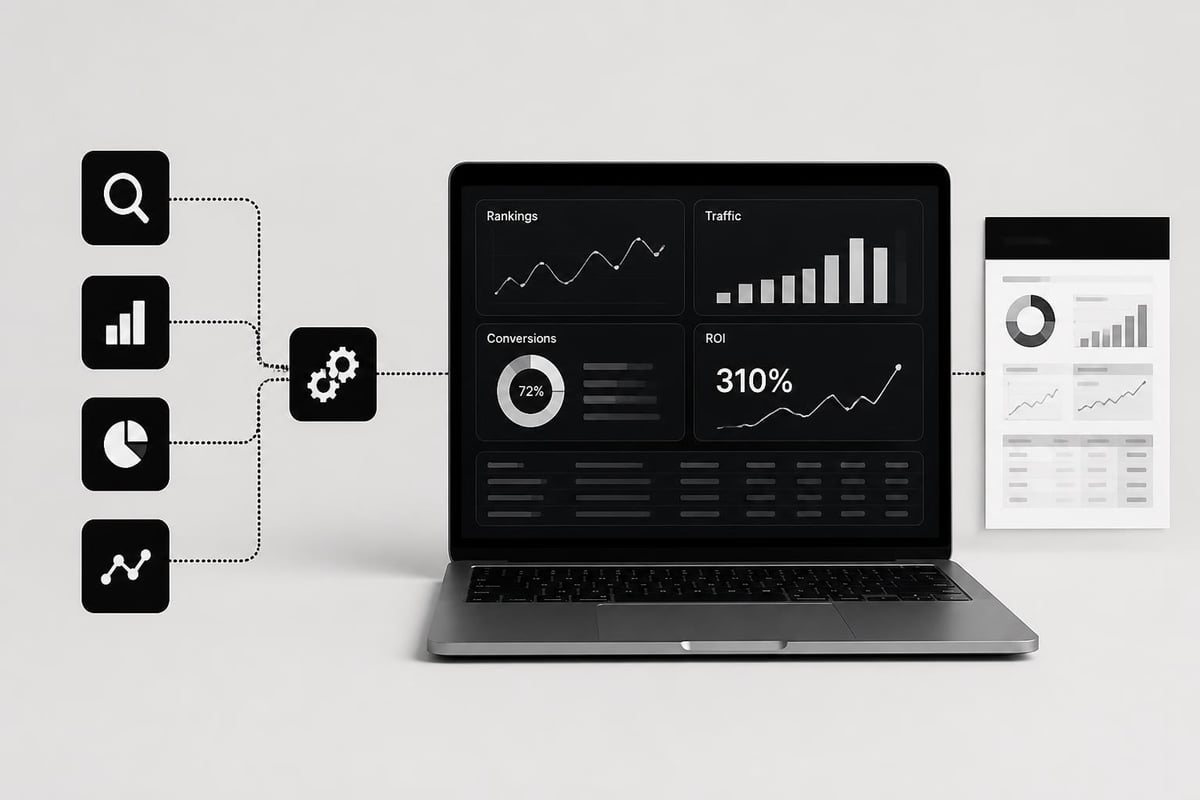
Charts and graphs make complex data digestible for clients who lack SEO expertise. Modern reporting software automatically generates visualizations that highlight wins and explain setbacks. When rankings drop, good software helps you quickly identify whether it's due to algorithm updates, competitor improvements, or technical issues.
Some platforms now offer AI-powered insights that interpret data and suggest next steps. Instead of simply showing that traffic decreased 15%, these tools might explain that the drop coincides with a specific algorithm update and recommend content refreshes for affected pages.
Keyword Research and Competitive Analysis Platforms
Effective keyword research drives content strategy and campaign planning. Software for seo agency keyword work has evolved from simple search volume lookups to sophisticated competitive intelligence platforms.
Modern keyword tools analyze search intent, identify question-based queries, and cluster related terms into topic groups. This helps agencies develop comprehensive content strategies rather than targeting isolated keywords. SE Ranking offers AI-powered search visibility analysis alongside traditional keyword research, making it valuable for agencies managing diverse client portfolios.
Competitive analysis features reveal what's working for competitors. The best platforms show which keywords drive traffic to competitor sites, which content formats perform best, and where gaps exist in competitor coverage. This intelligence helps agencies identify quick wins and long-term opportunities.
| Platform Feature | Benefit for Agencies | Client Impact |
|---|---|---|
| Keyword Difficulty Scoring | Prioritize achievable targets | Faster results |
| Search Intent Analysis | Align content with user needs | Higher engagement |
| Content Gap Analysis | Find untapped opportunities | Competitive advantage |
| Question-Based Keywords | Target featured snippets | Increased visibility |
| Seasonal Trend Detection | Plan timely campaigns | Relevance and traffic |
Local SEO and Multi-Location Tools
Agencies serving local businesses need specialized features for multi-location SEO. These tools track rankings by city or region, monitor Google Business Profile performance, and manage local citations across directories. The complexity multiplies for clients with dozens or hundreds of locations, making automation essential.
Some platforms offer bulk operations for local SEO tasks like posting Google Business updates across multiple locations or auditing citation consistency at scale. For agencies specializing in local SEO, these capabilities determine whether they can serve enterprise clients efficiently.
Content Creation and Optimization Software
Content remains central to SEO success. Software for seo agency content operations has expanded beyond basic optimization to include full-cycle content production tools.
Content optimization platforms like Clearscope use AI to analyze top-ranking content and provide real-time feedback on your drafts. These tools suggest related terms to include, optimal content length, and heading structure improvements. Some agencies use these platforms during content briefs, while others integrate them into their editorial review process.
AI writing assistants have matured significantly. While they don't replace human expertise, they accelerate first drafts and help maintain consistency across large content volumes. Agencies using AI writing tools report 3-5x faster content production when properly implemented.
Content workflow management features keep production organized across multiple clients and writers. Look for software that tracks content status from brief creation through publication, assigns tasks to team members, and maintains editorial calendars. Integration with content management systems like WordPress, Shopify, and Webflow streamlines the publishing process.
Integration and API Capabilities
No single platform does everything perfectly. The best software for seo agency use integrates seamlessly with other tools in your stack.
API access allows custom integrations and data exports. Agencies serving enterprise clients often build custom dashboards pulling data from multiple sources through APIs. This flexibility becomes crucial when clients have specific reporting requirements or use proprietary analytics platforms.
Look for software that connects with:
- Google Analytics and Search Console
- Social media management platforms
- CRM systems for lead tracking
- Project management tools
- Content management systems
- Email marketing platforms
Native integrations work better than third-party connectors like Zapier, which can introduce delays and reliability issues. Evaluate whether potential software offers direct integrations with the platforms your agency already uses.
Data Export and Portability
Client relationships don't always last forever. When clients leave, they often request historical data and reports. Software that makes data export difficult creates unnecessary friction during these transitions. Prioritize platforms offering CSV exports, PDF archives, and data portability features.
Some agencies maintain data warehouses where they store historical client data from multiple tools. This requires software with robust export capabilities and consistent data structures. The investment pays off when clients return after trying DIY SEO or testing other agencies.
Pricing Models and Budget Considerations
Software costs represent a significant expense for SEO agencies. Understanding pricing models helps you budget effectively and maintain healthy profit margins.
Per-user licensing works well for small agencies but becomes expensive as teams grow. Some platforms offer tiered pricing based on features rather than users, allowing entire teams access without per-seat fees. This model often provides better value for agencies with collaborative workflows.
Client-based pricing charges based on the number of client accounts or tracked websites. This aligns costs with revenue, making it easier to maintain margins as you scale. However, it can penalize agencies working with enterprise clients who need extensive tracking.
| Pricing Model | Best For | Watch Out For |
|---|---|---|
| Per User | Small teams (2-5 people) | Rapid team growth |
| Tiered Features | Mid-size agencies | Feature limitations |
| Per Client | Agencies with many small clients | Enterprise client costs |
| Usage-Based | Variable workloads | Unexpected overage charges |
| Flat Rate | Predictable budgeting | Underutilizing features |
Look for tools offering agency-specific plans with white-label features, client management capabilities, and bulk discounts. Many platforms charge premium prices for these features, but they're essential for professional agency operations.
Free Trials and Testing Periods
Before committing to expensive software for seo agency operations, take advantage of free trials to test functionality with real client work. Most platforms offer 14-30 day trials, giving you time to evaluate whether the tool fits your workflow.
During trials, test with your most demanding client to stress-test the platform. If software struggles with your largest account during the trial, it will only get worse as you scale. Evaluate customer support responsiveness during this period, as you'll likely need assistance when problems arise.
Specialized Tools for Advanced Agency Needs
Beyond core SEO platforms, specialized software addresses specific agency challenges. These tools complement your primary platforms and enable advanced service offerings.
Backlink analysis tools track link acquisition, identify toxic links, and monitor competitor link profiles. While general SEO platforms include basic backlink features, dedicated tools offer deeper analysis. They help agencies manage outreach campaigns, verify link placement, and clean up negative SEO attacks targeting clients.
Schema markup generators simplify implementing structured data. As search engines rely more heavily on structured data for rich results, agencies need efficient ways to create and validate schema markup. These tools generate code snippets and test implementation without requiring development expertise.
Page speed optimization platforms identify performance bottlenecks and recommend fixes. With Core Web Vitals now confirmed ranking factors, agencies need systematic approaches to improving site speed. Some tools simulate different connection speeds and devices, helping prioritize optimizations with the greatest impact.
Mobile and Local Rank Tracking Considerations
Mobile search now dominates in most industries. Software for seo agency rank tracking must account for mobile-desktop differences and local search variations.
Mobile rank tracking reveals how positions differ between devices. Rankings often vary significantly between mobile and desktop, especially for commercial queries where Google shows different result types. Agencies need separate tracking for each device type to accurately report performance.
Local rank tracking by zip code or city provides granular insights for location-based businesses. Generic rankings from a single location don't reflect what potential customers see across a service area. Advanced tools track rankings from multiple locations simultaneously, creating heat maps showing visibility across regions.
Voice search tracking has emerged as searches via voice assistants grow. These queries often differ from typed searches, using longer, more conversational phrases. Some platforms now track featured snippet ownership, which correlates with voice search results.
Team Collaboration and Access Controls
Agencies with multiple team members need software supporting collaboration without compromising security. Access controls determine who can view sensitive client data, make changes, or access billing information.
Role-based permissions let you grant appropriate access levels to strategists, content writers, link builders, and client services teams. Granular controls prevent accidental changes to critical settings while allowing team members the access they need for their responsibilities.
Audit logs track who made changes and when. When rankings suddenly drop or reports show unexpected data, audit logs help identify whether changes in tool settings contributed to the issue. This becomes especially important in agencies where multiple people access client accounts.
Client portals with limited access let clients view reports without accessing your full toolset. This maintains security while providing transparency. Some platforms support client user accounts with read-only access, preventing clients from accidentally changing tracking settings or viewing other clients' data.

Evaluating Software Support and Training Resources
Even the best software for seo agency operations proves frustrating without adequate support. Evaluate vendor support quality before committing to expensive annual contracts.
Support channel availability matters more than most agencies initially realize. Email-only support creates delays when urgent issues arise. Look for platforms offering live chat during business hours, phone support for critical issues, and comprehensive documentation for self-service problem-solving.
Training resources help your team maximize software value. Video tutorials, webinars, and certification programs accelerate onboarding for new team members. Guides on selecting the best SEO tools for agencies can help you understand which features require the steepest learning curves.
Community forums and user groups provide peer support and creative use cases. Active communities indicate healthy platforms with engaged users. These forums often surface workarounds for limitations and integration ideas you won't find in official documentation.
Making the Final Selection Decision
Choosing software for seo agency operations requires balancing numerous factors. Create a weighted scorecard evaluating potential platforms across your most important criteria.
Essential evaluation criteria include:
- Core feature completeness for your service offerings
- Pricing alignment with your business model
- Integration capabilities with existing tools
- Scalability as your agency grows
- Support quality and availability
- User interface and learning curve
- Reporting flexibility and white-label options
- Data accuracy and reliability
- Mobile and local capabilities
- Contract terms and cancellation policies
Involve team members who will use the software daily in evaluation. Their hands-on perspective during trials often reveals usability issues that aren't apparent to decision-makers reviewing feature lists. A tool that strategists love but content writers find confusing will create workflow friction.
Consider starting with a smaller commitment if possible. Some vendors offer month-to-month plans, though they're usually more expensive than annual contracts. The flexibility lets you test tools with real client work before making major financial commitments. Once you've validated fit, negotiate annual contracts for better pricing.
Selecting the right software for seo agency operations transforms how efficiently you serve clients and how effectively you demonstrate value. The best platforms automate routine tasks, provide actionable insights, and scale with your business as you add clients and team members. By prioritizing integration capabilities, automation features, and reporting flexibility, agencies can build technology stacks that support sustainable growth. RankPill automates the entire SEO content workflow-from keyword research through publication-letting your agency focus on strategy and client relationships while delivering consistent organic growth on autopilot.