
White SEO: Build Sustainable Rankings the Right Way

Modest Mitkus
May 4, 2026
Search engine optimization has evolved dramatically over the past decade, and the methods you choose to improve your rankings can make or break your online presence. White SEO represents the ethical, sustainable approach to ranking your website in search engines by following established guidelines and prioritizing genuine value for users. Unlike manipulative tactics that seek quick wins through loopholes, white SEO focuses on long-term growth through quality content, proper technical optimization, and authentic audience engagement. This approach not only protects your website from penalties but also builds a foundation for consistent organic traffic growth that compounds over time.
Understanding White SEO Fundamentals
White SEO, often called white hat SEO, encompasses all optimization strategies that align with search engine guidelines and best practices. The term draws from classic Western films where heroes wore white hats, symbolizing integrity and moral clarity.
This methodology stands in direct contrast to black hat techniques that attempt to manipulate search rankings through deceptive practices. White SEO prioritizes the user experience above all else, recognizing that search engines ultimately reward websites that provide genuine value to their audiences.
Core Principles That Define White SEO
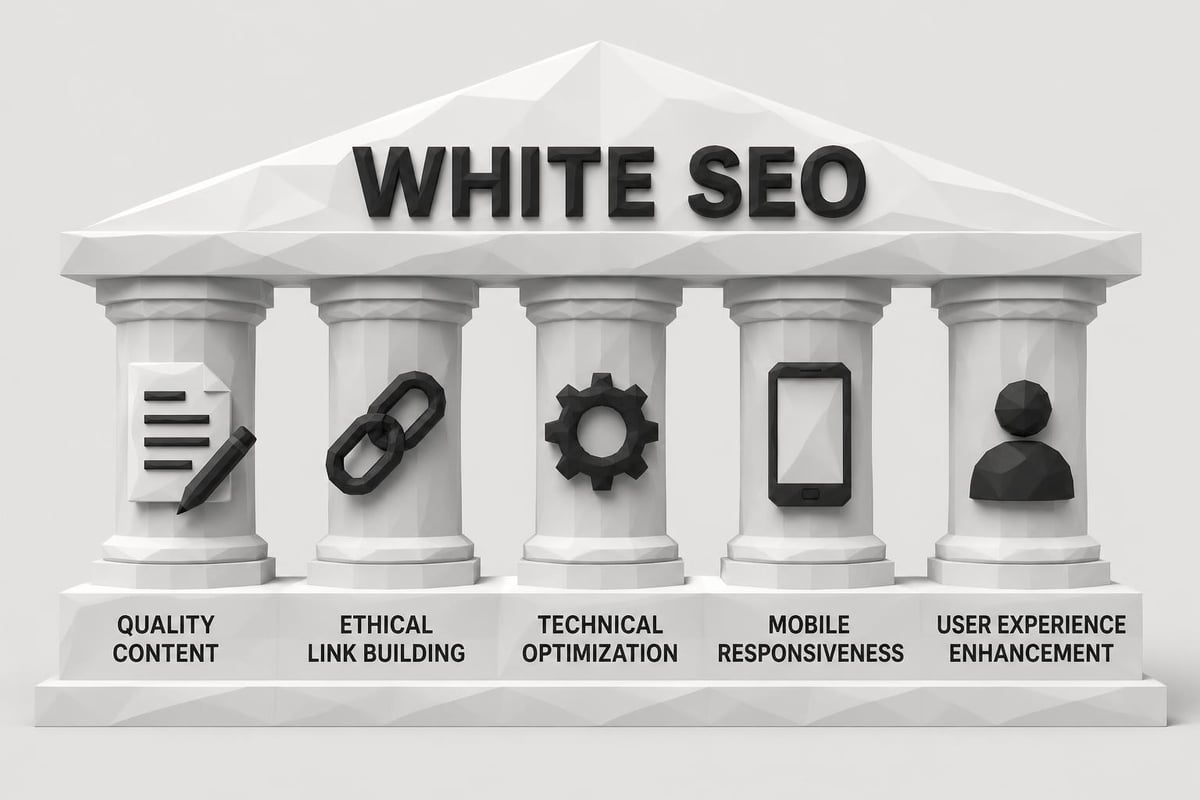
The foundation of white SEO rests on several immutable principles that guide every optimization decision:
- Quality content creation that answers user questions comprehensively
- Transparent link building through genuine relationship development
- Technical excellence that ensures fast, accessible websites
- Mobile optimization for the majority of search traffic
- User experience focus that reduces bounce rates and increases engagement
Search engines like Google have become increasingly sophisticated at identifying and rewarding websites that follow these principles. Their algorithms now incorporate machine learning and natural language processing to understand content quality at a deeper level than ever before.
Content Strategy in White SEO
Content forms the cornerstone of any successful white SEO campaign. High-quality, original content that addresses user intent remains the most powerful ranking factor in 2026.
When developing content for white SEO, you must focus on depth, accuracy, and relevance. This means conducting thorough research, providing actionable insights, and structuring information in ways that serve your audience's needs. The days of thin, keyword-stuffed pages are long gone, replaced by comprehensive resources that establish topical authority.
Creating Content That Ranks
Effective white SEO content follows a strategic framework:
- Research user intent behind target keywords to understand what searchers actually want
- Analyze competitor content to identify gaps and opportunities for differentiation
- Develop comprehensive outlines that cover topics thoroughly from multiple angles
- Write naturally while incorporating keywords where they fit contextually
- Update regularly to maintain freshness and accuracy over time
Keyword research and competitor analysis form the foundation of this process. You need to understand not just what people search for, but why they search for it and what would satisfy their query.
Natural language processing has made search engines remarkably good at understanding context, synonyms, and related concepts. This means your content should focus on covering topics comprehensively rather than repeating exact-match keywords unnaturally.
| Content Element | White SEO Approach | Impact on Rankings |
|---|---|---|
| Keyword Usage | Natural, contextual placement | High - signals relevance |
| Content Length | As long as needed to be thorough | Medium - depth matters more |
| Originality | 100% unique, valuable perspectives | Critical - duplicates get filtered |
| Update Frequency | Regular refreshes with new information | High - freshness factor |
| Multimedia | Relevant images, videos, infographics | Medium - enhances engagement |
Technical Optimization for White SEO
Technical SEO ensures search engines can efficiently crawl, understand, and index your content. This behind-the-scenes work significantly impacts your ability to rank for competitive keywords.
Site speed stands as one of the most critical technical factors in 2026. Google's Core Web Vitals have made page experience a direct ranking signal, rewarding websites that load quickly and provide smooth interactions.
Essential Technical Elements
White SEO technical optimization encompasses several key areas:
- Clean site architecture with logical hierarchy and internal linking
- XML sitemaps that guide search engine crawlers to important pages
- Structured data markup that helps search engines understand content context
- Mobile-responsive design that adapts seamlessly to all device sizes
- HTTPS security that protects user data and signals trustworthiness
- Canonical tags that prevent duplicate content issues
Each element works together to create a technically sound foundation. Ignoring technical SEO is like building a house on sand-no amount of content quality will compensate for fundamental structural problems.
Understanding how AI and SEO intersect becomes increasingly important as search engines leverage artificial intelligence to evaluate technical performance and user experience signals.
Link Building Through White SEO Methods
Link building remains one of the most challenging aspects of white SEO because it requires genuine effort to earn authoritative backlinks. Quality dramatically outweighs quantity when it comes to inbound links.
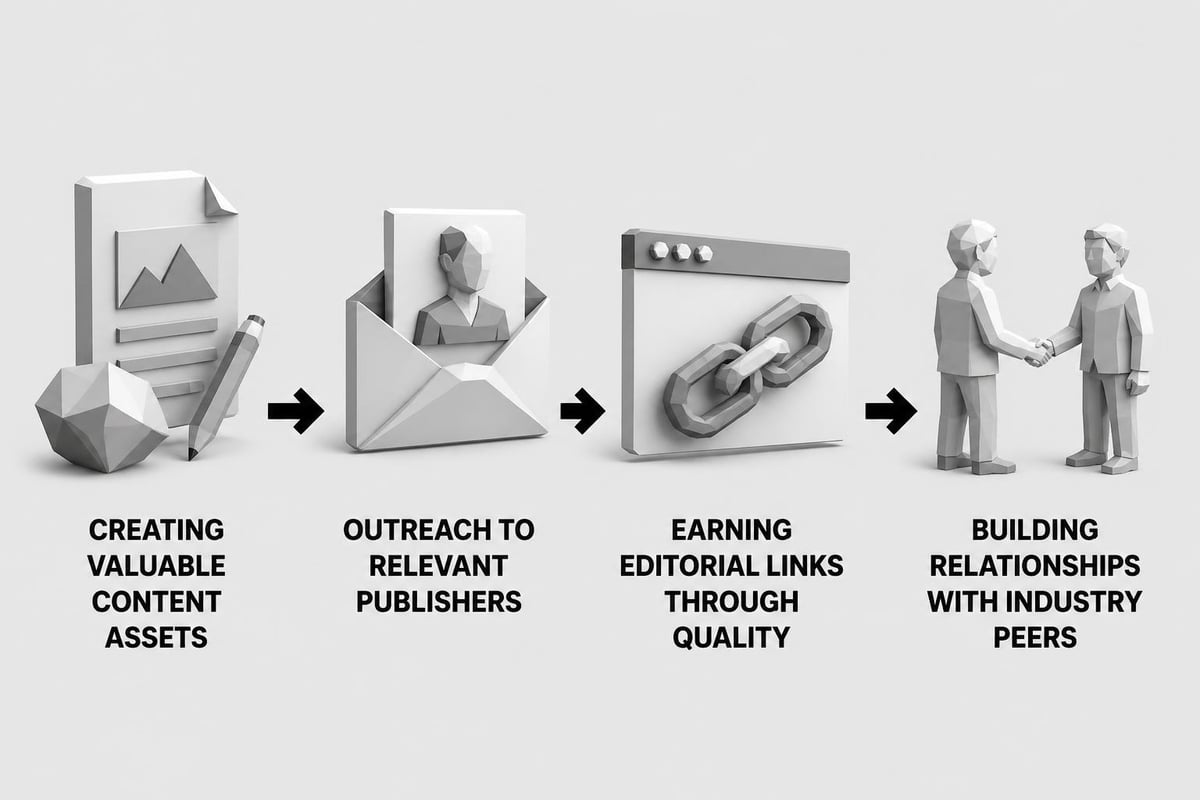
Ethical link-building strategies focus on creating content so valuable that other websites naturally want to reference it. This includes original research, comprehensive guides, unique data, and genuinely helpful resources.
Legitimate Link Acquisition Strategies
Building links through white SEO requires patience and creativity:
- Create linkable assets like original research, tools, or comprehensive guides
- Guest posting on relevant, authoritative websites in your industry
- Digital PR that earns media mentions and editorial links
- Broken link building by offering replacements for dead links
- Expert contributions to roundup posts and industry publications
These methods take significantly more time than black hat alternatives, but they create sustainable value. A single high-quality link from an authoritative source can provide more ranking power than dozens of low-quality directory submissions.
| Link Building Method | Effort Required | Sustainability | Risk Level |
|---|---|---|---|
| Guest Posting | Medium-High | High | Very Low |
| Digital PR | High | Very High | None |
| Resource Pages | Medium | High | Very Low |
| Broken Link Building | Medium | Medium-High | Very Low |
| Link Exchanges | Low-Medium | Medium | Low (if relevant) |
On-Page Optimization Best Practices
On-page optimization represents the elements you directly control on your website. White SEO approaches on-page factors with a focus on clarity, relevance, and user experience.
Title tags and meta descriptions serve as your first impression in search results. They should accurately describe your content while incorporating target keywords naturally. Clickbait titles that misrepresent content violate white SEO principles and ultimately harm your rankings through high bounce rates.
Optimizing Individual Pages
Each page requires attention to multiple optimization factors:
- Header hierarchy (H1, H2, H3) that organizes content logically
- Image alt text that describes visual content for accessibility and SEO
- Internal linking that connects related content and distributes page authority
- URL structure that clearly indicates page content and hierarchy
- Schema markup that provides structured data about your content
These elements work synergistically to help search engines understand your content while improving the user experience. Proper keyword implementation across these elements signals relevance without resorting to manipulation.
The integration of AI-powered content creation tools can help maintain consistency in on-page optimization while scaling content production, provided the output meets quality standards and receives human oversight.
User Experience as a Ranking Factor
Search engines increasingly prioritize websites that deliver excellent user experiences. This shift reflects their fundamental goal: directing users to websites that best satisfy their search intent.
Bounce rate, time on site, and pages per session provide indirect signals about content quality and relevance. While these aren't direct ranking factors, they correlate strongly with rankings because satisfied users engage more deeply with helpful content.
Enhancing User Experience
White SEO practitioners focus on several UX improvements:
Navigation should be intuitive, allowing users to find related content easily. Content formatting matters tremendously-break up text with subheadings, bullet points, images, and white space. Dense paragraphs deter readers and increase bounce rates.
Page speed directly impacts user satisfaction. Every second of delay decreases engagement and conversions. Optimize images, leverage browser caching, minimize code, and use content delivery networks to maximize speed.
Mobile responsiveness is non-negotiable in 2026, with mobile traffic dominating most industries. Your website must provide an excellent experience on smartphones and tablets, not just desktop computers.
Measuring White SEO Success
Tracking the right metrics helps you understand whether your white SEO efforts are generating results. Unlike black hat techniques that may show quick spikes followed by crashes, white SEO produces steady, sustainable growth.
Key Performance Indicators
Monitor these metrics to gauge white SEO effectiveness:
| Metric | What It Measures | Target Trend |
|---|---|---|
| Organic Traffic | Visitors from search engines | Steady upward growth |
| Keyword Rankings | Position for target terms | Gradual improvement |
| Domain Authority | Overall site credibility | Slow, consistent increase |
| Conversion Rate | Percentage of visitors who convert | Stable or improving |
| Engagement Metrics | Time on site, pages per session | Increasing over time |
Organic traffic growth typically takes 3-6 months to materialize with white SEO approaches. This timeline reflects how search engines gradually recognize and reward quality improvements. Patience is essential-the results compound over time as your authority builds.
Analytics tools provide detailed insights into which content performs best, which keywords drive traffic, and where users engage most deeply. Use this data to refine your strategy and double down on what works.
Content Freshness and Updates
Maintaining content relevance requires ongoing attention. White SEO recognizes that information becomes outdated, and search engines favor fresh, current content for many query types.
Regular content audits identify pages that need updates, consolidation, or removal. Refreshing existing content often provides better ROI than creating entirely new pages, especially for established articles that already have some authority and backlinks.
Update Strategy Framework
- Audit existing content quarterly to identify outdated information
- Prioritize high-traffic pages that could rank even better with updates
- Add new sections covering recent developments in your topic
- Update statistics and examples to reflect current data
- Improve formatting and readability based on current UX best practices
This approach signals to search engines that your content remains relevant and authoritative. It also improves user experience by ensuring visitors receive accurate, current information.
For businesses managing large content libraries, automated SEO platforms can help identify update opportunities and maintain publishing consistency at scale. RankPill automates much of this process by continuously researching keywords, generating optimized content, and publishing on schedule, allowing businesses to maintain fresh content without manual effort every single day.
Local SEO Through White Hat Methods
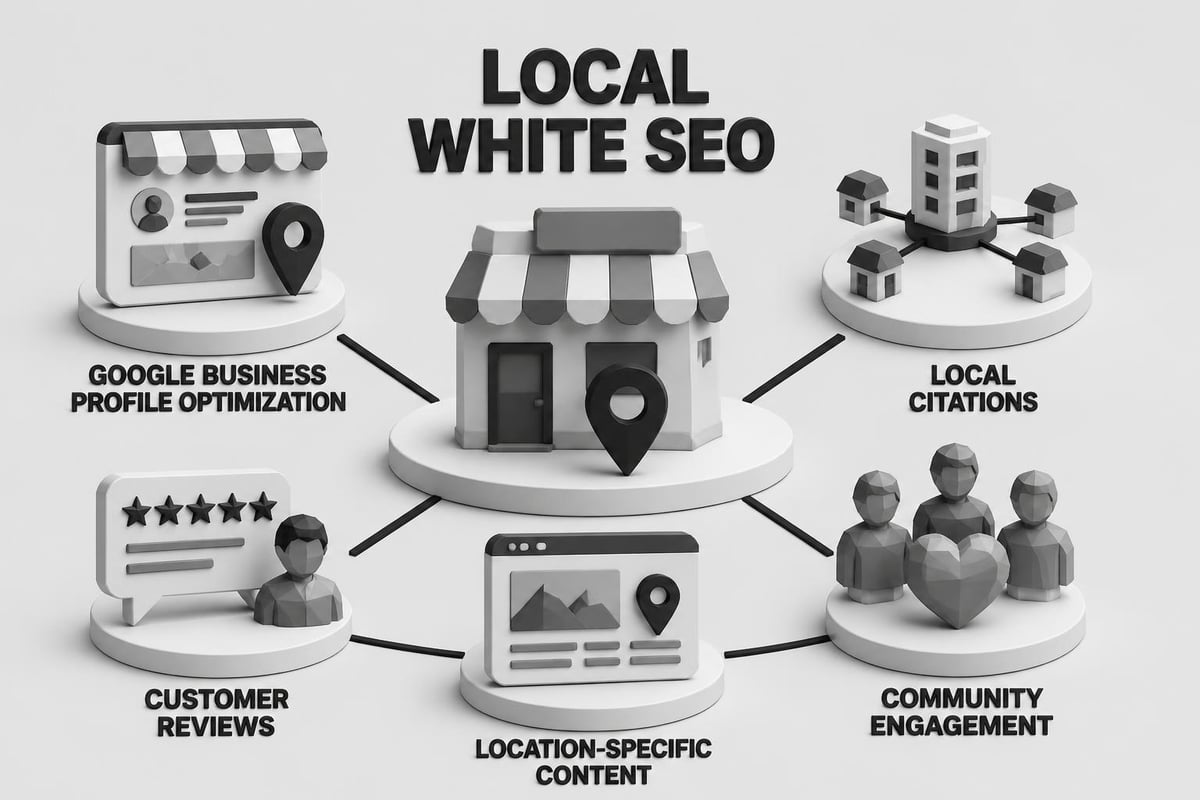
For businesses serving specific geographic areas, local SEO represents a crucial component of white SEO strategy. Google Business Profile optimization forms the foundation of local search visibility.
Accurate, consistent business information across all online directories signals legitimacy to search engines. Your name, address, and phone number (NAP) must match exactly across every platform.
Local Optimization Tactics
- Complete Google Business Profile with photos, hours, services, and regular posts
- Encourage genuine customer reviews through follow-up emails and in-person requests
- Create location-specific content that addresses local customer needs
- Build local citations in relevant business directories
- Participate in community events that generate local press coverage and links
Local SEO for restaurants and other location-dependent businesses requires particular attention to these factors. The competition is often less intense than national keywords, making local dominance achievable for smaller businesses.
Avoiding Common White SEO Mistakes
Even well-intentioned practitioners make errors that undermine their white SEO efforts. Understanding these pitfalls helps you avoid wasting time and resources on ineffective tactics.
Over-optimization represents one of the most common mistakes. Trying too hard to optimize for keywords can make content sound unnatural and actually harm rankings. Search engines have become sophisticated enough to recognize when content prioritizes algorithms over users.
Mistakes to Avoid
Duplicate content, even unintentional, dilutes your ranking potential. Ensure every page offers unique value and perspective. Canonical tags help when some duplication is unavoidable.
Neglecting mobile optimization in 2026 is unforgivable given mobile-first indexing. Test your website on actual mobile devices regularly, not just desktop browser emulators.
Ignoring search intent leads to high bounce rates despite strong keyword targeting. If users search for "white seo guide" seeking educational content but land on a service sales page, they'll immediately leave.
Inconsistent publishing schedules reduce your ability to build audience momentum. Building sustainable SEO and traffic growth requires consistent content production that keeps your website active and signals ongoing value to search engines.
The Long-Term Value of White SEO
White SEO delivers compounding returns that grow stronger over time. Unlike manipulative tactics that create constant risk of penalties, ethical optimization builds equity that appreciates.
Established websites with strong white SEO foundations weather algorithm updates better than sites built on questionable tactics. When Google rolls out major changes, quality-focused websites typically see stability or improvement while low-quality sites experience volatility.
The initial investment in white SEO-whether time or money-pays dividends for years. Well-optimized, valuable content continues attracting traffic and links long after publication. This contrasts sharply with paid advertising that stops delivering the moment you stop paying.
Trust and authority accumulate gradually through consistent white SEO practices. As your domain authority increases, new content ranks faster and easier than it would on a newer website. This creates a virtuous cycle where success breeds more success.
White SEO represents the only sustainable path to long-term search visibility and organic traffic growth in 2026 and beyond. By focusing on quality content, technical excellence, ethical link building, and genuine user value, you create a foundation that withstands algorithm changes and delivers compounding returns. RankPill automates white SEO content creation at scale, handling keyword research, writing, optimization, and publishing around the clock so your business can grow organic traffic without the manual overhead. Start building your sustainable SEO foundation today.