ASO Keyword Research Tools: Complete 2026 Guide

Modest Mitkus · October 12, 2026
Mobile app success depends heavily on discoverability. With millions of apps competing for attention in the Apple App Store and Google Play Store, understanding which keywords drive downloads becomes essential. ASO keyword research tools help app developers and marketers identify the exact search terms users type when looking for apps, making visibility and organic growth possible in an increasingly crowded marketplace.
Understanding ASO Keyword Research Fundamentals
App Store Optimization (ASO) mirrors SEO but operates within the unique constraints of mobile app platforms. Apple's discoverability guidelines explain how metadata, user behavior, and relevance signals determine which apps appear in search results. Unlike web search engines that crawl billions of pages, app stores limit the character count and placement of keywords, making strategic research even more critical.
The foundation of effective ASO starts with understanding how users search for apps. Most searches consist of one to three words, often generic category terms like "photo editor" or "fitness tracker." However, the highest-converting searches frequently include specific features or use cases, such as "calorie counter with barcode scanner" or "photo collage maker wedding."
Why Traditional SEO Tools Fall Short
Standard keyword research platforms designed for web content cannot access app store search data directly. Google Keyword Planner shows web search volume, not App Store or Google Play queries. This creates a significant gap because user behavior differs substantially between web searches and app store searches.
Key differences include:
- Character limits on app titles (30 characters on iOS) and subtitles
- Keyword field restrictions (100 characters on iOS, embedded in description on Android)
- Algorithm emphasis on download velocity and user engagement
- Regional variations in app store optimization requirements
- Conversion metrics tied to install rates rather than click-through rates
These constraints demand specialized aso keyword research tools that understand platform-specific ranking factors and provide actionable data within the unique parameters of mobile app marketplaces.
Essential Features of ASO Keyword Research Tools
Professional-grade aso keyword research tools share several core capabilities that distinguish them from general marketing platforms. These features address the specific challenges app developers face when optimizing for discoverability and downloads.
Search Volume and Popularity Metrics
Accurate search volume data shows how many users search for specific terms monthly. Unlike web SEO, app store search volumes are typically lower but represent higher purchase intent. A keyword with 5,000 monthly searches in the App Store might drive more valuable traffic than 50,000 web searches because users are actively seeking to install an app.
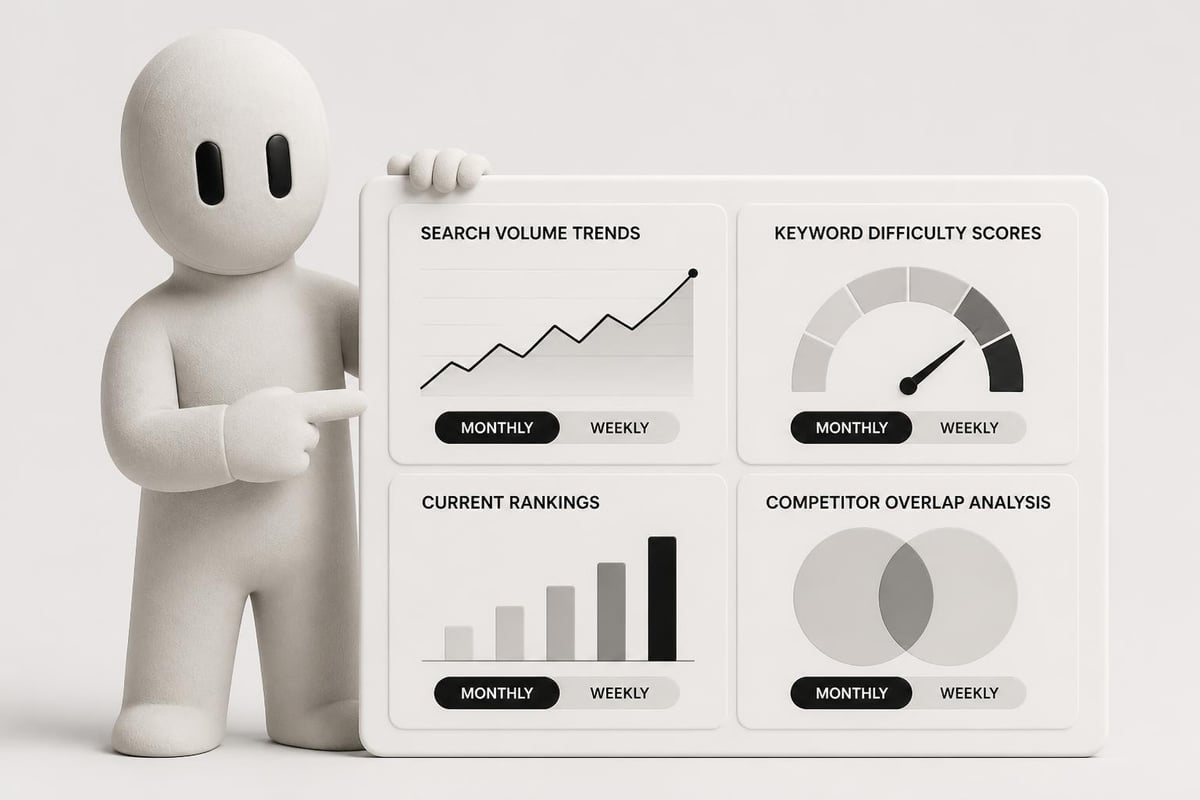
Most tools categorize popularity on a 0-100 scale, combining search frequency with trending patterns. Recent research on app search ranking prediction demonstrates how machine learning models can forecast keyword performance based on historical patterns and competitive dynamics.
| Metric Type | What It Measures | Why It Matters |
|---|---|---|
| Search Volume | Monthly query count | Indicates demand and traffic potential |
| Keyword Difficulty | Competition level (0-100) | Shows how hard ranking will be |
| Traffic Potential | Estimated downloads | Projects actual install impact |
| Relevance Score | Match to app function | Prevents wasted optimization effort |
Competitor Keyword Analysis
Understanding which keywords competitors rank for reveals opportunities and gaps. The best aso keyword research tools allow you to enter a competitor's app and extract their entire keyword portfolio, showing their rankings, estimated traffic, and metadata usage.
This competitive intelligence helps answer critical questions:
- Which keywords drive the most installs to similar apps?
- Where do competitors rank that you don't?
- What search terms are underutilized in your category?
- How have competitor rankings changed over time?
According to App Store ecosystem data from Apple, search remains one of the primary discovery methods for apps, making competitor analysis a strategic necessity rather than optional research.
Leading ASO Keyword Research Tools in 2026
The market offers several robust platforms, each with distinct strengths for different use cases and budgets. Selecting the right tool depends on your app category, growth stage, and technical requirements.
Mobile Action
Mobile Action provides comprehensive keyword tracking across both iOS and Android platforms. The tool excels at international keyword research, offering data for over 40 countries and multiple languages. Its keyword suggestion engine generates thousands of related terms based on seed keywords, category analysis, and competitor apps.
Standout features include:
- Real-time rank tracking for unlimited keywords
- Ad intelligence showing competitor Apple Search Ads campaigns
- Creative analysis tools for icon and screenshot optimization
- Integration with Apple Search Ads for direct campaign management
The platform works particularly well for apps with international audiences or those planning multi-market launches. Pricing starts at higher tiers suitable for established apps with monetization.
Sensor Tower
Sensor Tower built its reputation on market intelligence and has expanded into comprehensive ASO tools. The platform combines keyword research with download estimates, revenue tracking, and category rankings. This holistic view helps teams understand not just which keywords to target, but which actually drive business results.
The keyword research module identifies high-opportunity terms by analyzing search volume, competition, and your app's likelihood of ranking. Studies on how app rankings influence selection support Sensor Tower's focus on ranking probability-users overwhelmingly choose apps from the first page of results.
AppTweak
AppTweak focuses specifically on ASO, making it a favorite among app marketers who want depth rather than breadth. The platform's keyword database covers over 50 countries and provides detailed difficulty scores that account for competitor strength, not just search volume.
One unique feature is keyword grouping based on user intent. AppTweak categorizes keywords into discovery (broad category terms), feature-specific (functionality searches), and branded (competitor or company names). This taxonomy helps prioritize optimization efforts based on where users are in their decision journey.
App Radar
App Radar serves smaller teams and indie developers with an accessible interface and freemium pricing. While less feature-rich than enterprise platforms, it covers the essential workflow: keyword suggestions, rank tracking, and metadata optimization recommendations.
The tool particularly shines in its educational approach, explaining why certain keywords matter and how to implement them effectively. For teams new to ASO or managing smaller apps, this guidance reduces the learning curve significantly.
Building an Effective ASO Keyword Strategy
Tools provide data, but strategy transforms that data into growth. A systematic approach to keyword research and implementation maximizes your app's visibility while avoiding common pitfalls that waste optimization efforts.
Starting with Seed Keywords
Begin by brainstorming 10-15 core terms that describe your app's primary function and category. These seed keywords form the foundation for expansion research. For a meditation app, seeds might include "meditation," "mindfulness," "sleep sounds," "breathing exercises," and "stress relief."
Enter these seeds into your chosen aso keyword research tools to generate hundreds of related terms. Pay attention to:
- Long-tail variations with three or more words showing specific use cases
- Feature-based keywords highlighting specific functionality
- Problem-solution pairs where users describe a problem your app solves
- Alternative phrasings that mean the same thing but use different words
Similar to how long-tail keyword strategies work for web content, longer app search queries often convert better despite lower search volume because they indicate clearer intent and less competition.

Analyzing Keyword Difficulty vs. Opportunity
Not all high-volume keywords deserve pursuit. A keyword with 50,000 monthly searches dominated by established apps with millions of downloads may deliver zero traffic to a new app. Conversely, a 500-search-per-month term with low competition could drive hundreds of highly relevant installs.
Calculate keyword opportunity using this framework:
| Search Volume | Competition Level | Priority |
|---|---|---|
| High | Low | Immediate - Optimize now |
| High | High | Long-term - Build toward these |
| Low | Low | Quick Wins - Easy rankings |
| Low | High | Skip - Not worth effort |
Most aso keyword research tools provide difficulty scores, but manually checking the top 10 apps for each keyword gives a realistic view of what you're competing against. Look at their download counts, ratings, and how long they've held those positions.
Implementing Keywords Strategically
Once you've identified target keywords, placement matters tremendously. Apple's search documentation confirms that different metadata fields carry different weight in ranking algorithms.
iOS keyword placement hierarchy:
- App Name (30 characters) - Highest weight, most visible
- Subtitle (30 characters) - Strong weight, appears in search results
- Keyword Field (100 characters) - Moderate weight, invisible to users
- In-App Purchases - Minor weight, describes purchasable content
For Android, keywords must appear in the app description since Google Play lacks a dedicated keyword field. The first 250 characters carry the most weight, making the opening paragraph critical for ASO.
Avoid keyword stuffing-repeating the same term multiple times across fields. Both Apple and Google penalize this practice. Instead, use synonyms and related terms to maximize coverage without redundancy. If "photo editor" appears in your title, use "image editing" or "picture enhancement" in other fields.
Advanced ASO Keyword Research Techniques
Beyond basic keyword discovery, sophisticated optimization requires ongoing testing, localization, and competitive monitoring. These advanced techniques separate high-performing apps from those that plateau after initial optimization.
Seasonal and Trending Keyword Monitoring
Search behavior changes throughout the year. Fitness apps see volume spikes in January, tax apps peak in March and April, and education apps surge in August and September. The best aso keyword research tools track these patterns and alert you to emerging trends.
Set up automated monitoring for your core keywords and category terms. When you notice upward trends, adjust your metadata to capture that momentum. Neil Patel's ASO keyword research guide emphasizes the importance of timing optimization updates to match seasonal demand shifts.
Localization Beyond Translation
International expansion requires more than translating your existing keywords into other languages. Search behavior, popular apps, and competitive landscapes vary dramatically by country. A keyword that performs well in the United States might be irrelevant in Japan or Brazil.
Use aso keyword research tools that provide country-specific data to identify local search patterns. For example, while Americans might search for "car sharing app," UK users search for "car hire app" instead. These nuances determine whether localization succeeds or fails.
Research shows that properly localized metadata can increase downloads by 200% or more in new markets, making country-specific keyword research one of the highest-ROI optimization activities available.
A/B Testing Metadata Changes
Major app stores now offer built-in A/B testing capabilities. Apple's Product Page Optimization allows testing different icons, screenshots, and app previews. While you cannot directly test titles or keywords through these native tools, you can test which visual elements improve conversion for specific keyword traffic.
Track which keywords drive the highest conversion rates from impression to download. If certain keywords bring traffic that bounces without installing, they may be poorly targeted despite good search volume. Refine your keyword list based on actual conversion data, not just ranking potential.
Integrating ASO with Broader Marketing Automation
App store optimization doesn't exist in isolation. The most successful apps integrate ASO keyword research with paid user acquisition, content marketing, and overall growth strategies to create compounding advantages.
Connecting ASO and Apple Search Ads
The keywords that drive organic rankings often perform well in paid search ads. Use your aso keyword research tools to identify high-converting keywords, then bid on those same terms in Apple Search Ads or Google App Campaigns. This dual approach captures both paid and organic traffic for your best terms.
Conversely, paid search campaigns generate valuable data about which keywords actually convert. If a keyword drives high-quality installs through ads, prioritize it in your organic optimization efforts. TechCrunch documented how one team used this integration to scale App Store performance by approximately 200% in one year.
Keyword Data for Content Marketing
The same aso keyword research tools that optimize your app listing can inform your content strategy. Create blog posts, videos, and social content around the keywords users search for in app stores. This builds brand awareness and creates multiple touchpoints in the user journey.
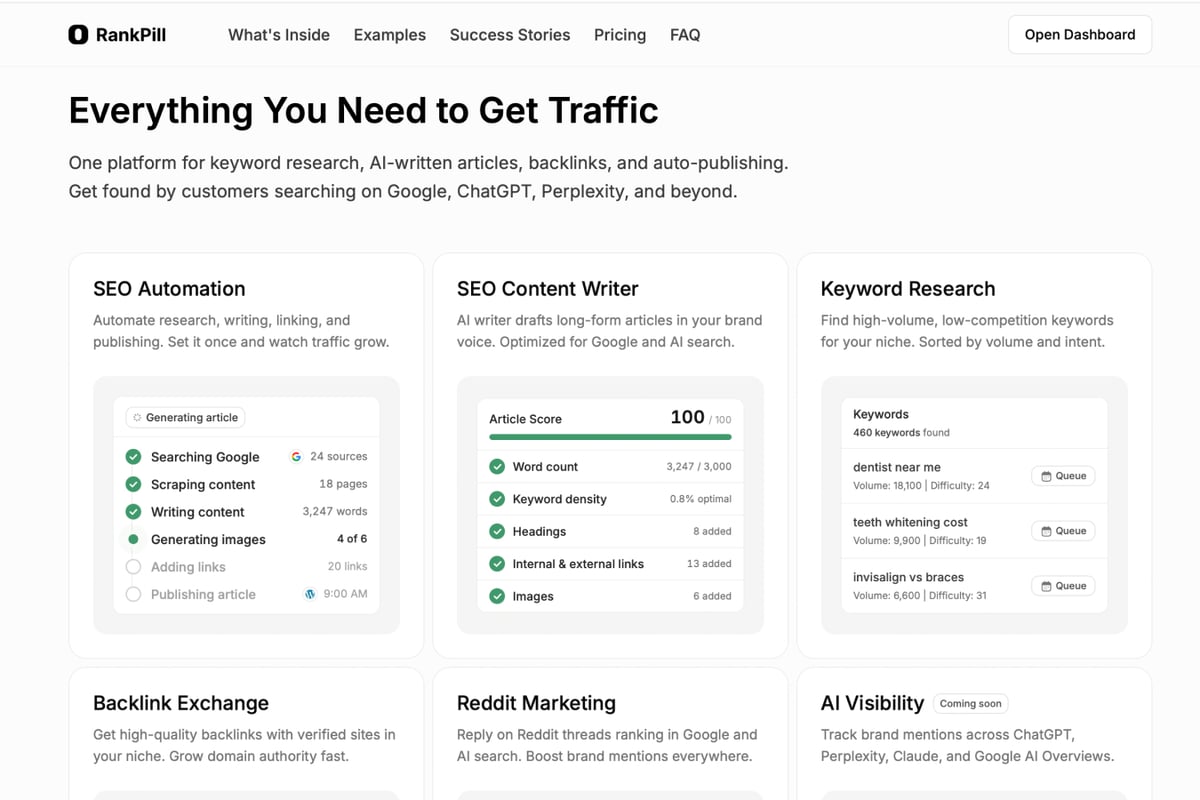
For businesses already managing web SEO, platforms like RankPill can automate the content creation process based on keyword research. While designed primarily for web search optimization, the principles of matching content to search intent apply equally to app-related content that drives awareness and downloads.

Monitoring Competitor Movements
App store rankings change constantly as competitors optimize their metadata, run paid campaigns, and release updates. Set up automated competitor tracking to receive alerts when rivals change their titles, add keywords, or shift rankings significantly.
Regular competitive analysis reveals strategic shifts in your category. If multiple competitors begin targeting a specific keyword, it may indicate emerging demand or a lucrative user segment. Conversely, if competitors abandon certain terms, investigate whether those keywords have become less valuable or if an opportunity has opened.
Common ASO Keyword Research Mistakes to Avoid
Even experienced marketers make preventable errors when conducting keyword research for app stores. Understanding these pitfalls helps you allocate resources more effectively and avoid optimization dead ends.
Targeting Branded Keywords of Competitors
While it's tempting to target keywords like "Instagram alternative" or "better than TikTok," app stores treat these searches differently than web search engines. Users searching for specific brand names almost always want that exact app, making conversion rates extremely low for alternatives.
Additionally, major platforms may filter or penalize apps that repeatedly reference competitor brands in their metadata. Focus instead on functional keywords that describe what your app does rather than which apps it competes against.
Ignoring Keyword Cannibalization
Using the same keyword in multiple places doesn't strengthen your ranking-it wastes limited character space. If "photo editor" appears in both your title and subtitle, you've used 24 characters (counting repetition and spaces) for a single keyword when you could have targeted two different terms.
Create a keyword map showing exactly which terms go in which metadata fields. Ensure no keyword appears more than once across all fields unless absolutely necessary for readability or branding.
Overlooking Update Frequency
App store algorithms favor active development and regular updates. Apps that haven't been updated in months gradually lose ranking power, even for keywords they previously dominated. However, changing metadata too frequently can also hurt rankings as the algorithm needs time to assess performance.
Most ASO guides recommend updating metadata every 4-6 weeks based on performance data. This cadence allows sufficient time to measure keyword impact while keeping your app "fresh" in algorithmic assessments.
Relying on a Single Tool
Different aso keyword research tools source data differently and may show varying search volumes or difficulty scores for the same keywords. Using multiple tools provides a more complete picture and helps identify discrepancies that require manual investigation.
Many successful ASO professionals maintain subscriptions to two or three different platforms, using each for specific strengths: one for keyword discovery, another for rank tracking, and a third for competitor analysis.
Measuring ASO Keyword Research Success
Effective measurement separates productive optimization from busy work. Track the right metrics to understand which keyword decisions drive actual business results rather than just vanity metrics.
Core ASO Performance Metrics
Beyond basic download counts, monitor these indicators of keyword research effectiveness:
- Keyword rankings - Position in search results for target terms
- Organic download percentage - Portion of installs from search vs. other sources
- Conversion rate - Percentage of viewers who install after seeing your listing
- Search impression share - How often your app appears for target keywords
- Category rankings - Overall position in relevant app store categories
Tools like auto SEO software demonstrate how automation can track and optimize performance metrics continuously, a principle equally valuable for app store optimization.
Attribution and Revenue Tracking
The ultimate measure of keyword research success is revenue impact. Which keywords drive users who become paying customers versus those who install and immediately delete? Most analytics platforms can segment users by acquisition source, allowing you to track lifetime value by keyword.
Key revenue metrics include:
| Metric | Calculation | Target |
|---|---|---|
| Cost Per Install (CPI) | Ad spend ÷ installs | Below category average |
| User Lifetime Value (LTV) | Total revenue per user | 3x CPI or higher |
| Return on Ad Spend (ROAS) | Revenue ÷ ad spend | 300%+ for sustainable growth |
| Organic-to-Paid Ratio | Organic installs ÷ paid installs | 2:1 or better indicates strong ASO |
High-quality keyword research identifies terms that drive valuable users, not just download volume. An app with 10,000 monthly installs from well-researched keywords often generates more revenue than one with 50,000 installs from poorly targeted terms.
The Future of ASO Keyword Research Tools
As artificial intelligence and machine learning become more sophisticated, aso keyword research tools continue evolving. Several trends will shape how app marketers conduct optimization in the coming years.
AI-Powered Keyword Suggestions
Current tools rely primarily on historical search data and competitor analysis. Emerging platforms use natural language processing to understand semantic relationships between keywords, suggesting terms based on user intent rather than just word matching.
These systems analyze app reviews, support tickets, and social media mentions to identify how users actually describe app functionality in their own words. This approach uncovers keyword opportunities that traditional research methods miss because users phrase their needs differently than developers describe their features.
Predictive Ranking Models
Machine learning models are becoming better at predicting which keywords an app can realistically rank for based on its current metrics. Rather than showing all possible keywords, future tools will focus recommendations on terms where you have a genuine probability of reaching the top 10 results.
These predictions account for your app's current download velocity, rating trends, retention metrics, and metadata strength relative to competitors. The result is more focused, achievable optimization targets rather than aspirational keywords that require years of growth to capture.
Cross-Platform Optimization Coordination
As users increasingly discover apps through channels beyond the app stores themselves-social media, web search, AI assistants, and embedded app clips-keyword research expands to cover these additional surfaces. Future aso keyword research tools will coordinate optimization across all discovery channels, ensuring consistent messaging and strategic keyword deployment wherever users encounter your app.
Platforms that unify web SEO, social media optimization, and traditional ASO into single workflows will provide significant competitive advantages. Similar to how AI and SEO integration improves web content performance, coordinated cross-platform strategies will dominate app growth in 2026 and beyond.
Effective ASO keyword research transforms app store visibility from guesswork into science, helping your app reach the users who need it most. The tools and strategies covered here provide a foundation for sustainable organic growth regardless of your app category or budget. If you're managing web presence alongside app optimization, RankPill automates keyword research, content creation, and SEO workflows so you can focus on product development while growing organic traffic across all channels. Start optimizing smarter today.
Unlock Traffic on Autopilot
Grow organic traffic on autopilot. RankPill will research, write, optimize, and publish articles to your website daily.