Long Tail Keyword Strategy: A Complete 2026 Guide

Modest Mitkus · May 29, 2026
Search engines process billions of queries daily, but most businesses chase the same high-volume keywords everyone else targets. The reality? Those competitive terms drive traffic but rarely convert. A well-executed long tail keyword strategy shifts focus to specific, multi-word phrases that capture genuine search intent and deliver measurable results. These longer, more detailed queries represent 70% of all search activity and connect you with users ready to take action.
Understanding the Foundation of Long Tail Keywords
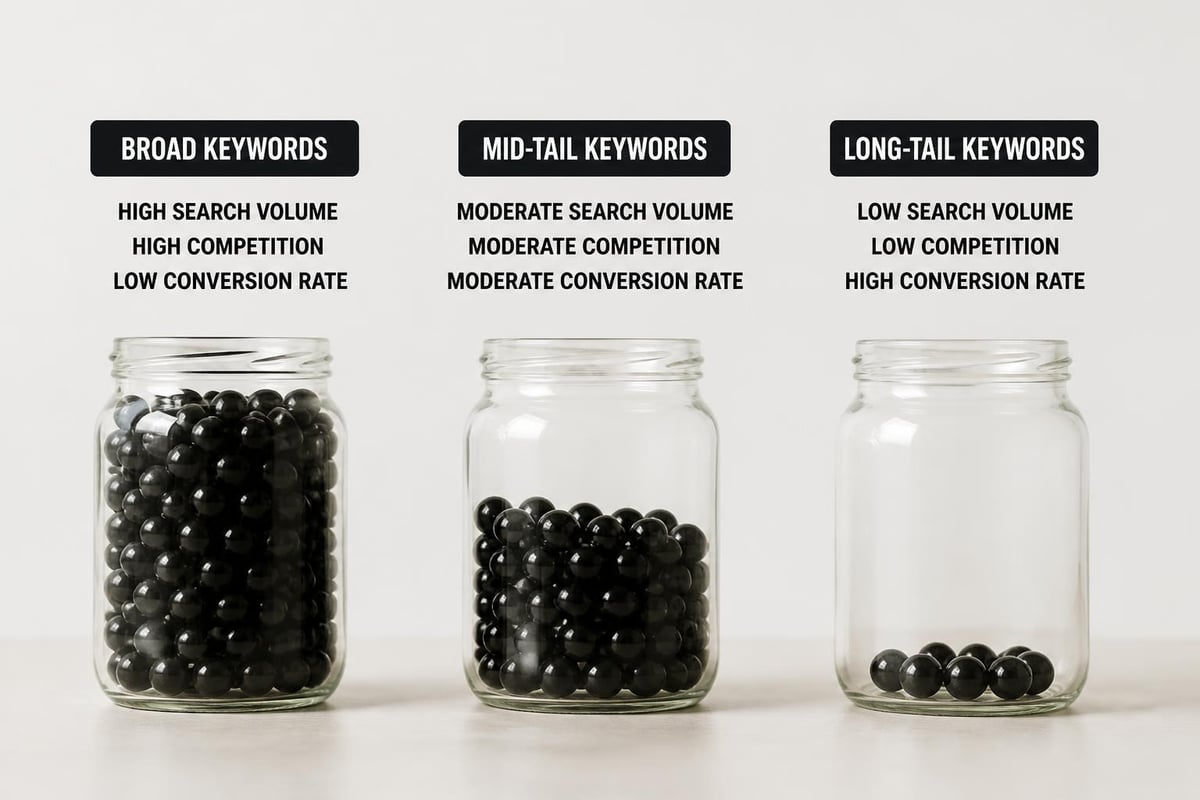
Long tail keywords are search phrases typically containing three or more words that target specific user intent. Unlike broad terms like "running shoes," these queries get specific: "best trail running shoes for wide feet women." The specificity reduces competition while increasing relevance.
The mathematics behind long tail keywords reveals their power. While individual long tail terms generate lower search volume, collectively they represent the majority of search traffic. Search Engine Journal highlights that these keywords convert 2.5 times better than generic terms because they match precise user needs.
Why Search Behavior Favors Specificity
Modern searchers have evolved beyond single-word queries. Voice search, conversational AI, and increased search sophistication drive this trend. Users now articulate exactly what they need, creating opportunities for businesses that align content with these detailed queries.
Consider the buyer journey. Someone searching "laptops" is browsing. Someone searching "best laptop for video editing under 1500 dollars" is ready to purchase. This intent clarity makes long tail keyword strategy essential for businesses focused on conversion rather than vanity metrics.
Building Your Long Tail Keyword Research Framework
Effective long tail keyword strategy starts with systematic research. Multiple data sources reveal opportunities competitors overlook.
Begin with seed keywords from your core offerings. If you sell automation software, your seeds might include "SEO automation," "content automation," and "marketing automation." These form the foundation for expansion into longer, more specific variations.
Leveraging Question-Based Queries
Questions dominate long tail searches. Users ask "how," "why," "what," "when," and "where" to find solutions. Tools like RankPill's keyword research tool help identify these question patterns within your niche.
Popular question formats include:
- How-to queries (how to automate SEO content)
- Comparison queries (automated SEO vs manual SEO)
- Best-of queries (best SEO automation tools for small business)
- Problem-solving queries (fix slow organic traffic growth)
- Location-specific queries (SEO automation services for e-commerce)
Each question type serves different user intent stages. How-to queries indicate research phase, while comparison queries suggest evaluation phase. Understanding these distinctions helps prioritize keywords based on your business objectives.
Mining Competitor Content Gaps
Your competitors reveal valuable insights through what they rank for and what they miss. Analyze their content to identify underserved topics within your niche.
| Analysis Method | What to Look For | Action Item |
|---|---|---|
| Content audit | Topics they cover superficially | Create comprehensive alternatives |
| Keyword gaps | Terms they don't target | Build dedicated content pieces |
| Question analysis | Unanswered user questions | Develop FAQ-style content |
| Search intent mismatch | Rankings that don't match query intent | Create better-aligned content |
This competitive intelligence transforms into actionable content opportunities. When you identify gaps, you've found low-competition entry points for your long tail keyword strategy.
Creating Content Clusters Around Long Tail Terms
Individual long tail keywords work better when organized into strategic content clusters. This approach builds topical authority while capturing multiple related searches.
Content clusters consist of a pillar page covering a broad topic and multiple cluster pages targeting specific long tail variations. For instance, a pillar page on "SEO automation" connects to cluster pages covering "automated keyword research," "automated content publishing," and "automated backlink building."
Mapping Keywords to Content Types
Different long tail keywords require different content formats. Understanding this relationship improves both user experience and search performance.
Informational queries need educational content. Someone searching "what is long tail keyword strategy" wants a guide or explanation. Tutorial articles, how-to posts, and educational resources satisfy this intent.
Commercial queries require comparison and evaluation content. Phrases like "best automated SEO platforms 2026" signal buying intent. Comparison tables, feature breakdowns, and pricing analysis serve these searchers.
Transactional queries demand conversion-focused pages. Searches containing "buy," "pricing," or "sign up" indicate readiness to convert. Product pages, landing pages, and demo request forms match this intent.
Platforms focused on digital marketing automation demonstrate how matching content format to search intent drives engagement and conversions across various keyword types.
Technical Implementation of Long Tail Keywords
Strategic placement and optimization techniques determine whether your long tail keyword strategy delivers results. Natural integration beats keyword stuffing every time.
On-Page Optimization Best Practices
Title tags remain the most critical ranking signal. Include your primary long tail keyword near the beginning while maintaining readability. A title like "Long Tail Keyword Strategy: Complete 2026 Guide for Small Business" captures specificity while communicating value.
Meta descriptions don't directly impact rankings but influence click-through rates. Use them to expand on your long tail keyword, answering the user's implied question. Keep descriptions between 140-150 characters for optimal display.
Header structure (H2, H3, H4) creates content hierarchy while incorporating semantic variations of your target keywords. This helps search engines understand topic relationships and content depth.
| Element | Optimization Approach | Example |
|---|---|---|
| URL slug | Keep short, include primary keyword | /long-tail-keyword-strategy |
| First paragraph | Use exact match keyword early | "A well-executed long tail keyword strategy..." |
| Subheadings | Use variations and related terms | "Building Your Long Tail Research Framework" |
| Image alt text | Describe image content with keyword context | "Long tail keyword conversion funnel diagram" |
| Internal links | Link to related cluster content | Link to keyword research tools |
Body content should incorporate your primary long tail keyword naturally while weaving in related terms and synonyms. Search engines understand semantic relationships, so forced repetition damages rather than helps rankings.
Schema Markup for Enhanced Visibility
Structured data helps search engines understand content context, particularly valuable for long tail queries seeking specific information types.
FAQ schema works exceptionally well for question-based long tail keywords. When your content answers "how to find long tail keywords for e-commerce," FAQ markup can trigger rich snippets displaying your answer directly in search results.
HowTo schema suits tutorial content targeting process-oriented long tail queries. Article schema provides context for blog posts and guides. Product schema enhances commercial content targeting buying-intent keywords.

Measuring and Refining Your Long Tail Performance
Data-driven optimization separates successful long tail keyword strategy from guesswork. Track metrics that reveal actual business impact.
Key Performance Indicators That Matter
Organic impressions show discovery potential. Rising impressions for your long tail targets indicate growing visibility. However, impressions alone don't drive business results.
Click-through rate reveals relevance. High impressions with low CTR suggests title and meta description misalignment with search intent. Test different messaging to improve this metric.
Average position tracks ranking progress. Long tail keywords often rank faster than competitive head terms. Monitor position changes to identify which content gains traction.
Conversion metrics provide the ultimate validation. Track which long tail keywords drive not just traffic but actual business outcomes-signups, purchases, demo requests, or other goal completions.
Iterative Optimization Based on Performance Data
Top-performing long tail content reveals optimization opportunities across your entire strategy. Analyze what works and replicate those patterns.
Content length correlation often emerges from this analysis. You might discover that your 2,000+ word comprehensive guides consistently outrank shorter pieces for competitive long tail terms. This insight informs future content creation standards.
Topic clustering patterns reveal untapped opportunities. When multiple long tail keywords within a cluster perform well, it signals demand for deeper coverage of that topic area. Expand successful clusters with additional supporting content.
User engagement metrics (time on page, scroll depth, bounce rate) indicate content quality beyond rankings. High-ranking content with poor engagement signals an intent mismatch requiring content revision.
Scaling Your Long Tail Content Production
Manual content creation limits how many long tail opportunities you can pursue. Strategic scaling approaches multiply your reach without sacrificing quality.
Automation and Efficiency Tools
Modern SEO automation platforms transform long tail keyword strategy from labor-intensive to systematic. These tools handle research, content creation, and publishing at scale.
Automated keyword research identifies hundreds of long tail opportunities within your niche. Instead of manually brainstorming variations, algorithms analyze search patterns, competitor rankings, and related queries to build comprehensive keyword lists.
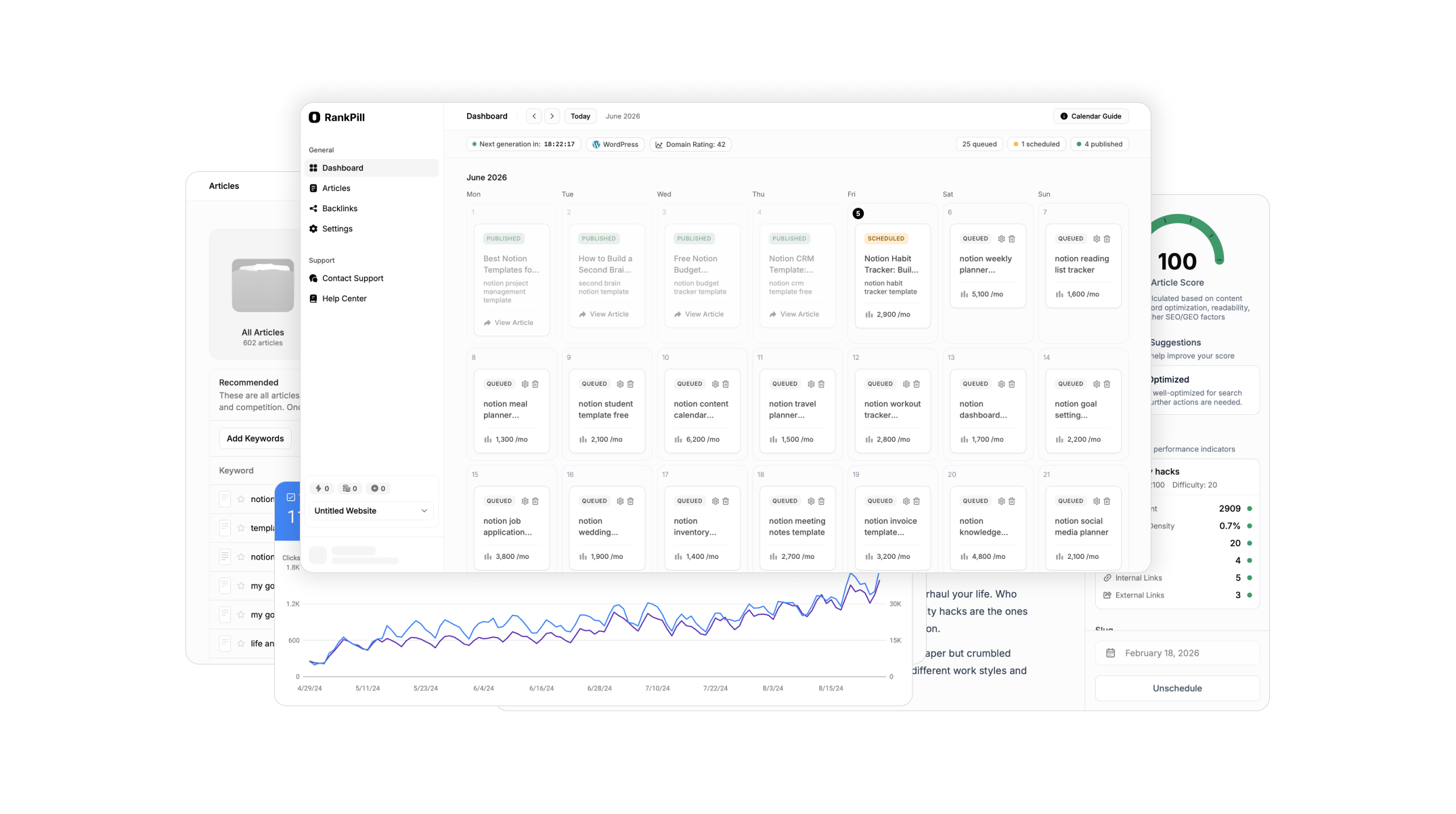
Content generation automation creates publish-ready articles targeting specific long tail keywords. RankPill provides automated SEO services including daily article publishing, keyword research, and backlink building specifically designed to scale long tail content production while maintaining optimization quality.
Publishing automation removes bottlenecks between content creation and going live. Integration with WordPress, Shopify, Webflow, and other platforms enables scheduled publishing that maintains consistent output without manual intervention.
Maintaining Quality at Scale
Volume without quality undermines long tail keyword strategy. Establish quality controls that preserve content value as production increases.
Editorial guidelines ensure consistency. Define standards for research depth, citation requirements, formatting, and tone. These guidelines help automated and human-created content maintain brand voice and value delivery.
Content audits identify improvement opportunities within existing long tail content. Regular reviews catch outdated information, broken links, and optimization gaps that accumulate over time.
User feedback reveals real-world content performance. Comments, questions, and support inquiries highlight where your long tail content succeeds or fails to answer user needs. This qualitative data complements quantitative analytics.
Advanced Long Tail Strategies for 2026
The search landscape evolves continuously. Forward-thinking long tail keyword strategy accounts for emerging trends and technologies.
Optimizing for AI Search and Conversational Queries
Generative AI search engines like ChatGPT and Perplexity change how users discover content. These platforms prioritize comprehensive, authoritative content that directly answers specific questions-the exact strength of long tail keyword strategy.
Optimizing content for AI visibility requires structured, citation-worthy information. AI systems favor content that clearly states facts, provides context, and cites sources. Your long tail content becomes training data and reference material for AI responses.
Conversational query optimization adapts content to natural language patterns. Instead of targeting only "best project management software small business," also optimize for "what's the best project management tool if I have a small team of five people?"
Video and Multi-Format Long Tail Content
Search results increasingly feature video, images, and mixed media. Expanding your long tail keyword strategy beyond text captures these opportunities.
Video SEO targets long tail queries with visual answers. Tutorial videos, product demonstrations, and explainer content rank for "how to" queries where users prefer visual learning. Video descriptions, titles, and transcripts all provide keyword optimization opportunities.
Image optimization captures long tail searches in Google Images and visual search platforms. Detailed alt text, descriptive file names, and surrounding content context help images rank for specific long tail queries.
Podcast content targets long tail queries where users seek in-depth discussion and expert perspective. Episode titles, show notes, and transcriptions extend your long tail keyword coverage into audio content.
Local and Geographic Long Tail Opportunities
Location-specific long tail keywords reduce competition while targeting high-intent local searchers. These queries combine service terms with geographic modifiers.
Building Location-Specific Content Clusters
City-level targeting creates focused local content. Instead of competing for "SEO services," target "affordable SEO services for small business in Austin" or "e-commerce SEO consultant Denver."
Neighborhood and district-level keywords further refine local targeting. In competitive markets, even city-level terms face significant competition. Neighborhood specificity ("SEO automation Williamsburg Brooklyn") reaches ultra-targeted audiences.
Service area pages multiply local long tail coverage. Create dedicated pages for each location you serve, optimizing each for location-specific long tail variations of your core services.
| Geographic Level | Example Long Tail Keyword | Competition Level |
|---|---|---|
| National | "automated SEO platform" | Very High |
| State | "automated SEO services California" | High |
| Metro area | "automated SEO Los Angeles area" | Medium |
| City | "automated SEO Santa Monica" | Low |
| Neighborhood | "automated SEO Venice Beach businesses" | Very Low |
Local intent signals in long tail keywords include "near me," specific neighborhoods, landmarks, and colloquial location names. Incorporate these naturally while avoiding keyword stuffing.
Industry-Specific Long Tail Keyword Applications
Different industries benefit from tailored long tail approaches. Understanding industry-specific search patterns improves keyword selection and content strategy.
E-Commerce Long Tail Keywords
Product-focused businesses leverage long tail keywords combining product types, features, use cases, and buyer qualifications. Shopify's long tail keyword guide demonstrates how e-commerce sites capture buying-intent searches.
Product attribute combinations create natural long tail keywords. "Waterproof hiking boots women size 8 wide" specifies multiple attributes that reduce competition while matching exact shopper needs.
Problem-solution keywords connect products to user pain points. "Laptop bag that fits 17 inch screen with charger pocket" targets searchers with specific requirements rather than generic "laptop bag" browsers.
B2B and SaaS Long Tail Strategies
Business software and services face different search patterns than consumer products. B2B long tail keywords often include job roles, company sizes, use cases, and integration requirements.
Role-specific keywords target decision-makers: "marketing automation platform for CMOs at mid-size companies" or "SEO tools for freelance content marketers."
B2B content marketing strategies demonstrate how longer sales cycles and multiple stakeholders influence keyword selection and content approach for business audiences.
Integration and compatibility keywords address technical buyers: "SEO automation that integrates with HubSpot" or "content publishing tool compatible with Webflow and WordPress."

Common Long Tail Strategy Mistakes to Avoid
Even experienced marketers make errors that undermine long tail keyword strategy effectiveness. Recognizing these pitfalls helps you avoid wasted effort.
Targeting Volume Over Intent
Search volume obsession leads to poor keyword selection. A keyword with 1,000 monthly searches but zero conversion potential delivers less value than a 50-search term that drives qualified leads.
Focus on commercial intent signals within long tail keywords. Terms containing "buy," "best," "review," "comparison," or specific product names indicate higher purchase intent than purely informational queries.
Ignoring Search Intent Alignment
Ranking for a long tail keyword means nothing if your content doesn't match what searchers actually want. Someone searching "long tail keyword strategy examples" wants specific illustrations, not theoretical explanations.
Content format mismatch causes high bounce rates despite good rankings. If users want a listicle but you provide a 3,000-word essay, they'll leave immediately. Study top-ranking content to understand format expectations.
Neglecting Content Updates
Long tail content requires maintenance. Information becomes outdated, competitors create better resources, and search algorithms evolve. Backlinko's comprehensive guide emphasizes ongoing optimization rather than publish-and-forget approaches.
Annual content audits identify refresh opportunities. Update statistics, add new examples, expand sections that prove popular, and remove outdated information. Search engines reward fresh, current content.
Integrating Long Tail Keywords with Broader SEO Strategy
Long tail keyword strategy doesn't exist in isolation. Integration with overall SEO efforts multiplies effectiveness.
Internal Linking Between Long Tail Content
Strategic internal links connect related long tail content, building topic clusters that establish topical authority. Link from broader pillar content to specific long tail articles and vice versa.
Anchor text diversity matters for natural link profiles. Vary how you link between related long tail articles. Use exact match, partial match, branded, and generic anchors across your internal linking structure.
Deep linking to specific sections (using heading anchors) provides more precise navigation. When referencing a particular subtopic, link directly to that section rather than just the page top.
Building Authority Signals
Long tail keywords offer easier ranking opportunities, but authority signals still influence results. Quality backlinks, domain age, and brand mentions contribute to rankings across all keyword types.
Guest posting on industry publications targeting your long tail topics builds relevant authority. When you contribute expert content to established sites, you earn backlinks and credibility that lift all your rankings.
Social signals and brand mentions create indirect SEO benefits. While not direct ranking factors, they drive traffic, encourage linking, and build the brand recognition that supports long tail visibility.
Future-Proofing Your Long Tail Approach
Search technology advances rapidly. Building adaptability into your long tail keyword strategy ensures continued effectiveness.
Preparing for Zero-Click Searches
Featured snippets and AI-generated answers increasingly provide information directly in search results. Users get answers without clicking through. Understanding how AI search impacts SEO helps adapt content strategy for this reality.
Structured content captures featured snippet opportunities. Clear question-and-answer formatting, bulleted lists, and numbered steps improve chances of snippet selection for long tail queries.
Even when clicks decrease, snippet visibility builds brand awareness and establishes authority. Users see your brand as the answer source, increasing direct traffic and branded searches over time.
Adapting to Voice Search Growth
Voice-activated searches use more conversational, long-form queries that align naturally with long tail keyword strategy. "What's the best way to automate SEO content publishing for a small business" reflects natural speech patterns.
Question-based content optimization serves both text and voice searches. When you structure content around questions users actually ask, you capture both typing and speaking searchers.
Local voice searches combine conversational queries with location intent: "Find me an affordable SEO automation service nearby." Optimizing for these patterns positions you for voice search growth.
Implementing a comprehensive long tail keyword strategy transforms how search traffic finds and converts on your website. By targeting specific, intent-rich queries rather than competing for crowded generic terms, you capture qualified visitors ready to engage with your offerings. The systematic approaches outlined here-from research and content clustering to technical optimization and performance measurement-provide a repeatable framework for sustainable organic growth. RankPill automates the entire process, handling keyword research, content creation, and publishing at scale so you can focus on strategic decisions while the platform executes your long tail keyword strategy around the clock.
Unlock Traffic on Autopilot
Grow organic traffic on autopilot. RankPill will research, write, optimize, and publish articles to your website daily.