Google Research Keyword Tool: Complete Guide for 2026

Modest Mitkus · August 25, 2026
Finding the right keywords has always been the cornerstone of successful SEO strategy, and the google research keyword tool remains one of the most trusted resources for marketers and content creators in 2026. Whether you're launching a new campaign, expanding your content library, or refining your existing strategy, understanding how to leverage this powerful research platform can mean the difference between ranking on page one or disappearing into obscurity. This comprehensive guide walks through everything you need to know about using Google's keyword research capabilities to drive organic traffic and build a sustainable content strategy.
Understanding the Google Research Keyword Tool Landscape
The google research keyword tool ecosystem has evolved significantly over the past few years, with Google Keyword Planner remaining the primary free option for most SEO professionals and content marketers. This tool, originally designed for Google Ads campaigns, provides valuable insights into search volume, competition levels, and related keyword opportunities that extend far beyond paid advertising.
What makes this tool particularly valuable in 2026:
- Access to Google's proprietary search data
- Monthly search volume estimates across different regions
- Competition metrics for both organic and paid search
- Keyword grouping and categorization features
- Historical trend data showing seasonal patterns
Many marketers overlook the fact that Google Keyword Planner was built primarily for advertisers, which means certain features and data points are optimized for paid campaigns rather than organic SEO. Understanding this distinction helps you interpret the data more accurately and make better strategic decisions.

Getting Started with Google Keyword Planner
Access to the google research keyword tool requires a Google Ads account, though you don't need to run active campaigns or spend money to use the keyword research features. Search Engine Journal's step-by-step guide provides detailed instructions for setting up your account and navigating the interface.
The setup process takes just a few minutes:
- Create or sign into your Google Ads account
- Switch to Expert Mode if prompted
- Navigate to Tools & Settings in the top menu
- Select Keyword Planner under the Planning section
- Choose between discovering new keywords or analyzing existing ones
Once inside, you'll encounter two primary research paths: "Discover new keywords" for exploration and "Get search volume and forecasts" for validating existing keyword lists. Both serve distinct purposes in your overall research workflow.
Core Features and Data Interpretation
The google research keyword tool provides several critical data points that inform your content and SEO strategy. Understanding how to read and interpret these metrics separates effective keyword research from guesswork.
| Metric | What It Measures | How to Use It |
|---|---|---|
| Average Monthly Searches | Estimated search volume | Prioritize keywords with sufficient demand |
| Competition | Advertiser competition level | Identify commercial intent and difficulty |
| Top of Page Bid (Low/High) | Suggested bid ranges | Gauge commercial value and intent |
| Three-Month Change | Recent trend direction | Spot emerging opportunities or declining topics |
Search Volume Accuracy and Limitations
Search volume data in the google research keyword tool represents estimates rather than precise counts. Research published in academic journals demonstrates that keyword tool outputs can vary significantly from actual query volumes due to sampling methods and data aggregation.
Key limitations to understand:
- Volume ranges become broader without active ad campaigns
- Long-tail keywords often show grouped or combined volumes
- Local and hyper-specific queries may lack sufficient data
- Seasonal keywords require year-over-year analysis
Despite these constraints, the tool remains valuable for comparative analysis and identifying relative opportunity sizes. Rather than treating the numbers as absolute truth, use them to understand relative demand between different keyword options.
Advanced Research Strategies
Moving beyond basic keyword lookups requires developing systematic approaches that uncover opportunities your competitors might miss. The google research keyword tool offers several advanced techniques that separate amateur research from professional-grade competitive intelligence.
Competitor Keyword Mining
Start by entering your competitor's website URL into the keyword discovery tool. This reveals keywords they're already ranking for or targeting in paid campaigns. Cross-reference this data with your own keyword list to identify gaps in your content strategy.
Backlinko's comprehensive guide demonstrates how to extract maximum value from competitor analysis, including filtering techniques that isolate the most valuable opportunities.
Question-Based Keyword Discovery
Questions represent some of the highest-intent search queries because they indicate users actively seeking solutions. When using the google research keyword tool, filter results to show only question-based keywords or manually identify patterns like "how to," "what is," "why does," and "when should."
These question keywords typically have:
- Higher conversion rates due to specific intent
- Lower competition from traditional content
- Better alignment with featured snippet opportunities
- Natural fit for FAQ and educational content formats

Integrating Keyword Research with Content Strategy
Raw keyword data only becomes valuable when you transform it into actionable content plans. The google research keyword tool provides the foundation, but your strategic interpretation determines ROI.
Building Topic Clusters
Rather than targeting individual keywords in isolation, modern SEO requires grouping related keywords into comprehensive topic clusters. This approach signals topical authority to search engines and creates better user experiences.
Steps to build effective clusters:
- Identify a core pillar topic with substantial search volume
- Use the keyword tool to find related subtopics and variations
- Map keywords to content types (guides, tutorials, comparisons)
- Create internal linking structure connecting cluster content
- Monitor performance and expand based on results
This clustering strategy aligns with how search engines understand semantic relationships between queries, making your content more likely to rank for multiple related terms simultaneously.
Search Intent Classification
Every keyword represents different user intent, and the google research keyword tool provides clues through metrics like competition level and bid prices. Research on contextual search intent shows that raw keyword matching increasingly gives way to intent-based ranking in modern search algorithms.
| Intent Type | Characteristics | Content Approach |
|---|---|---|
| Informational | Lower competition, moderate volume | Educational guides, tutorials, definitions |
| Navigational | Brand-specific, high volume | Landing pages, product pages, brand content |
| Commercial | High competition, high bid prices | Comparison guides, reviews, case studies |
| Transactional | Very high bids, moderate volume | Product pages, pricing, conversion-focused |
Understanding intent helps you create content that matches what users actually want when they search for specific keywords, dramatically improving engagement metrics and conversion rates.
Automating Keyword Research Workflows
Manual keyword research consumes significant time, especially when managing multiple content projects or client accounts. Smart automation strategies let you maintain research quality while scaling your output.
The google research keyword tool doesn't offer native automation features, but you can build workflows around it using spreadsheet templates, scripts, and integration with other platforms. For teams publishing content at scale, dedicated keyword research tools that automate discovery and analysis can dramatically accelerate your workflow.
Batch Processing and Template Systems
Rather than researching keywords one at a time, develop batch processes that analyze entire topic categories or competitor lists simultaneously. Export data into structured spreadsheets with formulas that calculate priority scores based on your unique criteria.
Essential template columns:
- Primary keyword and variations
- Search volume and trend direction
- Competition and difficulty scores
- Current ranking position (if applicable)
- Assigned content type and priority
- Publication date and status tracking
This systematic approach ensures consistent research quality across your team and creates historical records you can reference for strategy refinement.
Combining Multiple Data Sources
The google research keyword tool provides one perspective on keyword opportunity, but comprehensive SEO strategies require triangulating data from multiple sources. Google Trends offers complementary insights into seasonal patterns and regional variations that Keyword Planner may not fully capture.
Recommended supplementary tools:
- Google Search Console for actual performance data
- Google Trends for timing and geographic insights
- Answer the Public for question variations
- Industry forums and Reddit for authentic language patterns
- Competitor content gap analysis tools
When you cross-reference findings across these sources, patterns emerge that single-tool analysis would miss entirely.
Practical Applications Across Industries
The google research keyword tool adapts to virtually any industry or niche, though application strategies vary based on market characteristics and competitive dynamics.
Local Service Business Optimization
For location-based businesses like roofing companies or restaurants, geographic modifiers dramatically change keyword opportunity. The tool lets you filter by specific cities, regions, or countries to understand local demand patterns.
Local keyword research requires:
- Including city and neighborhood names in keyword variants
- Analyzing "near me" search patterns and equivalents
- Identifying service area boundaries through volume data
- Understanding seasonal patterns specific to your region
- Balancing broad service terms with specific procedure keywords
E-commerce Product Research
Product-focused businesses need to identify both category-level keywords and specific product searches. The google research keyword tool helps you understand which products have sufficient search demand to justify inventory investment.
E-commerce research should include:
- Brand name variations and model numbers
- Generic product category terms
- Problem-solution keywords related to product use cases
- Comparison and alternative product searches
- Attribute-specific keywords (color, size, features)
This multi-layered approach ensures you capture customers at every stage of their purchase journey, from initial awareness through final decision-making.
Common Mistakes and How to Avoid Them
Even experienced marketers fall into predictable traps when using the google research keyword tool. Recognizing these patterns helps you avoid wasted effort and misallocated resources.
Chasing Volume Over Relevance
High search volume attracts attention, but keywords with massive volume often prove too competitive for newer websites or require resources beyond what most teams can sustain. Worse, high-volume terms frequently indicate informational intent rather than conversion potential.
Better approach:
Focus on keyword efficiency rather than raw volume. A keyword with 500 monthly searches and a 5% conversion rate delivers better results than one with 10,000 searches and 0.1% conversion rate. Calculate the potential value based on your actual conversion funnel metrics.
Ignoring Long-Tail Variations
The google research keyword tool sometimes groups related long-tail keywords into broader terms, which can obscure valuable opportunities. Long-tail keyword strategies typically deliver better ROI because they target specific user needs with less competition.
Long-tail keywords offer multiple advantages:
- Lower competition makes ranking more achievable
- Higher specificity indicates stronger purchase intent
- Voice search optimization aligns with natural language
- Content creation becomes more focused and valuable
- Conversion rates typically exceed broad match equivalents
Misinterpreting Competition Metrics
The "competition" column in the google research keyword tool specifically measures advertiser competition for paid placements, not organic SEO difficulty. Many marketers mistakenly assume high competition equals impossible organic rankings.
Organic difficulty depends on:
- Domain authority of currently ranking pages
- Content quality and comprehensiveness of top results
- Backlink profiles pointing to ranking pages
- Technical SEO factors and page experience signals
- Topical authority in the subject area
Always verify organic difficulty using additional tools or manual SERP analysis before dismissing keywords based solely on Keyword Planner competition scores.
Staying Current with Algorithm Changes
Search algorithms evolve continuously, and keyword research strategies must adapt accordingly. The google research keyword tool provides relatively stable data, but how you apply that data should reflect current ranking factors.
AI and Semantic Search Impact
Modern search engines increasingly understand context, synonyms, and user intent rather than matching keywords literally. This shift means exact-match keyword optimization matters less than comprehensive topical coverage. Research on AI search optimization shows that content answering multiple related queries outperforms narrow keyword-focused pages.
Adaptation strategies:
- Research keyword clusters rather than individual terms
- Include natural language variations and synonyms
- Answer related questions within comprehensive content
- Build topical authority through interconnected content
- Monitor performance across multiple keyword variations
Mobile and Voice Search Considerations
Mobile searches now dominate most industries, and voice-activated queries continue growing. The google research keyword tool doesn't explicitly separate mobile from desktop data, but understanding mobile search patterns helps you interpret results more accurately.
Voice searches typically feature:
- Longer, more conversational phrases
- Question-based formulations
- Local intent and immediate needs
- Complete sentences rather than keyword fragments
- Action-oriented language seeking specific solutions
Incorporate these patterns into your keyword research by explicitly looking for question formats and longer phrases that mirror natural speech patterns.
Measuring Keyword Research ROI
Effective keyword research ultimately impacts revenue and growth metrics, not just traffic numbers. Tracking the right metrics helps you refine your research process and prove value to stakeholders.
Key Performance Indicators
Beyond basic ranking positions, measure the business impact of your keyword targeting decisions through comprehensive analytics.
| Metric | What It Reveals | Target Benchmark |
|---|---|---|
| Organic traffic growth | Overall keyword strategy effectiveness | 10-20% monthly increase |
| Conversion rate by keyword | Intent alignment and content quality | 2-5% for informational, 5-15% for commercial |
| Page value | Revenue attribution by keyword | Positive ROI within 6 months |
| Ranking velocity | Time to first-page rankings | 3-6 months for medium competition |
| Click-through rate | SERP snippet effectiveness | 3-5% for position 5-10, 20%+ for position 1-3 |
These metrics provide feedback loops that improve future keyword selection and content creation decisions.
Attribution and Content Performance
Connect keyword research decisions to actual business outcomes by implementing proper tracking and attribution. UTM parameters, conversion goals in analytics platforms, and CRM integration help you understand which keywords drive not just traffic, but qualified leads and customers.
The google research keyword tool gives you starting data, but your analytics infrastructure determines whether you can prove ROI and optimize accordingly. Organic marketing strategies that connect research to revenue create sustainable competitive advantages.
Integration with Broader SEO Automation
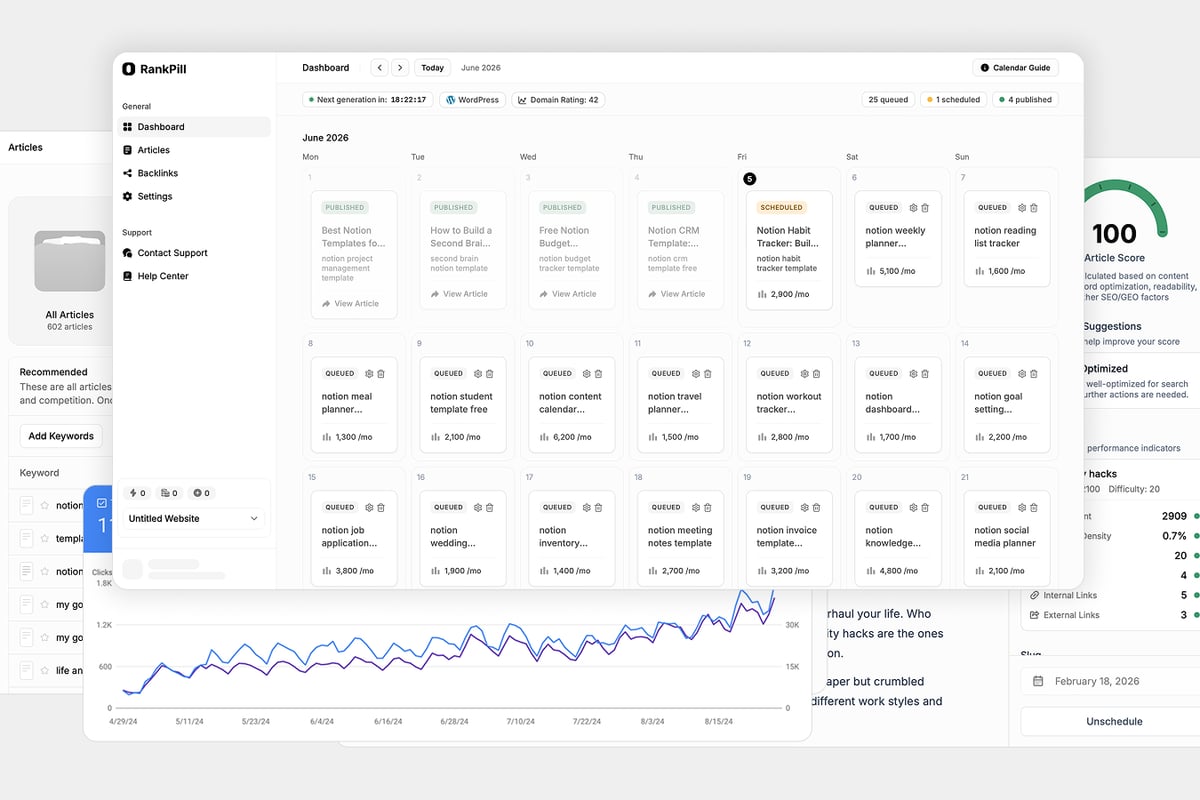
As SEO complexity increases, manual execution of research insights becomes a bottleneck. SEO automation platforms can take keyword research data and automatically generate content, build internal linking structures, and publish on schedule without constant manual intervention.
Modern automation tools handle:
- Taking keyword lists and creating content briefs automatically
- Generating SEO-optimized articles based on keyword parameters
- Building internal linking between related keyword-targeted pages
- Publishing content directly to your CMS on schedule
- Monitoring rankings and triggering content updates
This automation doesn't replace strategic keyword research from the google research keyword tool, but it dramatically scales your ability to act on research findings. When you identify 100 valuable keywords, automation lets you create and publish content for all of them within weeks rather than months or years.
Building Scalable Workflows
The most effective SEO programs combine thoughtful human strategy with automated execution. Use the google research keyword tool to identify opportunities and set strategic direction, then leverage automation to ensure consistent execution at scale.
Recommended workflow structure:
- Quarterly strategic keyword research sessions
- Prioritization based on business goals and resources
- Automated content brief generation from keyword lists
- AI-assisted content creation following brand guidelines
- Automated publishing and promotion workflows
- Performance monitoring with automated reporting
- Monthly review and strategy adjustment
This approach maintains strategic oversight while eliminating repetitive manual tasks that slow progress.
Mastering the google research keyword tool requires understanding both its capabilities and limitations, then building systematic processes that transform raw data into traffic-generating content. The strategies outlined here give you a framework for conducting research that drives measurable business results rather than vanity metrics. RankPill automates the entire workflow from keyword research through content creation and publishing, letting you scale your organic traffic without proportionally scaling your team. Start your automated SEO journey today and watch your rankings grow on autopilot.
Unlock Traffic on Autopilot
Grow organic traffic on autopilot. RankPill will research, write, optimize, and publish articles to your website daily.