
HARO Alternatives That Actually Get You Press Mentions

Modest Mitkus · November 13, 2026
The best HARO alternatives are Qwoted, Featured, Source of Sources, SourceBottle, ResponseSource and direct pitching to journalists. Each one gives you a way to answer reporter requests and earn a press mention without relying on the old Help a Reporter Out email. Which one fits depends on your niche, your country and how much time you can give it each week.
I'll cover what happened to HARO, how these platforms compare, how to pitch so reporters actually reply, and where press mentions stop being enough on their own.
What happened to HARO, and is it still relevant?
HARO still exists, but it is no longer the free, simple email list it once was. Help a Reporter Out connected journalists with expert sources through daily emails. It was sold, merged into other tools and rebranded more than once, and many founders stopped trusting the quality of its requests.
If you used HARO before, here is what changed for most people:
- Request volume grew, and so did the noise. Many emails were off-topic or vague.
- Anonymous or low-authority outlets appeared next to real publications.
- Response rates fell as more people sent the same generic answers.
- The format moved around, so people lost track of where to sign up.
So is it still relevant? Partly. The idea behind it, journalists asking for sources and experts answering, is more useful than ever. Reporters still need quotes, fast. What changed is that the best requests now live across several platforms, and a few direct channels beat all of them.
Check the current status of any service before you pay. Pricing and plans for these tools change often, so confirm details on each site.
Which HARO alternatives are worth your time?
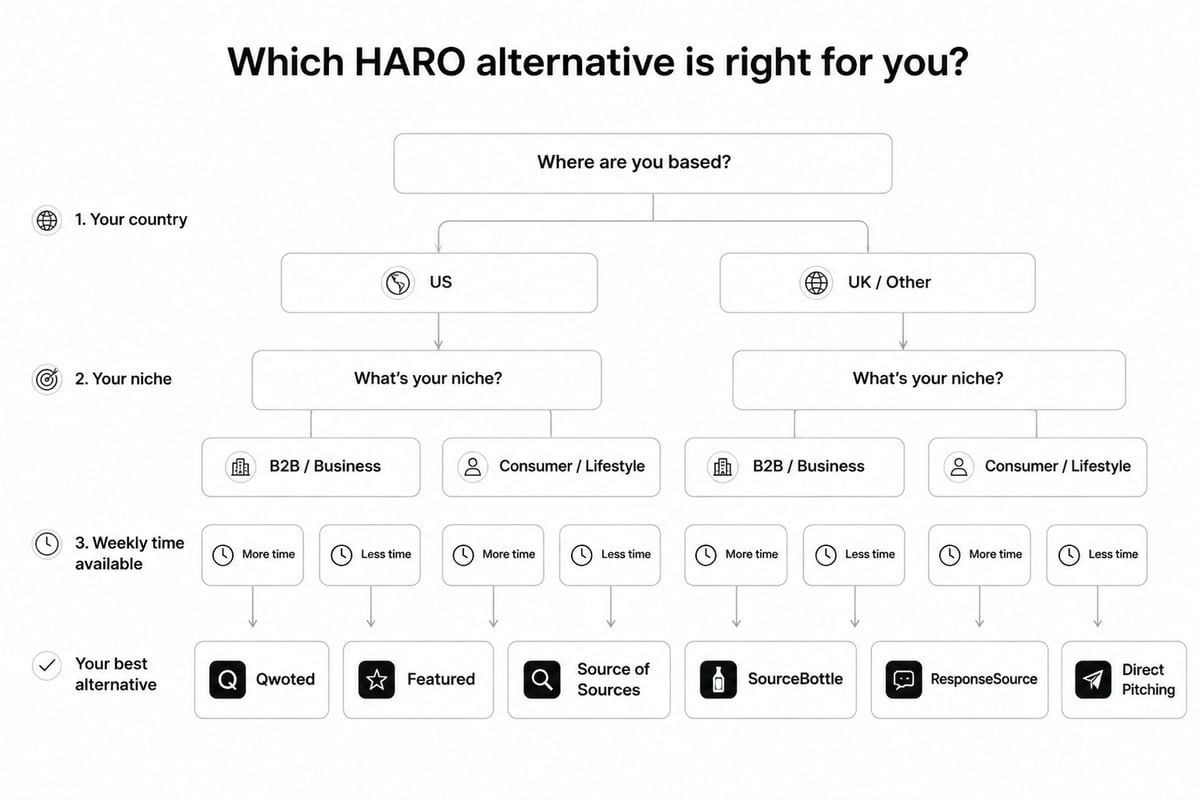
Six options cover most small businesses: Qwoted, Featured, Source of Sources, SourceBottle, ResponseSource and direct journalist pitching. They differ in cost, geography and how much work they ask from you.
Here is a side-by-side view of what each one is best at. I have kept it general because plans and prices change.
| Option | Best for | Format | Main trade-off |
|---|---|---|---|
| Qwoted | Building a profile reporters can search | Platform with profiles and queries | You need to keep your profile current |
| Featured | Fast, guided expert answers | Platform with query matching | Quality varies by outlet |
| Source of Sources | A free email list like old HARO | Daily email | Many people answer the same request |
| SourceBottle | Filtering by topic and country | Email and site | Stronger outside the US |
| ResponseSource | UK media requests | Platform and email | Most relevant to UK journalists |
| Direct pitching | Targeted coverage in your niche | Your own outreach | Takes research and follow-up time |
Pick one or two to start. Running all six means you spend more time reading requests than writing answers, and a late answer is worth almost nothing.
Qwoted and Featured: platforms with profiles
Qwoted and Featured work like a marketplace. You build a profile, journalists post queries, and you answer the ones that match your expertise. The benefit is that your answers sit in one place and reporters can find you without a query.
The cost is upkeep. A thin profile gets ignored. Write a clear one-line expertise statement, list three topics you can speak on, and add a short bio with real numbers from your business.
Source of Sources and SourceBottle: email-first options
Source of Sources is the closest match to the old HARO inbox. You scan a daily email and answer the requests that fit. It costs little in setup, but a popular request gets many replies fast, so speed matters.
SourceBottle lets you filter by topic and country. If you sell in Australia, New Zealand or the UK, that filter saves you from reading requests you can't use.
ResponseSource: UK-focused requests
ResponseSource is the better fit if your customers and target press are in the UK. A US founder will find fewer matches. A UK founder may find it more relevant than any US-first tool.
How to pitch journalists directly without a platform
Direct pitching works when you pick one reporter, one angle and one email, and it often beats broad HARO alternatives because the reporter already covers your topic. You skip the competition from hundreds of other responders.
Cision's 2025 State of the Media survey included responses from more than 3,000 journalists, and Cision's media relations guidance says email is the best channel for outreach, while social media can work in the right circumstances. A short, specific email is still the default.
A simple process:
- Pick a topic you can speak about with real numbers, such as "what we learned running 200 customer onboarding calls."
- Find 10 reporters who covered that topic in the last 90 days. Cision explains ways to find journalists, including media databases and professional networking.
- Read two of their recent pieces so you can reference them.
- Send a short email: one line on who you are, one line on the angle, one line offering a quote or data point.
- Follow up once after four or five days. Then stop.
Keep the pitch under 120 words. A reporter on deadline reads the first two lines and decides.
For background on how outreach fits into PR overall, Cision's overview of media outreach is a useful reference.
How to answer a request so a reporter uses your quote
A reporter uses your quote when it answers the exact question, arrives early and is easy to paste into a story. Most answers fail on one of those three.
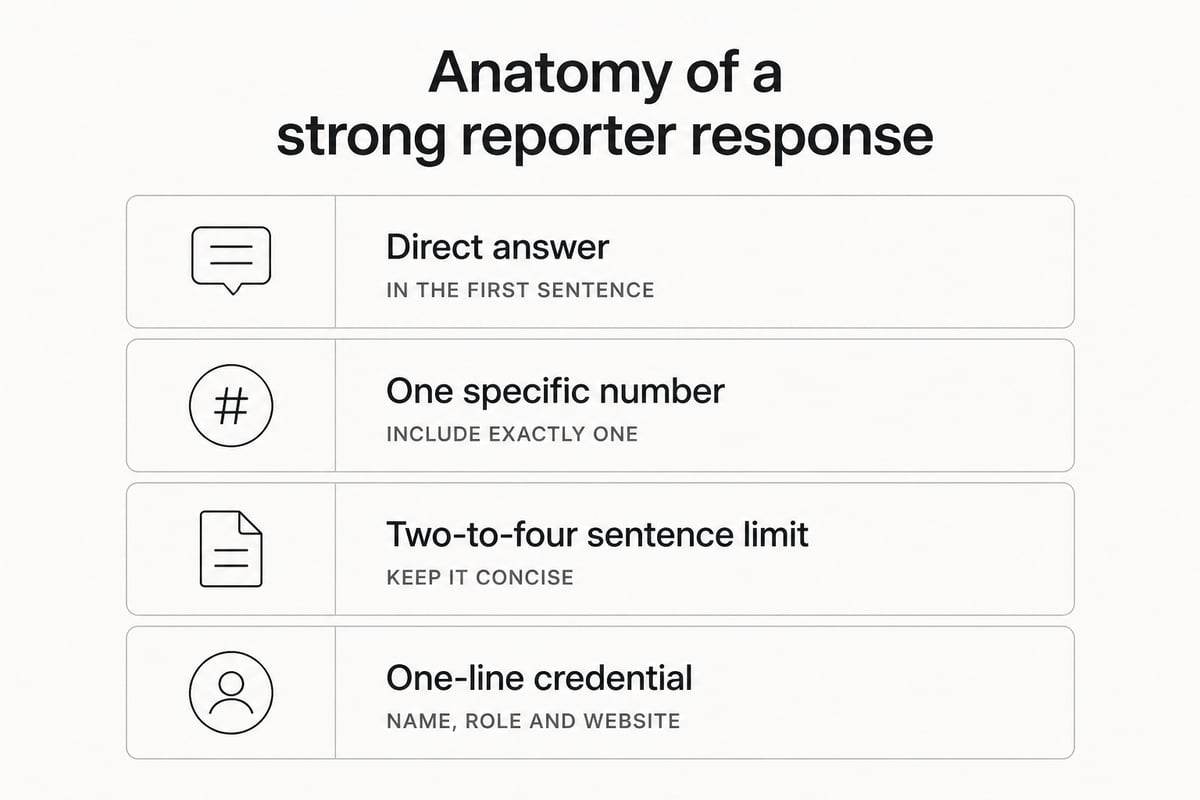
Follow these rules for every response:
- Answer first. Put your direct answer in the first sentence. Add the story after.
- Give a number. "Our churn dropped from 6% to 3.5% in four months" beats "we reduced churn a lot."
- Stay short. Two to four sentences is enough. Offer more if they want it.
- Include credentials in one line. Name, role, company, website.
- Reply fast. The first quality answers often get read. Late ones rarely do.
Do not pitch your product in the answer. A reporter who sees a sales line deletes the whole reply. If your product fits the story, a brief mention at the end is fine.
How much time should a small business spend on press mentions?
Plan for two to three hours a week on press mentions, and treat anything beyond that as a trade-off against your core work. Press is a slow channel for most small businesses, and the payoff is uneven.
Here is the honest picture:
- A single mention on a strong site can bring a backlink, a few referral visits and some credibility.
- Most responses get no reply. Even good answers often go unused.
- A mention rarely brings steady sales on its own. It helps most when readers can also find your site through search.
Cision's 2025 State of the Media report says press releases are a useful resource from PR teams for journalists, according to Cision's 2025 State of the Media report. That tells you reporters still want usable, well-prepared material. It does not mean every pitch lands.
If you have two hours a week, spend one on responding to requests and one on direct pitches to reporters in your niche. Track results in a simple sheet: request, date sent, outcome, link if published.

Where press mentions fit next to your SEO content
Press mentions and SEO content work best together: a mention sends a reporter's readers to your site, and your articles give those readers something to find and keep reading. Without content, a mention is a single spike. With content, the spike turns into rankings and repeat visits.
Think of it as two jobs:
- Press earns trust and a few strong backlinks.
- Content earns steady traffic from the questions customers search for every day.
A founder who only does press gets a few good weeks a year. A founder who only publishes content gets steady traffic but fewer strong links. Doing both, at a pace you can keep, builds more than either alone. If you want a deeper look at links, our guide to building backlinks covers the main routes.
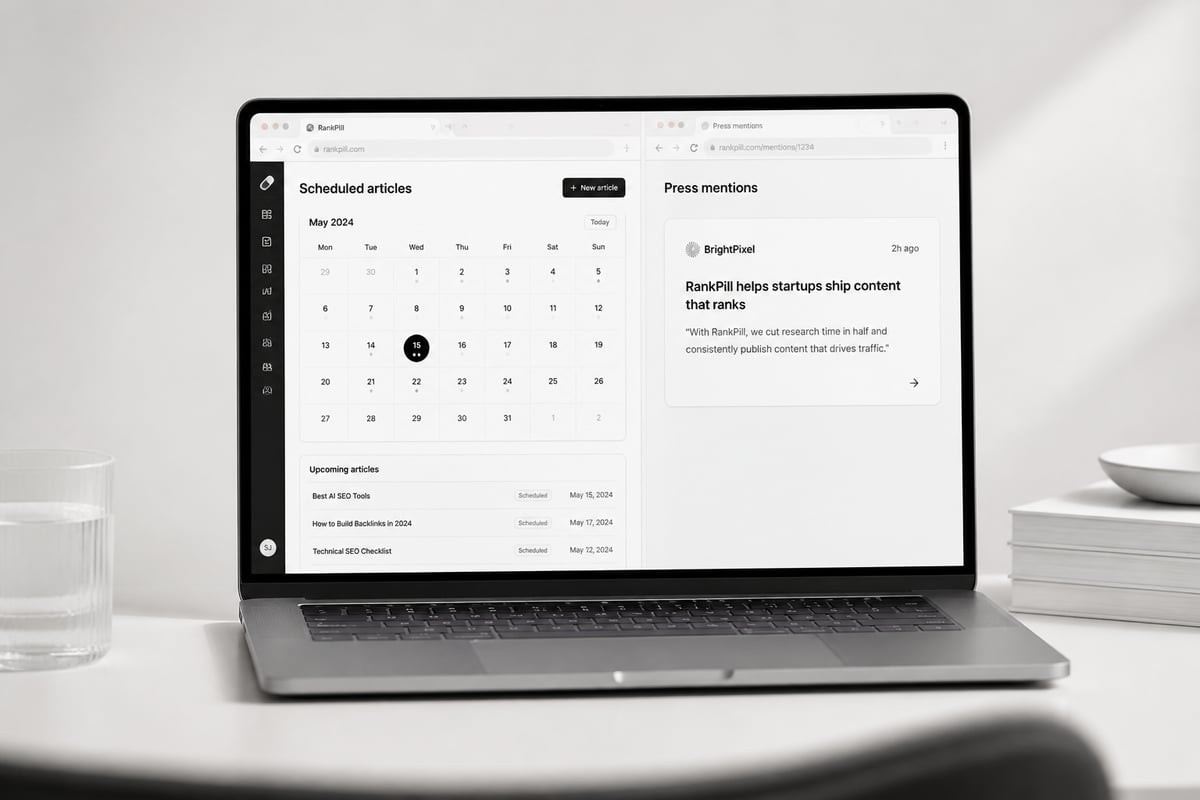
For most small teams, the content side is the one that stalls. Writing two articles a week by hand is hard when you are also running the business. RankPill handles that part: it plans, writes and publishes SEO articles to your site on a schedule you set, at about $3 per article on the RankPill plan.
RankPill is not for everyone. If you want only hand-written content, or your site can't connect to a supported publishing platform, it is the wrong fit, and a freelance writer or your own drafts will serve you better.
How to turn one press mention into more traffic
A press mention gives you a link and a short window of attention, so prepare a page that deserves the visit before the story goes live. If the link points to a thin homepage, most of that attention is wasted.
Do this each time a mention is published:
- Check where the link points. Ask the reporter to link a relevant page if it points to your homepage.
- Make sure that page answers the topic of the story in plain terms.
- Add internal links from that page to two or three related articles.
- Share the piece on your own channels and add it to a "Press" section.
- Watch the page in Google Search Console for new impressions over the next few weeks.
Over time, those mentions add up to a trail of trust. AI assistants also pull answers from pages on the web, so clear, well-sourced articles help you show up in tools like ChatGPT. If that interests you, our guide on how to rank on ChatGPT goes deeper.
FAQ
Does HARO still exist?
Yes, but in a changed form. The original free email service was sold and rebranded, and many users moved to other platforms. Check the current status on the provider's own site before you rely on it.
What are some alternatives to Help a Reporter Out?
The main alternatives are Qwoted, Featured, Source of Sources, SourceBottle and ResponseSource. You can also pitch reporters directly by email, which often gives better results for a narrow niche. Start with one platform and one direct-pitch routine rather than all of them.
What is the HARO platform?
HARO stood for Help a Reporter Out. It sent daily emails listing requests from journalists who needed expert quotes, and experts replied by email. Today the same idea runs across several platforms and direct outreach.
Pick one platform from the table above and send your first three answers this week, then write down what happens. Press mentions earn trust, but they work best when readers who click through find steady content on your site. Try RankPill to plan, write and publish SEO articles on your schedule, starting with a 3-day trial for $1, so your next mention lands on a site that already ranks for something.
Unlock Traffic on Autopilot
Grow organic traffic on autopilot. RankPill will research, write, optimize, and publish articles to your website daily.