
How Often Should I Blog? (2026 Guide)

Modest Mitkus
June 14, 2026
Deciding how often should i blog is one of the most common questions marketers and business owners face when building their content strategy. The answer isn't one-size-fits-all, and in 2026, the landscape has evolved beyond simple frequency rules. Search engines now prioritize quality, relevance, and user satisfaction over raw output volume, while AI-powered search platforms like ChatGPT evaluate content through entirely different lenses. This guide explores the data-driven approaches to blogging frequency, helping you create a sustainable publishing schedule that drives real organic growth without burning out your team or budget.
Understanding the Relationship Between Blogging Frequency and SEO
The connection between how often you publish and your search rankings is more nuanced than many realize. Frequency matters, but not in isolation. Search engines evaluate your content based on freshness, depth, authority, and how well it satisfies user intent.
Research shows that businesses publishing consistently see measurable SEO benefits. According to data on blog post frequency, companies that publish 16+ posts monthly receive 3.5 times more traffic than those publishing four or fewer posts. This correlation exists because regular publishing creates more entry points for organic search, targets more keywords, and signals to search engines that your site remains active and relevant.
However, the quality threshold has risen dramatically. A single comprehensive, well-researched article often outperforms five shallow posts on the same topic. Google's algorithms in 2026 prioritize content that demonstrates expertise, provides unique insights, and thoroughly addresses user questions.
The Quality vs. Quantity Debate
When determining how often should i blog, the quality versus quantity tension becomes critical. Publishing mediocre content frequently damages your SEO more than publishing excellent content infrequently.
Consider these factors:
- Search intent satisfaction: Does each article fully answer the user's question?
- Content depth: Are you providing comprehensive coverage or surface-level information?
- Original research: Do you include unique data, examples, or perspectives?
- Technical optimization: Is each piece properly structured with headers, meta descriptions, and internal links?
The optimal posting frequency for SEO emphasizes that 2-4 quality posts monthly establish a baseline for SEO impact. This baseline allows search engines to recognize your site as an active resource while giving you space to ensure each piece meets high standards.

Data-Driven Blogging Frequency Recommendations
Different business sizes and traffic levels require different approaches to publishing schedules. Your current traffic, resources, and industry competition should inform your strategy.
| Monthly Traffic | Recommended Posts/Week | Minimum Posts/Month | Notes |
|---|---|---|---|
| 0-10K pageviews | 2-3 posts | 8-12 posts | Building foundation requires consistency |
| 10K-50K pageviews | 3-4 posts | 12-16 posts | Scaling phase with established authority |
| 50K-100K pageviews | 4-5 posts | 16-20 posts | Maintaining momentum and covering more keywords |
| 100K+ pageviews | 5+ posts | 20+ posts | Dominating search results in your niche |
These benchmarks come from analyzing successful blogs across industries. Traffic-based posting schedules show that blogs receiving 0-10K monthly pageviews benefit most from 2-3 weekly posts to build consistent readership and search visibility.
Industry-Specific Considerations
Your industry influences how often should i blog because competition and search behavior vary dramatically across sectors. SaaS companies typically need higher frequencies to cover feature updates, use cases, and integration guides. E-commerce sites benefit from product-focused content tied to seasonal trends and buyer questions.
Professional services firms often succeed with lower frequencies (1-2 weekly posts) if each piece demonstrates deep expertise. Business blogging guidelines suggest that most businesses see strong results publishing 1-4 times monthly when they prioritize strategic topics and comprehensive coverage.
B2B content generally requires more research and stakeholder input, naturally leading to lower sustainable frequencies. B2C brands can often maintain higher posting rates because topics are broader and less technical.
Creating Your Sustainable Publishing Schedule
Building a realistic blogging schedule starts with honest assessment of your resources, goals, and constraints. Consistency beats ambition every time. A sustainable schedule you maintain for months outperforms an aggressive schedule you abandon after weeks.
Start by evaluating:
- Available writing resources: Internal team, freelancers, or automation tools
- Budget allocation: Cost per article including research, writing, editing, and promotion
- Content promotion capacity: Social media, email, and outreach bandwidth
- Quality standards: Revision rounds, fact-checking, and approval processes
- Measurement systems: Analytics setup to track performance and adjust strategy
Content posting frequency recommendations advise that small businesses and personal blogs aim for 1-2 weekly posts, while medium-sized websites target 2-3 posts weekly. These targets balance growth goals with resource realities.
The Role of Content Automation
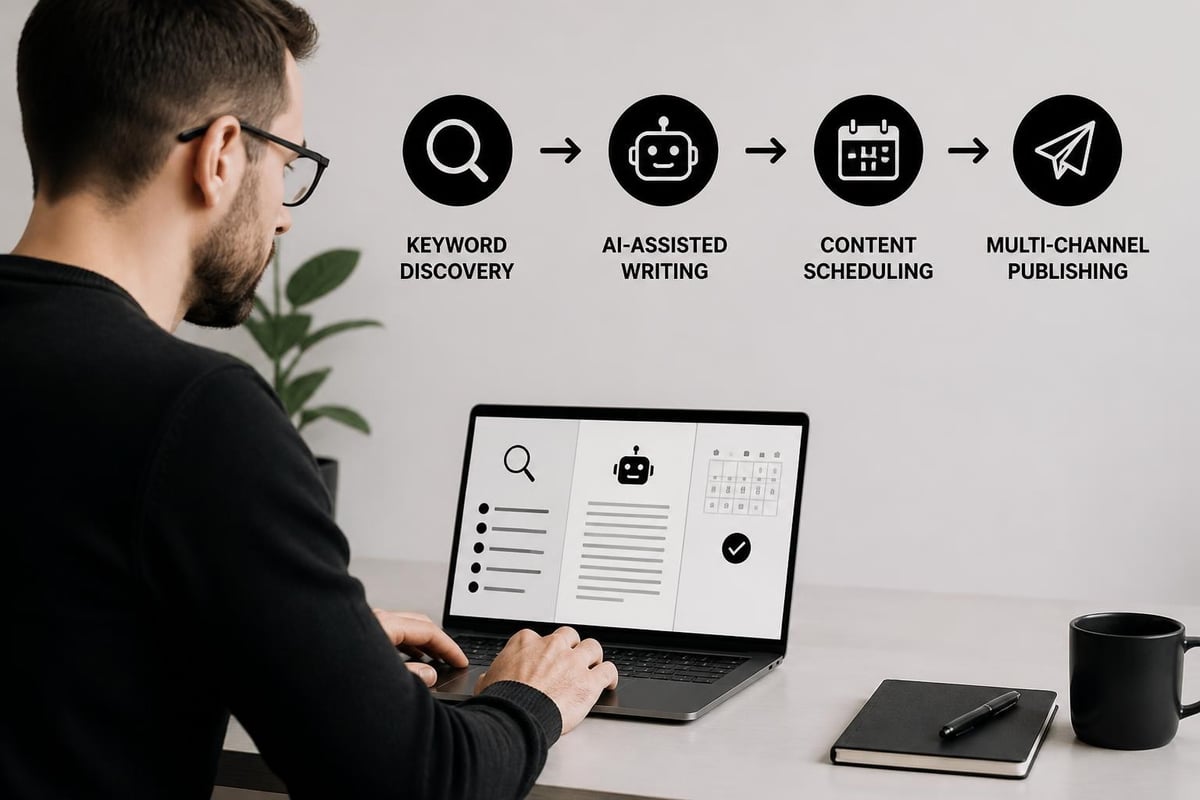
Modern SEO automation has transformed how businesses answer the question of how often should i blog. Platforms that handle keyword research, content generation, and publishing eliminate traditional bottlenecks that limited frequency.
RankPill's SEO automation capabilities allow businesses to maintain consistent daily publishing schedules without proportional increases in team size or budget. When automation handles research, drafting, and distribution, you can shift focus to strategy and promotion rather than production logistics.
Automation doesn't mean sacrificing quality. Advanced AI content systems now produce well-researched, properly structured articles that satisfy both search engines and readers. The key is choosing automation that includes comprehensive keyword research, natural language generation, and proper technical optimization.
Measuring the Impact of Your Blogging Frequency
Publishing content without measuring results wastes resources and misses optimization opportunities. Track specific metrics to understand whether your current frequency drives desired outcomes.
Essential metrics include:
- Organic traffic growth: Month-over-month increases in search-driven visits
- Keyword rankings: Position improvements for target terms
- Page engagement: Time on page, scroll depth, and bounce rate
- Conversion rates: How blog traffic converts to leads or sales
- Index coverage: How quickly search engines discover and index new posts
Use Google Analytics 4 and Google Search Console to establish baseline performance before adjusting frequency. Then test changes systematically, giving each frequency level at least 90 days to demonstrate impact before drawing conclusions.
Adjusting Based on Performance Data
When determining how often should i blog going forward, let data guide your decisions. If doubling your posting frequency increases traffic by 20% but quadruples costs, the ROI doesn't justify continuation. Conversely, if publishing one additional weekly article drives 50% more conversions, the business case becomes clear.
Blog frequency best practices highlight that many successful blogs post 2-4 times weekly, but success isn't about hitting a magic number. It's about finding the frequency where quality remains high, resources stay sustainable, and results justify investment.
Consider seasonal adjustments as well. Retail businesses might increase frequency during holiday shopping periods, while B2B companies might reduce summer output when decision-makers take vacations. Flexibility within your baseline schedule prevents resource waste during low-impact periods.
Common Blogging Frequency Mistakes to Avoid
Even experienced marketers fall into predictable traps when setting publishing schedules. Understanding these pitfalls helps you build a strategy that actually works.
Publishing for the sake of publishing ranks among the most damaging mistakes. When content calendars become obligations rather than strategies, quality suffers. Every article should target specific keywords, address real user questions, or serve defined business objectives. Filler content dilutes your site's authority and wastes crawl budget.
Inconsistent publishing patterns confuse both audiences and algorithms. If you publish five articles one week and zero the next three weeks, readers don't know when to expect new content and search engines can't establish a reliable crawl pattern. Consistent blogging strategies emphasize that one to two quality posts weekly beats sporadic bursts of activity.
Ignoring content updates while chasing new posts creates decay. Your existing articles lose rankings as information becomes outdated. Allocate 20-30% of content production time to updating and republishing high-performing older posts. This strategy often delivers better ROI than creating entirely new pieces.
| Mistake | Consequence | Solution |
|---|---|---|
| Sacrificing quality for quantity | Lower rankings, poor engagement | Set minimum word counts and research requirements |
| Inconsistent schedule | Unpredictable traffic, reduced authority | Define sustainable frequency and stick to it |
| No content promotion | Low initial traffic, slow indexing | Build promotion into every post's workflow |
| Ignoring keyword research | Missing target audience, low search visibility | Use keyword research tools before writing |
Resource Allocation Errors
Many businesses answer how often should i blog based on competitors rather than internal capacity. Trying to match a well-funded competitor's output without comparable resources leads to burnout and failure.
Be realistic about your constraints. A solo founder can't maintain the same frequency as a company with a dedicated content team. Instead of spreading resources thin across many mediocre posts, concentrate effort on fewer exceptional pieces that build authority and drive sustainable traffic.
Strategic Content Planning Beyond Frequency
How often should i blog represents just one dimension of content strategy. The topics you cover, keywords you target, and content types you create matter as much as publishing schedule.
Build topic clusters around core business offerings. Create comprehensive pillar content that thoroughly addresses broad topics, then support it with cluster content covering specific subtopics. This structure signals topical authority to search engines while creating natural internal linking opportunities.
Content mix variation prevents audience fatigue and captures different search intents:
- How-to guides: Instructional content targeting "how to" queries
- Comparison articles: "X vs Y" content for consideration-stage buyers
- Data-driven posts: Original research and industry statistics
- Case studies: Specific customer success examples
- Opinion pieces: Thought leadership and industry commentary
Blog posting schedules for 2026 suggest posting 2-4 times weekly to maintain reader engagement, but this assumes varied, valuable content rather than repetitive formats.
Aligning Frequency with Business Goals
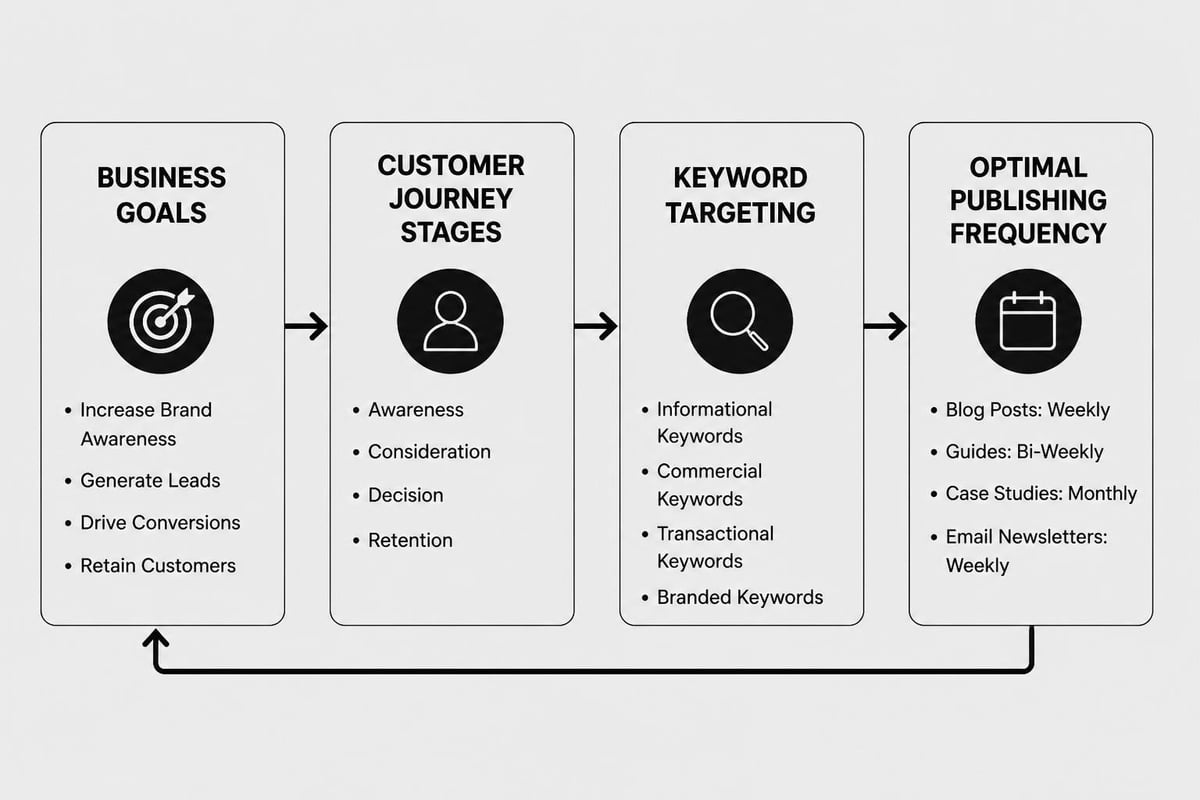
Your publishing frequency should directly support measurable business objectives. If lead generation drives your blog, focus on topics that attract ready-to-buy searchers even if this means lower overall frequency. If brand awareness matters most, higher frequency across broader topics makes sense.
Map content to your customer journey:
- Awareness stage: Educational content addressing pain points
- Consideration stage: Comparison and solution-focused articles
- Decision stage: Product-specific content and case studies
- Retention stage: Advanced tips and best practices for existing customers
This mapping ensures each article serves strategic purposes beyond simply maintaining publishing frequency.
Scaling Your Blogging Operations
As your business grows, your answer to how often should i blog will evolve. Successful scaling requires systems, not just increased effort.
Document your content production process completely. Create templates for briefs, outlines, and post formats. Build style guides that ensure consistency across writers. Establish quality checklists that every piece must pass before publishing. These systems make scaling predictable rather than chaotic.
Consider different scaling approaches:
- Hire in-house writers: Best for businesses needing tight brand control and industry expertise
- Engage freelancers: Flexible option for variable content needs and specialized topics
- Implement automation: Ideal for maintaining high frequency with consistent quality standards
- Hybrid approach: Combine automation for volume with human oversight for strategy
AI-powered content generation has matured significantly in 2026. Modern systems produce content that reads naturally, incorporates proper keyword optimization, and maintains brand voice consistency. This technology enables businesses to answer how often should i blog with "daily" without proportional budget increases.
The Future of Blogging Frequency
Search and content consumption patterns continue evolving, influencing optimal publishing strategies. Understanding emerging trends helps you future-proof your blogging approach.
AI search engines like ChatGPT and Perplexity evaluate content differently than traditional search. They prioritize comprehensiveness, source credibility, and direct answer quality. This shift means fewer, more thorough articles might outperform high-frequency shallow content. Learning how to get mentioned by AI platforms requires different optimization strategies than traditional SEO.
Voice search growth favors conversational, question-focused content. Mobile-first indexing demands faster load times and better mobile experiences. Video integration within blog posts increases engagement and time on page. These factors should inform your content production, potentially reducing pure text frequency while increasing multimedia richness.
Personalization technologies will eventually allow dynamic content delivery based on user characteristics and search history. This development might shift focus from publishing frequency to content modular design and version management.
Determining how often should i blog depends on your specific resources, goals, and market conditions, but consistency and quality consistently outweigh raw frequency. Whether you publish twice weekly or twice daily, the key is maintaining sustainable schedules that deliver genuine value to your audience while supporting measurable business objectives. RankPill automates the entire content creation and publishing process, enabling businesses to maintain optimal blogging frequencies without expanding teams or budgets. With automated keyword research, AI-written articles, and seamless CMS integration, you can focus on strategy while the platform handles daily execution.