Niche Site SEO: Strategies to Dominate Specific Markets

Modest Mitkus · May 26, 2026
Niche site SEO represents one of the most effective pathways to online success in 2026, especially for businesses targeting specialized audiences. Unlike broad-authority sites competing across multiple industries, niche sites concentrate their efforts on specific topics, allowing for deeper expertise, stronger topical authority, and higher conversion rates. The challenge lies in executing SEO strategies that account for limited keyword pools, intense competition from established players, and the need to establish credibility within a specialized field.
Understanding the Fundamentals of Niche Site SEO
Niche site SEO requires a fundamentally different approach than general SEO practices. The primary distinction centers on audience specificity and content depth rather than breadth. When optimizing a niche site, you're not trying to rank for thousands of generic terms. Instead, you're targeting highly specific queries that indicate strong purchase intent or information needs within your specialty.
The advantages of niche site SEO become apparent quickly. Search engines reward topical authority, meaning sites that demonstrate comprehensive expertise in a narrow field often outrank generalist competitors. This phenomenon occurs because Google's algorithms increasingly prioritize E-E-A-T (Experience, Expertise, Authoritativeness, and Trustworthiness) signals, which are easier to establish within a focused niche.
Key Components That Drive Niche Site Success
Effective niche site SEO combines several interconnected elements:
- Precise keyword targeting focused on long-tail, high-intent queries
- Comprehensive topical coverage that addresses every subtopic within your niche
- Strategic internal linking that reinforces topical relationships
- Quality backlinks from authoritative sources within your industry
- User experience optimization tailored to your specific audience's expectations
The relationship between these components creates a compound effect. As you publish more topically relevant content, your internal linking structure strengthens, your backlink opportunities expand, and your overall domain authority within the niche increases.

Keyword Research Strategies for Niche Markets
Keyword research for niche site SEO demands a different mindset than traditional SEO approaches. Rather than chasing high-volume terms, successful niche site operators identify keyword clusters that collectively represent their market's search behavior. This strategy acknowledges that individual niche keywords may have limited monthly searches, but dozens or hundreds of related terms can generate substantial cumulative traffic.
Start by mapping your niche's keyword landscape through semantic analysis. Identify the core topics your audience cares about, then expand into related questions, problems, and solutions. Tools like RankPill's keyword research tool can accelerate this process by surfacing low-competition opportunities that manual research might miss.
Building a Sustainable Keyword Portfolio
A sustainable keyword portfolio balances immediate opportunities with long-term authority building:
- Money keywords with clear commercial intent that drive conversions
- Informational keywords that establish expertise and attract top-of-funnel traffic
- Comparison keywords that capture users in the decision phase
- Problem-solution keywords that address specific pain points
- Local or demographic modifiers that reduce competition further
According to effective SEO practices for niche businesses, focusing on these keyword types can produce dramatic traffic increases, with some sites experiencing over 400% growth in organic visibility within months.
| Keyword Type | Average Volume | Competition | Conversion Rate | Priority Level |
|---|---|---|---|---|
| Money Terms | Low-Medium | High | Very High | High |
| Informational | Medium | Medium | Low | Medium |
| Comparison | Low | Medium | High | High |
| Problem-Solution | Low-Medium | Low-Medium | Medium-High | Very High |
| Long-tail Variations | Very Low | Low | High | Medium |
Content Strategy for Niche Site Authority
Content remains the foundation of niche site SEO, but quantity alone won't achieve rankings. The focus must shift to comprehensive coverage and content depth that demonstrates genuine expertise. Each article should aim to become the definitive resource for its target keyword, leaving searchers with no reason to click back to search results.
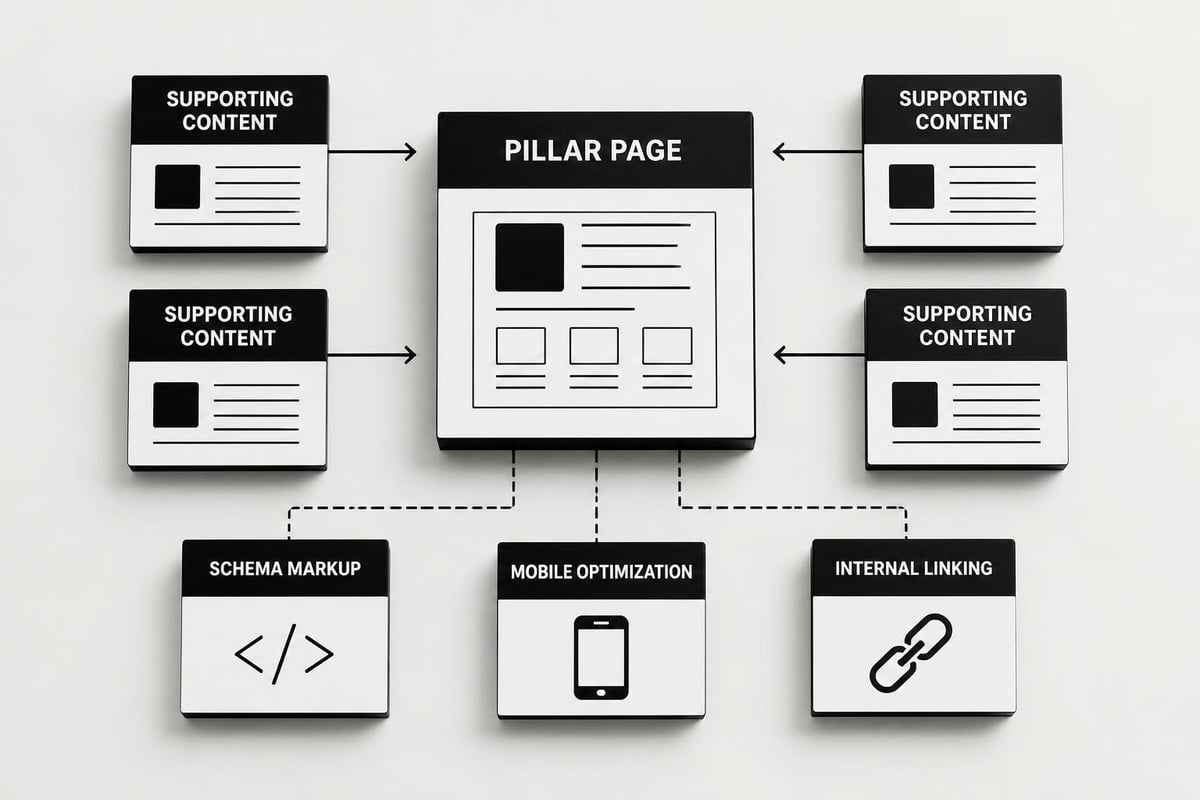
When developing content for niche sites, consider the principle of topical clusters. Create pillar content that covers broad niche topics comprehensively, then support these pillars with detailed articles addressing specific subtopics. This architecture signals to search engines that your site possesses comprehensive knowledge across your entire niche.
Automation Meets Quality in Content Production
The challenge for niche site operators lies in producing sufficient content to cover their topic comprehensively without sacrificing quality. Manual content creation limits output, while low-quality automated content damages authority. The solution involves leveraging AI and SEO strategically to maintain both velocity and quality standards.
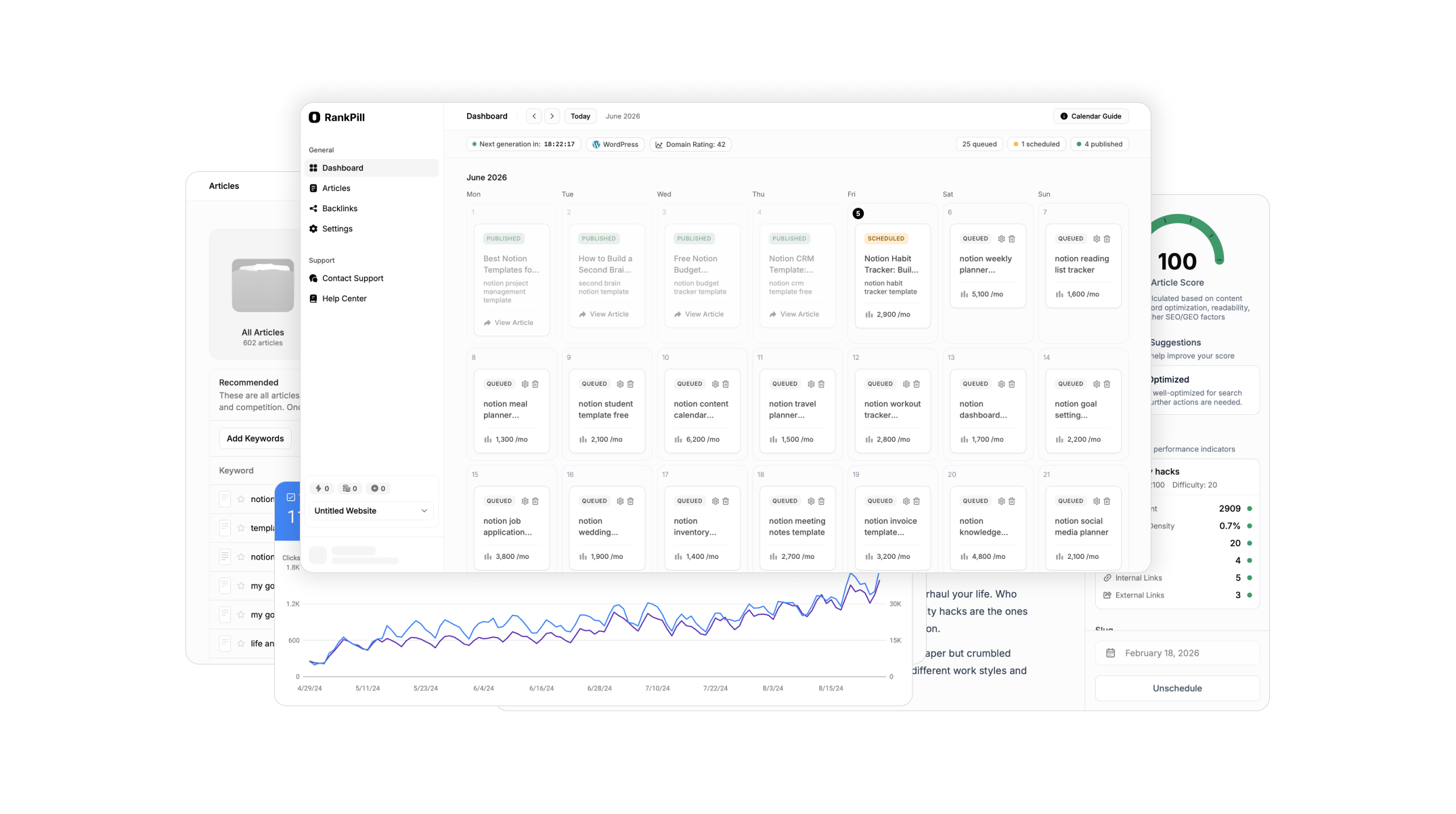
Modern SEO automation platforms can handle keyword research, content structure, internal linking, and even publishing workflows. This automation allows niche site owners to focus on editorial oversight and strategic decisions rather than mechanical tasks. RankPill's SEO Automation exemplifies this approach, managing the entire content workflow from keyword identification through publication, ensuring consistent output without compromising the depth and accuracy that niche audiences demand.

Content production at scale becomes viable when automation handles:
- Daily keyword opportunity identification
- Article structure and outline creation
- Internal linking suggestions based on topical relationships
- Image integration and optimization
- Automatic publishing to your CMS platform
Technical Optimization for Niche Websites
Technical SEO for niche sites follows similar principles to broader SEO, but certain elements require special attention. Site speed matters tremendously when competing against established authorities. Your technical foundation must be flawless because you're unlikely to outrank competitors on domain authority alone during your site's early phases.
Focus on these technical priorities:
- Mobile optimization with responsive design and fast load times
- Schema markup specific to your niche (product, recipe, FAQ, etc.)
- XML sitemaps that prioritize your most important content
- Clean URL structures that reflect topical hierarchy
- Page speed optimization targeting Core Web Vitals metrics
The comprehensive guide to mastering SEO emphasizes that technical foundations directly impact how search engines crawl, index, and rank your content, making these optimizations non-negotiable for competitive niches.
Monitoring and Maintaining Technical Health
Establish regular technical audits to catch issues before they impact rankings:
- Weekly crawl error monitoring to identify broken links and indexation issues
- Monthly Core Web Vitals review to ensure speed metrics remain competitive
- Quarterly content audits to update outdated information and refresh underperforming pages
- Continuous uptime monitoring to minimize server-related ranking fluctuations
Link Building Tactics for Niche Sites
Link building presents unique challenges for niche sites. The limited pool of relevant linking domains means you can't rely solely on scalable tactics like guest posting to broad-audience sites. Instead, niche site SEO demands relationship building within your specific industry and creative approaches to earning contextual backlinks.
Niche edit backlinks offer one of the most effective strategies for niche sites. These involve adding your links to existing, relevant content on authoritative sites within your niche. The contextual relevance provides more SEO value than generic directory listings or broad-topic guest posts.
Building a Diverse Backlink Profile
A healthy backlink profile for niche sites includes:
- Industry directory listings from authoritative niche-specific directories
- Expert roundups where you contribute insights alongside other industry authorities
- Resource page placements on educational or government sites in your field
- Broken link replacement where you offer your content as a replacement for dead links
- Digital PR targeting niche publications and industry blogs
According to niche edit strategies, these contextual links often outperform traditional guest posts because they appear within aged content that already possesses authority and rankings.
| Link Type | Difficulty | Authority Value | Relevance | Best Use Case |
|---|---|---|---|---|
| Niche Edits | Medium-High | High | Very High | Targeted authority boost |
| Guest Posts | Medium | Medium-High | High | Volume building |
| Resource Pages | Medium | Medium | Very High | Evergreen value |
| Industry Directories | Low-Medium | Medium | High | Foundation building |
| Digital PR | High | Very High | Medium-High | Brand authority |
Developing a systematic link building approach prevents the feast-or-famine cycle that plagues many niche sites. Allocate time weekly for outreach, relationship building, and content promotion. Track your link acquisition rate and adjust tactics based on what generates the highest-quality placements.
Content Freshness and Update Strategies
Niche site SEO demands ongoing content maintenance, not just new publication. Search algorithms increasingly favor fresh, updated content over static pages, particularly in industries where information evolves rapidly. Implementing a content refresh schedule ensures your most valuable pages maintain their rankings and continue attracting traffic.
Prioritize updates based on:
- Current rankings (focus on pages ranking positions 4-20 that could reach the top 3)
- Traffic potential (high-volume keywords deserve more frequent updates)
- Content age (pages over 12 months old should be reviewed)
- Industry changes (regulatory updates, new research, technology shifts)
Systematic Content Refresh Process
- Identify underperforming or aging content through analytics review
- Research current search intent and competitor content for target keywords
- Update statistics, examples, and references to current year (2026)
- Expand thin sections and add new relevant subtopics
- Improve internal linking to and from refreshed pages
- Update publication date to signal freshness
Strategies for effective niche site SEO confirm that regular content updates can restore lost rankings and even propel pages to new ranking peaks by demonstrating ongoing relevance and authority.
Measuring Success and Adjusting Strategy
Niche site SEO success requires different metrics than broad-authority sites. While overall domain authority matters, more important indicators include keyword position improvements within your specific niche, qualified traffic growth, and conversion rate optimization. These metrics directly correlate with revenue and business objectives.
Track these key performance indicators:
- Rankings for money keywords (positions 1-10 in search results)
- Organic traffic by landing page to identify top performers
- Engagement metrics (time on page, bounce rate, pages per session)
- Conversion rate for commercial intent pages
- Backlink acquisition rate from relevant domains
- Topical authority score measuring content coverage completeness
Create monthly performance reports that highlight progress toward specific goals. Rather than obsessing over small ranking fluctuations, focus on quarterly trends that demonstrate sustained growth or identify areas requiring strategic adjustment.
Data-Driven Optimization Decisions
Use performance data to inform content and SEO decisions:
- Double down on topics generating strong engagement and conversions
- Identify content gaps where competitors rank but you don't
- Analyze which link sources drive the most valuable referral traffic
- Test different content formats (guides vs. lists vs. comparisons)
- Experiment with content length to find the optimal depth for each topic
Understanding how AI and content marketing intersect helps niche site operators leverage automation for data analysis and content optimization, freeing time for strategic decision-making.
Advanced Tactics for Competitive Niches
When entering highly competitive niches, standard SEO practices may not suffice. Advanced tactics become necessary to differentiate your site and accelerate authority building. These approaches require more effort but deliver disproportionate results in crowded markets.
Original research and data represent one of the most powerful differentiators for niche sites. Publishing industry surveys, case studies, or proprietary data creates linkable assets that naturally attract backlinks from other sites in your niche. This content type establishes genuine expertise while building your backlink profile organically.
Creating Linkable Assets in Your Niche
Develop content specifically designed to earn links:
- Annual industry surveys that become referenced resources
- Comprehensive comparison databases not available elsewhere
- Free tools or calculators relevant to your niche
- Visual resources like infographics or interactive charts
- Expert interviews with recognized authorities in your field
The case study demonstrating 800% traffic growth illustrates how combining E-A-T signals, topical authority, and strategic link building can overcome even significant competitive obstacles in challenging niches.
Avoiding Common Niche Site SEO Mistakes
Even experienced SEO practitioners make critical errors when launching niche sites. Understanding these pitfalls helps you avoid setbacks that could delay your success by months or years. The most damaging mistakes stem from misunderstanding how niche site SEO differs from traditional SEO approaches.
Common errors include:
- Choosing niches too broad without sufficient focus to establish authority
- Ignoring search intent by targeting keywords that don't match your content
- Building thin content that fails to comprehensively address topics
- Pursuing irrelevant backlinks that waste resources without SEO benefit
- Neglecting user experience in favor of pure optimization tactics
- Inconsistent publishing schedules that prevent momentum building
Research on SEO and content quality correlation demonstrates that search engines increasingly penalize sites that prioritize optimization tactics over genuine user value, making this balance critical for long-term success.
Quality Standards That Matter
Establish minimum quality thresholds for all published content:
- Word count minimums appropriate to search intent (typically 1,500-3,000 words for niche topics)
- Original images or custom graphics rather than generic stock photos
- Expert review or fact-checking for accuracy in specialized topics
- Mobile responsiveness testing before publication
- Readability optimization targeting your audience's education level
Implementing these standards as part of auto SEO software workflows ensures consistency across all content while maintaining the quality necessary for competitive niches.
Integration with Broader Marketing Strategies
Niche site SEO shouldn't exist in isolation from your broader digital marketing efforts. The most successful niche sites integrate SEO with email marketing, social media, and paid advertising to create synergistic growth. Each channel reinforces the others, accelerating authority building and traffic growth.
Consider how digital marketing automation connects SEO with other channels:
- Email capture on high-traffic SEO pages builds your owned audience
- Social sharing of SEO content generates initial engagement signals and links
- Paid ads to top-performing organic content maximizes conversion rates
- Retargeting brings organic visitors back for conversion
- Content repurposing extends SEO content value across multiple platforms
This integrated approach recognizes that while organic search provides sustainable, scalable traffic, combining it with other channels creates faster initial growth and higher overall ROI.
Building authority through niche site SEO requires consistent effort across keyword research, content creation, technical optimization, and link building. The specialized nature of niche markets demands focused strategies that establish topical expertise rather than broad coverage. RankPill automates the most time-intensive aspects of this process, from daily keyword research and content publishing to strategic backlinking, allowing you to scale your niche site presence without sacrificing the quality and depth that specialized audiences demand.
Unlock Traffic on Autopilot
Grow organic traffic on autopilot. RankPill will research, write, optimize, and publish articles to your website daily.