Podcast SEO: The Complete Guide for 2026

Modest Mitkus · October 10, 2026
Podcasting has exploded in recent years, with over 464 million listeners worldwide and more than 5 million active shows competing for attention. As the audio landscape becomes increasingly crowded, creators can no longer rely solely on word-of-mouth or platform algorithms to grow their audience. Strategic podcast SEO has become essential for discoverability, helping episodes surface in search engines, podcast directories, and AI-powered assistants. Whether you're launching a new show or optimizing an established library, understanding how to make your audio content searchable can dramatically expand your reach and build sustainable organic growth.
Understanding Podcast SEO Fundamentals
Podcast SEO differs significantly from traditional website optimization because you're optimizing both audio files and the text-based assets that surround them. Search engines cannot listen to your episodes, so they rely entirely on metadata, transcripts, show notes, and structured markup to understand and rank your content.
The core components of podcast SEO include your RSS feed optimization, episode-specific landing pages, transcriptions, show notes, and structured data implementation. Each element plays a distinct role in helping search algorithms categorize and surface your content to potential listeners.
How Search Engines Process Podcast Content
Google and other search engines index podcast content through multiple pathways. They crawl your podcast website, parse your RSS feed, and incorporate data from major directories like Apple Podcasts and Spotify. When someone searches for topics related to your episodes, search engines match queries against your textual content rather than the audio itself.
This creates a unique optimization challenge. You need to translate the value and topics covered in your audio into search-friendly text formats. The more comprehensive and well-structured your textual content, the better search engines can match your episodes to relevant queries.

Optimizing Your Podcast RSS Feed
Your RSS feed serves as the backbone of podcast distribution, containing essential metadata that platforms and search engines use to classify your show. According to Apple's RSS requirements, specific tags and formatting standards directly impact discoverability.
Critical RSS elements for SEO:
- Show title: Include relevant keywords while maintaining brand recognition
- Show description: A keyword-rich summary (typically 150-250 words) that explains your show's value proposition
- Episode titles: Descriptive, search-friendly titles that clearly communicate episode content
- Episode descriptions: Detailed summaries with natural keyword integration
- Category tags: Proper categorization helps listeners find your show through directory browsing
Your RSS feed should follow Spotify's metadata best practices, which emphasize clarity, accuracy, and keyword relevance without keyword stuffing.
Crafting Search-Optimized Episode Titles
Episode titles function as your first line of SEO defense. Generic titles like "Episode 23" waste valuable ranking opportunities. Instead, create descriptive titles that incorporate target keywords naturally.
| Weak Title | Strong Title | SEO Benefit |
|---|---|---|
| Episode 15 | How to Build Backlinks Through Guest Posting in 2026 | Targets specific keyword phrases |
| Marketing Tips | Content Marketing Automation Strategies for Small Teams | Describes value and audience |
| Interview with John | John Smith on AI-Powered SEO Tools for E-commerce | Includes guest name and topic keywords |
Your titles should balance keyword optimization with reader appeal. Front-load important keywords while maintaining natural language that entices clicks.
Creating High-Value Episode Landing Pages
Dedicated landing pages for each episode provide search engines with rich, indexable content. These pages should function as comprehensive resources that stand alone even without listening to the episode.
Each episode page should include:
- Complete show notes with timestamps and key takeaways
- Full transcription of the episode
- Embedded audio player for immediate playback
- Related resources and links mentioned in the episode
- Structured data markup (PodcastEpisode schema)
- Social sharing buttons and embed codes
The HubSpot podcast SEO guide emphasizes that episode pages should target specific long-tail keywords related to the topics discussed. This approach helps you rank for informational queries while building topical authority.
Implementing Transcripts for Maximum SEO Impact
Transcripts transform your audio content into searchable text, dramatically expanding your keyword footprint. Research from 3Play Media's case study demonstrates that adding transcripts can increase organic traffic by up to 6.68% and improve engagement metrics.
Full-length transcripts serve multiple purposes. They improve accessibility for deaf and hard-of-hearing audiences, allow readers to skim for specific information, and provide search engines with thousands of words of contextual content.
For optimal podcast SEO, publish transcripts directly on your episode pages rather than hiding them behind downloads or separate URLs. Format transcripts with speaker labels, paragraph breaks, and timestamp markers to enhance readability.
Leveraging Structured Data for Rich Results
Structured data markup tells search engines exactly what type of content you're publishing. The PodcastEpisode schema allows you to mark up individual episodes with detailed metadata that can trigger rich results in search.
Essential structured data properties:
- name: Episode title
- description: Episode summary
- datePublished: Publication date
- duration: Episode length in ISO 8601 format
- associatedMedia: Link to audio file with AudioObject properties
- partOfSeries: Connection to parent PodcastSeries
When implementing structured data, follow Google's structured data policies to ensure compliance and maximize rich result eligibility. Proper markup can help your episodes appear in dedicated podcast carousels and enhanced search listings.

Writing Show Notes That Rank and Convert
Show notes represent your best opportunity to target specific keywords while providing listener value. Effective show notes go beyond simple summaries to create comprehensive content hubs.
Show Notes Content Structure
Opening section: Start with a compelling 2-3 sentence summary that incorporates your primary target keyword. This section should hook readers and clearly communicate the episode's value.
Key takeaways: Use bullet points or numbered lists to highlight main discussion points, making content scannable for both readers and search engine crawlers.
Detailed summary: Expand on major topics with 300-500 words of contextual information. Include relevant keywords naturally while adding value beyond what's in the audio.
Guest information: For interview episodes, include guest bios with links to their websites and social profiles. This builds relationships and earns potential backlinks.
Resources mentioned: Create a comprehensive list of tools, books, studies, or websites discussed. Internal and external links add credibility and SEO value.
Call-to-action: Direct listeners to subscribe, leave reviews, or visit specific resources.
Show notes should target long-tail keywords related to your episode topics. These specific, lower-competition phrases often convert better than broad terms and help you build topical authority.
Keyword Research for Podcast Content
Strategic keyword research ensures your podcast content aligns with actual search demand. Understanding what your target audience searches for helps you plan episode topics and optimize existing content effectively.
Start by identifying core topics within your niche, then expand into specific questions and long-tail variations. Tools that provide search volume data and competition metrics help prioritize opportunities.
When conducting keyword research for podcasts, focus on:
- Question-based queries: "How to," "what is," and "why" searches that indicate informational intent
- Topic variations: Different ways people describe the same concept
- Trend keywords: Emerging topics with growing search interest
- Competitor gaps: Topics your competitors haven't adequately covered
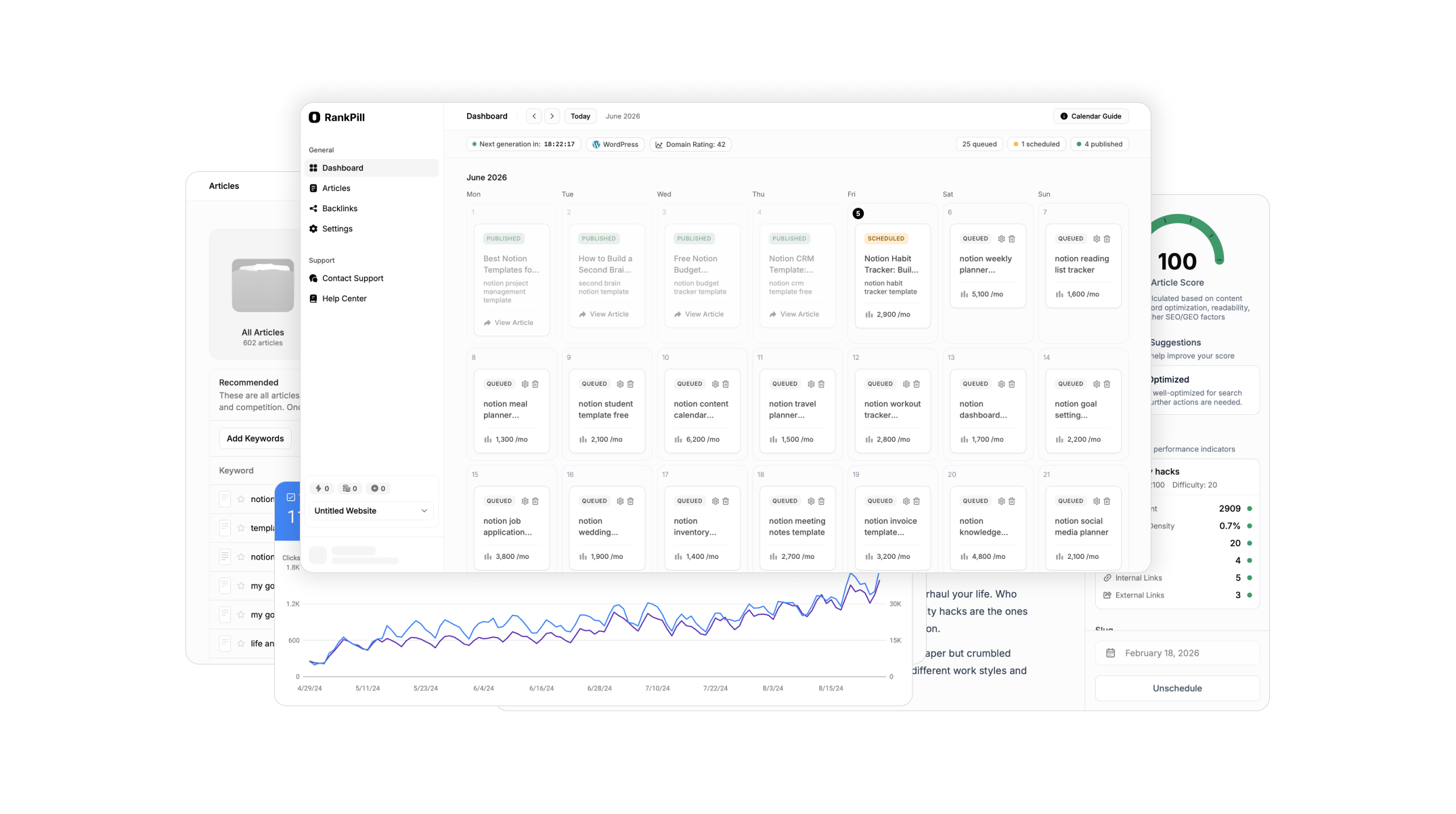
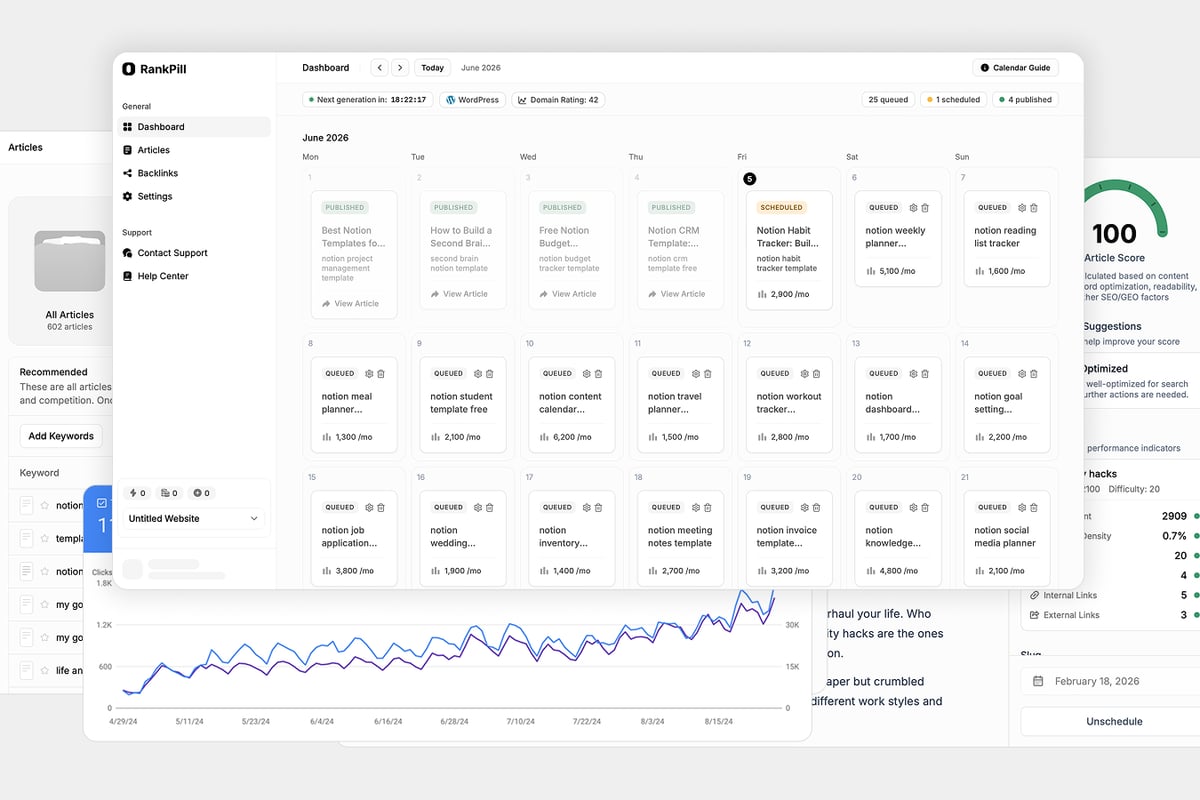
For businesses looking to scale content research efficiently, RankPill's keyword research tool helps identify high-intent opportunities without expensive enterprise software subscriptions. The platform surfaces content gaps and provides actionable keyword data that aligns with your podcast themes.
Repurposing Podcast Content Across Platforms
Maximizing podcast SEO requires distributing content across multiple formats and platforms. Each repurposed asset creates new entry points for discovery.
Effective repurposing strategies:
- Blog posts: Transform episode content into comprehensive articles targeting specific keywords
- YouTube videos: Upload full episodes or highlight clips with optimized titles and descriptions
- Social media clips: Create shareable snippets for platforms like LinkedIn, Instagram, and TikTok
- Email newsletters: Feature episode summaries with links to full content
- Slide decks: Convert key points into visual presentations for SlideShare or LinkedIn
According to the Semrush podcast SEO guide, repurposing extends your content's lifespan and captures audiences who prefer different consumption formats. Each platform has unique SEO opportunities and ranking factors.
YouTube as a Podcast SEO Channel
YouTube functions as the world's second-largest search engine, making it essential for podcast discoverability. Uploading episodes to YouTube with optimized titles, descriptions, and tags creates an additional ranking pathway.
| YouTube SEO Element | Best Practice | Impact |
|---|---|---|
| Title | Include primary keyword in first 60 characters | High |
| Description | Detailed summary with timestamps and links (first 150 chars critical) | High |
| Tags | Mix of broad and specific keywords (8-12 tags) | Medium |
| Thumbnail | Custom image with readable text and faces | High |
| Closed Captions | Upload transcript-based captions | Medium |
| Cards & End Screens | Link to related content and playlists | Medium |
YouTube videos also appear in Google search results, giving you dual visibility. Videos optimized for both platforms can dominate search real estate for target keywords.
Building Backlinks to Podcast Content
Backlinks remain a critical ranking factor, signaling to search engines that your content provides value worth referencing. Podcast content offers unique link-building opportunities through guest relationships and shareable insights.
Proven podcast link-building tactics:
- Guest post exchanges: Feature guests on your show, then contribute articles to their platforms with links back to the episode
- Resource page outreach: Contact websites that maintain industry resource lists and suggest your best episodes
- Transcript syndication: Partner with publications to republish transcripts with proper attribution links
- Expert roundups: Participate in industry roundups and mention relevant episodes
- Social proof: Encourage guests to share episodes, naturally generating social signals and potential links
The Content Marketing Institute notes that podcasts excel at relationship-building, which translates into organic backlink opportunities when you create genuinely valuable content.
For systematic backlink growth, platforms like RankPill's backlink exchange help connect podcast creators with complementary websites for mutually beneficial link building without resorting to black-hat tactics.
Technical SEO for Podcast Websites
Your podcast website's technical foundation directly impacts search performance. Fast loading speeds, mobile responsiveness, and proper site architecture ensure search engines can efficiently crawl and index your content.
Site Architecture and Internal Linking
Organize your podcast website with clear hierarchical structure. Create category pages for different show segments or topic areas, with individual episode pages nested beneath them. This organization helps search engines understand content relationships and passes link equity effectively.
Internal linking best practices:
- Link between related episodes within show notes
- Create topic cluster pages that link to all relevant episodes
- Use descriptive anchor text that includes target keywords
- Implement breadcrumb navigation for easy site traversal
- Build a comprehensive sitemap that includes all episode pages
Strategic internal linking strengthens your site's SEO foundation by distributing authority and helping search engines discover new content.
Mobile Optimization and Core Web Vitals
With Edison Research data showing that 73% of podcast listening occurs on mobile devices, mobile optimization is non-negotiable. Your podcast website must deliver excellent mobile experiences.
Focus on Google's Core Web Vitals metrics:
- Largest Contentful Paint (LCP): Audio players and episode pages should load primary content within 2.5 seconds
- First Input Delay (FID): Interactive elements should respond within 100 milliseconds
- Cumulative Layout Shift (CLS): Prevent layout shifts from lazy-loaded images or ads
Compress audio files appropriately for streaming, optimize images, and minimize JavaScript to maintain fast load times across devices.
Measuring Podcast SEO Performance
Tracking the right metrics helps you understand what's working and where to focus optimization efforts. Podcast SEO measurement requires combining analytics from multiple sources.
Key performance indicators:
- Organic search traffic: Monitor sessions from search engines to episode pages and show notes
- Keyword rankings: Track positions for target keywords in search results
- Download growth: Measure listener acquisition from organic sources
- Engagement metrics: Time on page, scroll depth, and transcript interaction
- Backlink profile: Monitor new referring domains and link quality
- Featured snippets: Track when your content appears in position zero
- Conversion rate: Measure how search visitors convert to subscribers
Segment your analytics to understand which episodes drive the most organic traffic and why. Identify patterns in successful episodes to replicate winning elements.
Attribution and Channel Analysis
Determining how listeners discover your podcast requires setting up proper attribution. Use unique URLs in show notes, UTM parameters for social shares, and podcast-specific promo codes to track different channels.
Compare organic search performance against other discovery methods like:
- Podcast directory search and browse
- Social media referrals
- Direct traffic from loyal subscribers
- Paid advertising campaigns
- Guest cross-promotion
This data reveals which SEO efforts generate the highest-quality listeners and where to allocate resources for maximum impact.
Advanced Podcast SEO Strategies for 2026
As podcast SEO matures, advanced tactics separate leaders from followers. Implementing these strategies requires more effort but delivers compounding returns.
Voice Search Optimization
Voice assistants increasingly serve as podcast discovery tools. Optimizing for voice search requires focusing on conversational keywords and question-based queries.
Structure content to answer specific questions directly. Use FAQ schema markup to enhance voice search eligibility. Consider that voice searches tend to be longer and more conversational than typed queries.
Voice search optimization tactics:
- Include "who," "what," "where," "when," "why," and "how" questions in titles and headings
- Write show notes in natural, conversational language
- Create FAQ sections that directly answer common questions
- Optimize for local search if your podcast covers location-specific topics
- Target featured snippet positions with concise, direct answers
AI Search and ChatGPT Optimization
As AI-powered search tools like ChatGPT become more prevalent, optimizing content for AI understanding grows in importance. These platforms rely on clear, well-structured information to generate responses.
Ensure your podcast content includes:
- Clear topic declarations early in transcripts and show notes
- Structured data markup that explicitly defines content type and relationships
- Authoritative source citations that AI can verify
- Comprehensive coverage of topics from multiple angles
- Regular content updates demonstrating freshness and relevance
For businesses exploring AI and SEO integration, understanding how to optimize for both traditional search engines and AI assistants becomes critical for future-proofing discoverability.
Platform-Specific Optimization Strategies
Each podcast platform has unique algorithms and ranking factors. Optimizing for multiple platforms simultaneously maximizes overall discoverability.
Apple Podcasts Optimization
Apple Podcasts remains the dominant directory, requiring specific optimization approaches. The platform prioritizes:
- New subscriber velocity: Rapid subscriber growth signals quality
- Review quantity and recency: Fresh positive reviews boost rankings
- Listener behavior: Completion rates and episode downloads matter
- Metadata quality: Accurate, keyword-rich descriptions perform better
- Cover art appeal: Professional, eye-catching artwork improves click-through
Encourage reviews strategically by asking satisfied listeners at natural points in episodes. Avoid generic "leave a review" requests; instead, reference specific episode moments that resonated.
Spotify Discovery Optimization
Spotify's algorithm emphasizes listener retention and engagement. Episodes that keep listeners through to completion receive algorithmic boosts.
Spotify optimization priorities:
- Strong episode hooks in the first 30 seconds
- Consistent publishing schedule to build habit
- Strategic playlist inclusion for increased exposure
- Engagement with Spotify's Q&A and poll features
- Cross-promotion with music playlists when relevant
Spotify also surfaces podcasts through its search function, making metadata optimization equally important on this platform.
Content Strategy for Long-Term Podcast SEO Success
Sustainable podcast SEO requires strategic content planning aligned with audience needs and search demand. Random episode topics limit your ability to build topical authority.
Develop content pillars representing your core expertise areas. Create multiple episodes within each pillar, linking between related content and demonstrating comprehensive knowledge.
Content planning framework:
- Identify core pillars: Choose 3-5 broad topics central to your niche
- Map subtopics: Break each pillar into specific subtopics and questions
- Research keyword demand: Validate search interest for each subtopic
- Create content calendar: Schedule episodes to systematically cover each area
- Interlink aggressively: Connect related episodes through show notes and calls-to-action
- Update evergreen content: Refresh popular episodes with current information
This structured approach mirrors successful SEO automation strategies that build authority through comprehensive, interconnected content libraries rather than isolated pieces.

Common Podcast SEO Mistakes to Avoid
Even experienced podcasters make optimization errors that limit their growth potential. Recognizing these pitfalls helps you avoid wasting effort on ineffective tactics.
Frequent podcast SEO mistakes:
- Neglecting transcripts: Relying solely on short show notes leaves search potential untapped
- Generic episode titles: Missing keyword opportunities with vague or clever titles
- Inconsistent publishing: Irregular schedules hurt algorithmic favor and audience retention
- Ignoring mobile experience: Podcast websites that perform poorly on mobile lose listeners
- Duplicate content: Publishing identical show notes across multiple platforms without canonical tags
- Overlooking local SEO: Missing opportunities to rank for location-specific queries
- Keyword stuffing: Forcing unnatural keyword usage that hurts readability
- Missing structured data: Failing to implement schema markup limits rich result eligibility
Avoiding these mistakes while implementing proven optimization tactics creates a solid foundation for organic growth. The key lies in consistency and patience, as podcast SEO compounds over time.
Podcast SEO transforms audio content into a discovery engine, connecting your expertise with audiences actively searching for solutions. By optimizing RSS feeds, creating comprehensive episode pages with transcripts, implementing structured data, and repurposing content across platforms, you build sustainable organic growth that compounds over time. If you're looking to automate your content optimization and scale your SEO efforts efficiently, RankPill provides the tools and automation to grow your organic traffic on autopilot, complementing your podcast strategy with consistent, optimized content that ranks.
Unlock Traffic on Autopilot
Grow organic traffic on autopilot. RankPill will research, write, optimize, and publish articles to your website daily.