SEO Automation for Wix: Complete Guide for 2026

Modest Mitkus · September 29, 2026
Wix has evolved from a simple website builder into a sophisticated platform that supports serious SEO efforts. Yet many business owners still spend hours manually optimizing pages, updating meta descriptions, and researching keywords. SEO automation for Wix eliminates this bottleneck by systematically handling repetitive optimization tasks while you focus on strategic growth. This guide explores how to implement automated workflows that boost your Wix site's organic visibility without constant manual intervention.
Understanding SEO Automation Capabilities on Wix
The Wix platform provides several native automation features through its built-in SEO toolkit that many users overlook. These tools handle technical foundations automatically, from sitemap generation to robots.txt configuration.
Native Wix SEO Features That Work on Autopilot
Wix handles several technical SEO elements without manual intervention:
- Automatic XML sitemap creation and updates whenever you publish new pages
- Robots.txt file generation with sensible defaults for crawl management
- Mobile-responsive page rendering across all templates
- SSL certificate implementation for secure HTTPS connections
- Canonical URL assignment to prevent duplicate content issues
These baseline automations ensure your site meets Google's technical requirements from day one. However, the real opportunity for SEO automation for Wix lies in combining native features with external tools and custom code.

Extending Automation with Wix Velo
Wix Velo (formerly Corvid) unlocks programmatic control over SEO elements through JavaScript APIs. The Wix SEO APIs let developers automate meta tag generation, structured data insertion, and dynamic sitemap creation based on your content database.
For example, you can write Velo code that:
- Pulls product data from your Wix Store database
- Generates optimized title tags and meta descriptions using templates
- Injects appropriate schema markup (Product, Offer, Review schemas)
- Updates SEO elements whenever inventory or pricing changes
This programmatic approach scales across hundreds or thousands of pages without manual editing. E-commerce sites and content-heavy Wix platforms benefit tremendously from this level of automation.
Automating Keyword Research and Content Planning
Keyword research traditionally consumes significant time, but automation transforms it into a systematic, ongoing process. Modern SEO automation for Wix involves tools that continuously identify opportunities rather than one-off manual searches.
Setting Up Automated Keyword Discovery
| Automation Method | What It Does | Best For |
|---|---|---|
| Topic monitoring | Tracks new search queries in your niche | Trending content ideas |
| Competitor tracking | Identifies keywords competitors rank for | Gap analysis |
| Question mining | Finds question-based queries | FAQ and blog content |
| Search Console analysis | Surfaces keywords you already rank for | Quick-win optimization |
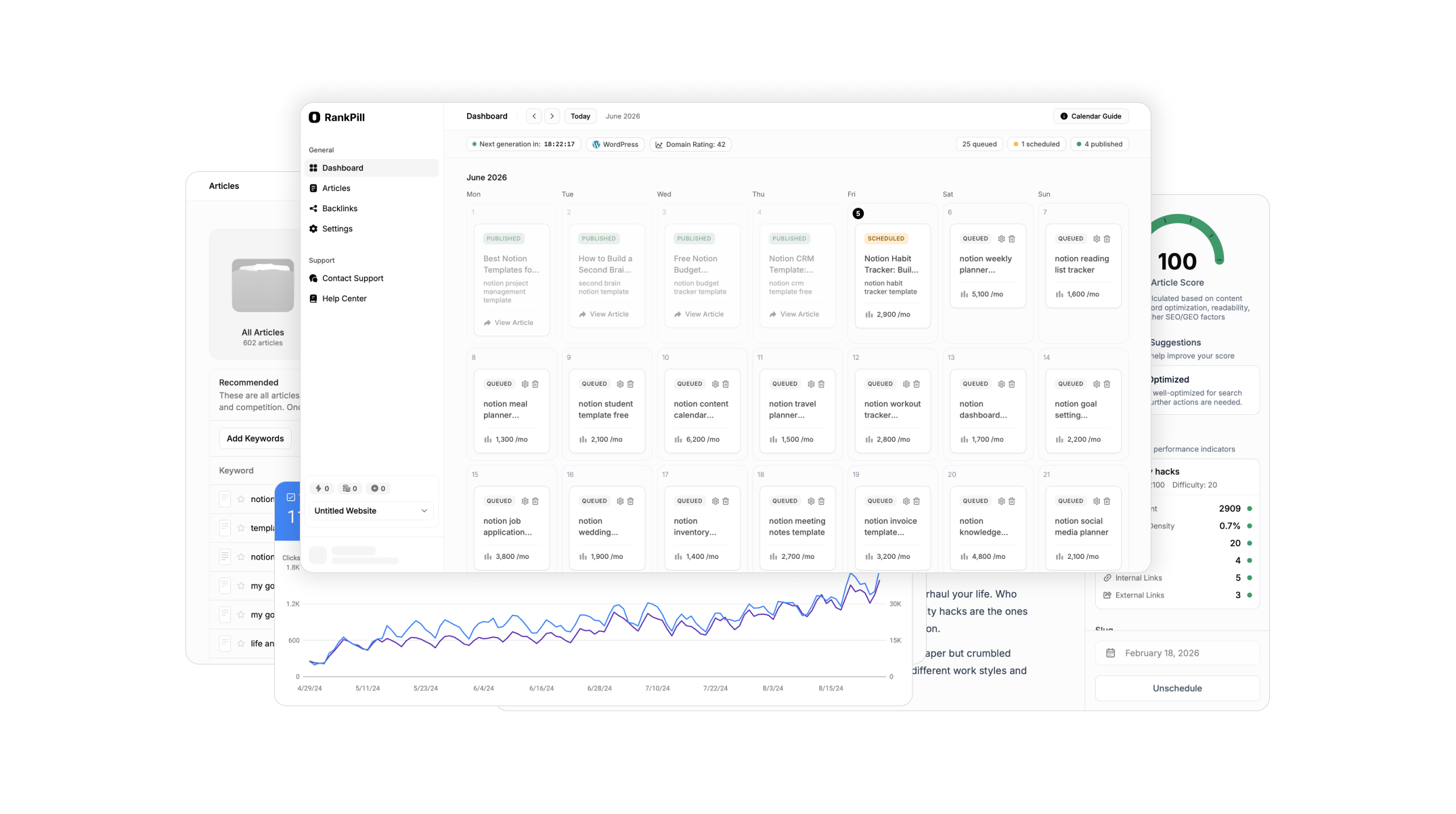
Platforms like RankPill automate the entire keyword research workflow, identifying low-competition terms your Wix site can target. The system analyzes search volume, competition levels, and user intent to build a prioritized content queue.
The automation advantage becomes clear when you consider frequency. Manual keyword research happens monthly at best. Automated systems run daily, capturing emerging trends before competitors notice them. This continuous discovery feeds your content pipeline with fresh opportunities aligned to actual search behavior.
Connecting Keywords to Content Calendars
Once keywords are identified, automation can map them to content briefs and publishing schedules. Integration between keyword tools and project management platforms creates a seamless workflow from research to publication.
Tools supporting automated SEO processes can generate content outlines, suggest internal linking structures, and even draft initial copy based on target keywords. This transforms keyword lists from static spreadsheets into actionable content plans.
Optimizing On-Page Elements at Scale
Manual optimization of title tags, meta descriptions, headers, and image alt text becomes impractical once your Wix site grows beyond a dozen pages. Automation ensures consistency and best practices across your entire site.
Dynamic Meta Tag Generation
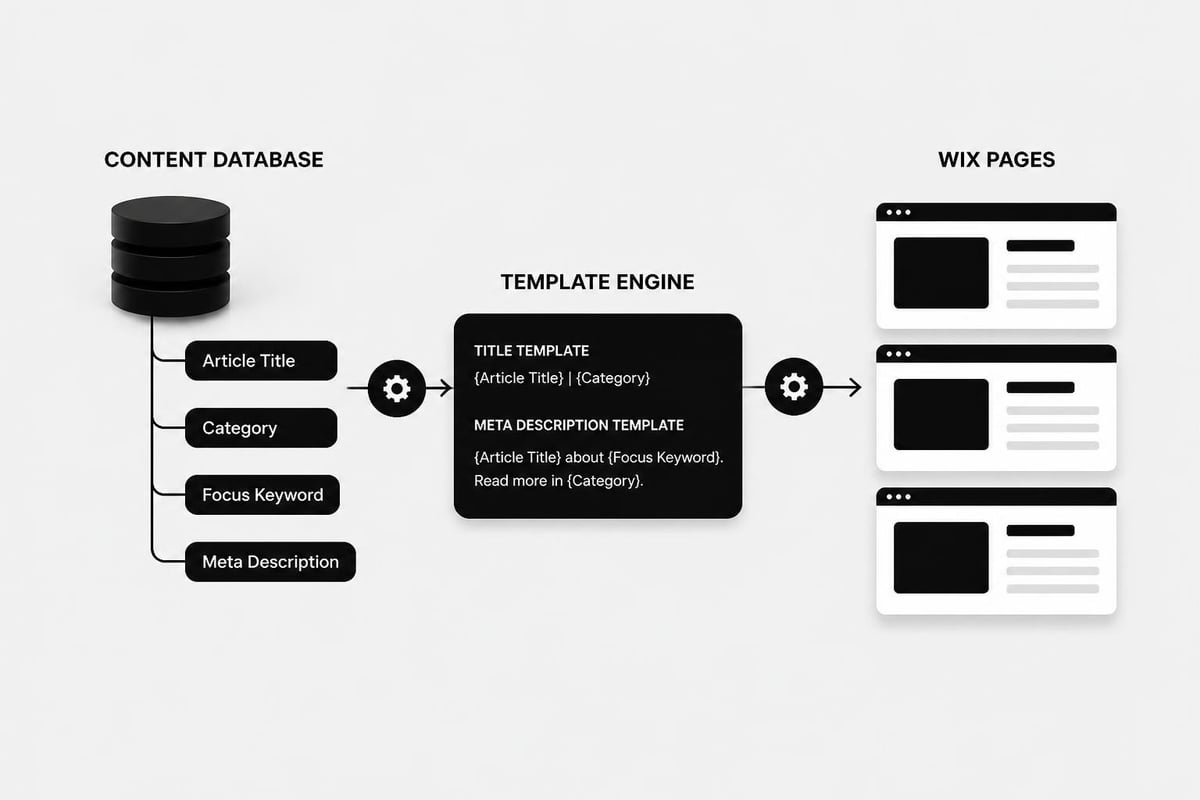
Rather than writing unique meta tags for each page, establish template-based rules that automatically generate optimized metadata. For a Wix blog, your automation might follow this pattern:
Title tag formula: [Post Title] | [Category] | [Site Name]
Meta description formula: [First 140 characters of post] Learn more about [primary keyword] at [Site Name].
Velo code can implement these templates dynamically, pulling content from your CMS and assembling SEO-optimized metadata on every page load. This approach maintains consistency while adapting to each page's unique content.
Structured Data Implementation
Structured data helps search engines understand your content context, enabling rich snippets and enhanced search results. The Google structured data gallery shows which schema types qualify for special SERP features.
Automate structured data injection using Wix Velo:
- Article schema for blog posts (headline, author, publish date, image)
- Product schema for e-commerce items (price, availability, reviews)
- Local Business schema for service businesses (address, hours, phone)
- FAQ schema for question-answer content
- BreadcrumbList schema for site navigation
The Schema.org documentation provides the vocabulary standards. Write Velo functions that pull relevant data from your Wix databases and generate valid JSON-LD markup automatically on each page type. This ensures every new page includes appropriate structured data without manual coding.
Automating Content Creation and Publishing
Content automation represents the frontier of SEO automation for Wix. While human oversight remains valuable, AI-powered systems now handle research, writing, optimization, and publishing with minimal intervention.
AI-Driven Content Workflows
Modern content automation platforms follow this workflow:
- Research phase: Analyze top-ranking content for target keywords
- Outline generation: Structure articles based on search intent and common questions
- Content creation: Draft comprehensive articles covering target topics
- Optimization layer: Add internal links, optimize headers, insert keywords naturally
- Visual integration: Generate or select relevant images with proper alt text
- Publishing: Push finished content directly to your Wix site via API
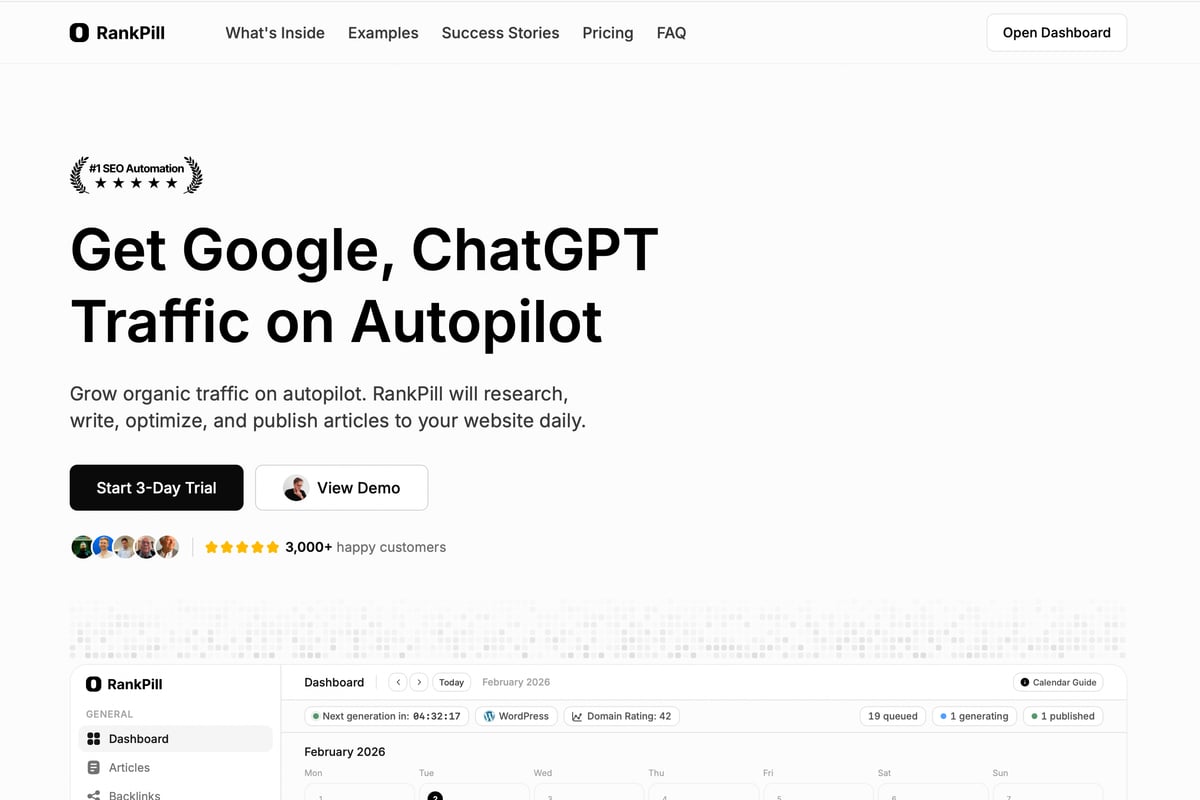
RankPill automates this entire sequence, researching keywords, writing optimized articles, and publishing directly to Wix sites without manual steps. The platform handles everything from keyword selection to image generation, producing publish-ready content that targets both traditional search engines and AI platforms like ChatGPT.
Quality Control in Automated Publishing
Automation doesn't mean abandoning editorial standards. Implement quality gates that review content before publication:
- Readability scoring to ensure appropriate reading level
- Plagiarism checking against existing web content
- Keyword density validation (avoiding over-optimization)
- Internal link verification (confirming target pages exist)
- Image optimization checks (file size, dimensions, alt text presence)
These automated quality checks catch issues that manual review might miss while maintaining publishing velocity. Your Wix site benefits from consistent output without sacrificing content standards.
Technical SEO Automation Strategies
Beyond content and on-page optimization, technical SEO requires ongoing monitoring and maintenance. Automation transforms reactive troubleshooting into proactive issue prevention.
Automated Site Audits and Monitoring
| Technical Element | Automation Approach | Alert Trigger |
|---|---|---|
| Broken links | Weekly crawl and validation | Link returns 404 |
| Page speed | Daily Core Web Vitals check | LCP > 2.5s |
| Mobile usability | Automated viewport testing | Layout shift > 0.1 |
| Index coverage | Search Console API monitoring | New exclusion errors |
| Sitemap freshness | Auto-generation on content updates | Sitemap age > 7 days |
Tools can monitor Core Web Vitals continuously, alerting you when performance degrades before it impacts rankings. This proactive approach prevents technical issues from accumulating into serious SEO problems.
Sitemap and Indexing Automation
Wix generates basic sitemaps automatically, but dynamic sites benefit from custom sitemap logic. Using Velo and the official sitemap protocol, you can create automated sitemaps that:
- Prioritize recently updated content with higher priority scores
- Update changefreq values based on actual content modification patterns
- Generate separate sitemaps for different content types (blog, products, services)
- Submit updated sitemaps to Google and Bing via their webmaster APIs
The Google Search Console API enables programmatic sitemap submission and index status monitoring. Automate these submissions to ensure new content gets crawled quickly without manual intervention.
Backlink Building and Management Automation
Link building remains labor-intensive, but automation streamlines outreach, tracking, and relationship management. SEO automation for Wix should include systematic approaches to earning and monitoring backlinks.
Automated Outreach and Relationship Building
Effective link building automation involves:
- Prospect identification (finding sites in your niche with relevant content)
- Contact information discovery (extracting decision-maker emails)
- Personalized outreach sequences (templated but customized emails)
- Follow-up scheduling (automated reminder sequences)
- Response tracking (monitoring engagement and conversion)
While full automation risks appearing spammy, semi-automated workflows save time while maintaining personalization. Tools can handle research and scheduling while you add personal touches to outreach messages.
Link Monitoring and Quality Assessment
Once you've built backlinks, automated monitoring ensures they remain active and valuable:
- Daily backlink crawls verify links haven't been removed
- Anchor text analysis tracks diversity and over-optimization risks
- Domain authority monitoring alerts you to quality changes in linking domains
- Competitor link tracking identifies new opportunities from rivals' backlink profiles
These automated checks protect your link equity and surface opportunities for additional outreach. Many businesses discover that automating backlinks through systematic processes yields better results than sporadic manual efforts.
Measuring and Reporting Automation
Data analysis consumes hours each week, but automated reporting transforms raw metrics into actionable insights without manual spreadsheet work.
Automated Analytics Dashboards
Configure automated reports that track:
- Organic traffic trends (overall and by landing page)
- Keyword ranking movements (position changes for target terms)
- Conversion rates from organic channels (goals and e-commerce)
- Technical health scores (aggregated crawl and performance metrics)
- Content performance (which articles drive traffic and engagement)
Modern SEO automation platforms pull data from Google Analytics, Search Console, and ranking trackers, then compile executive summaries highlighting significant changes. You receive weekly or monthly reports without building them manually.
ROI Calculation and Forecasting
Automation can model SEO investment returns by correlating effort with outcomes. Track variables like:
- Articles published per month
- Average ranking position changes
- Traffic growth rates
- Conversion value from organic visitors
Over time, these correlations reveal which automated activities drive the strongest returns, letting you optimize your SEO automation for Wix based on actual performance data rather than assumptions.
Integration Strategies for Complete Automation
The most powerful SEO automation for Wix involves connecting multiple tools into unified workflows. Integration eliminates manual data transfer and creates seamless processes.
Building Your Automation Stack
A comprehensive Wix SEO automation stack might include:
- Content platform: Automated writing and optimization
- Keyword tool: Continuous opportunity discovery
- Rank tracker: Position monitoring across target terms
- Analytics hub: Centralized performance reporting
- Link manager: Backlink tracking and outreach
- Technical auditor: Site health monitoring
APIs and integration platforms like Zapier or Make connect these tools, triggering actions across systems. For example, when your keyword tool identifies a new opportunity, it could automatically create a content brief, add it to your publishing queue, and schedule outreach once published.
Looking at the broader landscape of best SEO automation tools, you'll find solutions ranging from all-in-one platforms to specialized point solutions. The right choice depends on your Wix site's scale, complexity, and budget constraints.
Custom Automation with Wix Velo and External APIs
Advanced users can build custom automations that integrate Wix Velo with external SEO APIs. This programmatic approach enables unique workflows tailored to your specific business model.
Example automation sequence:
- Velo code monitors your Wix blog database for new posts
- On publication, it extracts the primary keyword and post URL
- An API call sends this data to your rank tracking service
- Another API submits the URL to Google's indexing API for faster crawling
- Social media APIs auto-post the new content to your channels
- A final call logs the publication in your analytics dashboard
This end-to-end automation removes manual steps from content promotion, ensuring every published piece receives consistent optimization and distribution effort.
Common Pitfalls and How to Avoid Them
While SEO automation for Wix delivers tremendous efficiency, improper implementation creates new problems. Understanding common mistakes helps you design robust automated workflows.
Over-Automation and Quality Degradation
The primary risk of automation is sacrificing quality for quantity. Automated content that lacks depth, originality, or accuracy damages your brand and search rankings. Avoid this by:
- Setting quality thresholds that content must meet before publication
- Implementing human review checkpoints for critical pages
- Using automation for research and structure, not just bulk generation
- Monitoring user engagement metrics (bounce rate, time on page) to validate content quality
Remember that Google's algorithms increasingly prioritize helpful, original content. Automation should enhance your ability to create valuable resources, not replace thoughtful content strategy.
Technical Debt from Inadequate Monitoring
Automated systems can fail silently, creating issues that accumulate over time. A broken automation might stop updating meta tags, fail to submit sitemaps, or inject malformed structured data.
Prevent technical debt through:
- Automated monitoring of your automations (meta alerts)
- Regular audits comparing automated output to expected results
- Version control for custom Velo code
- Documentation of automation logic and dependencies
- Fallback mechanisms when primary automations fail
This defensive approach ensures your SEO automation for Wix remains reliable rather than becoming a source of technical problems.
Ignoring Search Engine Guidelines
Automation makes it easy to implement tactics at scale, including tactics that violate search engine policies. Automated link schemes, keyword stuffing via templates, or cloaked content delivery can trigger penalties.
Stay within guidelines by:
- Reviewing programmatic SEO best practices regularly
- Ensuring automated content provides genuine value to users
- Avoiding manipulative linking patterns in automated outreach
- Testing automated implementations on staging sites first
- Consulting official search engine documentation before scaling tactics
When combined with platforms like AI and SEO tools, these safeguards ensure your automation enhances rather than endangers your search visibility.
Advanced Techniques for Competitive Advantage
Once you've mastered basic SEO automation for Wix, advanced strategies provide additional competitive edges. These techniques require more sophisticated implementation but deliver outsized returns.
Multi-Language SEO Automation
Expanding into international markets multiplies your optimization workload. Automation makes multi-language SEO feasible by systematically adapting content, keywords, and technical elements for each target market.
Automated multi-language workflows include:
- Keyword research in each target language (not just translation)
- Hreflang tag generation and validation
- Localized content creation adapted to regional search behavior
- Region-specific structured data (local business info, pricing)
Advanced platforms handle each language as a separate SEO program with dedicated keyword research and content strategies, avoiding the pitfalls of simple translation approaches.
Predictive SEO and Trend Automation
Rather than reacting to current search trends, predictive automation identifies emerging topics before they peak. Machine learning models analyze search pattern evolution, social signals, and news cycles to forecast upcoming interest.
Implement predictive SEO through:
- Historical search volume trend analysis
- Social media momentum tracking for relevant topics
- News API monitoring for industry developments
- Automatic content brief generation for predicted trends
- Accelerated publishing timelines to capture early search traffic
This proactive approach positions your Wix site as an early authority on emerging topics, capturing traffic before competition intensifies.
Personalized SEO Based on User Segments
Advanced automation can adapt SEO elements based on user segments, location, or behavior. While maintaining single URLs for indexing, you can personalize meta descriptions, calls-to-action, and content emphasis.
Example segment-based automations:
- Location-aware meta descriptions mentioning the user's city
- Industry-specific content highlights for B2B visitors
- Experience-level adjustments (beginner vs. advanced content)
- Device-optimized content presentation (mobile vs. desktop)
These personalized touches improve user engagement metrics, which increasingly influence search rankings. Automation makes personalization scalable rather than prohibitively complex.
SEO automation for Wix transforms time-consuming optimization tasks into systematic workflows that run continuously in the background. By combining Wix's native features, Velo customizations, and external automation platforms, you can scale your organic visibility without proportionally scaling effort. RankPill specializes in this exact challenge, automating keyword research, content creation, and publishing to grow your Wix site's organic traffic on autopilot, letting you focus on strategic growth while the platform handles daily optimization tasks.
Unlock Traffic on Autopilot
Grow organic traffic on autopilot. RankPill will research, write, optimize, and publish articles to your website daily.