
SEO Tools for Agencies: The Complete 2026 Guide

Modest Mitkus
March 17, 2026
Digital marketing agencies face mounting pressure to deliver measurable SEO results across multiple client accounts simultaneously. The right seo tools for agencies can transform how teams research keywords, audit websites, track rankings, and produce optimized content at scale. As we navigate through 2026, agencies must leverage sophisticated platforms that combine automation, AI capabilities, and comprehensive analytics to maintain competitive advantages. This guide examines the essential categories of SEO tools that agencies need, comparing features, pricing models, and integration capabilities to help you build a technology stack that drives client success and agency profitability.
Essential Features in SEO Tools for Agencies
Modern agencies require platforms that extend far beyond basic keyword tracking. The most effective seo tools for agencies incorporate client management features, white-label reporting, and multi-user collaboration capabilities that streamline operations across entire teams.
Client Management and Reporting
Agency-focused SEO platforms must accommodate simultaneous management of dozens or hundreds of client accounts. White-label reporting allows agencies to present data under their own branding, maintaining professional consistency and client trust. Automated report scheduling saves countless hours each month, while customizable dashboards let agencies highlight metrics that matter most to specific clients.
The best platforms provide role-based access controls that allow clients to view their own data without accessing other accounts or sensitive agency information. This transparency builds trust while maintaining operational security. Advanced tools also include client portals where stakeholders can check progress anytime without requiring agency intervention.
Comprehensive Keyword Research Platforms
Keyword research forms the foundation of effective SEO strategies. Agencies need tools that uncover not just high-volume terms but also intent-driven opportunities that convert visitors into customers.
Competitive Intelligence and Gap Analysis
Leading keyword platforms reveal exactly which terms competitors rank for and identify gaps in your clients' content strategies. Semrush has established itself as a comprehensive solution offering keyword tracking, competitor analysis, and site audits that agencies worldwide rely on.

Key capabilities to prioritize:
- Historical search volume trends across multiple years
- Keyword difficulty scores calibrated for realistic ranking timelines
- SERP feature tracking (featured snippets, local packs, knowledge panels)
- Question-based keyword discovery for content ideation
- International keyword data for multi-market clients
The most sophisticated platforms now integrate AI to predict keyword trends before they peak, giving agencies first-mover advantages. This predictive capability becomes especially valuable for seasonal businesses and emerging markets where timing determines success.
| Feature | Enterprise Tools | Mid-Tier Tools | Budget Tools |
|---|---|---|---|
| Keyword Database Size | 20B+ keywords | 5-10B keywords | 1-3B keywords |
| Competitor Tracking | Unlimited | 10-50 sites | 3-10 sites |
| API Access | Full access | Limited | None |
| Historical Data | 10+ years | 2-5 years | 6-12 months |
Long-Tail Opportunity Discovery
Agencies serving small business SEO clients benefit enormously from long-tail keyword strategies. These phrases convert at higher rates despite lower search volumes, making them perfect for budget-conscious campaigns. Advanced filtering lets agencies identify questions, comparisons, and location-specific variations that align precisely with client offerings.
Technical SEO Audit and Monitoring Tools
Technical health determines whether even the best content can rank effectively. Agencies need continuous monitoring systems that detect issues before they impact client visibility.
Site Crawling and Issue Detection
Comprehensive crawling tools simulate how search engines discover and evaluate websites. They identify broken links, duplicate content, missing metadata, slow-loading pages, and structural problems that confuse search engines. SE Ranking provides all-in-one platform features including site audits that help agencies manage technical SEO across client portfolios.
Critical technical checks include:
- XML sitemap validation and robots.txt configuration
- Mobile usability across different devices and screen sizes
- Core Web Vitals monitoring for page experience signals
- SSL certificate status and mixed content warnings
- Structured data implementation and schema markup errors
Modern tools now integrate with Google Search Console to combine proprietary data with official Google metrics, creating comprehensive visibility into how search engines perceive client websites.
Performance Optimization
Page speed directly influences rankings and user experience. Google PageSpeed Tools help agencies analyze and optimize website performance, identifying specific improvements that accelerate loading times. The best SEO platforms incorporate performance monitoring alongside traditional ranking metrics, creating holistic views of site health.
Agencies should prioritize tools that provide actionable recommendations rather than just identifying problems. Developer-friendly output formats help technical teams implement fixes quickly, accelerating time-to-improvement for clients.
Content Optimization and Creation Platforms
Content remains the primary vehicle for ranking improvements and organic traffic growth. Agencies need platforms that combine research, optimization, and production capabilities.
AI-Powered Content Analysis
Tools like Clearscope and MarketMuse analyze top-ranking content to identify topics, subtopics, and semantic relationships that comprehensive articles should address. These platforms grade content against competitive benchmarks, suggesting improvements that enhance relevance and depth.
The evolution toward AI-powered SEO platforms has transformed agency workflows. Rather than spending days researching and outlining content, teams now receive data-driven briefs in minutes. This efficiency allows agencies to serve more clients without proportionally expanding staff.
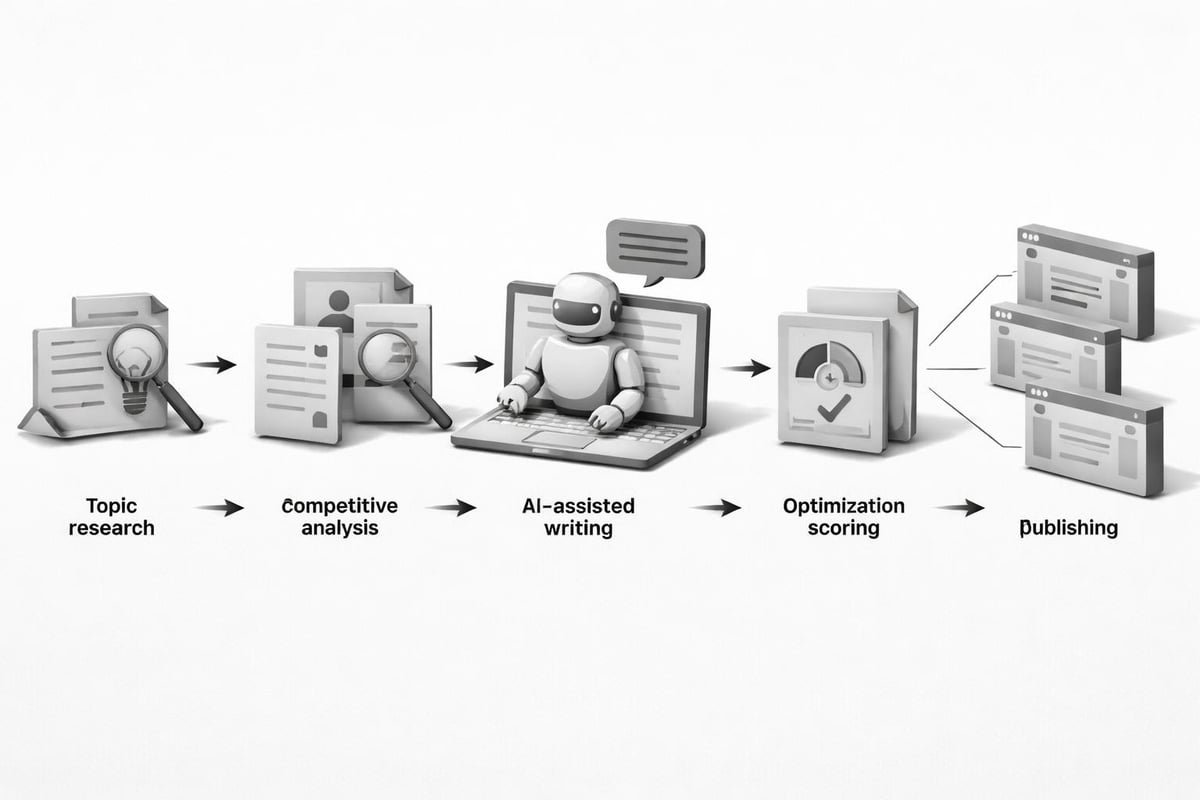
RankPill represents the next generation of content automation, functioning as an AI SEO tool that automatically researches, writes, and publishes optimized content 24/7 while targeting both traditional Google search and emerging AI search platforms like ChatGPT. At just $99 per month for 30 articles, agencies can deliver consistent content at $3 per article compared to traditional agency costs exceeding $5,000, fundamentally changing the economics of content marketing services.
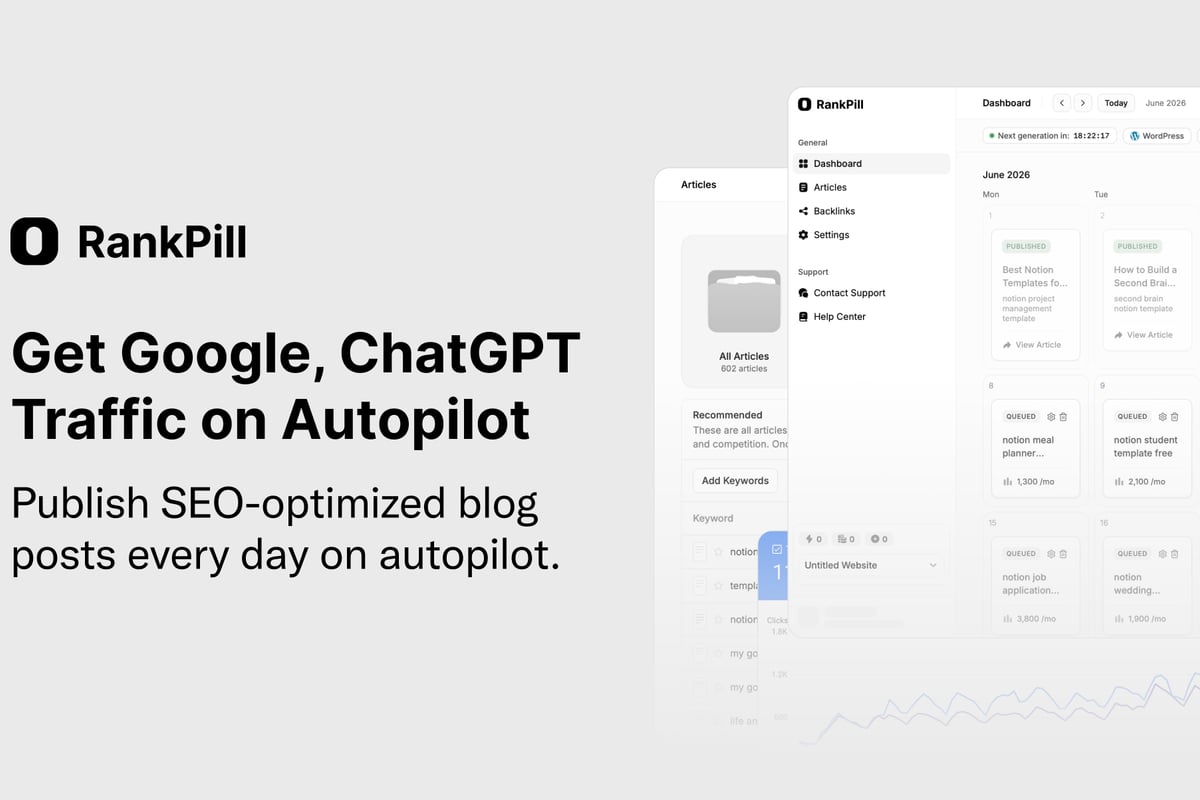
Automated Content Calendars
Strategic content planning prevents the feast-or-famine publishing patterns that undermine SEO progress. Advanced platforms generate content calendars based on keyword prioritization, seasonal trends, and competitive gaps. Automated scheduling ensures consistent publishing rhythms that search engines reward with increased crawling frequency.
Integration with popular content management systems enables seamless workflows from planning through publication. Understanding how to increase blog traffic through systematic content strategies becomes manageable when agencies leverage automation appropriately.
Link Building and Backlink Analysis Tools
Quality backlinks remain among the strongest ranking signals. Agencies need comprehensive tools for discovering opportunities, analyzing competitor link profiles, and monitoring their own link acquisition efforts.
Backlink Discovery and Outreach
The most effective link building tools combine massive backlink databases with outreach management features. They identify websites linking to competitors, highlight broken link opportunities, and track outreach campaigns from initial contact through link placement.
Essential link analysis features:
- Domain authority and page authority metrics
- Anchor text distribution analysis
- Link velocity tracking (new and lost links)
- Toxic link identification for disavowal
- Relationship tracking for ongoing outreach
Agencies managing competitive SEO analysis benefit from tools that reverse-engineer competitor link strategies, revealing exactly which relationships drive their rankings. This intelligence informs agency outreach priorities and helps clients understand realistic timelines for catching up to established competitors.
Rank Tracking and Analytics Platforms
Demonstrating progress requires accurate, consistent rank monitoring across search engines, locations, and devices. Agency-grade rank trackers must handle thousands of keywords across dozens of client accounts.
Multi-Location and Device Tracking
Local businesses require location-specific rank tracking that reflects how customers actually search. The best platforms track rankings across cities, neighborhoods, and even zip codes, revealing hyperlocal visibility patterns. Device-specific tracking shows whether clients rank differently on mobile versus desktop, informing optimization priorities.
| Tracking Feature | Why Agencies Need It | Best Use Cases |
|---|---|---|
| Daily updates | Detect volatility and algorithm impacts quickly | Competitive industries, breaking news sites |
| On-demand checks | Verify ranking changes after optimizations | Post-publication verification, client meetings |
| SERP feature tracking | Monitor featured snippet and local pack visibility | High-value conversion opportunities |
| Competitor comparison | Benchmark client progress against rivals | Executive reporting, strategy sessions |
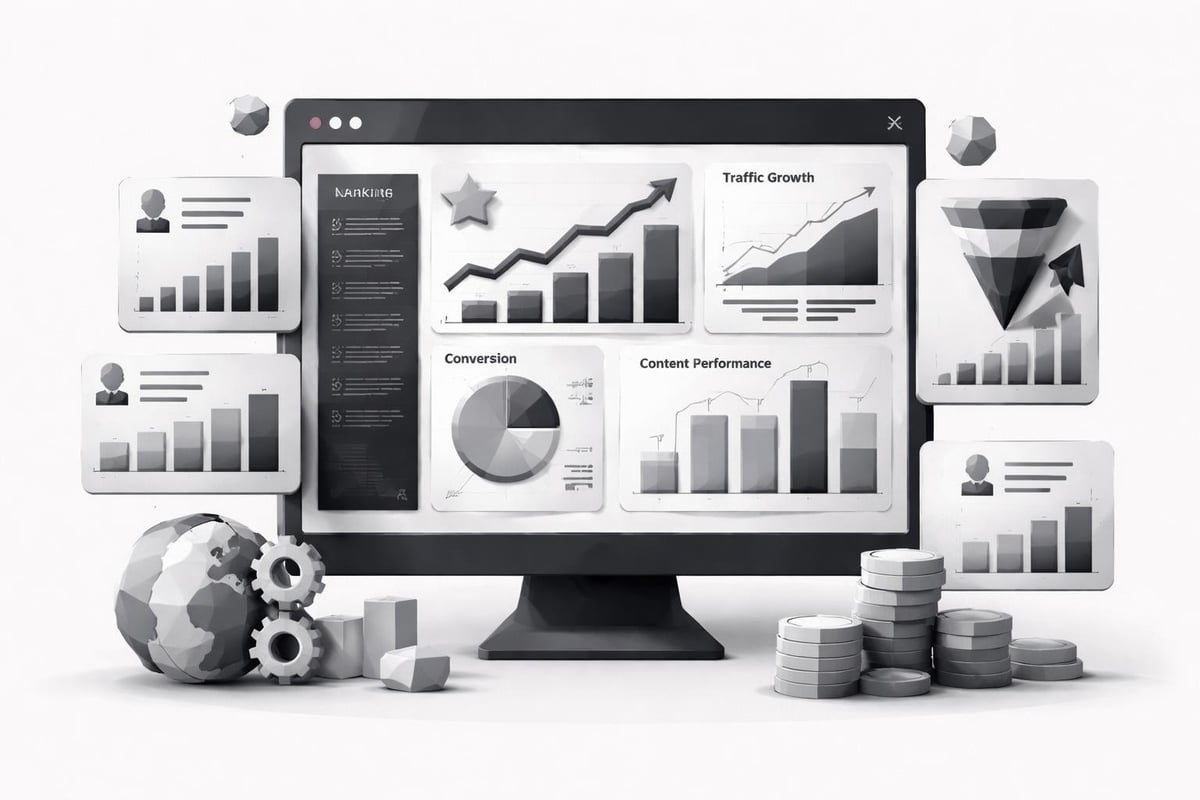
Integration with Google Analytics and Search Console creates unified dashboards that connect rankings to actual traffic and conversions, demonstrating ROI rather than just visibility improvements.
Custom Reporting Automation
Time spent compiling reports is time not spent improving client results. The best seo tools for agencies automate report generation, pulling data from multiple sources into branded templates that agencies can customize for each client's priorities and sophistication level.
Integration and Workflow Efficiency
Disconnected tools create data silos and workflow friction. Modern agencies prioritize platforms that integrate with their existing technology stacks.
CMS and Marketing Platform Connections
Direct integrations with WordPress, Shopify, HubSpot, and other platforms eliminate manual data transfer. Content optimization tools that push directly to content management systems reduce publication time from hours to minutes. Agencies can leverage these integrations to maintain quality control while delegating execution to junior team members.
Understanding organic SEO strategies becomes more practical when tools automatically implement technical optimizations, freeing strategists to focus on higher-level planning and client relationships.
API Access for Custom Solutions
Enterprise agencies often require custom dashboards or proprietary reporting systems. Robust API access lets development teams pull SEO data into internal platforms, creating unified views across SEO, PPC, social media, and other marketing channels.
Webhook capabilities enable real-time notifications when significant events occur, such as ranking drops, new backlinks, or technical errors. These alerts let agencies respond proactively rather than discovering problems during monthly reviews.
Pricing Models and Budget Considerations
SEO tool costs represent significant agency overhead. Understanding pricing structures helps agencies maximize value while controlling expenses.
Tiered Pricing and Scalability
Most platforms offer tiered pricing based on features, data limits, or user counts. Agencies should analyze their client mix to determine which tier provides optimal value. Key variables include:
- Number of projects or domains tracked simultaneously
- Keyword tracking limits (daily or monthly)
- Historical data access and retention periods
- Number of team members requiring access
- White-label and client portal availability
Budget allocation strategy:
- Invest in one comprehensive platform as your foundation (typically 40-50% of tool budget)
- Add specialized tools for specific capabilities (content, links, technical) (30-40%)
- Reserve budget for emerging tools and experimentation (10-20%)
Some agencies pass tool costs to clients as monthly retainer line items, while others absorb costs as operational overhead. Either approach works provided pricing structures align with client service packages.
Free and Freemium Options
Budget-conscious agencies can leverage free SEO tools for basic capabilities while reserving paid tools for advanced features. Google Search Console, Google Analytics, and Google PageSpeed Insights provide substantial value at no cost. However, these free options lack the agency-specific features-client management, white-label reporting, bulk operations-that paid platforms provide.
Freemium models let agencies test platforms before committing to annual contracts. Many tools offer limited free tiers suitable for small client accounts or internal marketing efforts.
Choosing the Right Tool Stack for Your Agency
No single platform perfectly addresses every agency need. Building an effective toolkit requires understanding your client base, service offerings, and team capabilities.
Assessment Framework
Evaluate potential tools across these dimensions:
- Client industry alignment: Does the tool excel in local SEO, ecommerce, enterprise, or B2B contexts?
- Team technical proficiency: Can your staff maximize advanced features, or do you need simpler interfaces?
- Integration requirements: Must it connect with specific CMS platforms or marketing automation systems?
- Reporting customization: How much flexibility do you need in presenting data to clients?
- Support and training: Does the vendor provide agency-specific education and responsive technical support?
Moz Pro offers comprehensive suite capabilities particularly suitable for agencies, with strong emphasis on educational resources that help teams maximize tool value. Their structured approach to SEO methodology aligns well with agencies building standardized processes across client accounts.
Building Versus Buying
Some agencies develop proprietary tools for specific functions, particularly when managing large client volumes with unique requirements. Custom solutions offer perfect alignment with workflows but require ongoing development resources. Most agencies optimize costs by purchasing established platforms for core functions while building lightweight custom tools for reporting or specific integrations.
Staying Current with SEO Tool Evolution
The SEO landscape changes constantly, and tools must evolve accordingly. Agencies should regularly reassess their technology stacks to ensure they're leveraging latest capabilities.
AI and Automation Trends
Artificial intelligence increasingly powers keyword research, content optimization, and even automated SEO execution. Tools that seemed cutting-edge two years ago now lag behind AI-enhanced competitors. Agencies exploring SEO with AI gain efficiency advantages that translate directly to improved margins and client results.
The emergence of AI search optimization creates entirely new optimization categories. Forward-thinking agencies now optimize content not just for traditional search engines but also for AI platforms that recommend content within conversational interfaces.
Emerging capabilities to monitor:
- Predictive ranking forecasts based on historical patterns
- Automated content creation that maintains brand voice consistency
- Natural language processing for semantic keyword clustering
- Visual search optimization as image-based queries increase
- Voice search optimization as smart speaker usage expands
Understanding how to get recommended by ChatGPT and other AI assistants represents the next frontier in visibility optimization, requiring new approaches beyond traditional SEO methodologies.
Agency-Specific Platform Considerations
Certain platforms cater specifically to agency needs with features that individual marketers rarely require.
White-Label Solutions
White-label capabilities let agencies present tools as proprietary technology, strengthening client relationships and perceived value. Duda exemplifies this approach with website builder tools designed specifically for agencies, including white-label options and client management features.
The best white-label platforms allow complete branding customization-logos, color schemes, domain names-creating seamless experiences where clients never see the underlying vendor. This positioning justifies premium pricing and differentiates agencies in competitive markets.
Multi-Client Management
Managing dozens of client accounts requires specialized interfaces that individual tools don't provide. Agency platforms should offer:
- Single-dashboard views across all client accounts
- Bulk operations for implementing changes across multiple sites
- Permission systems that let clients access only their data
- Aggregated billing that simplifies accounting
- Cross-client reporting for identifying patterns and opportunities
These operational efficiencies become increasingly valuable as agencies scale, often determining whether growth requires proportional headcount increases or whether technology enables more leverage.
Selecting the right seo tools for agencies fundamentally impacts operational efficiency, service quality, and profitability in 2026's competitive landscape. By investing in platforms that combine comprehensive data, client management features, and automation capabilities, agencies position themselves to deliver exceptional results while maintaining healthy margins. RankPill provides agencies with automated content creation that scales effortlessly across client accounts, generating optimized articles 24/7 while your team focuses on strategy and client relationships. Transform your content delivery capabilities and explore how AI-powered automation can revolutionize your agency's service offerings today.