B2B Content Marketing: Strategy Guide for 2026

Modest Mitkus · May 25, 2026
B2B content marketing has evolved from a nice-to-have tactic into a revenue-driving necessity for companies seeking sustainable growth in 2026. Unlike consumer-focused content that prioritizes entertainment and emotional connection, b2b content marketing targets decision-makers who need data, expertise, and solutions to complex business challenges. The landscape now demands a strategic blend of SEO optimization, thought leadership, and automated distribution to reach buyers who conduct extensive research before ever speaking with a sales representative. With purchasing committees averaging 6-10 stakeholders and buyer journeys extending over months, businesses must create comprehensive content ecosystems that educate, build trust, and demonstrate measurable value at every touchpoint.
Understanding the B2B Content Marketing Framework
The foundation of successful b2b content marketing rests on understanding that business buyers consume content differently than individual consumers. Research indicates that 73% of B2B buyers complete more than half their purchasing decision before contacting sales, making your content library the first and often most influential touchpoint in the customer journey.
A documented strategy separates high-performing programs from those that waste resources. According to Sprout Social's strategic guide to B2B content marketing, companies with written strategies are significantly more likely to report content marketing success compared to those without clear documentation.
Core Components of a B2B Strategy
Building an effective framework requires several interconnected elements:
- Buyer persona research that goes beyond demographics to understand pain points, decision criteria, and information consumption preferences
- Content mapping aligned to each stage of the buyer journey from awareness through decision and advocacy
- SEO integration ensuring discoverability through both traditional search engines and AI-powered search experiences
- Distribution channels matched to where your target audience actually spends time researching solutions
- Performance metrics tied directly to pipeline generation and revenue attribution
The relationship between AI and content marketing has fundamentally changed how businesses approach content creation and optimization. Modern platforms now enable automated keyword research, content generation, and distribution at scales previously impossible with manual processes.

Content Formats That Drive B2B Results
Different content formats serve distinct purposes throughout the buying cycle. The most effective b2b content marketing programs deploy a strategic mix rather than relying on a single format.
Long-Form Educational Content
In-depth articles, guides, and whitepapers establish thought leadership while capturing organic search traffic. These assets typically range from 2,000 to 5,000 words and target informational keywords early in the buyer journey. Liquid Web's B2B content marketing best practices emphasize that comprehensive content outperforms shallow pieces in both search rankings and lead quality.
Case studies deserve special attention as they provide social proof and demonstrate real-world application of your solutions. The most compelling case studies include:
- Quantifiable results with specific metrics and percentage improvements
- Customer quotes that humanize the data and build credibility
- Challenge-solution-outcome structure that mirrors your prospect's current situation
- Industry-specific context that resonates with similar buyers
Video and Interactive Content
Video consumption among B2B buyers has increased exponentially, with product demos, customer testimonials, and thought leadership interviews driving engagement rates that far exceed text-based content. Interactive tools like ROI calculators, assessment quizzes, and configuration tools generate qualified leads while providing immediate value.
| Content Format | Best Use Case | Typical Conversion Rate | Production Effort |
|---|---|---|---|
| Blog Articles | SEO, awareness | 2-4% | Low-Medium |
| Whitepapers | Lead generation | 8-12% | High |
| Video Demos | Consideration stage | 15-20% | Medium-High |
| Case Studies | Decision stage | 10-15% | Medium |
| Webinars | Nurture, education | 20-25% | High |
The strategic deployment of content across formats creates multiple entry points for prospects at different stages of awareness and preference for content consumption.
SEO Optimization for B2B Visibility
Search engine optimization forms the backbone of sustainable b2b content marketing programs. Unlike paid channels that stop delivering results when budgets run dry, properly optimized content continues attracting qualified traffic for months or years after publication.
Keyword Strategy for Business Buyers
B2B keyword research requires understanding the technical language and industry jargon your buyers use. First Page Sage's B2B content marketing practices recommend organizing content around topical pillars rather than isolated keywords. This approach builds topical authority and allows you to capture search traffic across the entire problem-solution spectrum.
Effective keyword targeting balances three dimensions:
- Search volume indicating market size and opportunity
- Competition level determining ranking difficulty and required resources
- Commercial intent predicting likelihood of conversion to qualified leads
Tools like RankPill's keyword research tool help identify low-competition opportunities that competitors overlook, enabling faster visibility growth without fighting established players for saturated terms.
Technical SEO Foundations
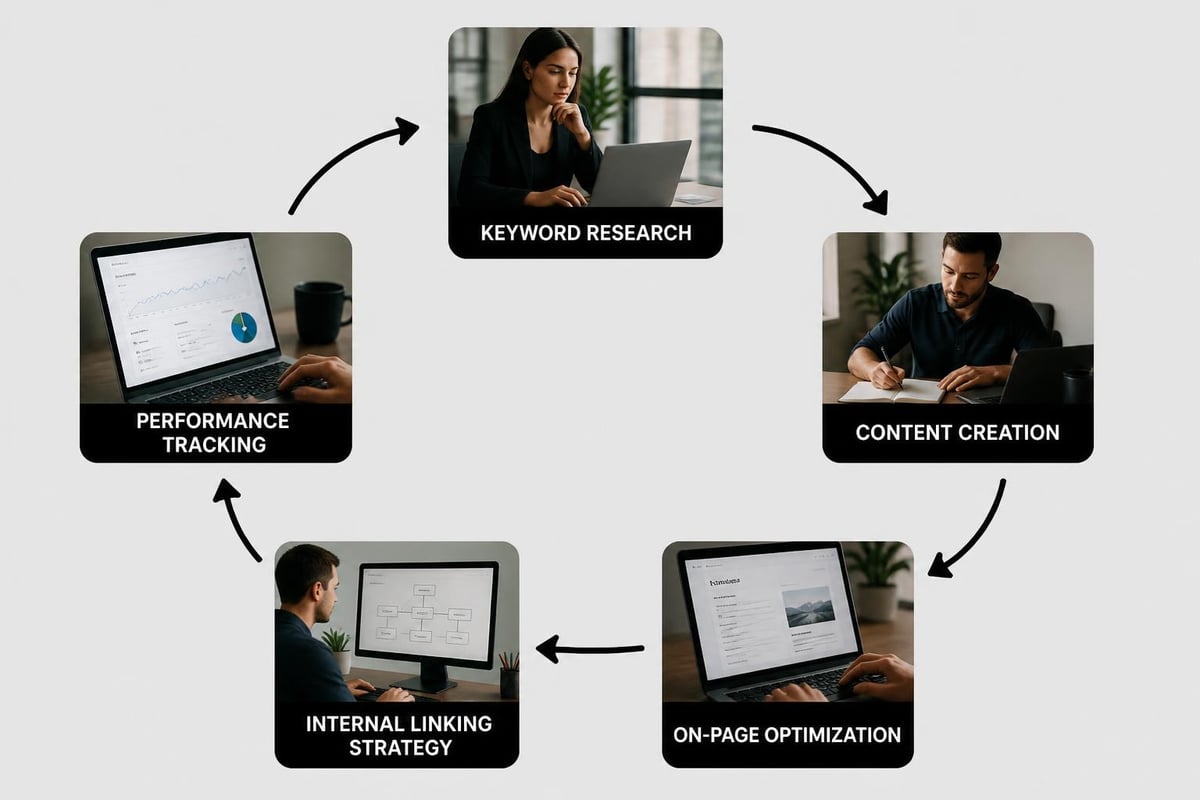
Beyond keywords, technical elements determine whether search engines can effectively crawl, index, and rank your content. Critical factors include site speed, mobile responsiveness, structured data markup, and internal linking architecture that distributes page authority throughout your content library.
The rise of AI search optimization introduces new considerations for content structure and presentation. Generative AI platforms like ChatGPT, Perplexity, and Google's AI Overviews prioritize content that directly answers questions with clear, authoritative information supported by credible sources.
Distribution Channels and Amplification
Creating exceptional content represents only half the equation. Strategic distribution ensures your content reaches decision-makers where they actively seek information and solutions.
Owned Media Optimization
Your website and blog serve as the content hub, but distribution through owned channels extends reach significantly. Email marketing remains the highest-ROI channel for B2B, particularly when segmented by buyer persona, industry, and journey stage. Marketing automation platforms enable behavior-triggered sequences that deliver relevant content based on prospect actions and engagement patterns.
LinkedIn dominates professional social media for B2B, but effective strategies go beyond company page posts. Employee advocacy programs that empower team members to share content expand reach while adding authentic voices that resonate more effectively than corporate messaging.
Earned and Paid Amplification
Guest posting on industry publications and partnerships with complementary brands provide access to established audiences. Agencies like Pioneer Marketing specialize in local SEO and content distribution strategies that help businesses expand their reach through both organic and paid channels.
Paid distribution through LinkedIn ads, Google Search, and industry-specific platforms accelerates visibility for high-priority content. The key lies in promoting content offers rather than direct sales messages, using paid traffic to build audience relationships rather than immediate conversions.
Strategic repurposing multiplies content value without proportional increases in production effort. A single comprehensive guide can be transformed into:
- Multiple blog posts exploring specific subtopics
- Social media content highlighting key insights
- Email newsletter series
- Video or podcast discussions
- Presentation decks for sales enablement
According to Salesforce's B2B content marketing guide, repurposing content increases reach by an average of 300% while reducing overall content production costs.
Automation and Scaling Content Production
Manual content creation processes cannot keep pace with the volume required for competitive b2b content marketing in 2026. The average B2B company needs to publish 3-5 high-quality pieces weekly to maintain search visibility and thought leadership positioning.
The Role of Marketing Automation
Modern digital marketing automation platforms handle repetitive tasks that previously consumed hours of human effort. Automated workflows manage content publishing schedules, social media distribution, email campaigns, lead scoring, and nurture sequences without constant manual intervention.
The most sophisticated automation systems integrate content performance data with CRM platforms, enabling closed-loop attribution that connects specific content pieces to pipeline generation and revenue. This data-driven approach allows continuous optimization based on what actually drives business results rather than vanity metrics like page views.
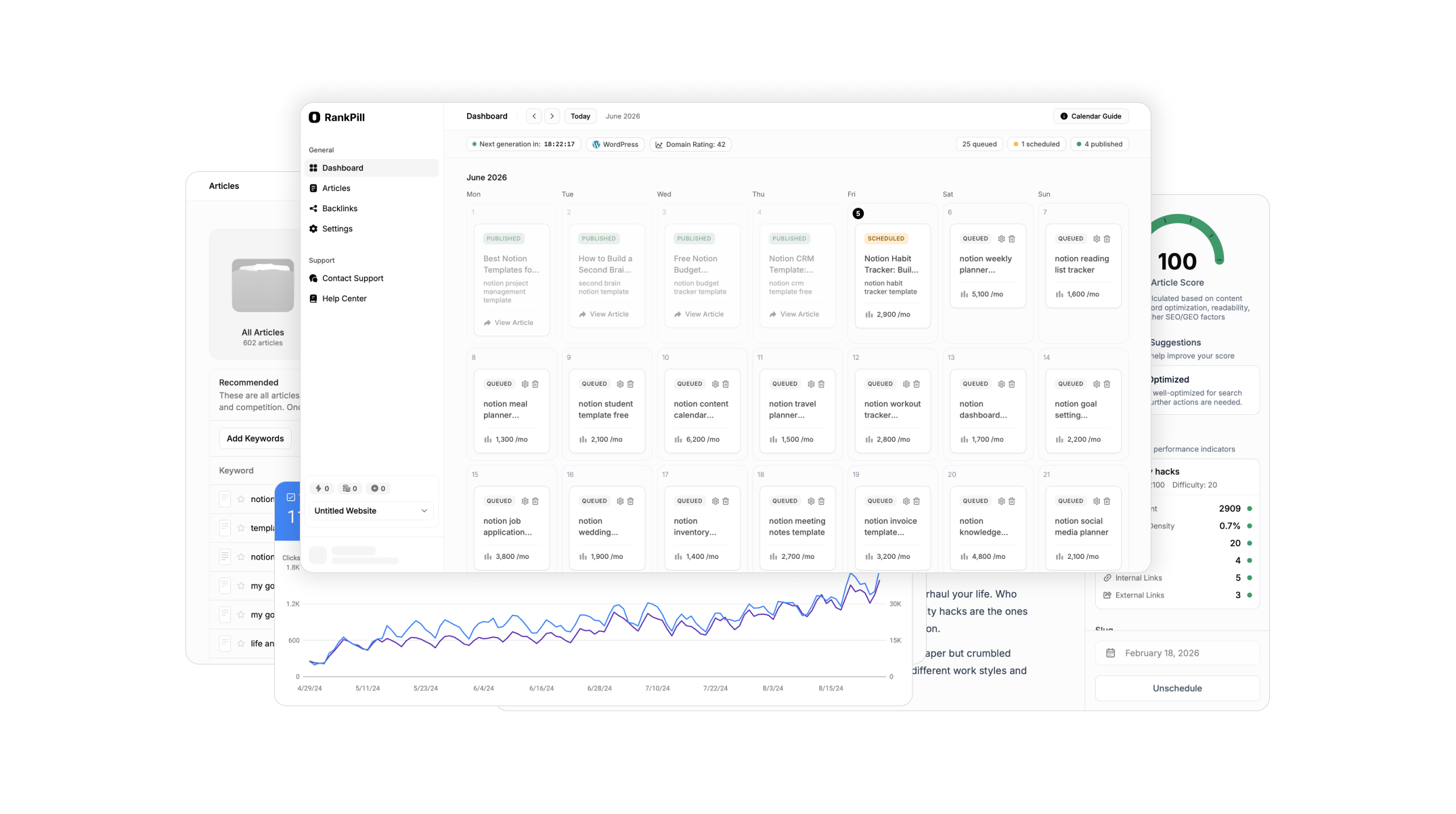
For businesses serious about scaling content output without proportional increases in team size, platforms offering SEO automation handle everything from keyword research through content creation and publication.
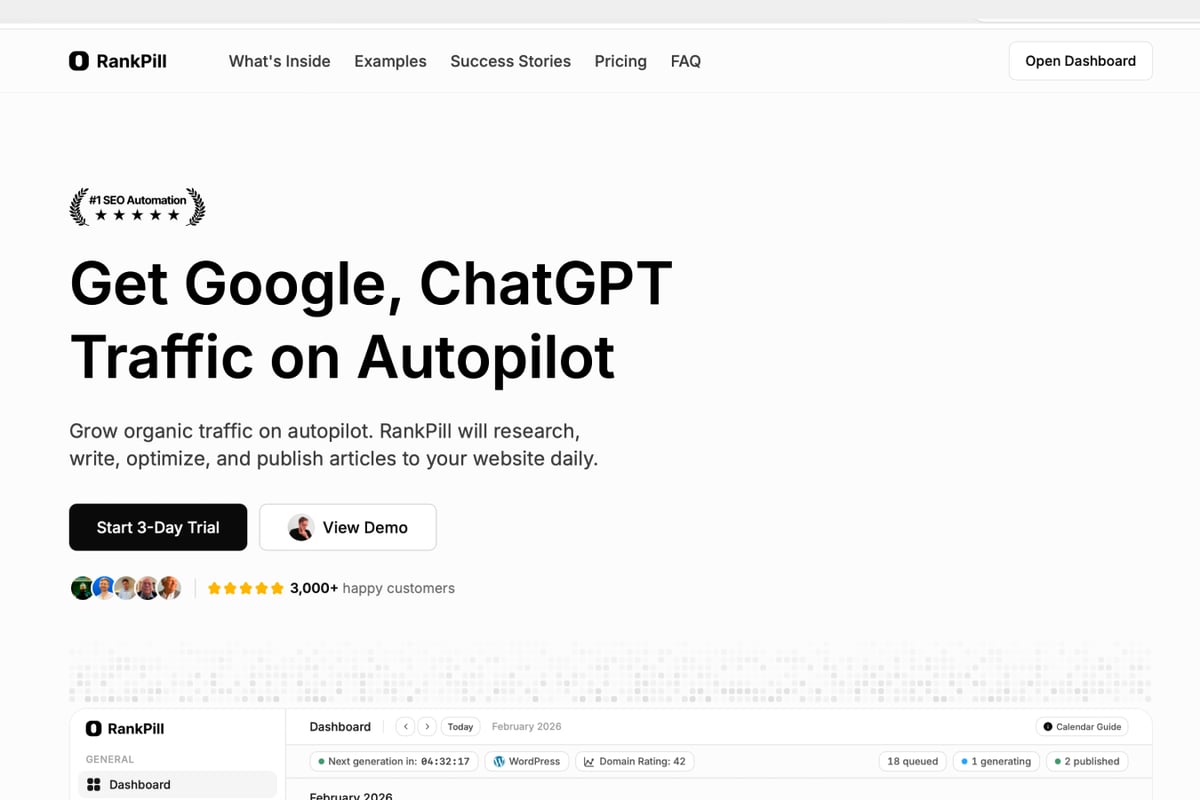
These systems identify content opportunities, generate optimized articles, implement proper internal and external linking, and publish directly to content management systems on predetermined schedules.
AI-Powered Content Generation
Artificial intelligence has transformed content production economics. What previously required days of research, writing, and optimization now happens in hours. The key distinction lies between generic AI content and strategically optimized material that ranks in search engines and serves actual buyer needs.
Quality AI content implementation requires:
- Strategic human oversight to ensure accuracy, brand voice, and strategic alignment
- Fact-checking and editing to maintain credibility and expertise
- SEO optimization beyond basic keyword insertion to include topical authority and search intent matching
- Original insights and data that differentiate content from competitors covering similar topics
Understanding how Google evaluates AI content helps businesses leverage AI productivity benefits while maintaining content quality standards that satisfy both search algorithms and human readers.
Measuring B2B Content Marketing Performance
Effective measurement separates strategic programs from random acts of content. The challenge lies in tracking metrics that actually correlate with business outcomes rather than engagement vanity metrics.
Leading and Lagging Indicators
Leading indicators provide early signals of content performance and include organic traffic growth, keyword ranking improvements, content engagement rates, and lead generation volume. These metrics help identify what's working before significant revenue impact becomes visible.
Lagging indicators measure ultimate business impact: pipeline value influenced by content, customer acquisition cost, sales cycle length, and revenue attribution. According to Zio Advertising's strategy guide, successful B2B content programs demonstrate clear connections between content consumption and deal progression.
| Metric Category | Key Measurements | Business Impact |
|---|---|---|
| Visibility | Organic traffic, keyword rankings | Top-of-funnel awareness |
| Engagement | Time on page, scroll depth, return visits | Content quality validation |
| Lead Generation | Form conversions, gated content downloads | Pipeline building |
| Pipeline Influence | Content touches before opportunity creation | Sales acceleration |
| Revenue Attribution | Closed revenue influenced by content | ROI justification |
Attribution Modeling Challenges
B2B buyer journeys involve multiple touchpoints across weeks or months, making single-touch attribution models inadequate. Multi-touch attribution provides more accurate pictures of content contribution but requires sophisticated tracking and CRM integration.
The difference between organic search vs paid search becomes critical in attribution analysis, as organic content often plays supporting roles throughout extended buying cycles while paid channels typically capture final conversions.
Building Content for Multiple Search Experiences
The search landscape has fragmented beyond traditional Google searches. B2B buyers now conduct research through ChatGPT, Perplexity, industry-specific databases, and social platforms. Effective b2b content marketing in 2026 optimizes for this diverse ecosystem.
Generative Engine Optimization
Generative Engine Optimization represents a new discipline focused on ensuring AI systems include and reference your content when answering user queries. Unlike traditional SEO that optimizes for ranking positions, GEO prioritizes being cited as authoritative sources within AI-generated responses.
Key GEO tactics include:
- Clear, direct answers to common industry questions
- Structured data markup that helps AI parse content meaning
- Citation-worthy statistics and data that AI systems reference
- Authoritative backlink profiles that signal credibility to AI training data
Understanding Perplexity SEO and other AI search platforms helps businesses position content for maximum visibility across emerging search experiences that increasingly supplement or replace traditional search engines.
Voice and Conversational Search
Voice-activated search continues growing among business users seeking quick answers while multitasking. Conversational queries tend to be longer and more specific than typed searches, requiring content that addresses natural language questions rather than keyword-stuffed text.
Featured snippets and "People Also Ask" sections provide prime real estate for voice search responses. Structuring content with clear question-and-answer formats increases the likelihood of capturing these positions.
Content Governance and Quality Control
Scaling content production without governance structures leads to inconsistent messaging, brand dilution, and quality degradation. Mature b2b content marketing programs implement systems that maintain standards while enabling volume.
Editorial Guidelines and Review Processes
Documented editorial guidelines cover brand voice, terminology preferences, content structure requirements, and quality thresholds. These guidelines ensure consistency whether content comes from internal team members, freelancers, or AI-assisted creation.
Multi-stage review processes typically include:
- Subject matter expert review for technical accuracy and insight quality
- SEO optimization check confirming keyword targeting and technical implementation
- Editorial review ensuring readability, flow, and brand voice consistency
- Legal/compliance review for regulated industries requiring approval processes
- Final quality assurance before publication
Content Maintenance and Updates
Published content requires ongoing maintenance to remain relevant and effective. Search algorithms favor fresh, current information, while buyers quickly abandon outdated resources. Quarterly content audits identify high-performing pieces worth updating and low-performing assets requiring improvement or consolidation.
The B2B News Network's strategy guide emphasizes that content maintenance delivers higher ROI than creating entirely new pieces when existing assets already rank and attract traffic.
Competitive Differentiation Through Content
Markets saturated with similar solutions require content differentiation beyond product features. Thought leadership, original research, and unique perspectives separate memorable brands from commodity providers.
Original Research and Data
Proprietary research generates media coverage, backlinks, and buyer attention that generic content cannot match. Industry surveys, benchmark reports, and trend analyses position companies as authoritative sources while creating linkable assets that improve overall domain authority.
The investment in original research pays dividends across multiple years as data remains relevant and continues attracting citations from other publishers and researchers.
Storytelling and Human Connection
Data alone rarely compels action. Stories that illustrate challenges, transformations, and outcomes create emotional connections that pure information cannot achieve. Customer success narratives, founder journey stories, and team expertise profiles humanize brands in ways that resonate with decision-makers seeking trustworthy partners.
Vulnerability and transparency build trust in crowded markets. Sharing lessons learned from failures, discussing industry challenges honestly, and acknowledging limitations demonstrates authenticity that polished marketing speak cannot convey.
Integration with Sales Enablement
The most effective b2b content marketing programs view sales teams as content distribution partners rather than separate functions. Sales enablement ensures representatives have the right content at the right moments to advance opportunities.
Sales Content Needs Assessment
Regular collaboration between marketing and sales identifies content gaps that prevent deal progression. Common gaps include:
- Industry-specific case studies that match prospect situations
- Competitive comparison resources addressing specific objections
- Technical documentation answering detailed implementation questions
- ROI calculators quantifying business value for specific use cases
- Executive briefings designed for senior stakeholder consumption
Content libraries organized by buyer journey stage, industry, company size, and use case enable sales teams to quickly locate relevant resources during conversations.
Feedback Loops and Content Refinement
Sales team feedback provides invaluable insights into which content resonates with prospects and which falls flat. Regular debriefs capture questions that prospects ask repeatedly, objections that arise consistently, and topics requiring deeper coverage.
This feedback loop transforms content from static marketing assets into living resources that evolve based on actual buyer interactions and needs.
Successful b2b content marketing in 2026 requires strategic planning, consistent execution, and continuous optimization based on performance data. The businesses that thrive combine thought leadership with technical SEO excellence, human creativity with AI-powered efficiency, and compelling storytelling with measurable business results. RankPill automates the heavy lifting of content production, keyword research, and SEO optimization, allowing your team to focus on strategy and differentiation while the platform handles daily publishing, linking, and technical optimization that drives sustainable organic growth.
Unlock Traffic on Autopilot
Grow organic traffic on autopilot. RankPill will research, write, optimize, and publish articles to your website daily.