
Backlink Building Strategies That Drive Rankings in 2026

Modest Mitkus · June 2, 2026
Building backlinks remains one of the most critical factors in search engine optimization, yet the landscape has fundamentally shifted from the volume-focused approaches of the past. Today's backlink building strategies prioritize quality, relevance, and authentic relationships over manufactured link schemes. Search engines have become increasingly sophisticated at detecting manipulative tactics, making it essential to focus on earning links that genuinely enhance your site's authority and trustworthiness. Understanding which strategies deliver real results versus those that waste time and resources can mean the difference between steady organic growth and stagnant search visibility.
Understanding Modern Link Equity and Authority
The concept of link equity has evolved considerably as search algorithms have matured. Link equity refers to the value and authority passed from one website to another through backlinks, but not all links carry equal weight. In 2026, search engines evaluate numerous factors when determining how much authority a link transmits, including the linking site's own authority, topical relevance, placement within content, and the surrounding context.
Domain authority represents the overall trustworthiness and credibility of a website in search engine evaluation. When you earn backlinks from high-authority domains within your industry, you receive significantly more ranking power than dozens of links from low-quality or irrelevant sites. This shift toward quality over volume in backlink building has fundamentally changed how effective strategies operate.
Key Factors That Determine Link Value
Understanding what makes a backlink valuable helps you prioritize your outreach efforts and resource allocation. Here are the critical elements that determine link quality:
- Topical relevance: Links from sites covering similar subjects to yours carry more weight
- Editorial placement: Links naturally embedded in quality content outperform footer or sidebar links
- Anchor text optimization: Descriptive, natural anchor text signals relevance without appearing manipulative
- Page-level authority: The specific page linking to you matters as much as the overall domain
- Link context: The surrounding content and other links on the page influence value transfer
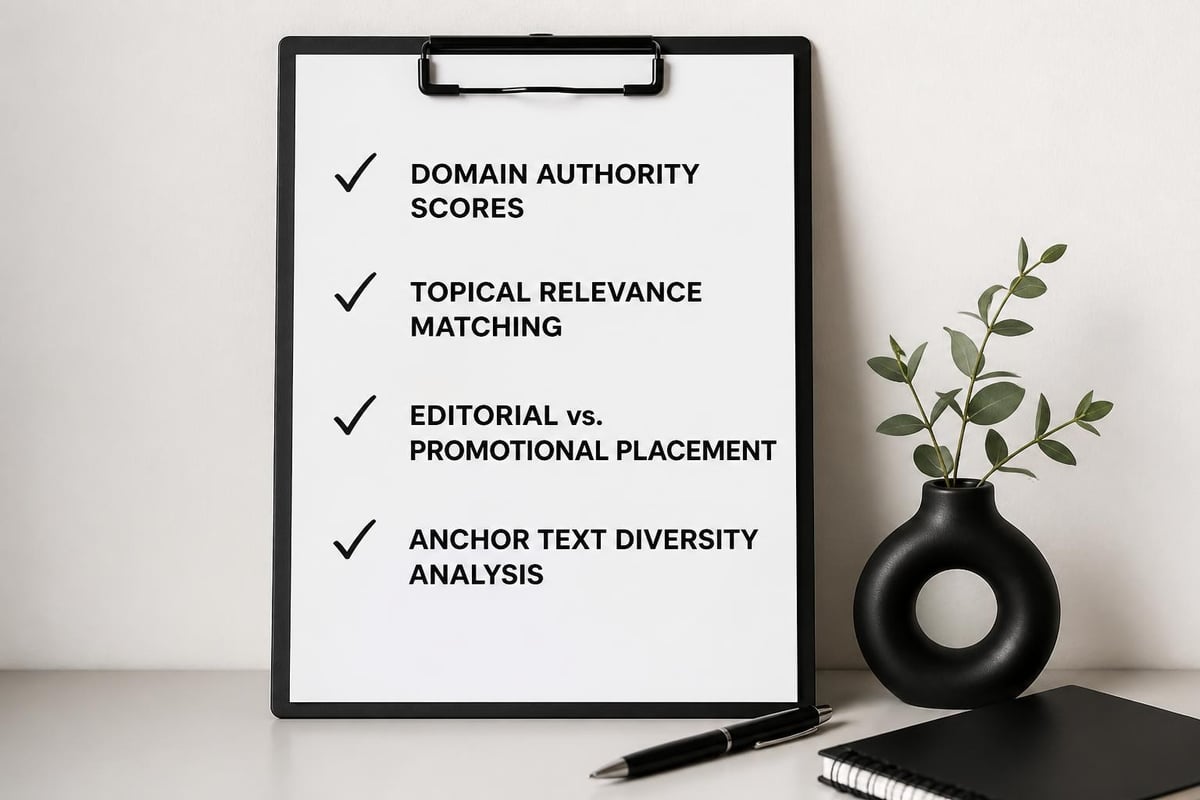
The factors contributing to high-quality backlinks extend beyond simple metrics to encompass the entire linking ecosystem. A single link from a trusted industry publication can deliver more ranking power than hundreds of directory submissions or comment links.
Digital PR and Journalist Outreach
Digital PR has emerged as one of the most effective backlink building strategies for earning high-authority editorial links. This approach focuses on creating newsworthy content and stories that journalists and publishers want to cover, resulting in natural backlinks from trusted media outlets.
The foundation of successful digital PR lies in understanding what makes content genuinely newsworthy. Journalists receive hundreds of pitches daily, so your story must offer unique value, timely insights, or compelling data that their audience cares about. Original research, industry surveys, and expert commentary on trending topics consistently perform well.
Building relationships with journalists before you need coverage creates a foundation for future success. Follow relevant journalists on social media, engage thoughtfully with their work, and position yourself as a reliable source of expertise in your niche. When you do pitch stories, personalization makes all the difference-generic mass emails get deleted immediately.
Crafting Effective Media Pitches
Your pitch should communicate value within the first two sentences. Journalists make decisions quickly, so lead with the most compelling hook. Include relevant data points, explain why the story matters now, and make it clear how it serves their specific audience.
Timing significantly impacts success rates. Pitch stories that align with current events, industry trends, or seasonal interests. Monitor news cycles within your industry and prepare commentary or data that adds value to ongoing conversations.
Guest Posting on Authoritative Platforms
Guest posting remains a powerful backlink building strategy when executed with quality and relevance as primary objectives. The key distinction between effective guest posting and spam tactics lies in the value you provide to the host publication and its audience.
Identify authoritative websites within your industry that accept high-quality contributed content. Research their existing articles to understand their content standards, audience interests, and gaps you could fill with unique expertise. Focus on platforms where your target audience actively engages, not just sites with high domain metrics.
| Strategy Component | Effective Approach | Ineffective Approach |
|---|---|---|
| Site Selection | Relevant industry publications with engaged audiences | Any site accepting guest posts regardless of relevance |
| Content Quality | In-depth, original insights backed by research | Rehashed generic content with keyword stuffing |
| Link Placement | 1-2 contextual links within valuable content | Multiple forced links in author bio only |
| Pitch Personalization | Tailored topics addressing specific audience needs | Generic template pitches sent en masse |
The content you contribute should match or exceed the quality of the host site's best-performing articles. This demonstrates respect for their audience and increases acceptance rates. Many proven link building strategies emphasize that guest posts should deliver genuine value first, with backlinks as a secondary benefit.

When incorporating backlinks within guest content, ensure they enhance the reader's understanding or provide genuinely useful resources. Forced or irrelevant links diminish credibility and may lead to rejection or removal.
Creating Link-Worthy Content Assets
The most sustainable backlink building strategies center on creating content so valuable that other websites naturally want to reference and link to it. These link-worthy assets include original research, comprehensive guides, interactive tools, and data visualizations that serve as authoritative resources within your industry.
Original research and surveys generate significant backlink opportunities because they provide unique data that other content creators reference. When you publish industry insights that don't exist elsewhere, you become the primary source that journalists, bloggers, and analysts cite in their own work.
Comprehensive resource guides that thoroughly cover specific topics also attract natural backlinks. When you create the definitive guide on a subject, it becomes the go-to reference that others link to when discussing related topics. The depth and accuracy of these resources determine their long-term link acquisition potential.
Types of High-Performance Link Assets
Different content formats attract backlinks through different mechanisms:
- Statistical roundups: Curated industry statistics become citation magnets
- Interactive calculators: Tools that provide personalized value get shared and linked
- Visual data presentations: Infographics and charts that simplify complex information
- Comparison frameworks: Detailed product or strategy comparisons that help decision-making
- Case studies: Real-world results and data that validate approaches or strategies
The investment in creating these assets pays dividends over time as they continue attracting backlinks months or years after publication. This contrasts sharply with one-time outreach efforts that stop generating links once the campaign ends.
Resource Page and Directory Strategies
Strategic placement on relevant resource pages and quality directories provides foundation-level backlinks that establish topical authority. While directory submissions earned a negative reputation due to spam tactics, selective inclusion in respected industry directories still offers value.
Resource pages curated by educational institutions, industry associations, and established websites provide context-rich backlink opportunities. These pages exist to help users find valuable tools, services, and information within specific categories, making them ideal for relevant, quality backlinks.
Identifying these opportunities requires targeted searching. Use search operators like "your industry + resources" or "your topic + helpful links" to find pages actively curating relevant content. Educational (.edu) and government (.gov) domains maintaining resource collections offer particularly valuable placements.
For automated approaches that complement manual strategies, RankPill's Free Backlink Exchange connects you with quality websites for mutual link building. The platform provides 30 free monthly credits that roll over, allowing you to wait for genuinely relevant matches rather than settling for low-quality links that could harm your SEO efforts.
The pitch for resource page inclusion should emphasize how your content fills a gap or provides unique value to their curated collection. Explain specifically why their audience would benefit from accessing your resource, and make it easy for them to include you by providing suggested descriptions and anchor text.
Competitor Backlink Analysis and Replication
Analyzing your competitors' backlink profiles reveals proven opportunities within your industry. If specific websites link to multiple competitors but not to you, those sites clearly value content similar to yours and represent realistic outreach targets.
Backlink analysis tools help identify where competitors earn their most valuable links. Focus on understanding the types of content and strategies that attracted those links rather than attempting to replicate every individual link. Pattern recognition across competitor profiles reveals systematic opportunities.
Strategic Competitor Analysis Process
Start by identifying your 5-10 closest competitors who rank well for your target keywords. Analyze their backlink profiles to categorize link types:
- Editorial links from industry publications
- Guest posts on relevant blogs
- Resource page inclusions
- Directory listings
- Partnership or collaboration links
Common link sources across multiple competitors represent the highest-value targets for your own outreach. These websites have demonstrated repeated willingness to link to businesses in your space.
The best link building tools of 2025 provide comprehensive competitor analysis features that streamline this research process. However, the analysis itself only provides value when you act on the insights with targeted, personalized outreach.
Broken Link Building Tactics
Broken link building offers value to website owners while earning quality backlinks for your content. This strategy involves finding broken external links on relevant websites, then suggesting your content as a replacement resource.
The process begins with identifying high-authority websites within your niche that maintain resource pages or content with external links. Use broken link checking tools to scan these pages for 404 errors and dead links. When you find broken links pointing to content similar to what you offer, you have an outreach opportunity.
Your pitch should lead with the value you're providing-alerting them to broken links that diminish their user experience and site credibility. Frame your content suggestion as a helpful solution rather than a promotional request. Include the specific broken link URL, the page where it appears, and a brief explanation of why your resource serves as an appropriate replacement.
| Broken Link Building Step | Key Action | Success Factor |
|---|---|---|
| Site Identification | Find relevant, high-authority sites in your niche | Domain relevance and authority |
| Link Scanning | Check for 404 errors and dead external links | Volume of broken links found |
| Content Matching | Ensure your content aligns with the broken link topic | Topical relevance |
| Outreach | Provide value-first communication | Personalization and helpfulness |
| Follow-up | Polite reminder after 7-10 days | Persistence without pestering |
This approach works because you solve a real problem for website owners. Broken links frustrate users and can negatively impact SEO, so webmasters generally appreciate being alerted to them. Your content recommendation becomes a natural extension of helpful communication.
Strategic Partnership Link Building
Building authentic business relationships creates some of the most valuable and sustainable backlink opportunities. Strategic partnerships with complementary businesses, industry associations, and service providers often include natural link exchanges as part of broader collaboration.
Identify businesses that serve similar audiences but aren't direct competitors. For example, if you provide marketing automation software, partnerships with content agencies, CRM providers, or analytics platforms could include reciprocal content featuring and linking.
Joint ventures like co-hosted webinars, collaborative research projects, or integrated service offerings naturally generate backlinks as both parties promote the initiative. These links carry strong contextual relevance and come from genuine business relationships rather than manufactured link schemes.
Industry certifications, memberships, and sponsorships also create legitimate backlink opportunities. Many professional associations feature member directories with profile pages that include website links. Conference sponsorships typically include backlinks from event websites that carry significant authority within specific industries.
Content Syndication and Republishing
Strategic content syndication extends your reach while potentially earning additional backlinks from authoritative platforms. When done correctly with proper canonicalization, syndication doesn't create duplicate content issues and can introduce your work to new audiences.
Platforms like Medium, LinkedIn, and industry-specific publications often welcome quality contributed content. The key is ensuring that syndicated versions include canonical tags pointing to your original article, signaling search engines about the primary source.
Some syndication arrangements include "originally published on" attributions with backlinks to your site. Even when the syndicated version doesn't pass direct link equity due to canonicalization, the exposure and brand visibility can lead to secondary backlinks as new readers discover and reference your work.
Republishing your content on platforms with built-in audiences also supports your broader content marketing strategy by maximizing the return on content creation investment. Each piece of quality content should work across multiple channels rather than existing in isolation on your blog.
Leveraging Existing Relationships and Mentions
Brand mentions without backlinks represent untapped link opportunities. When websites mention your brand, products, or content without linking, a simple outreach request often converts the mention into a backlink.
Set up monitoring for unlinked brand mentions using tools that track web references to your business name, product names, or key personnel. When you find mentions, reach out with a brief, friendly request asking them to link the mention to your site. Frame it as improving user experience-readers who want to learn more will appreciate direct access.
Client testimonials and case studies also create backlink opportunities. When you deliver exceptional results for clients, many are willing to share their experience through testimonials on their own websites, case study participation, or quotes in your content that they'll link to when sharing.
The proven backlink building techniques that remain effective in 2026 consistently emphasize relationship quality over transactional link exchanges. Building genuine connections within your industry creates an ecosystem where backlinks flow naturally from mutual respect and shared value.
Automation and Scaling Considerations
As your backlink building strategies mature, selective automation helps scale efforts without sacrificing quality. The key distinction lies between automating research and administrative tasks versus attempting to automate relationship building and content creation.
Research automation tools can efficiently identify prospects, track outreach status, and monitor backlink acquisition. Email sequences can handle initial outreach and follow-ups, but personalization remains essential. Templates provide structure while customization demonstrates genuine interest in each prospect.
Modern SEO automation platforms increasingly incorporate backlink building features that complement manual outreach efforts. However, fully automated link building without human oversight tends to produce low-quality results that don't move ranking needles.
The most effective scaling approach combines automation for repetitive tasks with human expertise for strategy, personalization, and relationship development. This hybrid model allows teams to execute more outreach while maintaining the quality standards that earn valuable backlinks.
Balancing Manual and Automated Approaches
Consider which aspects of your backlink building strategies benefit from automation:
- Automate: Prospect research, broken link scanning, mention monitoring, basic follow-ups
- Manual: Relationship building, pitch personalization, content creation, partnership negotiations
- Hybrid: Outreach sequence management, progress tracking, quality assessment
For businesses seeking comprehensive automation that includes content creation to support link building, platforms like RankPill provide integrated solutions. The service automates keyword research, content production, and backlink building within a unified workflow, allowing teams to focus on strategy rather than execution.
Measuring Link Building Success
Effective backlink building strategies require consistent measurement to understand what works and optimize resource allocation. Beyond simply counting new backlinks, meaningful metrics reveal the quality and impact of your link acquisition efforts.
Domain authority changes over time indicate whether your backlink profile strengthens your overall site credibility. While not a Google metric, third-party domain authority scores provide useful benchmarks for comparing progress and competitive positioning.
Referring domain growth matters more than total backlink count. Earning your first link from 100 different websites provides far more value than 100 links from the same single domain. Track the diversity and quality of unique referring domains consistently.
Organic traffic growth from specific content tied to backlink campaigns helps connect link building directly to business outcomes. When you earn backlinks to particular pages, monitor whether those pages see corresponding traffic increases and improved rankings for target keywords.
| Success Metric | What It Measures | Why It Matters |
|---|---|---|
| Referring Domains | Unique sites linking to you | Diversity indicates natural profile |
| Domain Authority | Overall site trust and credibility | Higher authority improves ranking potential |
| Page-Level Authority | Specific page strength | Target pages gain ranking power |
| Organic Traffic | Visitors from search | Direct business impact |
| Keyword Rankings | Position for target terms | Visibility in search results |
Link velocity-the rate at which you acquire new backlinks-should appear natural rather than suspiciously sudden. Gradual, consistent link acquisition signals organic growth patterns that search engines trust more than irregular spikes.
Avoiding Common Link Building Mistakes
Many backlink building strategies fail not from poor concept but from execution mistakes that undermine results. Recognizing these common pitfalls helps you avoid wasting resources on ineffective approaches.
Prioritizing quantity over quality remains the most widespread mistake. A handful of authoritative, relevant backlinks from respected industry sources will always outperform hundreds of low-quality directory submissions or comment links. Search engines have become highly sophisticated at identifying and discounting manipulative link patterns.
Ignoring relevance in pursuit of high domain authority creates another problem. A link from a high-authority news site covering completely unrelated topics provides minimal value compared to a moderately authoritative site within your specific niche. Topical relevance significantly influences how much link equity transfers.
Using exact-match anchor text excessively triggers manipulation flags. Natural backlink profiles contain diverse anchor text including branded terms, generic phrases, and naked URLs. Forced keyword-rich anchors across multiple links appear artificial and risk penalties.
Red Flags That Harm Link Profiles
Watch for these warning signs in your backlink building strategies:
- Sudden spikes in new backlinks within short timeframes
- Links predominantly from low-quality or irrelevant sites
- Identical or near-identical anchor text across many links
- Links from known link farms or private blog networks
- Reciprocal linking arrangements at scale
- Footer or sidebar links without contextual relevance
The comprehensive backlink building guide emphasizes that sustainable strategies align with search engine guidelines rather than attempting to game algorithms. Short-term ranking boosts from manipulative tactics inevitably reverse when algorithms detect the patterns.
Industry-Specific Link Building Approaches
Different industries require tailored backlink building strategies that align with unique audience behaviors and content ecosystems. Understanding your specific industry landscape helps identify the most effective tactics.
B2B and SaaS companies often find the greatest success with thought leadership content, industry research, and strategic partnerships. Publishing original data studies, contributing expert commentary to industry publications, and building integration partnerships creates natural backlink opportunities within professional networks.
E-commerce and retail businesses can leverage product-focused content, buying guides, and retailer directories. Creating comprehensive product comparison content, seasonal gift guides, and expert reviews attracts backlinks from deal sites, shopping guides, and consumer information resources.
Local service businesses benefit from local directory optimization, community involvement, and local press coverage. Sponsoring community events, participating in local business associations, and earning coverage in regional news outlets builds relevant local backlinks that support geographic search visibility.
Professional services including legal, medical, and financial sectors face stricter content regulations but can succeed through educational content, professional association participation, and expert contribution to authoritative publications. Building credibility through E-E-A-T (Experience, Expertise, Authoritativeness, Trustworthiness) signals supports both backlink acquisition and ranking performance.
For businesses operating across multiple markets, implementing multi-language SEO requires localized backlink building strategies that account for regional differences in link building norms and authoritative sources.
Future-Proofing Your Link Building Strategy
As search algorithms continue evolving, backlink building strategies must adapt to maintain effectiveness. Several emerging trends will shape how successful link building operates in coming years.
AI-driven search experiences are changing how users discover content and how search engines evaluate authority. Earning mentions and citations in AI-generated responses requires focusing on content that directly answers specific questions with authoritative, well-sourced information. Understanding how to get mentioned by AI systems complements traditional backlink building.
Entity-based search means search engines increasingly understand concepts, relationships, and real-world entities rather than just keywords. Building backlinks that establish your brand as an authoritative entity within your topic area supports this shift. Consistent NAP (Name, Address, Phone) information, structured data implementation, and entity-focused content creation all reinforce entity signals.
User experience signals continue gaining importance in ranking algorithms. Backlinks that drive engaged, satisfied visitors who interact meaningfully with your content provide more value than links generating bounced traffic. The quality of traffic backlinks deliver matters as much as the links themselves.
The shift toward evaluating link building strategies for sustained success emphasizes building diverse, natural link profiles that reflect genuine authority rather than attempting to manipulate specific algorithmic factors. As search engines become more sophisticated, strategies aligned with their core objective-connecting users with genuinely valuable, authoritative content-remain effective regardless of specific algorithm updates.
Implementing effective backlink building strategies requires consistent effort, strategic thinking, and a commitment to providing genuine value across the web ecosystem. The most successful approaches combine multiple tactics tailored to your specific industry, audience, and competitive landscape while maintaining focus on quality over quantity. If you're ready to put your entire SEO workflow on autopilot-including strategic backlink building, keyword research, and daily content publishing-RankPill automates the complete process so you can focus on growing your business while your organic visibility steadily increases in the background.
Unlock Traffic on Autopilot
Grow organic traffic on autopilot. RankPill will research, write, optimize, and publish articles to your website daily.
 WordPress