
Is SEO Worth It? ROI, Benefits & Cost Analysis 2026

Modest Mitkus · June 7, 2026
Search engine optimization remains one of the most debated marketing investments for businesses in 2026. While some companies report extraordinary returns from organic search, others struggle to see meaningful results after months of effort and expense. The question "is SEO worth it" depends on multiple factors including your industry, competition, timeline expectations, and execution quality. Understanding the true cost, realistic timelines, and potential returns helps business owners make informed decisions about allocating budget to SEO versus other marketing channels.
The Real Cost of SEO in 2026
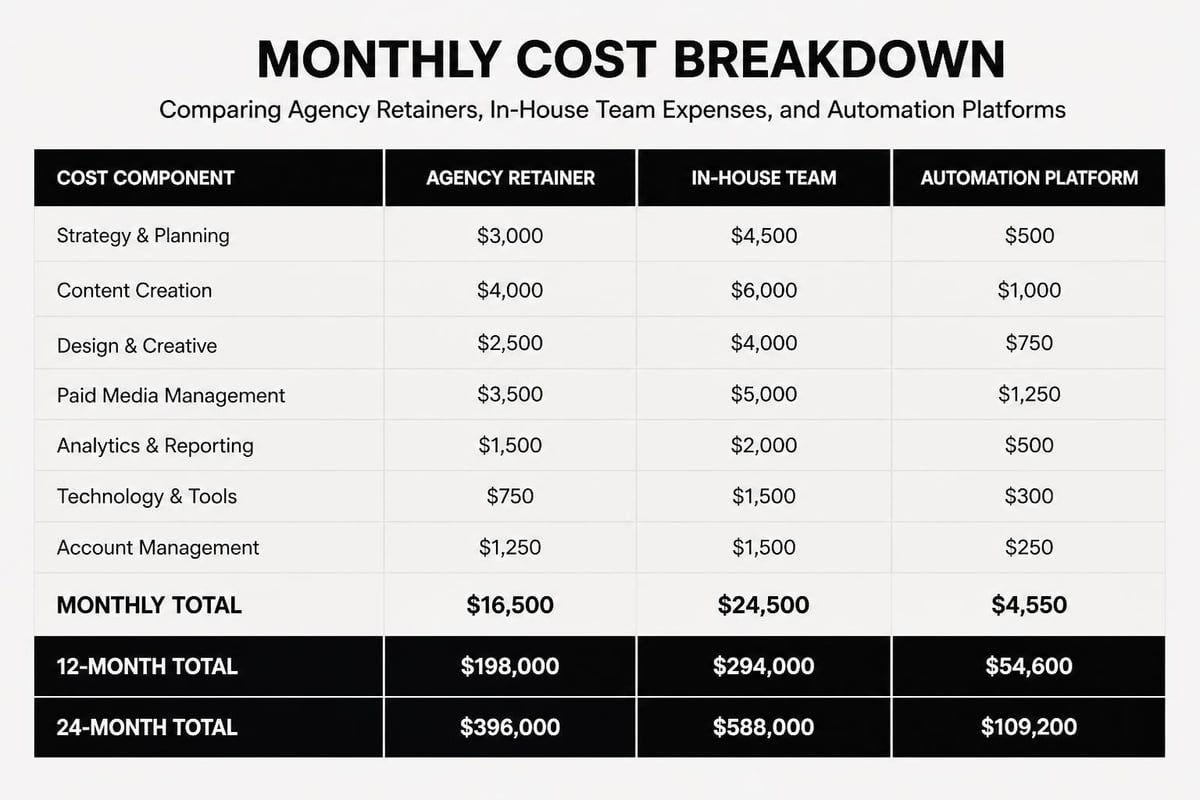
Determining whether is SEO worth it starts with understanding what you'll actually pay. SEO costs vary dramatically based on whether you hire an agency, build an in-house team, or use automation tools.
Agency Pricing Models
Traditional SEO agencies typically charge between $2,500 and $10,000 per month for comprehensive services. Enterprise-level clients often pay $15,000 to $30,000 monthly for competitive industries like finance, legal, or insurance.
What you get at different price points:
- $1,000-$2,500/month: Basic optimization, limited content, small businesses
- $2,500-$5,000/month: Monthly content, technical SEO, link building, local optimization
- $5,000-$10,000/month: Comprehensive strategy, competitive research, advanced link acquisition
- $10,000+/month: Enterprise solutions, multiple locations, highly competitive markets
Most agencies require 6-12 month contracts, meaning your minimum investment ranges from $15,000 to $120,000 before seeing substantial results.
In-House Team Expenses
Building an internal SEO team provides more control but comes with significant overhead. A competent SEO specialist commands $60,000-$90,000 annually, while senior strategists earn $90,000-$140,000 in major markets.
You'll also need content writers ($45,000-$70,000), technical developers for implementation, and potentially link-building specialists. Total annual costs for a small in-house team easily exceed $150,000 when including salaries, benefits, tools, and training.
Automation and Technology Solutions
SEO automation platforms have emerged as cost-effective alternatives, with pricing ranging from $99 to $500 monthly. These tools handle keyword research, content creation, and publishing workflows that traditionally required expensive human resources.
The cost differential is substantial. Where agencies charge $5,000+ monthly and content alone costs $200-$500 per article, automation can reduce per-article costs to $3-$10 while maintaining publication frequency.
Timeline Expectations: When Results Actually Appear
Understanding the timeline helps answer is SEO worth it for businesses evaluating opportunity costs. According to research from Ahrefs, only 5.7% of newly published pages reach Google's top 10 results within one year.
The First Three Months
Expect minimal organic traffic growth during this period. Search engines need time to crawl, index, and evaluate new content. Technical fixes and on-page optimization lay the foundation but rarely drive immediate rankings.
What happens during months 1-3:
- Website audit and technical corrections
- Initial keyword research and content strategy
- First batch of optimized content published
- Basic link building foundation established
- Analytics and tracking implementation
Some businesses abandon SEO during this phase, mistakenly believing the investment isn't working.
Months Four Through Twelve
Rankings begin improving as search engines recognize your site's authority and content quality. Traffic typically increases 20-50% for well-executed strategies, though highly competitive industries may see slower growth.
| Month Range | Expected Traffic Increase | Ranking Improvements |
|---|---|---|
| 4-6 months | 15-30% from baseline | Long-tail keywords ranking |
| 7-9 months | 30-60% from baseline | Medium-difficulty keywords improving |
| 10-12 months | 50-100% from baseline | Some competitive terms entering top 20 |
Companies that persist through the first year often see compounding returns as content libraries expand and domain authority strengthens.
Long-Term Trajectory
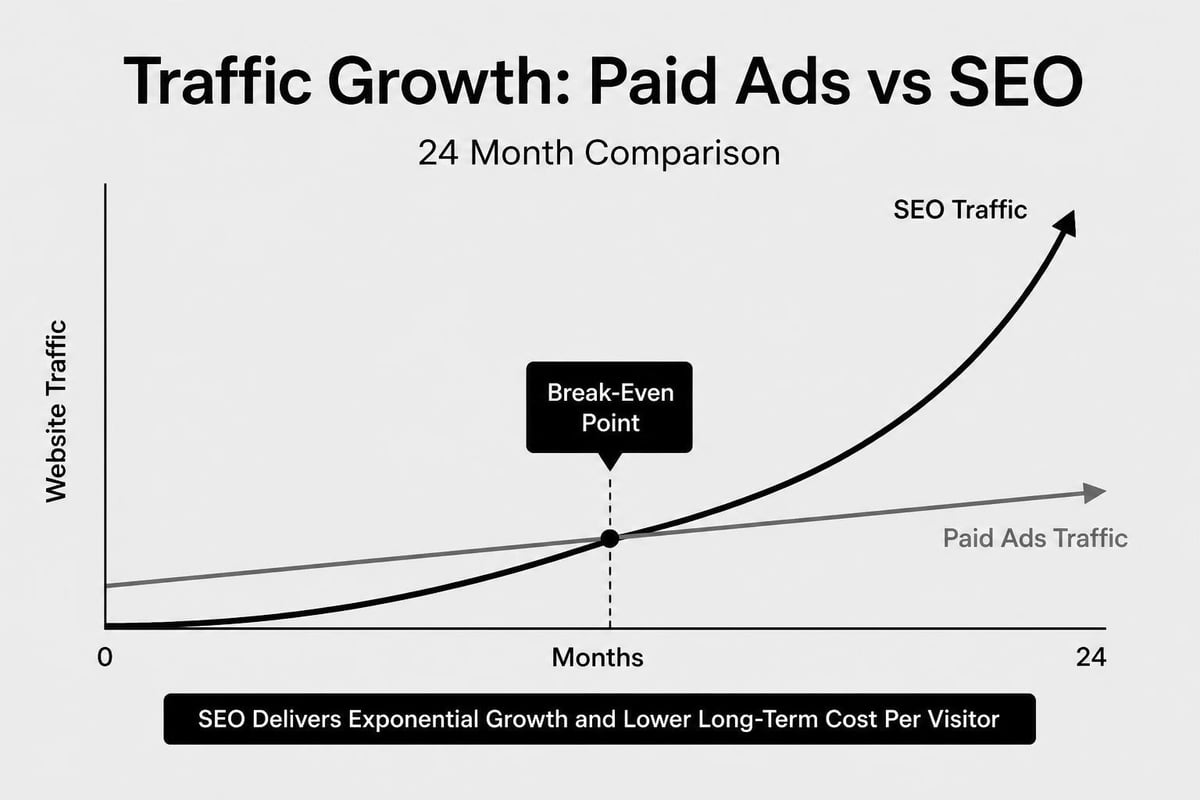
After 18-24 months, successful SEO campaigns generate exponential returns. Established content continues ranking and attracting traffic with minimal ongoing investment compared to paid advertising.
Research on SEO effectiveness shows that mature SEO strategies often deliver 5-10 times the traffic volume compared to initial baseline measurements after two years of consistent effort.
Measuring ROI: Is SEO Worth It for Your Business?
Calculating return on investment requires tracking both costs and revenue attribution. Many businesses undervalue SEO because they fail to properly measure its contribution to sales.
Attribution and Revenue Tracking
Organic search contributes to conversions throughout the customer journey, not just at the final click. A prospect might discover your brand through organic search, return via social media, and convert through direct traffic weeks later.
Key metrics to track:
- Organic sessions and pageviews
- Keyword rankings for target terms
- Conversion rate from organic traffic
- Customer acquisition cost (CAC) from SEO
- Customer lifetime value (LTV) from organic channel
- Assisted conversions and multi-touch attribution
Businesses using AI-powered SEO platforms can track these metrics more efficiently through integrated dashboards and automated reporting.
Comparing SEO ROI to Other Channels
| Marketing Channel | Typical CAC | Sustainability | Time to Results |
|---|---|---|---|
| SEO | $50-$200 | High (compounds over time) | 6-12 months |
| PPC | $80-$300 | Low (stops when budget ends) | Immediate |
| Social Media Ads | $70-$250 | Low (platform dependent) | 1-2 weeks |
| Content Marketing | $100-$400 | Medium-High | 3-6 months |
SEO typically delivers the lowest long-term customer acquisition cost once initial rankings are established. A study comparing marketing channels found that SEO-generated leads convert 14.6% of the time, compared to just 1.7% for outbound marketing methods.
Break-Even Analysis
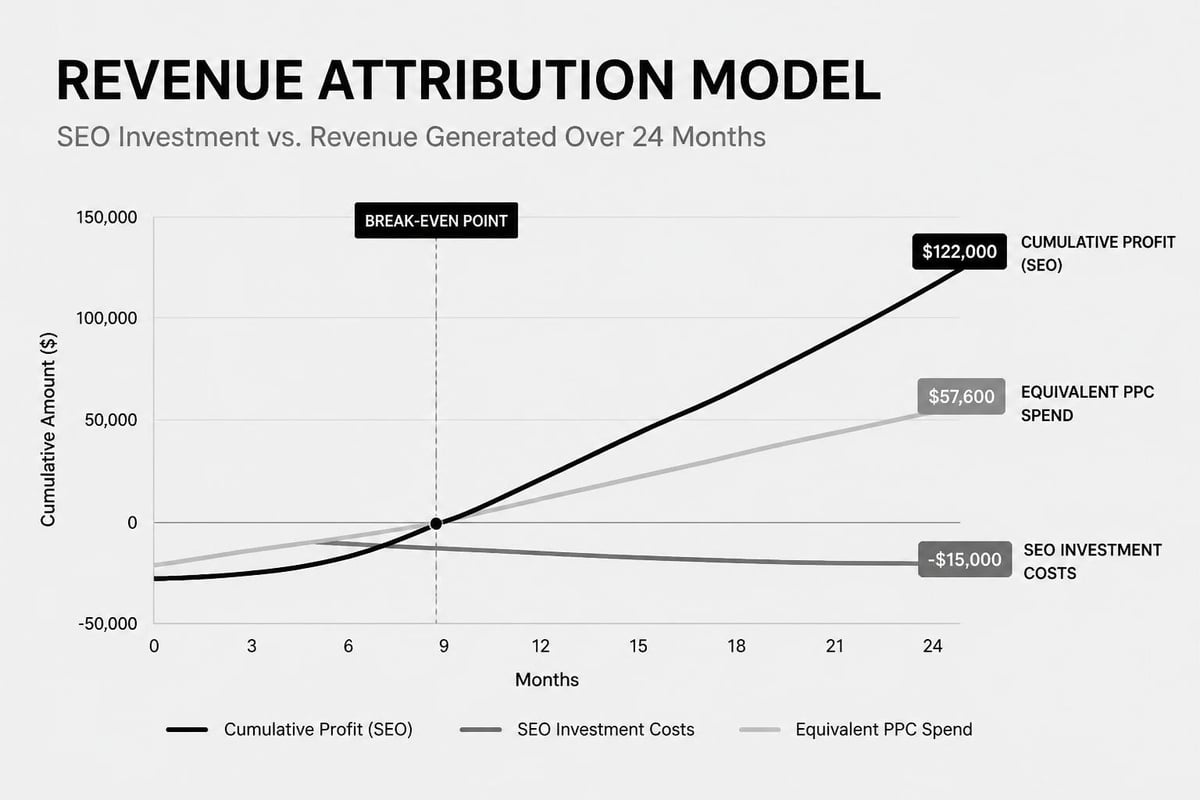
Calculate your break-even point by dividing total SEO investment by the profit margin from organic conversions. For example, if you invest $5,000 monthly in SEO and each customer generates $500 in profit, you need 10 new customers monthly to break even.
Most businesses reach break-even between months 8-14, after which SEO becomes increasingly profitable as traffic compounds without proportional cost increases.
Industries Where SEO Delivers Exceptional Value
The question is SEO worth it varies significantly by business model and industry characteristics. Certain sectors benefit more from organic search than others.
High-Intent Service Businesses
Local service providers like plumbers, lawyers, dentists, and contractors see outstanding SEO returns because searchers have immediate purchase intent. Someone searching "emergency plumber near me" is ready to hire within hours.
These businesses benefit from local SEO strategies that capture high-intent searches within their service area. The customer lifetime value often justifies substantial SEO investment.
E-Commerce and Product-Based Businesses
Dropshipping and e-commerce businesses leverage SEO to compete against larger retailers without matching their advertising budgets. Product-focused content ranks for thousands of long-tail keywords that collectively drive significant revenue.
The challenge lies in product differentiation and avoiding duplicate content issues when selling items available from multiple retailers.
B2B and SaaS Companies
B2B content marketing supported by SEO creates sustained lead generation pipelines. Educational content ranking for industry problems attracts prospects early in the buying cycle, nurturing them through the consideration phase.
SaaS companies particularly benefit because their high customer lifetime values justify longer sales cycles and higher customer acquisition costs. A single enterprise customer acquired through organic search might generate $50,000-$500,000 in revenue over several years.
Content Publishers and Media Sites
Websites monetizing through advertising, affiliates, or subscriptions depend almost entirely on organic traffic. SEO represents their primary acquisition channel, making the question is SEO worth it essentially irrelevant since their business model requires it.
These businesses must publish consistently and at scale. For businesses in this category, RankPill automates the entire content workflow, from keyword research to publishing, allowing you to maintain the content velocity needed to compete. Tools like SEO automation enable publishers to scale content production from dozens to hundreds of articles monthly without proportionally increasing costs.

When SEO Might Not Be Worth the Investment
Honest evaluation requires acknowledging scenarios where SEO delivers poor returns relative to other marketing channels.
Very Short-Term Business Models
Pop-up shops, seasonal businesses operating less than six months, or event-based enterprises rarely see ROI from SEO before their operating window closes. The 6-12 month timeline for meaningful results exceeds their business lifespan.
Better alternatives for short-term businesses:
- Pay-per-click advertising for immediate traffic
- Social media advertising with precise targeting
- Influencer partnerships for rapid awareness
- Email marketing to existing customer lists
Extremely Niche Markets with Minimal Search Volume
If your total addressable market searches for your products less than 100 times monthly, SEO investment likely exceeds the potential return. Ultra-specialized B2B services or hyper-local businesses might find other channels more effective.
Use keyword research tools to verify that sufficient search volume exists before committing to SEO. If monthly searches don't support your revenue goals, reconsider the channel.
Businesses Lacking Implementation Resources
SEO requires consistent execution across months or years. Companies without capacity to implement recommendations, publish content regularly, or maintain technical standards waste their investment.
Success demands either dedicating internal resources, hiring agencies, or automating SEO workflows to ensure consistent execution.
The Evolving SEO Landscape in 2026
Determining is SEO worth it requires understanding how the discipline continues evolving with AI integration and changing search behaviors.
AI Search Engines and Optimization Strategies
ChatGPT, Perplexity, and other AI search engines now handle billions of queries. Getting mentioned by AI requires different optimization approaches than traditional Google SEO.
Key differences in AI search optimization:
- Emphasis on authoritative, cited content
- Structured data for AI comprehension
- Direct, conversational answers to questions
- Entity relationships and knowledge graphs
Generative engine optimization represents the next frontier for businesses seeking visibility across both traditional and AI-powered search platforms.
Traditional Google Updates
Google's algorithm updates in 2025-2026 increasingly reward genuine expertise and user satisfaction over purely technical optimization. The "helpful content" updates penalized sites creating content primarily for search engines rather than humans.
TechRadar's guide on mastering SEO emphasizes user experience, page speed, and mobile optimization as critical ranking factors that extend beyond traditional keyword targeting.
The Role of Automation and AI Tools
Manual SEO execution becomes increasingly inefficient as content demands scale. AI tools for SEO now handle keyword research, content generation, and optimization workflows that previously required extensive human labor.
This democratization means smaller businesses can compete more effectively against enterprises with larger budgets by leveraging technology to multiply their output.
Making the Decision: Your SEO Investment Framework
Use this framework to evaluate whether is SEO worth it for your specific situation.
Step 1: Validate Search Demand
Research whether your target customers actually use search engines to find solutions you provide. Ahrefs' decision flowchart helps determine if your customers search for what you offer.
Check keyword volumes, analyze competitor organic traffic, and verify that search intent aligns with your business model.
Step 2: Calculate Realistic Customer Value
Determine the average lifetime value of a customer acquired through organic search. Multiply your average sale value by purchase frequency and retention timeframe.
Higher customer lifetime values justify more aggressive SEO investment and longer timelines to profitability.
Step 3: Assess Your Competition
Analyze who currently ranks for your target keywords. If the first page consists entirely of established authorities with massive backlink profiles, ranking will require substantial investment and time.
Look for opportunities in long-tail keywords and specialized topics where competition remains manageable.
Step 4: Evaluate Your Capacity
Honestly assess whether you can execute consistently for 12-24 months. SEO rewards persistence and compounds results over time.
Capacity requirements:
- Publishing 4-16 quality articles monthly
- Implementing technical recommendations
- Building quality backlinks regularly
- Monitoring performance and adjusting strategy
- Maintaining website health and speed
If internal capacity is limited, automation platforms or agencies fill the execution gap.
Step 5: Define Success Metrics
Establish clear KPIs beyond just rankings. Track organic sessions, conversion rates, revenue attribution, and customer acquisition costs.
Set milestone expectations at 3, 6, 12, and 24 months to evaluate progress objectively rather than abandoning the strategy prematurely.
The Compound Effect: SEO's Greatest Advantage
The most compelling argument for is SEO worth it lies in its compounding nature. Unlike paid advertising that stops generating results when you stop paying, SEO creates assets that continue producing returns.
Content as Appreciating Assets
Well-optimized content published today can rank and drive traffic for years with minimal additional investment. A single comprehensive guide might generate thousands of visitors monthly for 3-5 years.
Calculate the lifetime value of content by estimating monthly traffic over multiple years. Content costing $500 to produce that generates 500 visitors monthly for three years delivers exceptional ROI compared to equivalent paid traffic costs.
Authority Building and Domain Trust
Each quality article, earned backlink, and positive user signal strengthens your overall domain authority. This compounds future SEO efforts, making subsequent content easier to rank.
Established sites with strong authority rank new content faster and for more competitive terms than new websites, creating a virtuous cycle of increasing returns.
Diminishing Marginal Costs
While initial SEO investment requires substantial setup and foundation building, marginal costs decrease over time. Your 50th article costs the same to produce as your first, but ranks faster and contributes to a larger ecosystem of interlinked content.
This economic characteristic makes SEO increasingly efficient as your program matures, contrasting with advertising channels where costs typically increase as you scale.
Risk Mitigation Strategies
Smart SEO investment includes hedging against algorithm changes, competitive pressure, and market shifts.
Diversification Across Keyword Types
Avoid over-dependence on a small number of high-volume keywords. Distribute content across informational, commercial, and navigational search intents to capture various customer journey stages.
Target a mix of short-tail competitive terms and long-tail specific phrases to balance risk and opportunity.
Multi-Channel Integration
SEO works most effectively as part of an integrated marketing strategy rather than in isolation. Combine organic search with email marketing, social media, and strategic paid advertising.
Use paid search to test messaging and conversion rates before investing in SEO for those topics. Promote top-performing organic content through social channels to accelerate backlink acquisition.
Continuous Adaptation
SEO requires ongoing learning and adaptation as algorithms, competitors, and user behaviors evolve. Allocate 10-15% of your SEO budget to testing new approaches and responding to industry changes.
Monitor algorithm updates, competitive movements, and emerging search platforms to maintain ranking resilience.
Alternative Perspectives on SEO Value
Academic research on SEO awareness reveals that public understanding of search engine optimization varies widely, with many users unaware of how rankings are determined or influenced.
This knowledge gap creates both opportunities and challenges. Sophisticated SEO strategies capture traffic from users who don't understand how search results are curated, but also means algorithm changes can dramatically shift user behaviors.
Studies comparing optimized versus non-optimized content in health information spaces found that SEO optimization doesn't necessarily correlate with content quality, raising questions about whether rankings always serve user interests.
However, analysis of Learning to Rank algorithms suggests that sophisticated search algorithms increasingly recognize quality signals beyond simple optimization tactics, rewarding genuinely helpful content over manipulative SEO.
Final Investment Considerations
Before committing budget, consider these final factors in determining is SEO worth it for your business.
Competitive Moat Building
SEO creates barriers to entry that protect market position. Once you establish strong rankings and authority, competitors must invest substantially more to displace you.
This defensive value extends beyond immediate ROI, protecting market share and reducing long-term customer acquisition costs.
Asset Value in Business Valuation
Established organic traffic significantly increases business valuation during acquisition or investment evaluations. Predictable, sustainable traffic sources command premium multiples compared to paid-traffic-dependent businesses.
Many business brokers value organic traffic at 3-5x monthly profit, making SEO investment directly additive to enterprise value.
Learning and Capability Building
SEO expertise becomes a permanent organizational capability. Knowledge about customer search behaviors, content creation, and technical optimization remains valuable even if specific tactics evolve.
This intellectual capital benefits other marketing initiatives beyond search engine visibility.
The question is SEO worth it ultimately depends on your industry, timeline, execution capacity, and customer acquisition economics. For most businesses with sufficient search volume and customer lifetime values above $200, SEO delivers exceptional long-term ROI despite requiring patience through the initial 6-12 month ramp period. The compounding nature of organic rankings, decreasing marginal costs, and business asset value make SEO one of the most efficient customer acquisition channels when executed consistently. If you're ready to scale organic traffic without the agency price tag, RankPill automates keyword research, content creation, and publishing to grow your search visibility on autopilot while you focus on serving customers.
Unlock Traffic on Autopilot
Grow organic traffic on autopilot. RankPill will research, write, optimize, and publish articles to your website daily.
 WordPress