Dropshipping SEO: Complete Guide for 2026

Modest Mitkus · May 27, 2026
Dropshipping stores face unique challenges when it comes to search engine optimization. Unlike traditional e-commerce businesses with exclusive products, dropshippers often compete with hundreds of other stores selling identical items from the same suppliers. This makes dropshipping SEO both more challenging and more critical for success. Understanding how to differentiate your store, create unique value, and optimize for search engines can mean the difference between a profitable business and one that disappears into obscurity. The strategies outlined in this guide will help you build sustainable organic traffic even in highly competitive markets.
Understanding the Dropshipping SEO Landscape
Dropshipping SEO requires a fundamentally different approach than standard e-commerce optimization. When you're selling products that appear on dozens or hundreds of competing websites, search engines face a difficult challenge in determining which site deserves top rankings.
The core challenge stems from duplicate content. Most dropshippers copy manufacturer descriptions directly onto their product pages, creating identical content across multiple domains. Google's algorithms detect this duplication and typically favor the original source or the most authoritative domain, pushing newer dropshipping stores to lower positions.
Key Differences in Dropshipping SEO Strategy
Traditional e-commerce sites often have proprietary products, brand recognition, and exclusive content that naturally differentiate them. Dropshipping stores must create this differentiation artificially through strategic optimization.
Critical factors that set dropshipping SEO apart:
- Need for completely rewritten product descriptions
- Higher emphasis on niche-specific content marketing
- Greater importance of technical SEO fundamentals
- Requirement for stronger brand positioning
- Dependency on alternative traffic sources during growth phase
One successful approach involves building topical authority in specific niches rather than trying to rank for every product you carry. This strategy, detailed in successful dropshipping SEO case studies, focuses on becoming the go-to resource for particular product categories.

Technical SEO Foundations for Dropshipping Stores
Before diving into content strategy, your technical infrastructure must support search engine crawling and indexing. Technical issues can completely undermine even the best content efforts.
Site speed stands as one of the most critical technical factors. Dropshipping stores often use platforms like Shopify or WooCommerce with multiple apps and plugins that slow page load times. Every additional second of load time correlates with decreased rankings and higher bounce rates.
Essential Technical Optimizations
| Technical Element | Impact on Rankings | Implementation Priority |
|---|---|---|
| Page Speed | High | Critical |
| Mobile Responsiveness | High | Critical |
| SSL Certificate | Medium | Critical |
| XML Sitemap | Medium | High |
| Structured Data | Medium | High |
| URL Structure | Low-Medium | Medium |
Your URL structure should be clean and descriptive. Avoid automatically generated URLs with product IDs or random characters. Instead, use readable URLs that include your target keywords: /products/wireless-bluetooth-headphones rather than /products/prod-12345.
Implementing structured data markup helps search engines understand your product pages. Schema.org markup for products should include price, availability, reviews, and ratings. This enables rich snippets in search results, which significantly improve click-through rates even when you don't rank first.
The Shopify blog strategy approach emphasizes the importance of clean technical foundations before scaling content production.
Creating Unique Product Content at Scale
The single biggest challenge in dropshipping SEO is creating unique, valuable product descriptions when you're selling the same items as competitors. Simply rewriting manufacturer descriptions isn't enough-you need to add genuine value.
Content Differentiation Strategies
Start by understanding your target customer better than competitors do. Rather than writing generic descriptions that could apply to any buyer, craft content that speaks directly to your specific niche audience.
Effective approaches for unique product content:
- Customer pain point focus (address specific problems your niche faces)
- Comparison frameworks (show how products stack against alternatives)
- Use case scenarios (demonstrate real-world applications)
- Detailed specification breakdowns (go deeper than manufacturer specs)
- FAQ sections (answer questions competitors ignore)
For stores with hundreds or thousands of products, manual writing becomes impractical. This is where automation becomes essential. RankPill's AI content writer generates SEO-optimized product descriptions at scale, creating unique content that matches search intent while maintaining your brand voice across thousands of product pages.
The key is ensuring each product page provides information not readily available elsewhere. This might include compatibility guides, sizing charts specific to your audience, installation instructions, or maintenance tips. According to research on creating unique content for generic products, adding even 200-300 words of unique, helpful content can significantly improve rankings.
Keyword Research for Dropshipping Products
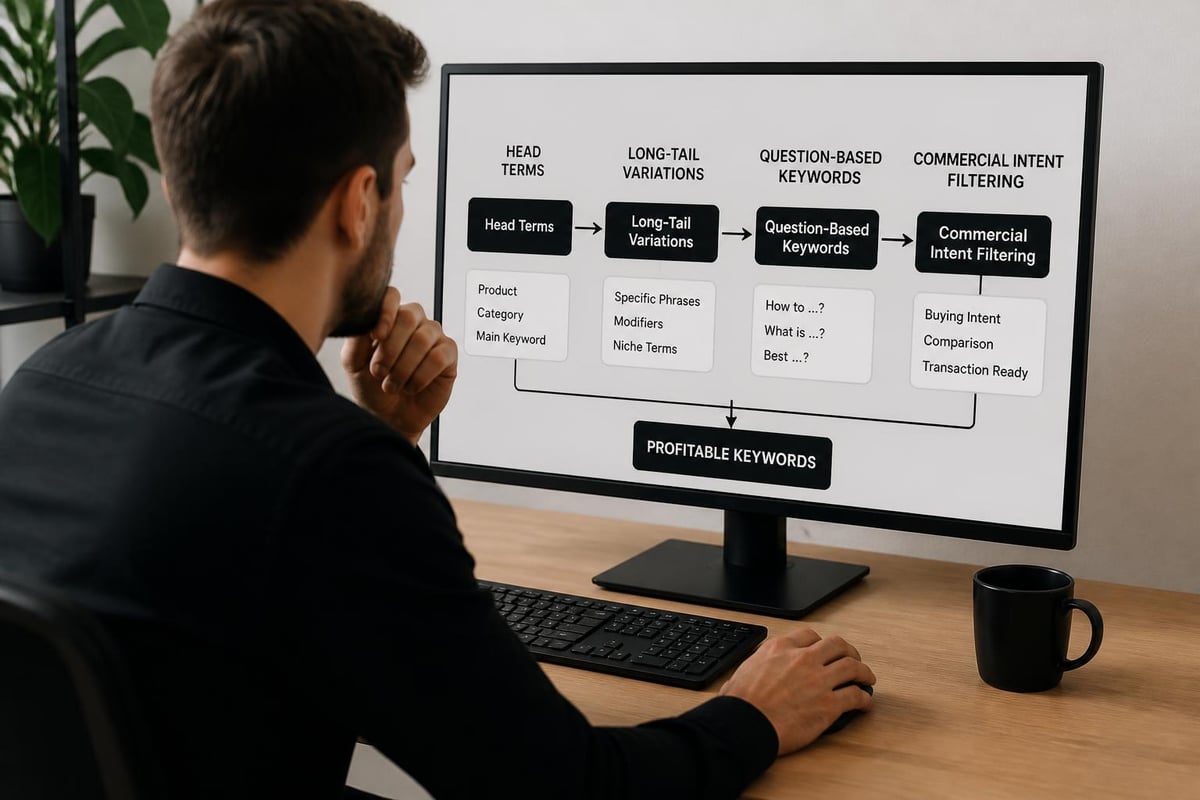
Generic product keywords like "wireless earbuds" or "yoga mat" typically have overwhelming competition from established brands and retailers. Successful dropshipping SEO requires targeting more specific, long-tail keywords where you can realistically rank.
The strategy focuses on informational and problem-solving keywords rather than purely transactional ones. These keywords attract users earlier in the buying journey and face less direct competition from major retailers.
Long-Tail Keyword Targeting
- Identify your core product categories
- Research common customer questions and problems
- Find low-competition variations with commercial intent
- Map keywords to specific content types
- Prioritize based on difficulty and conversion potential
Example keyword progression for a fitness dropshipping store:
| Keyword Type | Example | Competition | Strategy |
|---|---|---|---|
| Head Term | "yoga mat" | Extreme | Avoid initially |
| Mid-Tail | "thick yoga mat for bad knees" | High | Target with guides |
| Long-Tail | "best 15mm yoga mat for knee pain during hot yoga" | Medium | Product page target |
| Question-Based | "how thick should yoga mat be for knee problems" | Low | Blog content |
Using specialized tools helps identify opportunities competitors miss. The approach outlined in AI keyword research methods can uncover thousands of long-tail variations that individually have low search volume but collectively drive significant traffic.
Focus on keywords that indicate buying intent but include specificity that filters out casual browsers. Terms like "best," "review," "vs," and "for [specific use case]" often indicate users closer to purchase decisions.
Content Marketing Strategy for Dropshipping Sites
Product pages alone won't build the authority needed to compete in dropshipping SEO. A comprehensive content marketing strategy creates the topical relevance and backlink opportunities that boost your entire domain.
Blog content serves multiple purposes: it targets informational keywords, establishes expertise, generates backlinks, and creates entry points for users who later convert on product pages. The strategy requires consistent publishing of genuinely helpful content.
Content Types That Drive Dropshipping Traffic
Buying guides remain the most effective content type for dropshipping stores. These comprehensive articles help users understand product categories, compare options, and make informed decisions. They naturally link to your product pages while targeting high-value keywords.
Comparison articles pit similar products against each other, allowing you to rank for "Product A vs Product B" searches while showcasing items you carry. These articles attract users in the final decision-making phase.
How-to tutorials demonstrate product usage, solve common problems, and establish your brand as helpful rather than purely transactional. They build trust and often generate organic backlinks from users who find them valuable.
The digital marketing automation approach enables consistent content production without overwhelming your team. Publishing frequency matters significantly-sites publishing 16+ posts monthly see 3.5x more traffic than those publishing 0-4 posts.
Common mistakes include creating thin content that barely exceeds 300 words or writing for keywords without considering user intent. According to Shopify dropshipping SEO best practices, successful stores publish comprehensive guides averaging 1,500-2,500 words that thoroughly address user questions.
Link Building for Dropshipping Authority
Backlinks remain one of Google's strongest ranking signals. For dropshipping stores competing against established retailers, building quality links becomes essential for improving domain authority and product page rankings.
The challenge lies in earning links when you don't manufacture products, conduct original research, or have unique brand stories. This requires creative outreach and strategic content creation.
Effective Link Building Tactics
Guest posting in your niche remains viable when done authentically. Rather than targeting generic marketing blogs, focus on niche-specific publications where your expertise adds genuine value. A fitness dropshipper should target fitness blogs, workout communities, and health publications.
Scalable link building approaches:
- Create original data or surveys in your niche
- Develop free tools or calculators related to your products
- Build relationships with micro-influencers for organic mentions
- Participate authentically in niche communities and forums
- Leverage supplier relationships for partnership content
Resource page link building works particularly well for dropshipping stores. Many websites maintain curated lists of helpful resources in specific niches. Reaching out with genuinely useful content (comprehensive guides, calculators, comparison tools) can earn placements on these high-authority pages.
The broken link building strategy identifies dead links on relevant websites and offers your content as a replacement. This provides value to webmasters while securing quality backlinks.
Understanding the balance between organic search vs paid search helps you invest appropriately in SEO while maintaining short-term revenue through paid channels.
Optimizing Category and Collection Pages
Category pages represent significant ranking opportunities often overlooked by dropshipping stores. These pages can target broader keywords than individual product pages while showcasing your entire inventory in specific niches.
The mistake many dropshippers make is creating category pages with only product grids and minimal text. Search engines need substantial unique content to understand what the page offers and why it deserves rankings.
Category Page Optimization Framework
Each category page should include 500-1,000 words of unique content that introduces the category, explains product selection criteria, and addresses common buyer questions. This content should appear above or alongside product listings.
- Write compelling category descriptions with target keywords
- Add filtering and sorting options with SEO-friendly URLs
- Include customer reviews and ratings when available
- Create unique meta titles and descriptions
- Build internal links from blog content to category pages
Category page content elements:
- Introduction to the product category (150-200 words)
- Buyer's guide section (300-400 words)
- FAQ section addressing common questions
- Comparison framework or selection criteria
- User-generated content when possible
Internal linking from blog posts to category pages passes authority and helps search engines understand your site architecture. When you publish a buying guide about yoga equipment, linking to your yoga mat category page creates a natural relevance connection.
According to SEO strategies for dropshipping with non-unique products, well-optimized category pages often rank for competitive mid-tail keywords that individual product pages can't capture.
Local SEO Considerations for Dropshipping
While dropshipping typically operates without physical inventory or locations, local SEO strategies can still apply when targeting specific geographic markets. This becomes particularly relevant for stores focusing on regional niches or those wanting to rank for "near me" searches.
The approach requires creating location-specific content and optimizing for geographic keywords even without a physical storefront. This works particularly well for dropshippers targeting products with regional demand variations.
Geographic Targeting Without Physical Presence
Creating location-specific landing pages allows targeting keywords like "yoga equipment in Austin" or "home gym equipment Los Angeles" even without local inventory. These pages combine local keyword targeting with your standard product offerings.
Content should acknowledge your dropshipping model while emphasizing fast shipping to the specific region. Transparency builds trust-you can highlight shipping times, local shipping partners, or regional preferences without pretending to have a physical location.
| Strategy | Implementation | Benefit |
|---|---|---|
| City-Specific Pages | Create landing pages for major cities | Capture local searches |
| Regional Content | Write guides addressing regional needs | Build topical relevance |
| Local Link Building | Partner with regional bloggers | Geographic authority signals |
| Shipping Transparency | Highlight regional shipping details | Build trust |
The strategy works best for niches where local considerations matter (climate-specific products, regional hobbies, location-based needs). A surfing equipment dropshipper benefits more from local SEO than a generic electronics store.
Measuring and Tracking Dropshipping SEO Performance
Effective dropshipping SEO requires continuous monitoring and adjustment based on performance data. Without proper tracking, you're optimizing blindly and can't identify what's working or where to focus efforts.
Google Analytics and Search Console provide foundational insights, but dropshipping stores need additional metrics specific to their business model. Traffic alone doesn't indicate success-you need to track rankings, conversions, and revenue attribution.
Critical SEO Metrics for Dropshipping
Organic traffic growth measures overall SEO momentum but must be segmented by page type. Track traffic to product pages separately from blog content to understand which optimization efforts drive conversions versus top-of-funnel awareness.
Keyword rankings for target terms show whether your optimization efforts move pages up in search results. Track both branded and non-branded keywords, focusing particularly on commercial intent terms that drive revenue.
Organic conversion rate reveals whether SEO traffic converts at acceptable rates. Low conversion rates despite growing traffic indicate a targeting problem-you're ranking for keywords that attract non-buyers.
- Average session duration for organic traffic
- Pages per session from search visitors
- Product page bounce rates
- Category page engagement metrics
- Blog-to-product page flow rates
Revenue per organic session helps calculate ROI on SEO investments. This metric becomes particularly important for dropshipping stores where margins are typically tighter than traditional retail.
The AI and SEO integration enables automated tracking and reporting, allowing you to monitor hundreds of keywords and pages without manual spreadsheet management.
Avoiding Black-Hat SEO Traps in Dropshipping
The competitive nature of dropshipping tempts some store owners toward manipulative SEO tactics that violate search engine guidelines. While these techniques might show short-term gains, they inevitably result in penalties that can destroy your entire business.
Common black-hat tactics in the dropshipping space include keyword stuffing, cloaking, link schemes, and content automation that produces nonsensical text. Recent research on black-hat SEO in e-commerce scams reveals how these tactics not only risk penalties but damage the entire industry's credibility.
White-Hat Alternatives to Common Shortcuts
Instead of buying links from link farms, focus on creating genuinely valuable content that earns natural backlinks. This takes longer but builds sustainable authority that won't disappear after an algorithm update.
Rather than spinning or copying content, invest in unique descriptions that provide genuine value. Even AI-generated content should be edited, fact-checked, and enhanced with your expertise before publishing.
Sustainable practices that replace risky shortcuts:
- Quality content over keyword-stuffed pages
- Natural link building over purchased link packages
- Transparent shipping and return policies over hidden terms
- Genuine reviews over fake testimonials
- White-hat automation over manipulative scripts
The comprehensive SEO guide for dropshipping emphasizes sustainable growth strategies that build long-term business value rather than quick wins that evaporate.
Optimizing for AI Search and Voice Queries
Search behavior continues evolving as users increasingly rely on AI assistants, voice search, and conversational queries. Dropshipping SEO strategies must adapt to these emerging search patterns to maintain visibility.
AI-powered search engines like ChatGPT and Perplexity pull information from indexed content to answer user queries. Getting cited by these systems requires different optimization than traditional Google rankings. The Perplexity SEO approach focuses on clear, authoritative content that AI systems can confidently cite.
Conversational Keyword Optimization
Voice searches tend to be longer and more conversational than typed queries. Users ask complete questions rather than using abbreviated keyword phrases. Optimizing for these queries requires natural language content that directly answers common questions.
Create FAQ sections that mirror how people actually speak. Instead of targeting "best yoga mat thick knees," optimize for "what's the best yoga mat if I have bad knees and need extra cushioning?"
Structured data becomes even more critical for AI search visibility. Properly marked-up content helps AI systems extract and present your information accurately when answering user queries.
The generative engine optimization strategy helps ensure AI systems recognize your content as authoritative and citation-worthy, expanding your visibility beyond traditional search results.
Scaling Your Dropshipping SEO Efforts
As your store grows from dozens to hundreds or thousands of products, manual SEO optimization becomes impossible. Scaling requires systematic processes and automation that maintain quality while increasing output.
Template-based optimization provides consistency across product pages while allowing customization for different categories. Create content templates that include all necessary SEO elements-unique descriptions, specifications, benefits, FAQs, and related products-then customize for each item.
Automation Without Sacrificing Quality
The key challenge in scaling dropshipping SEO involves maintaining content quality while increasing production volume. Poor automation produces thin, duplicate content that harms rather than helps rankings.
Scalable SEO processes:
- Develop comprehensive content templates for each product category
- Create systematic keyword research workflows
- Implement automated internal linking structures
- Build category-level content hierarchies
- Establish quality control checkpoints before publishing
Modern auto SEO software can handle keyword research, content generation, and optimization at scale while maintaining the quality standards search engines reward. The difference between effective automation and harmful automation lies in maintaining editorial oversight and ensuring content serves users rather than just search engines.
Batch processing allows efficient optimization of similar products. Rather than optimizing items individually, group similar products and create variations on proven content frameworks. This dramatically reduces time investment while maintaining uniqueness.
Successful dropshipping SEO in 2026 requires strategic differentiation, technical excellence, and consistent content production that builds authority in competitive markets. The stores that thrive combine unique value propositions with systematic optimization and sustainable link building strategies. RankPill automates the most time-intensive aspects of SEO-from keyword research to content creation to daily publishing-allowing dropshipping stores to build organic traffic consistently without dedicating entire teams to content production.
Unlock Traffic on Autopilot
Grow organic traffic on autopilot. RankPill will research, write, optimize, and publish articles to your website daily.