
Keyword Gap Tool: Find SEO Opportunities Competitors Miss

Modest Mitkus
September 25, 2026
Competitive intelligence separates growing brands from stagnant ones. While your competitors rank for hundreds of valuable keywords, you might be completely blind to the opportunities sitting right in front of you. A keyword gap tool solves this problem by revealing exactly which keywords drive traffic to competitor sites but not to yours. This analysis transforms your content strategy from guesswork into a data-driven roadmap, showing you precisely where to invest your resources for maximum SEO impact.
What Is a Keyword Gap Tool and Why It Matters
A keyword gap tool is a competitive analysis platform that compares your website's keyword rankings against competitor domains to identify search terms where rivals rank but you don't. Think of it as an X-ray vision for SEO, revealing the invisible opportunities that competitors are already monetizing while you're missing out.
The tool works by analyzing search engine results pages (SERPs) across thousands or millions of keywords, then categorizing them into distinct groups:
- Competitor-only keywords: Terms where competitors rank but you have no presence
- Shared keywords: Terms where both you and competitors appear in results
- Your unique keywords: Terms where you rank but competitors don't
- Missing keywords: High-value terms where neither you nor competitors currently rank
This segmentation creates a clear competitive landscape. Instead of randomly generating content ideas or relying on gut instinct, you're working from actual market data that shows proven demand.
The Business Value of Gap Analysis
Every keyword your competitor ranks for represents traffic they're capturing and you're not. When Search Engine Journal's keyword research guide analyzes competitive opportunity discovery, they emphasize that gap analysis delivers faster results than traditional keyword research because you're targeting terms with validated commercial intent.
Consider a practical example: Your competitor ranks on page one for "automated content scheduling" with 2,400 monthly searches. You don't rank at all for that term. That's not just a keyword gap, it's a revenue gap. Every month, thousands of potential customers see their brand instead of yours.

How Keyword Gap Tools Actually Work
The mechanics behind gap analysis combine crawling technology, search engine data, and ranking algorithms. Most tools connect to extensive keyword databases containing billions of search queries, historical ranking data, and estimated search volumes.
When you input your domain and competitor URLs, the tool queries its database to build ranking profiles for each site. It identifies which keywords trigger each domain to appear in search results, at what position, and with what estimated traffic value.
| Analysis Type | What It Reveals | Strategic Application |
|---|---|---|
| Missing keywords | Competitor ranks, you don't | Priority content creation targets |
| Weak keywords | You rank poorly, competitor ranks well | Optimization and improvement opportunities |
| Shared keywords | Both rank competitively | Competitive battlegrounds requiring differentiation |
| Unique strengths | You rank, competitor doesn't | Leverage points and authority topics |
The tool then calculates keyword difficulty, search volume, cost-per-click estimates, and SERP features to help you prioritize which gaps to address first. This data-driven approach means you're not creating content in a vacuum; you're filling specific, measurable gaps in your market presence.
Database Quality Determines Accuracy
Not all keyword gap tools access the same quality of data. The most reliable platforms refresh their keyword databases daily, tracking ranking fluctuations in real time. Others update weekly or monthly, potentially missing trending opportunities or showing outdated competitive positions.
When evaluating tools, consider how they source search volume data. Some use direct search engine APIs, while others model estimates based on clickstream data or search patterns. Google's developer documentation on search trends offers insight into how official search data differs from third-party estimates.
Finding the Right Competitors to Analyze
Your biggest business competitor isn't necessarily your most relevant SEO competitor. A keyword gap tool becomes significantly more valuable when you analyze the right domains, not just the obvious ones.
Start by identifying three types of competitive domains:
- Direct business competitors: Companies offering the same products or services
- SERP competitors: Sites that rank for your target keywords regardless of business model
- Aspirational competitors: Larger sites in your niche with keyword portfolios you want to replicate
SERP-Based Competitor Discovery
The most effective approach combines manual research with tool-powered discovery. Search for your primary keywords and note which domains consistently appear in the top 10 results. These SERP competitors often include informational sites, publishers, or affiliate platforms that aren't direct business rivals but control the search visibility you need.
Many keyword gap tools include automatic competitor suggestion features. Enter your domain, and the tool identifies sites with similar keyword profiles or content focus. This discovery process often reveals competitors you didn't know existed, particularly in adjacent markets or emerging content categories.
When analyzing best SEO automation tools, for instance, your SERP competitors might include software review sites, marketing blogs, and SaaS comparison platforms alongside direct tool vendors. Each competitor type reveals different keyword opportunities aligned with different search intents.
Interpreting Gap Analysis Results
Raw keyword lists quickly become overwhelming. A typical gap analysis between two established domains might return 10,000 or more keyword opportunities. The skill lies in filtering, prioritizing, and translating that data into actionable strategy.
Start by applying filters based on your specific criteria:
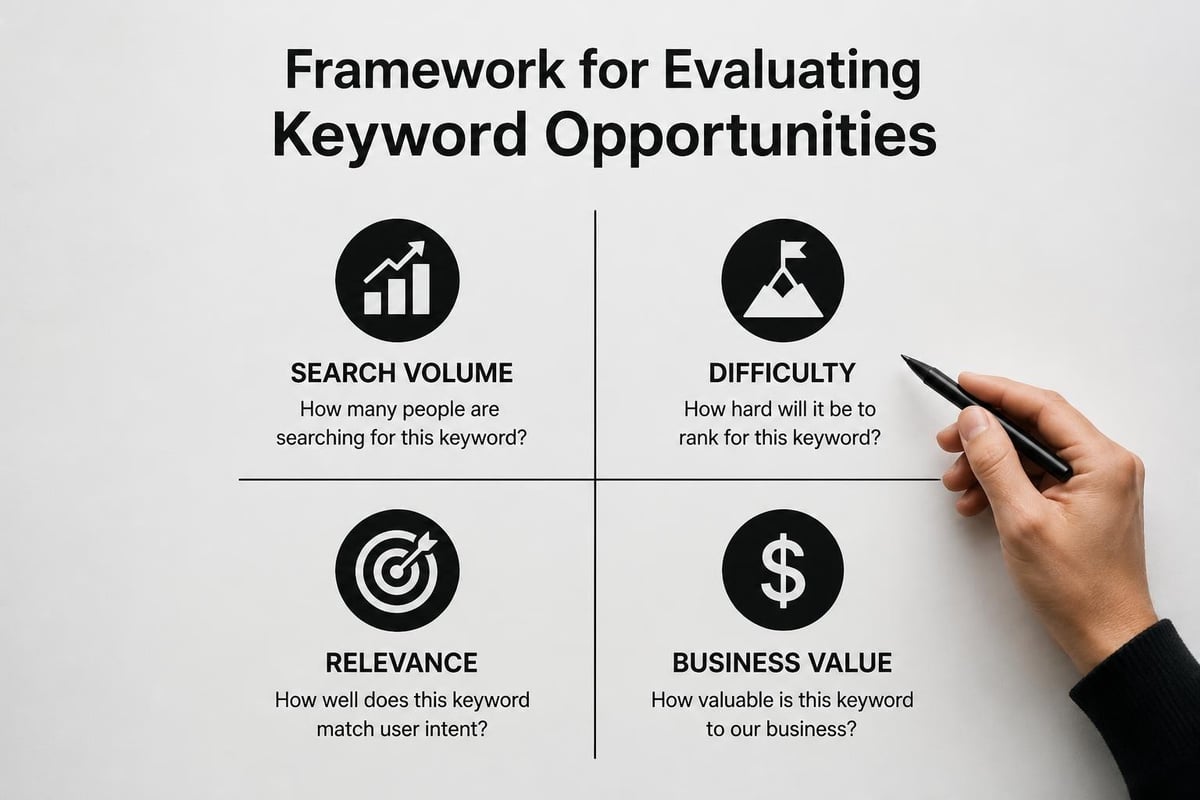
- Search volume threshold: Set minimum monthly searches to focus on meaningful traffic
- Keyword difficulty range: Target gaps within your domain authority's competitive range
- SERP feature presence: Identify keywords triggering featured snippets, local packs, or video results
- Commercial intent: Filter for transactional, commercial, or informational queries based on current goals
Question-Based Keywords Reveal Content Gaps
Pay special attention to question keywords in your gap analysis. When competitors rank for "how to," "what is," or "why does" queries that you don't, they're capturing audience attention at critical learning stages. These informational searches often represent top-of-funnel opportunities that build authority and eventually drive conversions.
According to HubSpot's content gap analysis guide, question-based keywords should form the foundation of educational content strategies because they directly match user search behavior and intent.
Building a Content Strategy From Gap Data
A keyword gap tool doesn't just identify opportunities; it provides a ready-made content calendar. Transform your gap analysis into a prioritized action plan by organizing keywords into content clusters and topics.
Group related keywords into thematic buckets. If your gap analysis reveals 50 keywords around "SEO reporting," don't create 50 separate articles. Instead, plan a comprehensive guide covering the topic cluster with internal links between related pieces.
Content Type Mapping
Different keyword types demand different content formats:
- Tutorial keywords ("how to set up...") → Step-by-step guides with screenshots
- Comparison keywords ("X vs Y") → Feature comparison articles with tables
- Definition keywords ("what is...") → Comprehensive explainer content
- Tool keywords ("best X for Y") → Curated lists with real evaluation criteria
This mapping ensures your content not only targets the right keywords but also satisfies search intent, which directly impacts ranking ability.
When planning content for automated SEO strategies, you'd identify whether searchers want conceptual understanding, implementation guidance, tool recommendations, or technical specifications. Your gap analysis reveals which intent variations competitors cover and which remain open opportunities.
Advanced Gap Analysis Techniques
Basic gap analysis compares single domains, but advanced techniques reveal deeper competitive intelligence. Multi-competitor analysis stacks several competitor domains against your own, showing keywords where multiple rivals rank but you don't. These multi-competitor gaps often indicate established search demand with proven traffic potential.
Historical Gap Tracking
Monitor how your keyword gaps change over time. Set up monthly gap analyses using the same competitor set, tracking which gaps you've successfully closed and which new ones have emerged. This longitudinal view shows whether your content strategy is gaining competitive ground or losing it.
Historical tracking also reveals seasonal patterns. A gap that appears in October might represent a seasonal opportunity that won't matter in March. Conversely, persistent year-round gaps indicate fundamental content deficiencies requiring strategic attention.
| Metric | What to Track | Strategic Insight |
|---|---|---|
| Gap closure rate | Keywords added to your rankings from previous gap list | Content strategy effectiveness |
| New gaps emerging | Competitor keywords added since last analysis | Competitive content velocity |
| Shared keyword movement | Ranking position changes on shared terms | Head-to-head competitive performance |
| Gap value growth | Total estimated traffic of unaddressed gaps | Opportunity cost of inaction |
Intent-Filtered Gap Analysis
Advanced practitioners filter gaps by specific search intent. Separate transactional gaps from informational ones. If you're launching a new product line, prioritize commercial and transactional keyword gaps. If you're building domain authority, focus on informational and educational gaps where you can establish thought leadership.
Bing Webmaster Tools' keyword research documentation explains how intent signals within keyword structure help you categorize and prioritize opportunities based on business objectives rather than just search volume.
Common Keyword Gap Tool Mistakes
Even with powerful tools, execution errors undermine results. The most frequent mistake is treating all gaps equally. Not every keyword your competitor ranks for deserves your attention. Some gaps exist because the keyword isn't relevant to your business model, serves low-value traffic, or falls outside your expertise area.
Ignoring Your Own Strengths
Gap analysis naturally focuses on what you're missing. However, your unique keyword strengths, terms where you rank but competitors don't, deserve equal strategic attention. These represent your defensible competitive advantages. Double down on these areas with additional content, internal linking, and backlink building to strengthen your authority moat.
The Similarweb guide to content gap analysis emphasizes balancing offensive gap-filling with defensive strength-building for sustainable competitive positioning.
Another common error is analysis paralysis. Teams run comprehensive gap analyses, generate massive spreadsheets, then fail to execute because the opportunity list feels overwhelming. Set clear prioritization rules before running analysis. Commit to addressing your top 10 or 20 gaps before expanding the scope.
Integrating Gap Analysis Into SEO Workflow
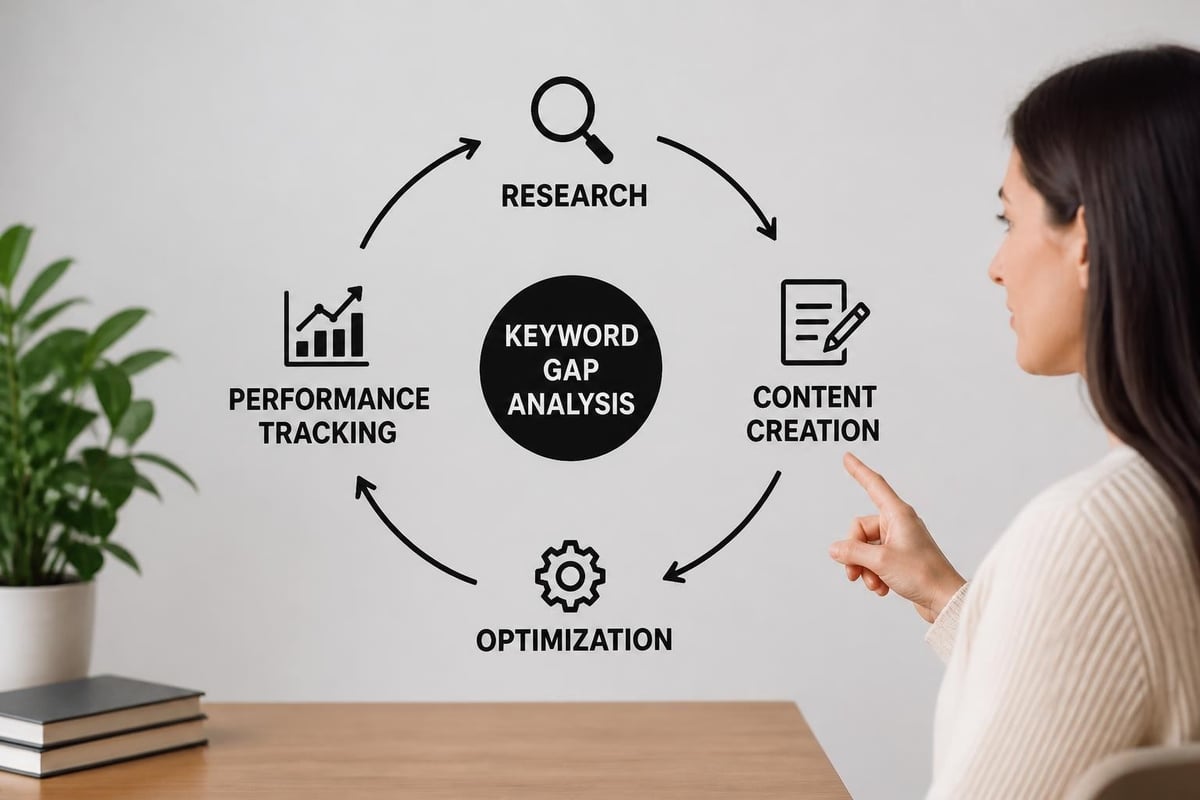
Keyword gap analysis shouldn't be a one-time exercise. Build it into your regular SEO workflow as a recurring strategic checkpoint. Quarterly gap reviews ensure you're continuously identifying new opportunities as competitors evolve their content strategies and as search demand shifts.
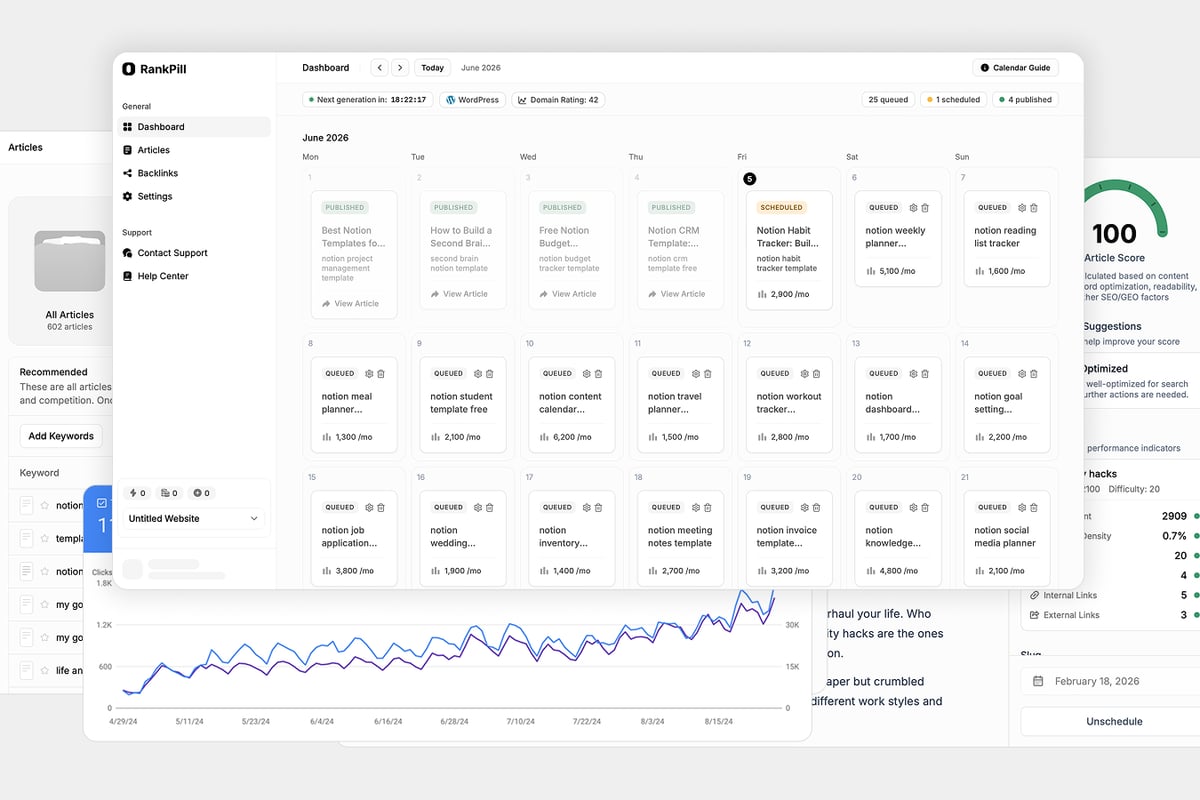
For teams using AI keyword research and automation platforms, gap analysis provides the strategic direction while automation handles execution at scale. You identify which competitor gaps offer the highest value, then deploy automated content creation to systematically close those gaps without manual bottlenecks.
RankPill's automated SEO services excel at this integration, combining keyword research with daily content publishing to systematically address competitive gaps. Instead of manually creating content for each identified opportunity, automation enables you to close dozens of keyword gaps simultaneously while maintaining quality and relevance.
Cross-Functional Gap Collaboration
Share gap analysis findings beyond the SEO team. Product teams learn which features competitors emphasize that you don't. Sales teams discover which objections or comparisons prospects are researching. Customer success identifies which support topics competitors address that you haven't documented.
This cross-functional application transforms a pure SEO tool into a strategic business intelligence asset. Gap data informs product roadmaps, sales enablement materials, and customer education initiatives, not just content calendars.
Measuring Gap Analysis ROI
Track specific metrics to validate whether gap-closing efforts deliver results. Monitor keyword rankings for previously identified gaps, measuring how many move from "not ranking" to page 2, page 1, or top 3 positions over 30, 60, and 90-day periods.
Beyond rankings, track organic traffic increases attributable to gap-focused content. Use analytics segments to isolate traffic from keywords that appeared in your original gap analysis. This direct attribution shows whether closing gaps translates to actual visitor growth.
Conversion tracking completes the ROI picture. If you close 50 high-value keyword gaps but those pages don't convert, you've built traffic without business impact. Align gap selection with conversion potential from the start, prioritizing keywords that attract your ideal customer profile.
Competitive Share of Voice
Calculate your share of voice across high-priority keyword clusters. If you and three competitors all target the same 100 keywords, what percentage of total visibility do you control? Track how gap-closing efforts shift your competitive share month over month.
According to Content Marketing Institute's framework for finding content gaps, share of voice metrics translate keyword rankings into market position, showing whether you're gaining or losing ground in your competitive landscape.
Keyword Gap Tools vs. Traditional Research
Traditional keyword research starts with seed keywords, expands through suggestion tools, and filters based on metrics. Gap analysis flips this approach, starting with proven competitor success and working backward to identify why those keywords work.
Both methods have value, but gap analysis offers distinct advantages:
- Proven demand: Competitor rankings validate that keywords drive traffic
- Competitive context: You see exactly how high the bar is for ranking
- Faster prioritization: Competitor success provides built-in qualification
- Strategic focus: Analysis targets winnable battles rather than theoretical opportunities
Traditional research still matters for discovering emerging keywords, long-tail variations, and opportunities in genuinely new categories where no competitors yet rank. The most sophisticated SEO strategies combine both approaches, using gap analysis for competitive intelligence and traditional research for innovation.
Scaling Gap Analysis Across Large Sites
Enterprise sites with thousands of pages face unique gap analysis challenges. Instead of comparing entire domains, segment analysis by site sections, product categories, or content types. Run separate gap analyses for your blog versus product pages versus documentation.
This segmentation reveals whether specific site areas lag behind competitors while others perform well. You might dominate product comparison keywords but severely underperform on tutorial content, or vice versa. Segment-level insights drive more targeted resource allocation.
For teams managing multiple brands or international sites, template your gap analysis process. Create standardized competitor sets, filter criteria, and reporting formats that work across properties. This systematization enables you to run efficient comparative analysis across your portfolio without reinventing the methodology each time.
Future-Proofing Your Gap Strategy
Search landscapes evolve constantly. A keyword gap tool shows today's competitive reality, but smart strategists anticipate tomorrow's shifts. Monitor trending keywords within your gap analyses, identifying rising search terms where early content investment might establish market leadership before competitors notice the opportunity.
Academic research on competitive mapping and clustering demonstrates how systematic opportunity identification methods help organizations move from reactive to proactive positioning. Applied to keyword strategy, this means using gap data to predict where markets are heading, not just where they've been.
AI search engines and conversational interfaces change how people query information. Adapt your gap analysis to identify question patterns, conversational phrases, and topic clusters that perform well in both traditional search and AI-powered answer engines. This dual optimization ensures your content remains discoverable regardless of how search technology evolves.
When optimizing content for AI and SEO, gap analysis reveals which topics competitors cover comprehensively enough to trigger AI answer citations. These comprehensive coverage gaps represent opportunities to create definitive resources that both rank traditionally and get referenced by AI systems.
Keyword gap analysis transforms competitive intelligence into actionable SEO strategy by revealing exactly which search opportunities your competitors capture while you don't. By systematically identifying, prioritizing, and closing these gaps, you build market share in proven traffic channels rather than gambling on unvalidated keyword ideas. RankPill automates this entire workflow, combining continuous keyword research with daily content publishing to systematically close competitive gaps and grow your organic visibility on autopilot.