SEO Automation for Shopify: Complete 2026 Guide

Modest Mitkus · May 18, 2026
Running a Shopify store in 2026 means competing against thousands of similar businesses for search visibility. Manual SEO tasks like optimizing product descriptions, updating meta tags, and creating content consume hours that could be spent growing your business. SEO automation for Shopify solves this challenge by handling repetitive optimization tasks continuously, allowing store owners to focus on product development and customer service while their search rankings improve in the background.
Why Shopify Stores Need SEO Automation
Traditional SEO requires constant attention to detail across hundreds or thousands of product pages. Every new product launch demands keyword research, meta description writing, image alt text optimization, and schema markup implementation.
The manual approach creates several problems for e-commerce businesses:
- Time investment scales poorly as inventory grows
- Inconsistent optimization across product collections
- Delayed responses to keyword trend changes
- Human error in repetitive tasks
- Resource allocation conflicts between SEO and operations
SEO automation for Shopify addresses these pain points by systematizing the optimization process. According to research on SEO techniques in organizations, businesses that implement structured approaches to keyword generation and content optimization see measurable improvements in organic traffic growth.

The Scale Challenge
A typical Shopify store with 500 products would require approximately 1,000 hours annually for basic SEO maintenance using manual methods. This calculation includes product description optimization, meta tag updates, image optimization, and monthly content creation.
Automation reduces this workload by 85-90%, freeing merchant time while maintaining consistency across all pages.
Core Components of Shopify SEO Automation
Effective seo automation for shopify encompasses multiple interconnected systems working together. Each component handles specific optimization tasks while contributing to overall search performance.
Automated Product Page Optimization
Product pages generate the majority of e-commerce search traffic. Automation tools analyze existing content, identify optimization opportunities, and implement improvements without manual intervention.
Key automated product optimization tasks include:
- Dynamic meta title generation based on product attributes
- Description enhancement with relevant keywords
- Schema markup implementation for rich snippets
- Image alt text creation from product data
- URL structure optimization following SEO best practices
Yoast SEO for Shopify provides real-time analysis specifically designed for e-commerce optimization, helping merchants understand how their product pages perform against SEO criteria.
Content Generation and Publishing
Beyond product pages, successful Shopify stores require regular blog content targeting informational keywords. Automated content systems research relevant topics, generate optimized articles, and publish them according to predetermined schedules.
This approach aligns with a comprehensive Shopify blog strategy that drives traffic from buyers at different stages of the purchase journey. Content automation ensures consistent publishing frequency, which search engines reward with better crawl rates and indexing priority.
| Manual Content Process | Automated Content Process | Time Savings |
|---|---|---|
| Keyword research: 2-3 hours | Keyword research: 10 minutes | 87% faster |
| Article writing: 4-6 hours | Article writing: 15 minutes | 94% faster |
| Optimization: 1-2 hours | Optimization: automatic | 100% faster |
| Publishing: 30 minutes | Publishing: automatic | 100% faster |
| Total: 8-12 hours | Total: 30-40 minutes | 92% faster |
Technical SEO Monitoring
Technical issues kill search rankings before content quality even matters. Automated monitoring systems continuously check for problems like broken links, slow page speeds, mobile usability errors, and indexation issues.
When problems are detected, these systems either fix them automatically or send priority alerts to the merchant. This proactive approach prevents ranking losses that would otherwise go unnoticed for weeks.
Implementing Automation Workflows
Successful seo automation for shopify requires strategic implementation rather than random tool adoption. The most effective approach follows a phased rollout that prioritizes high-impact areas.
Phase One: Product Page Foundations
Start by automating the most repetitive tasks across existing inventory. Focus on standardizing optimization elements that directly impact search visibility.
Implementation priorities:
- Template creation for automated meta descriptions
- Bulk image alt text generation from product titles
- Schema markup deployment across all product types
- URL redirect automation for discontinued products
- Duplicate content identification and resolution
These foundational elements create consistency that search engines recognize and reward. Many merchants see 15-25% traffic improvements within 60 days of implementing basic product page automation.
Phase Two: Content Creation Systems
Once product pages maintain consistent optimization, shift focus to content generation. Auto SEO software handles the entire content workflow from keyword identification through publication.
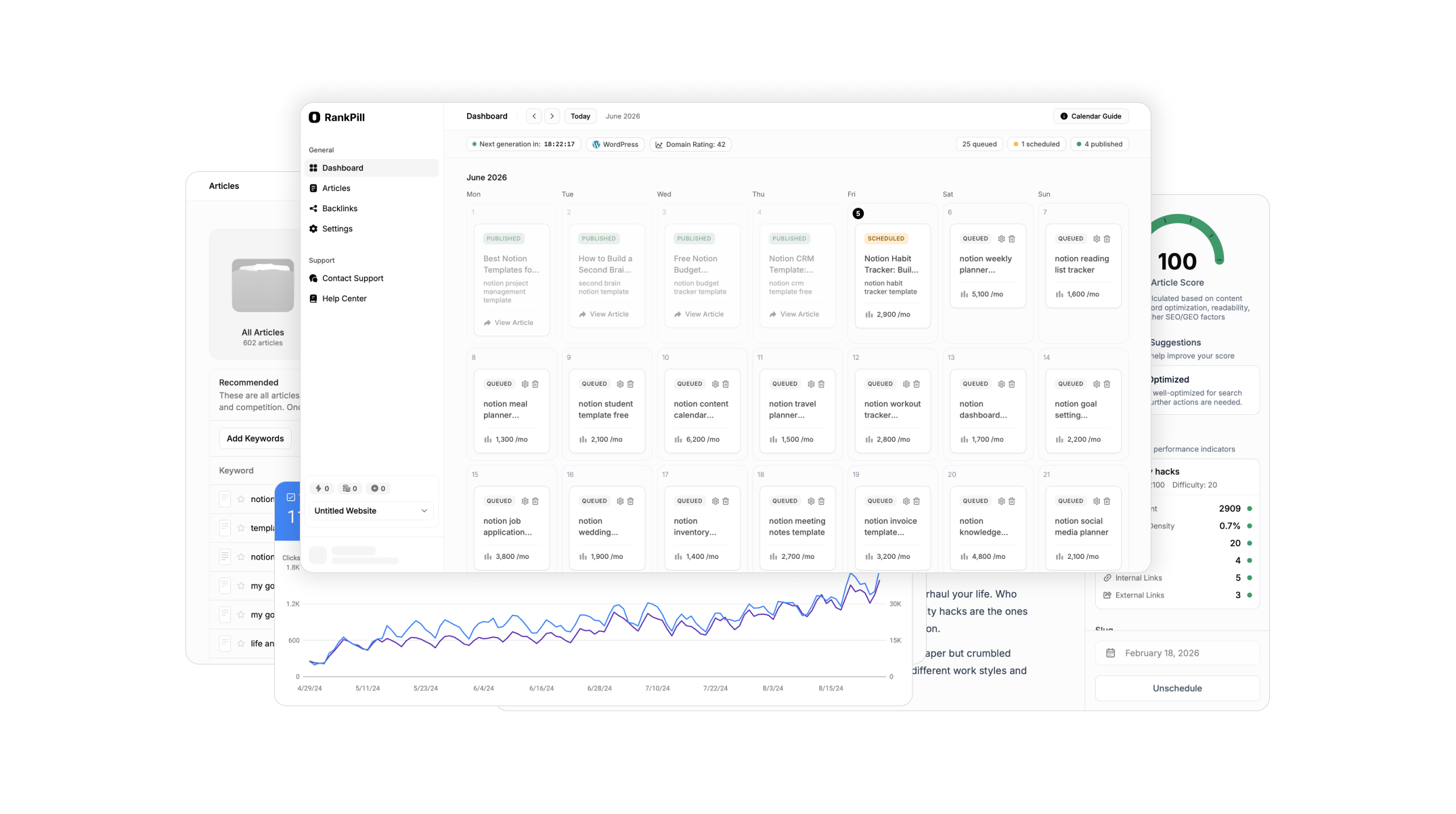
Platforms like RankPill automate keyword research, content creation, internal linking, and publishing directly to your Shopify store, running continuously without manual oversight. This eliminates the bottleneck most stores face when trying to publish multiple articles weekly while managing daily operations.
Phase Three: Performance Optimization
With content and product optimization running automatically, implement systems that continuously improve based on performance data.

Advanced automation analyzes which keywords drive conversions, identifies content gaps in high-value categories, and adjusts optimization strategies based on algorithm updates. This creates a self-improving system that becomes more effective over time.
Keyword Strategy Automation
Manual keyword research represents one of the most time-consuming aspects of e-commerce SEO. Automation transforms this from a quarterly project into a continuous background process.
Discovery and Prioritization
Automated keyword tools continuously scan search trends, competitor rankings, and related queries to identify new opportunities. Rather than working from static keyword lists, automated systems discover emerging search patterns as they develop.
The keyword research tool approach finds low-competition opportunities that manual research typically misses, particularly long-tail variations that drive high-intent traffic.
Automated keyword systems evaluate opportunities across multiple dimensions:
- Search volume trends over time
- Competition difficulty scores
- Commercial intent signals
- Seasonal pattern recognition
- Gap analysis against competitor coverage
Application Across Store Sections
Once keywords are identified, automation distributes them strategically across different store sections. Product pages target transactional keywords, collection pages focus on category terms, and blog content captures informational queries.
This systematic keyword distribution ensures comprehensive search coverage without cannibalization between pages. The automation monitors for internal competition and adjusts keyword targets to maximize overall store visibility.
Content Quality in Automated Systems
A common concern about SEO automation for Shopify involves content quality. Early automation tools produced obviously robotic content that provided poor user experiences and attracted search engine penalties.
Modern automation in 2026 leverages advanced language models that understand context, maintain brand voice, and create genuinely helpful content. Research on AI and SEO integration demonstrates that well-configured automated systems now produce content indistinguishable from human writing while maintaining optimization standards.
Quality Control Mechanisms
Professional automation platforms include multiple quality safeguards:
- Brand voice training that matches your existing content style
- Fact verification against authoritative sources
- Readability scoring to ensure appropriate complexity levels
- Duplicate content detection to prevent self-plagiarism
- Grammar and spelling validation before publication
These systems ensure that automation enhances rather than compromises content quality. The key difference between effective and ineffective automation lies in proper configuration and ongoing refinement.
Human Oversight Balance
Complete automation doesn't mean zero human involvement. The optimal approach combines automated execution with strategic human oversight.
Store owners should review automated content performance monthly, provide feedback on voice and style preferences, and adjust strategic direction based on business goals. The automation handles tactical execution while humans maintain strategic control.
Integration with Shopify Ecosystem
The best SEO automation for Shopify integrates seamlessly with your existing store infrastructure. This eliminates the need for manual data transfers or duplicate work across platforms.
Native Shopify Connections
Modern automation platforms connect directly to Shopify's API, accessing product data, inventory status, pricing information, and customer behavior patterns. This real-time data access enables dynamic optimization that responds to store changes automatically.
When you add new products, automation systems immediately generate optimized content. When products go out of stock, systems adjust focus to available inventory. This responsiveness prevents the lag time typical of manual SEO processes.
| Integration Type | Manual Management | Automated Management | Business Impact |
|---|---|---|---|
| New product SEO | 1-2 days per product | Immediate | Faster time-to-ranking |
| Inventory changes | Weekly batch updates | Real-time adjustment | No wasted ad spend |
| Price updates | Manual meta refresh | Automatic sync | Accurate search snippets |
| Collection changes | Monthly reorganization | Dynamic categorization | Better user experience |
Multi-Channel Coordination
Many Shopify merchants sell across multiple channels. SEO automation coordinates optimization across your website, blog, social commerce profiles, and marketplace listings.
This unified approach ensures consistent messaging and prevents keyword cannibalization between channels. According to TechRadar's 2026 Shopify review, stores that maintain consistent optimization across channels see 40% better overall search performance than those with siloed approaches.
Measuring Automation ROI
Implementing seo automation for shopify requires investment in tools and setup time. Measuring return on this investment helps justify the expense and identify optimization opportunities.
Primary Performance Metrics
Track these key indicators to assess automation effectiveness:
- Organic traffic growth month-over-month
- Keyword ranking improvements across target terms
- Conversion rate changes for organic visitors
- Time savings compared to manual processes
- Revenue attributed to organic search channel
Most merchants observe measurable improvements within 30-45 days of implementing comprehensive automation. Traffic increases typically range from 25-60% within the first quarter, though results vary based on competition levels and starting baselines.
Cost-Benefit Analysis
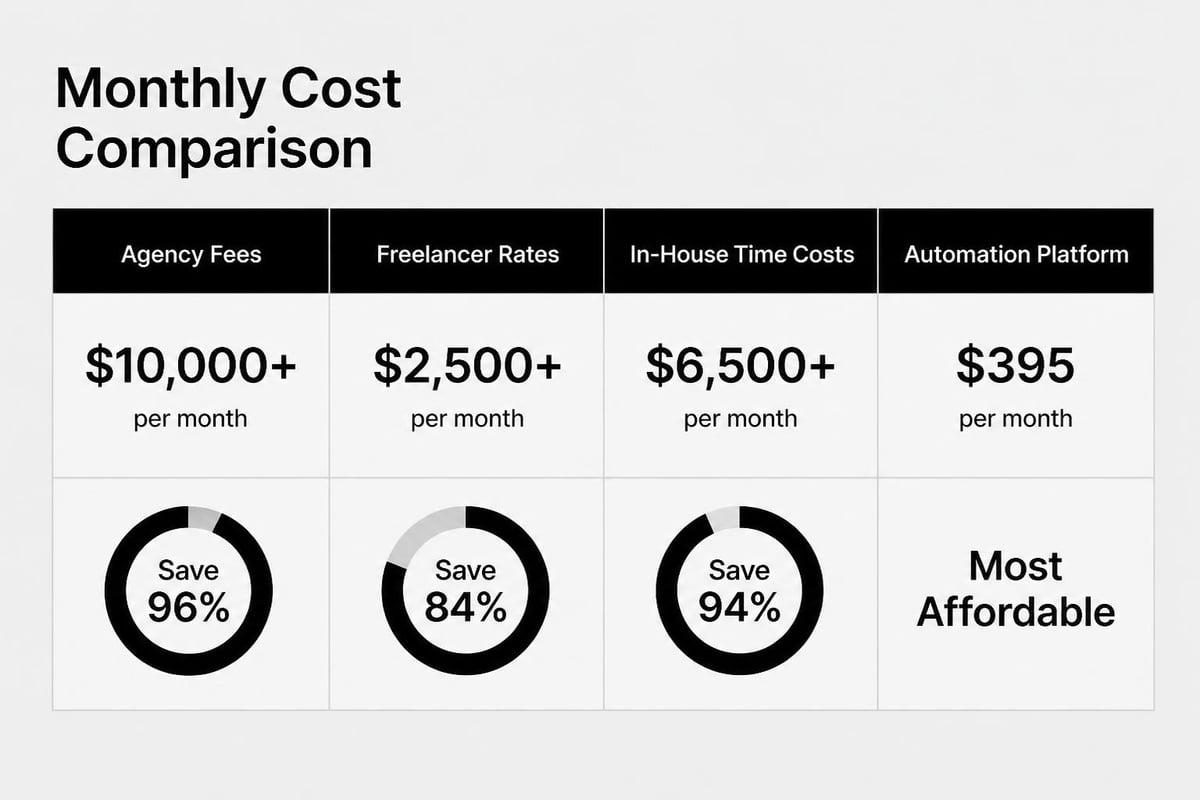
Compare automation costs against alternative approaches. A full-service agency managing SEO for a medium-sized Shopify store typically charges $2,500-$5,000 monthly. Freelance SEO specialists cost $75-$150 hourly, with ongoing optimization requiring 15-30 hours monthly.
Automation platforms cost $99-$499 monthly depending on store size and feature requirements, representing 80-95% cost savings compared to agency or freelance alternatives. For businesses managing SEO in-house, automation recovers 15-25 hours weekly that can be redirected to higher-value activities.
Advanced Automation Strategies
Once basic automation runs smoothly, advanced strategies unlock additional growth potential. These approaches require more sophisticated configuration but deliver outsized returns.
Seasonal Optimization Cycles
E-commerce businesses experience predictable seasonal patterns. Advanced automation anticipates these cycles, adjusting content focus and keyword priorities months before peak seasons.
For example, systems automatically increase winter clothing content production in July for fall indexing, ensuring maximum visibility when search demand peaks in October and November. This anticipatory approach captures traffic that reactive strategies miss.
Competitor Gap Analysis
Automated competitor monitoring identifies keywords and content types where competitors rank but your store doesn't. These gaps represent immediate opportunity areas since proven search demand exists.
Systems prioritize gap-filling content creation, rapidly closing visibility gaps that manual processes would take months to address. This aggressive gap-closing approach accelerates market share gains in competitive niches.
Multi-Language Expansion
International growth requires SEO in multiple languages. Automation makes expansion feasible by handling translation, localization, and optimization simultaneously across target markets.
Rather than sequential market entry, automation enables parallel expansion into five, ten, or twenty markets at once. Each market receives native-level optimization tailored to local search behaviors rather than generic translated content.
Common Implementation Mistakes
Understanding typical pitfalls helps merchants avoid expensive errors when deploying SEO automation for Shopify stores.
Over-Automation Without Strategy
Some merchants activate every available automation feature without strategic consideration. This creates content bloat, keyword cannibalization, and mixed messaging that confuses search engines and customers.
Effective automation follows a documented strategy that defines content priorities, keyword hierarchies, and brand voice guidelines. Automation executes this strategy efficiently, but the strategy itself requires human judgment.
Neglecting Quality Monitoring
Automation doesn't mean "set and forget." Systems require ongoing monitoring to ensure they maintain quality standards and adapt to algorithm changes.
Schedule monthly reviews of automated content performance, check for quality issues, and adjust configuration based on results. This oversight prevents small problems from becoming major issues while keeping automation aligned with business objectives.
Ignoring Technical Foundation
Content automation fails if technical SEO problems prevent indexing. Before implementing content automation, ensure your Shopify store has solid technical foundations: fast loading speeds, mobile responsiveness, proper schema markup, and clean site architecture.
Many merchants benefit from using auto SEO tools that address both technical and content optimization simultaneously, ensuring all SEO components work together effectively.
Future-Proofing Your Automation
Search algorithms evolve continuously. Effective SEO automation for Shopify must adapt to these changes without requiring complete reconfiguration.
AI Search Optimization
Traditional search engines now compete with AI platforms like ChatGPT that answer questions directly. Forward-thinking automation optimizes content for both traditional and AI search visibility, ensuring your products appear in responses regardless of platform.
This dual optimization approach captures traffic from users who prefer conversational search interfaces over traditional result pages. As AI search adoption grows, this capability becomes increasingly valuable.
Algorithm Adaptation
Quality automation platforms monitor algorithm updates and adjust optimization strategies automatically. Rather than waiting for manual intervention after ranking drops, adaptive systems detect changes and implement countermeasures within hours.
This responsiveness minimizes ranking volatility and maintains consistent traffic even during major algorithm shifts. The automation learns from each update, becoming more resilient over time.
Building Your Automation Stack
Creating an effective automation system requires selecting compatible tools that work together seamlessly. The ideal stack balances functionality, ease of use, and cost-effectiveness.
Essential Components
A complete Shopify SEO automation stack includes:
- Keyword research and tracking platform
- Content generation and optimization engine
- Technical SEO monitoring system
- Link building automation tools
- Performance analytics dashboard
Some platforms integrate all components in a single solution, while others require connecting multiple specialized tools. Integrated platforms offer simplicity but may sacrifice advanced features available in specialized tools.
Integration Considerations
When evaluating automation tools, assess how easily they connect with your existing systems. Native Shopify integrations eliminate manual data transfers and reduce error opportunities.
Check whether tools support webhooks for custom automation workflows, offer API access for advanced customization, and provide reliable customer support for troubleshooting integration issues. These factors determine long-term usability more than initial feature lists.
Training Your Automation System
Modern SEO automation for Shopify learns from feedback and improves over time. Proper training during initial setup accelerates this learning curve and produces better early results.
Voice and Style Configuration
Provide the automation system with examples of your best-performing content. The system analyzes these examples to understand your brand voice, preferred sentence structures, and terminology choices.
Feed diverse examples covering different product categories and content types to ensure the system understands variations in appropriate tone. Product descriptions require different style than educational blog posts, and the system needs examples of both.
Feedback Loops
Regularly review automated content and provide specific feedback on what works and what doesn't. Most platforms include feedback mechanisms that improve future output based on your preferences.
Positive reinforcement is as important as corrections. When automation produces excellent content, mark it as exemplary so the system understands what "great" looks like for your brand.
SEO automation for Shopify transforms time-consuming optimization tasks into systematic background processes that run continuously without manual intervention. By implementing strategic automation across product pages, content creation, and technical monitoring, merchants free up resources while improving search performance. RankPill automates your entire SEO workflow from keyword research through content publishing, helping Shopify stores grow organic traffic on autopilot while you focus on building your business.
Unlock Traffic on Autopilot
Grow organic traffic on autopilot. RankPill will research, write, optimize, and publish articles to your website daily.