
SEO Automation for WordPress: Complete 2026 Guide

Modest Mitkus · June 3, 2026
WordPress powers over 40% of all websites globally, making it the most popular content management system in 2026. Yet many site owners struggle to maintain consistent SEO practices while managing content, updates, and business operations. SEO automation for WordPress solves this challenge by streamlining repetitive optimization tasks, enabling businesses to scale their organic traffic without hiring large teams or spending countless hours on manual work.
Understanding SEO Automation for WordPress
SEO automation involves using software tools and platforms to handle time-consuming optimization tasks that traditionally required manual effort. These systems can manage everything from keyword research and content optimization to technical SEO fixes and performance monitoring.
WordPress users benefit particularly well from automation because the platform's plugin ecosystem and API structure support seamless integrations. Instead of manually optimizing each post, adjusting meta descriptions, or researching keywords for every article, automated systems handle these tasks according to predefined rules and AI-driven insights.
The value proposition extends beyond time savings. Automation ensures consistency across your entire content library, reduces human error, and allows even non-technical users to implement advanced SEO strategies. When implemented correctly, SEO automation for WordPress creates a competitive advantage by enabling faster content production without sacrificing quality or search visibility.
Core Components of WordPress SEO Automation
Automated Keyword Research and Planning
Traditional keyword research involves manually using multiple tools, analyzing competition, and building content calendars in spreadsheets. Automated systems streamline this by continuously identifying keyword opportunities based on search trends, competitor analysis, and your site's existing authority.
Modern keyword research tools integrate directly with WordPress, suggesting topics and keywords based on your niche, analyzing search intent, and prioritizing opportunities by difficulty and potential traffic. This automation enables content teams to focus on creation rather than research.
Benefits of automated keyword research include:
- Continuous discovery of new keyword opportunities
- Real-time competitive analysis and gap identification
- Automatic clustering of related keywords for comprehensive content
- Integration with content calendars and publishing workflows
- Historical performance tracking for refinement

Content Optimization and On-Page SEO
Once content is created, it requires optimization for search engines. Manual optimization involves checking keyword density, adjusting headings, writing meta descriptions, optimizing images, and ensuring proper internal linking. SEO automation for WordPress handles these tasks through intelligent analysis and automatic implementation.
Leading WordPress SEO plugins now incorporate AI-driven recommendations that go beyond simple checklists. They analyze semantic relevance, suggest related keywords, optimize content structure, and even rewrite sections to improve readability and search performance.
| Manual Approach | Automated Approach |
|---|---|
| Review each post individually | Bulk optimization across content library |
| Manually write meta tags | AI-generated meta descriptions based on content |
| Research internal linking opportunities | Automatic relevant link suggestions |
| Upload and optimize images separately | Automated image compression and alt text |
| Check readability scores manually | Real-time readability analysis and suggestions |
For businesses managing large content libraries, understanding how digital marketing automation integrates with SEO workflows becomes essential for scaling efficiently.
Technical SEO Automation
Technical SEO encompasses site speed, mobile optimization, schema markup, XML sitemaps, and crawlability. These foundational elements significantly impact search rankings, yet many require developer expertise to implement correctly.
Automated solutions monitor technical health continuously, identifying and often fixing issues without manual intervention. Modern systems can automatically generate and update XML sitemaps, implement schema markup based on content type, optimize image loading through lazy loading, and monitor site speed metrics.
Key technical automation features:
- Automatic XML sitemap generation and submission to search engines
- Schema markup implementation based on content analysis
- Mobile responsiveness monitoring and alerts
- Page speed optimization through caching and compression
- Broken link detection and correction
- Redirect management for site restructures
Implementing SEO Automation in Your WordPress Workflow
Choosing the Right Automation Tools
The WordPress ecosystem offers numerous SEO plugins and tools, each with different automation capabilities. Selection should align with your specific needs, technical expertise, and content production volume.
Free plugins like Yoast SEO and Rank Math provide basic automation features such as XML sitemap generation, meta tag templates, and content analysis. These work well for small sites with limited publishing frequency.
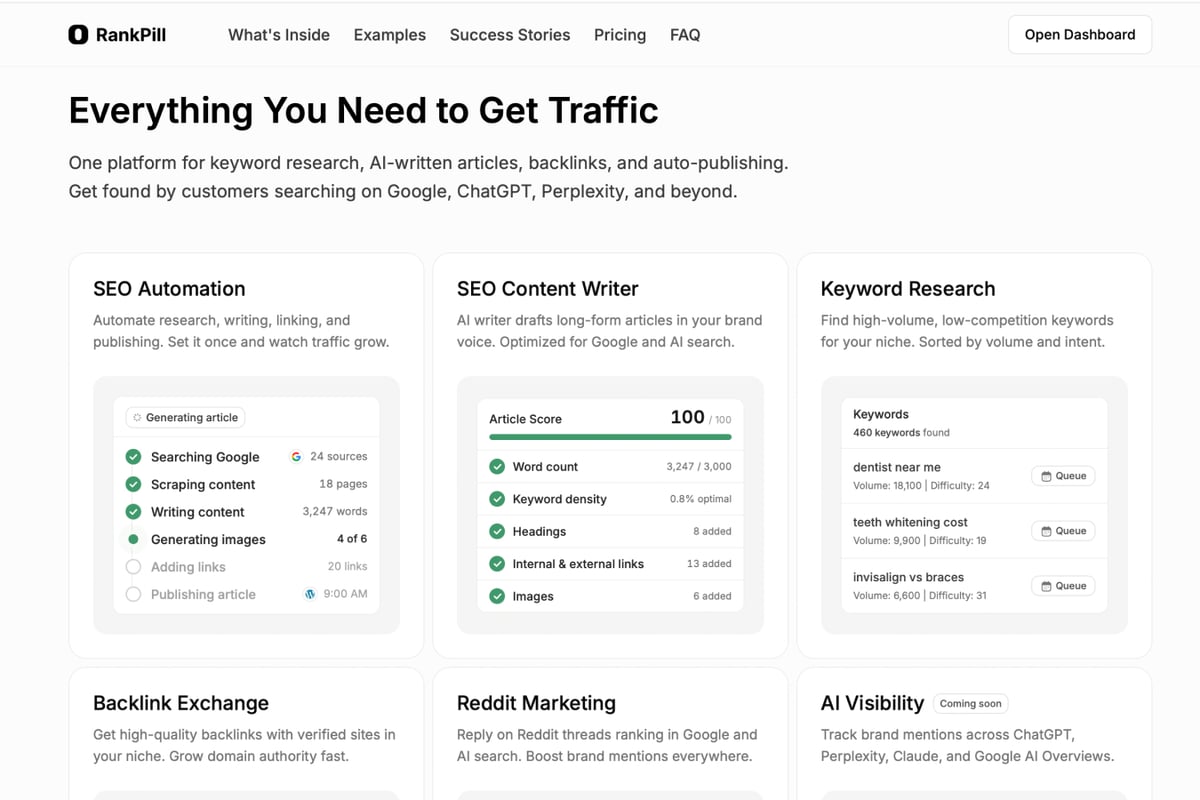
For businesses publishing daily content or managing multiple sites, dedicated automation platforms offer comprehensive solutions. These systems integrate keyword research, content creation, optimization, and publishing into unified workflows. The RankPill SEO automation platform exemplifies this approach by handling the entire content workflow from research through publishing, making it particularly valuable for teams prioritizing scalable organic growth.
Setting Up Automated Publishing Workflows
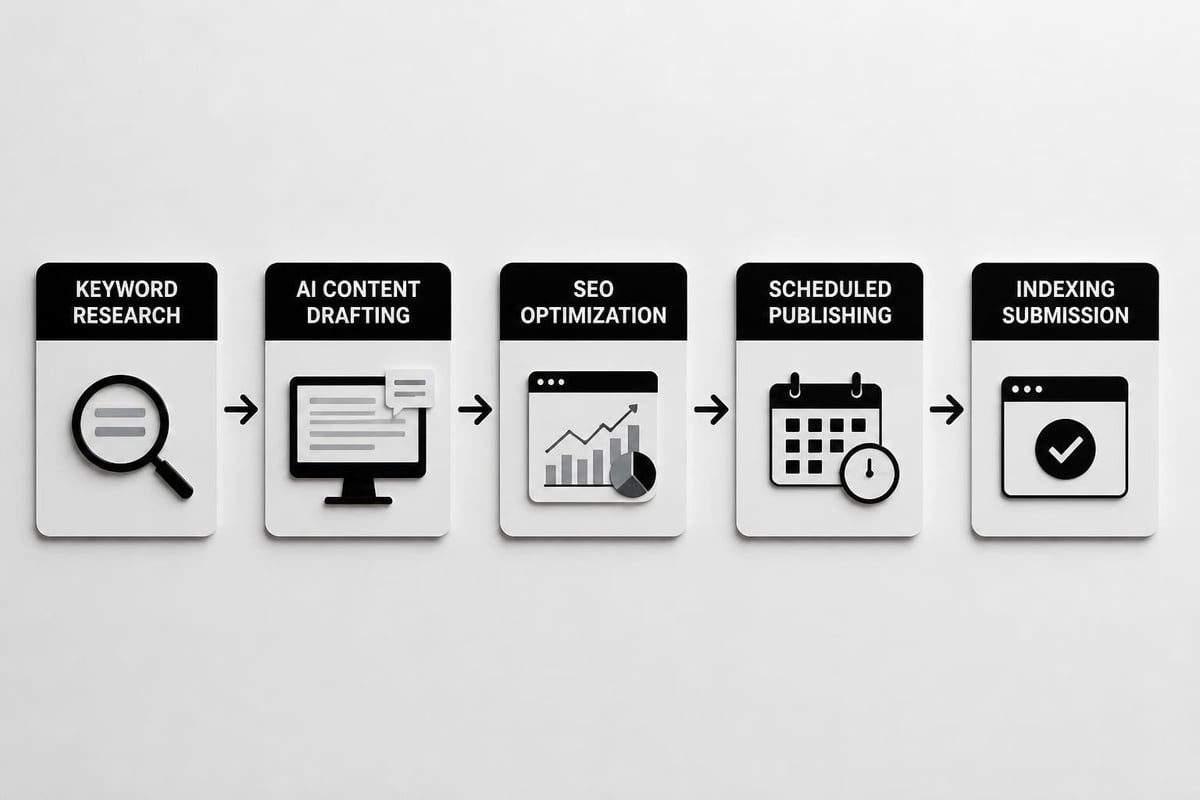
Publishing consistency drives SEO success, yet manual scheduling and optimization create bottlenecks. Automated publishing workflows eliminate these constraints by establishing systems that research, create, optimize, and publish content on predetermined schedules.
The setup process involves several connected components:
Content calendar automation pulls from keyword research to schedule topics weeks or months in advance. Systems analyze seasonal trends, competitor publishing patterns, and your existing content gaps to suggest optimal publishing times and topics.
Content creation automation uses AI to draft articles based on target keywords and search intent. While human oversight remains important for quality control, AI content for SEO has evolved significantly in 2026, producing publish-ready drafts that require minimal editing.
Optimization automation applies on-page SEO best practices before publication, including meta tag generation, heading structure optimization, internal link insertion, and image optimization. This ensures every published piece meets search engine requirements without manual checking.
Distribution automation publishes content to WordPress at scheduled times, submits URLs to search engines, and can even syndicate to social platforms for amplified reach.
Advanced Automation Strategies for WordPress SEO
Intelligent Internal Linking Systems
Internal linking strengthens site architecture, distributes page authority, and helps search engines understand content relationships. Manual internal linking becomes impractical as content libraries grow beyond a few dozen articles.
Automated internal linking analyzes content semantically, identifying contextually relevant opportunities to connect pages. Advanced systems consider anchor text diversity, link depth, and topical clustering to create natural linking patterns that boost SEO performance.
These tools continuously update older content with links to newer articles, ensuring your entire site benefits from fresh content rather than just new pages. This retroactive optimization significantly improves overall site authority without requiring manual content audits.
Backlink Building Automation
While backlink acquisition traditionally requires manual outreach and relationship building, certain aspects benefit from automation. Automated systems can identify link opportunities, monitor competitor backlinks, and track your link profile health.
Tools for automatic backlink building focus on white-hat strategies like content syndication, resource page identification, and broken link opportunities. These systems streamline the research and tracking components while still requiring human judgment for outreach and relationship management.
Automated backlink tasks include:
- Monitoring brand mentions for link opportunities
- Identifying broken links on relevant sites
- Tracking competitor backlink acquisition
- Analyzing link quality and spam scores
- Managing outreach email sequences
- Reporting link profile growth
Content Refreshing and Updating
Search engines favor fresh, updated content. Manually reviewing and updating old posts consumes significant time, yet neglecting this maintenance allows competitors to outrank your existing content.
SEO automation for WordPress includes content refresh systems that identify underperforming posts with update potential. These tools analyze ranking changes, search trend shifts, and content gaps, then prioritize articles for updating based on traffic potential.
Some advanced platforms automatically update statistics, replace outdated examples, add new sections addressing emerging subtopics, and re-optimize based on current keyword data. This keeps your content library competitive without requiring complete rewrites.
Measuring SEO Automation Success
Key Performance Indicators
Tracking the right metrics determines whether your automation investments deliver returns. Focus on indicators that reflect both efficiency gains and SEO performance improvements.
| Metric Category | Key Indicators | Target Benchmarks |
|---|---|---|
| Efficiency | Content production rate | 50-100% increase |
| Efficiency | Time per article optimization | 70-90% reduction |
| Traffic | Organic sessions growth | 20-30% monthly increase |
| Rankings | Keywords in top 10 | Steady upward trend |
| Engagement | Average time on page | Above industry average |
| Conversions | Organic conversion rate | Aligned with business goals |
Understanding the distinction between organic search vs paid search helps contextualize these metrics and demonstrates automation's long-term value compared to paid alternatives.
Analytics Integration and Reporting
Automated SEO systems generate substantial data, but information only creates value when transformed into actionable insights. Integration with Google Analytics, Search Console, and other tracking platforms consolidates metrics into comprehensive dashboards.
Automated reporting eliminates manual data compilation, delivering scheduled reports that highlight performance trends, identify issues requiring attention, and demonstrate ROI to stakeholders. Advanced systems use AI to interpret data, providing recommendations rather than just numbers.
This continuous feedback loop enables rapid strategy adjustments. When automation reveals certain content types or topics driving disproportionate traffic, you can adjust your content calendar accordingly. If technical issues emerge, automated alerts enable quick fixes before significant ranking damage occurs.
Optimizing for AI Search Engines
Adapting Automation for ChatGPT and AI Answers
Search behavior evolves beyond traditional Google queries. AI-powered search engines like ChatGPT, Perplexity, and Google's AI overviews require content optimization strategies that differ from conventional SEO.
Traditional SEO automation focuses on keyword targeting, but getting mentioned by AI requires structured, authoritative content that AI models can confidently reference. This involves clear factual statements, proper attribution, and comprehensive topic coverage.
Automation adjustments for AI visibility:
- Implement enhanced schema markup for fact extraction
- Structure content with clear, quotable statements
- Include statistical data with proper sourcing
- Create FAQ sections answering specific questions
- Optimize for conversational query patterns
Generative Engine Optimization
Generative engine optimization represents the next frontier in SEO automation for WordPress. As AI-generated answers become prominent in search results, content must be formatted for both traditional ranking and AI citation.
Automated systems now analyze content for GEO factors, ensuring articles provide clear answers, maintain factual accuracy, and present information in formats AI models prefer. This includes bullet-pointed summaries, definition-style explanations, and step-by-step instructions that AI can parse and reference.

Security Considerations in SEO Automation
Plugin and Platform Security
WordPress automation relies heavily on plugins and third-party integrations. Each additional tool introduces potential security vulnerabilities that could compromise your site and SEO efforts. Research on WordPress plugin vulnerabilities demonstrates the importance of security-conscious automation choices.
Select automation tools from reputable developers with consistent update schedules and security audit histories. Limit plugin installations to essential tools, regularly update all software, and implement security monitoring to detect unusual activity.
Automated security scans can identify vulnerabilities in your SEO plugins before hackers exploit them. Many managed WordPress hosting providers now include automated security patching as part of their service, protecting your automation stack without manual intervention.
Data Privacy and Compliance
SEO automation often involves collecting user behavior data, implementing tracking scripts, and managing personal information through forms and comments. These activities must comply with regulations like GDPR, CCPA, and other privacy laws.
Automated compliance tools help WordPress sites manage consent, data retention, and privacy policy updates. These systems can automatically anonymize analytics data, manage cookie consent based on user location, and maintain audit trails demonstrating compliance efforts.
When implementing SEO automation for WordPress, configure systems to respect privacy preferences, avoid aggressive tracking that damages user trust, and maintain transparent data practices that align with both legal requirements and ethical standards.
Common Pitfalls and How to Avoid Them
Over-Automation and Content Quality Issues
The primary risk in SEO automation involves sacrificing quality for quantity. Search engines increasingly prioritize helpful, accurate content over keyword-stuffed articles, making quality non-negotiable even in automated workflows.
Establish human review checkpoints in your automation process. While systems can draft content, optimize meta tags, and handle technical tasks, human editors should verify accuracy, ensure brand voice consistency, and add unique insights that differentiate your content from competitors.
Balance automation with expertise. Use automated tools to handle research, structure, and optimization while focusing human effort on strategic thinking, original research, and content that demonstrates genuine expertise. This approach maintains quality while maximizing efficiency gains.
Neglecting Manual Oversight
Automation reduces workload but doesn't eliminate the need for strategic oversight. Automated systems follow programmed rules and patterns, potentially missing nuanced opportunities or continuing ineffective strategies without correction.
Essential oversight activities include:
- Monthly content performance reviews
- Quarterly SEO strategy assessments
- Regular technical audits beyond automated checks
- Competitive analysis and strategy adjustments
- User feedback integration into content planning
Schedule regular reviews of automated processes to ensure they align with evolving best practices and your business goals. Search algorithms change, competitor strategies shift, and audience preferences evolve, requiring periodic automation refinement.
Integration Challenges
WordPress automation often involves multiple tools working together: research platforms, content systems, analytics tools, and publishing platforms. Poor integration creates data silos, duplicated efforts, and workflow inefficiencies that undermine automation benefits.
Prioritize platforms offering robust API connections and native WordPress integrations. When possible, consolidate functions into unified platforms rather than stitching together dozens of single-purpose tools. This simplifies management, improves data flow, and reduces potential failure points.
Test integrations thoroughly before relying on them for production workflows. Automated publishing failures, broken tracking implementations, or data sync issues can damage SEO performance if discovered too late.
Future Trends in WordPress SEO Automation
AI-Driven Personalization
SEO automation increasingly incorporates AI that personalizes content experiences based on user behavior, device type, and search intent. Future systems will automatically serve different content variations to different users, optimizing for conversion while maintaining SEO value.
These personalization engines analyze which content elements drive engagement for specific audience segments, then automatically test and refine variations. This goes beyond simple A/B testing to create dynamic content experiences that improve both user satisfaction and search performance.
Voice Search Optimization
Voice queries differ structurally from typed searches, requiring content optimized for conversational patterns and question-based formats. Automation tools now incorporate voice search optimization, analyzing content for natural language patterns and question-answer structures.
Future SEO automation for WordPress will likely include voice search performance tracking, automated content adjustments for featured snippet capture, and schema markup specifically designed for voice assistant responses.
Predictive SEO Analytics
Current automation reacts to data, but emerging systems predict future trends. Predictive analytics identify rising keywords before competition intensifies, forecast content performance based on historical patterns, and recommend strategy pivots before ranking declines occur.
These AI-powered systems analyze broader market trends, seasonal patterns, and subtle algorithm signals to provide forward-looking recommendations. This shifts SEO from reactive optimization to proactive strategy, giving automated WordPress sites competitive advantages.
SEO automation for WordPress transforms organic growth from a labor-intensive process into a scalable system that runs efficiently with minimal oversight. By automating keyword research, content optimization, technical SEO, and publishing workflows, businesses can compete effectively regardless of team size or budget constraints. RankPill provides comprehensive SEO automation that handles every aspect of this workflow, from daily keyword research through automatic content publishing, enabling businesses to grow organic traffic consistently while focusing resources on strategic initiatives that drive revenue.
Unlock Traffic on Autopilot
Grow organic traffic on autopilot. RankPill will research, write, optimize, and publish articles to your website daily.
 WordPress