
SEO for New Websites: Complete 2026 Strategy Guide

Modest Mitkus · May 31, 2026
Launching a new website in 2026 presents unique opportunities and challenges for search visibility. The foundation you build during your first 90 days determines whether your site will gain traction in search results or languish in obscurity. SEO for new websites requires a strategic approach that balances technical configuration, content planning, and authority building from day one. Unlike established sites with existing domain authority, new websites must prove their value to search engines while competing against mature competitors. This guide provides a comprehensive roadmap for implementing effective SEO strategies that deliver measurable results.
Understanding the New Website SEO Challenge
New websites start with zero domain authority, no backlink profile, and no search engine trust. Google's algorithms evaluate hundreds of ranking factors, but new sites lack the historical data that established competitors leverage. This puts you at a significant disadvantage initially.
The First 90 Days Matter Most
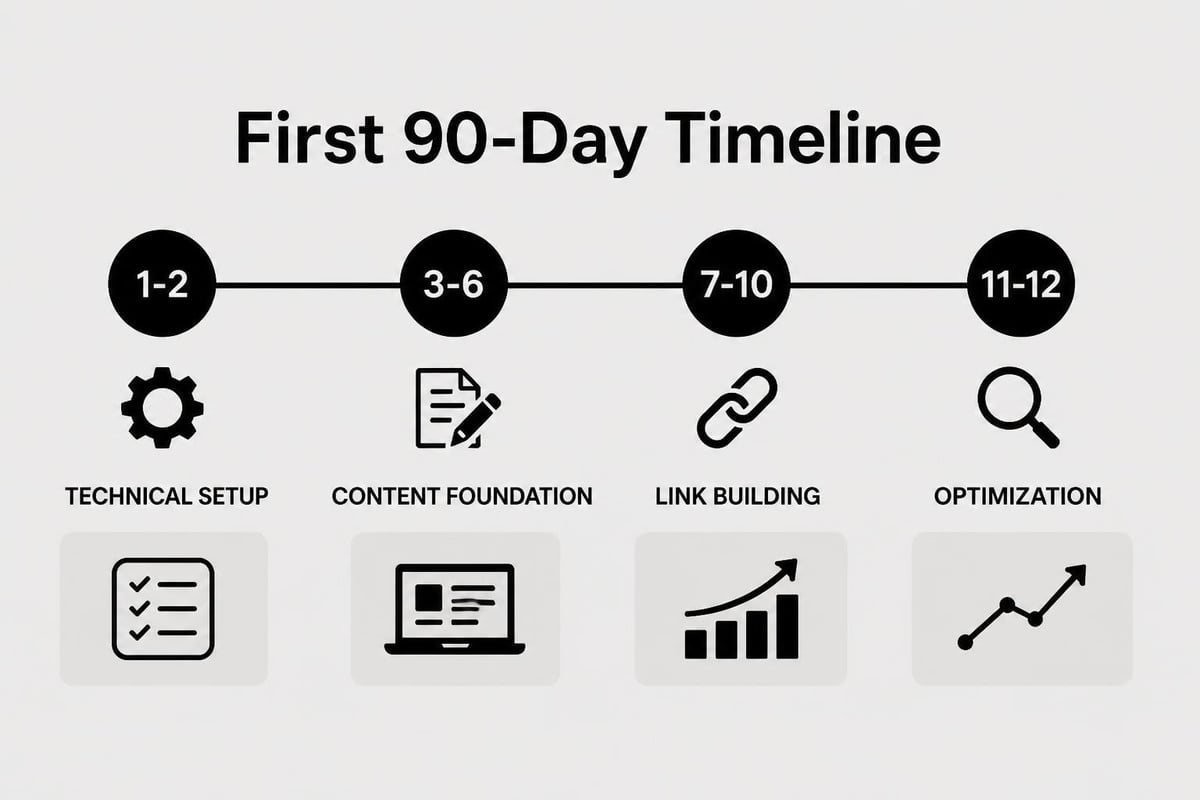
The initial three months after launch establish critical patterns that search engines track. Your content publishing frequency, technical stability, and user engagement signals all contribute to how quickly you gain visibility. Sites that implement comprehensive SEO strategies from the start typically see indexed pages within days rather than weeks.
Key challenges new websites face:
- Limited crawl budget allocation from search engines
- Zero established topical authority in your niche
- No existing backlinks to signal credibility
- Competition from sites with years of content history
- Longer indexing times for initial pages
Search engines prioritize crawling and ranking established domains, which means your content may sit unindexed even after publication. Understanding this reality helps set appropriate expectations while emphasizing the importance of technical excellence.
Technical SEO Foundation for New Sites
Technical SEO creates the infrastructure that allows search engines to discover, crawl, index, and rank your content efficiently. Before publishing a single article, ensure your website meets these fundamental requirements.
Essential Technical Configuration
Your site architecture influences how search engines understand and categorize your content. Start with a clean URL structure that reflects your content hierarchy logically. For example, /blog/seo-for-new-websites/ clearly indicates the content type and topic.
| Technical Element | Implementation Priority | Impact on Rankings |
|---|---|---|
| XML Sitemap | Critical - Day 1 | Ensures complete indexing |
| Robots.txt | Critical - Day 1 | Controls crawler access |
| SSL Certificate | Critical - Day 1 | Security signal and ranking factor |
| Mobile Responsiveness | Critical - Day 1 | Mobile-first indexing requirement |
| Page Speed Optimization | High - Week 1 | User experience and Core Web Vitals |
| Structured Data | Medium - Week 2 | Enhanced search result features |
Submit your sitemap through Google Search Console and Bing Webmaster Tools immediately after launch. This proactive submission accelerates the discovery process rather than waiting for search engines to find your site organically.
Core Web Vitals and User Experience
Google's page experience signals directly impact rankings, making performance optimization non-negotiable. Your new website should load in under 2.5 seconds on mobile devices, with minimal layout shift and quick interactivity.
Use tools like PageSpeed Insights to identify specific performance bottlenecks. Common issues include:
- Unoptimized images consuming excessive bandwidth
- Render-blocking JavaScript and CSS files
- Absence of browser caching headers
- Oversized font files and third-party scripts
Implementing a content delivery network (CDN) distributes your assets globally, reducing latency for international visitors. This investment pays dividends as you scale content production.
Keyword Research and Content Strategy
SEO for new websites succeeds or fails based on your keyword targeting strategy. Many new sites make the critical error of targeting highly competitive terms where established domains dominate the first page.
Finding Winnable Keywords
Focus your initial efforts on long-tail keywords with search volumes between 100 and 1,000 monthly searches. These terms typically have lower competition while delivering qualified traffic interested in specific solutions. Effective keyword research uncovers these opportunities by analyzing question-based queries and niche-specific phrases.
Keyword selection criteria for new websites:
- Search volume: 100-1,000 monthly searches
- Keyword difficulty: Under 30 on most SEO tools
- Commercial intent: Informational and transactional mix
- Topic relevance: Direct alignment with your offerings
- SERP analysis: Beatable competitor content quality
Use RankPill's keyword research tool to identify low-competition opportunities your competitors are missing. The platform reveals high-intent keywords with realistic ranking potential for newer domains.
Content Cluster Architecture
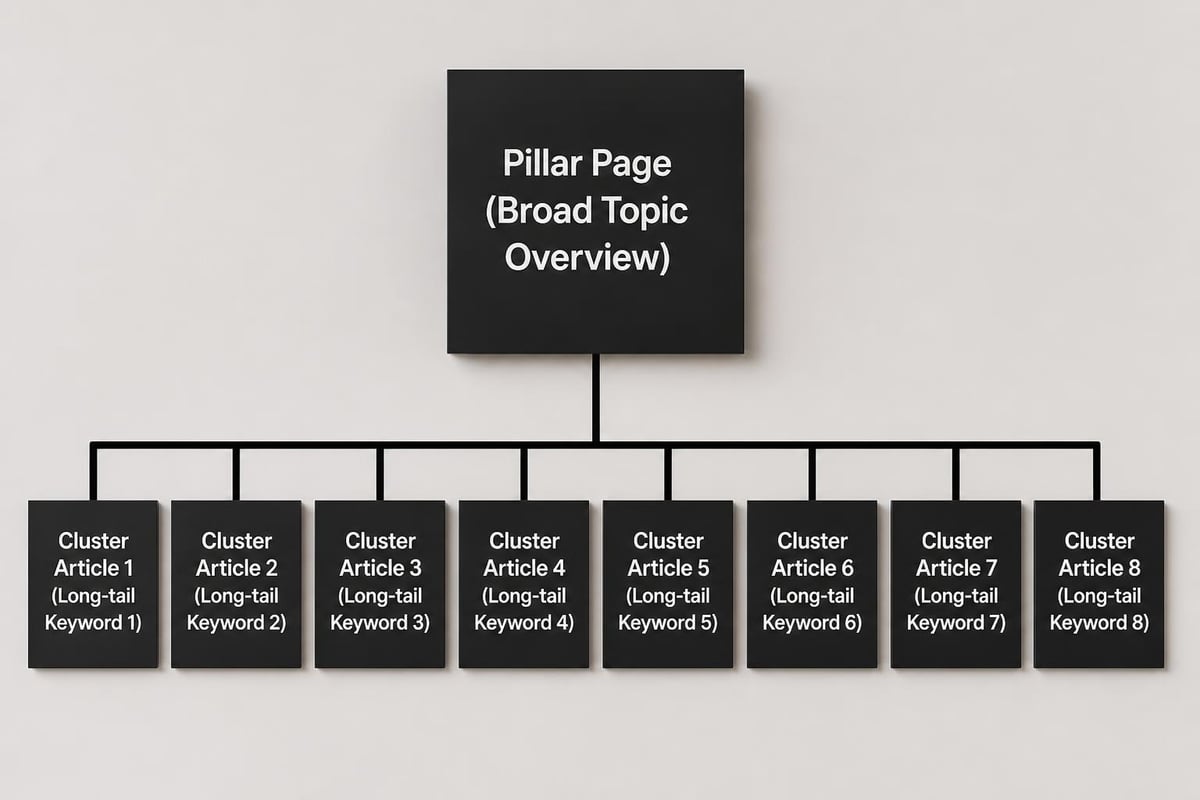
Organize your content into topical clusters rather than publishing isolated articles. This structure demonstrates subject matter expertise to search engines while creating natural internal linking opportunities.
A content cluster consists of:
- Pillar page: Comprehensive overview of a broad topic (2,500+ words)
- Cluster content: 8-12 supporting articles targeting specific subtopics (1,500-2,000 words each)
- Internal links: Strategic connections between pillar and cluster content
For instance, a pillar page about "SEO for new websites" connects to cluster articles covering technical SEO, keyword research, link building, and content optimization individually. This architecture builds topical authority faster than scattered content approaches.
Creating Optimized Content That Ranks
Publishing frequency and content quality both influence how quickly new websites gain search visibility. Establish a consistent publishing schedule that you can maintain long-term rather than bursting with activity then going dormant.
Content Optimization Fundamentals
Each article you publish should target one primary keyword while naturally incorporating related semantic terms. Modern SEO for new websites emphasizes search intent matching over keyword density manipulation.
On-page optimization checklist:
- Title tag contains primary keyword within first 60 characters
- Meta description compels clicks within 155 characters
- URL slug includes primary keyword in lowercase
- H2 and H3 headings incorporate semantic variations
- First paragraph introduces primary keyword naturally
- Image alt text describes visual content with context
- Internal links connect to related existing content
- External links reference authoritative sources
The platforms like RankPill automate this optimization process while maintaining natural language flow. The system researches keywords, writes comprehensive articles, and publishes them directly to your CMS without manual intervention.
Content Length and Depth
Search engines reward comprehensive content that thoroughly addresses user queries. For competitive topics, aim for 2,000+ word articles that cover subtopics competitors miss. However, content length should serve reader value rather than arbitrary word counts.
| Content Type | Recommended Length | Purpose |
|---|---|---|
| Blog Posts | 1,500-2,000 words | Answer specific questions thoroughly |
| Pillar Pages | 3,000-5,000 words | Comprehensive topic coverage |
| Product Pages | 500-1,000 words | Convert interest to action |
| Category Pages | 300-500 words | Organize and introduce subcategories |
Include multimedia elements like images, videos, and infographics to increase dwell time. Longer session durations signal content quality to search algorithms, particularly when combined with low bounce rates.
Building Authority Through Strategic Link Acquisition
Backlinks remain one of the strongest ranking signals, but new websites face significant challenges earning quality links. Your domain authority starts at zero, making outreach more difficult than established brands experience.
White-Hat Link Building Strategies
Focus on sustainable link acquisition methods that build authority gradually. Avoid purchasing links or participating in link schemes that violate search engine guidelines and risk penalties.
Effective link building tactics for new sites:
- Guest posting: Contribute expert articles to established industry publications
- Digital PR: Create newsworthy content that attracts editorial links
- Resource page outreach: Get listed on curated industry resource pages
- Broken link building: Replace dead links with your relevant content
- Community participation: Engage in forums and communities with link opportunities
The comprehensive SEO approach emphasizes relationship building over transactional link requests. Establish genuine connections with other website owners before requesting backlinks.
Internal Linking Structure
While building external backlinks, maximize the value of internal links within your own content. Strategic internal linking distributes page authority throughout your site while helping search engines understand content relationships.
Create a hub-and-spoke model where important pages receive multiple internal links from supporting content. For example, your main service pages should be linked from relevant blog articles, category pages, and navigation menus. This concentrated link equity helps priority pages rank faster.
Measuring Progress and Adjusting Strategy
SEO for new websites requires patience combined with data-driven optimization. Track key performance indicators weekly during your first 90 days to identify what's working and what needs adjustment.
Essential Metrics to Monitor
Google Search Console provides the most critical data for new websites. Monitor your indexed pages, average position, click-through rates, and impression growth weekly.
Primary KPIs for new website SEO:
- Indexed pages: Should grow consistently with content publication
- Organic impressions: Indicates increasing search visibility
- Average position: Tracks ranking improvements over time
- Click-through rate: Measures title and description effectiveness
- Crawl errors: Identifies technical issues blocking indexation
- Core Web Vitals: Ensures continued technical performance
Set realistic expectations for ranking timeline. Most new websites see their first meaningful organic traffic between 60-90 days after launch, with consistent growth accelerating after six months of strategic effort.
Content Performance Analysis
Identify which content types and topics generate the most engagement and conversions. Double down on successful formats while eliminating or improving underperforming content.
Compare your actual rankings against initial keyword difficulty estimates. If you're consistently outperforming expectations, you may be ready to target slightly more competitive terms. Conversely, if nothing ranks after 60 days, reassess your keyword selection criteria.
Advanced Strategies for Accelerated Growth
Once your technical foundation and initial content library are established, implement advanced tactics that compound your SEO results.
Automating Content Production at Scale
Manual content creation limits how quickly you can build topical authority. Digital marketing automation allows you to maintain publishing consistency without proportionally increasing team size.
AI-powered platforms research keywords, generate optimized articles, and publish directly to your website daily. This automation enables new websites to compete with established competitors by matching or exceeding their content output volume while maintaining quality standards.
Optimizing for AI Search Engines
Traditional Google optimization remains essential, but generative engine optimization represents the future of search visibility. ChatGPT, Perplexity, and other AI search tools pull information from authoritative sources to answer queries directly.
Structure your content to be citation-worthy for AI systems:
- Include clear, quotable definitions and statistics
- Format data in tables that AI can easily parse
- Answer questions directly in concise paragraphs
- Cite credible sources to establish authority
- Use schema markup to identify key information
Understanding how to get mentioned by AI platforms expands your visibility beyond traditional search results pages. These citations drive referral traffic while building brand recognition.
Avoiding Common New Website SEO Mistakes
Many new websites sabotage their SEO potential through avoidable errors that delay or prevent ranking success.
Critical Mistakes to Avoid
Publishing low-quality content to meet arbitrary quantity goals damages your site's reputation with search engines. Every article you publish should meet your quality standards or be eliminated from the publishing queue.
SEO mistakes that hurt new websites:
- Targeting highly competitive keywords beyond your domain authority
- Publishing thin content under 500 words that doesn't satisfy search intent
- Neglecting mobile optimization when 60% of searches occur on mobile devices
- Ignoring page speed while competitors load instantly
- Buying backlinks from link farms and PBNs
- Keyword stuffing that creates unnatural reading experiences
- Duplicating content across multiple pages
Complete SEO checklists help new website owners avoid these pitfalls through systematic implementation. Following proven frameworks prevents reinventing the wheel while reducing trial-and-error delays.
Managing Expectations Realistically
SEO delivers compounding returns over time rather than immediate results. Most new websites won't rank on page one for competitive terms within their first three months. This reality makes SEO for new websites a long-term investment rather than a quick traffic solution.
Plan for 6-12 months of consistent effort before expecting significant organic traffic. However, you should see measurable progress monthly:
- Month 1-2: Pages indexed and crawl errors resolved
- Month 3-4: First page one rankings for long-tail keywords
- Month 5-6: Traffic beginning to compound as more articles rank
- Month 7-12: Established topical authority attracting natural backlinks
Understanding the difference between organic search vs paid search helps set appropriate timelines. Paid advertising delivers immediate traffic but stops when you stop paying. Organic search builds sustainable traffic that grows over time.
Scaling Your SEO Efforts Efficiently
As your new website gains traction, scaling content production and optimization becomes the next challenge. Manual processes that worked for 10 articles per month create bottlenecks at 50+ articles monthly.
Systematic Content Workflows
Document every step of your content creation process, from keyword research through publishing and promotion. This documentation enables delegation and eventual automation of repetitive tasks.
Standardize templates for different content types. Your how-to articles, listicles, comparison posts, and case studies should each follow proven frameworks that ensure quality while reducing decision fatigue.
Batch similar tasks together rather than completing one article from start to finish before beginning another. Research 10 keywords at once, then outline all 10 articles, then write all 10 pieces. This batching increases efficiency by reducing context switching.
Building a Sustainable Publishing Schedule
Consistency matters more than volume for new websites. Publishing three high-quality articles weekly outperforms publishing 20 articles one month then none the next. Search engines reward steady content growth that demonstrates ongoing commitment.
Create an editorial calendar that extends at least 90 days into the future. This planning prevents last-minute scrambling while ensuring comprehensive topic coverage across your content clusters.
Consider the AI SEO platform approach that automates the entire workflow. These systems maintain publishing consistency without requiring daily manual effort, allowing you to focus on business development while your SEO runs on autopilot.
Building effective SEO for new websites requires technical excellence, strategic keyword targeting, consistent content production, and patient authority building over months rather than weeks. The foundation you establish during your first 90 days determines whether your site gains sustainable organic visibility or struggles indefinitely. RankPill automates the entire SEO workflow, from keyword research through daily article publishing and backlink building, allowing new websites to compete with established competitors without hiring expensive agencies or dedicating full-time resources to content creation.
Unlock Traffic on Autopilot
Grow organic traffic on autopilot. RankPill will research, write, optimize, and publish articles to your website daily.
 WordPress