SaaS SEO Strategy: Complete Guide for 2026

Modest Mitkus · May 24, 2026
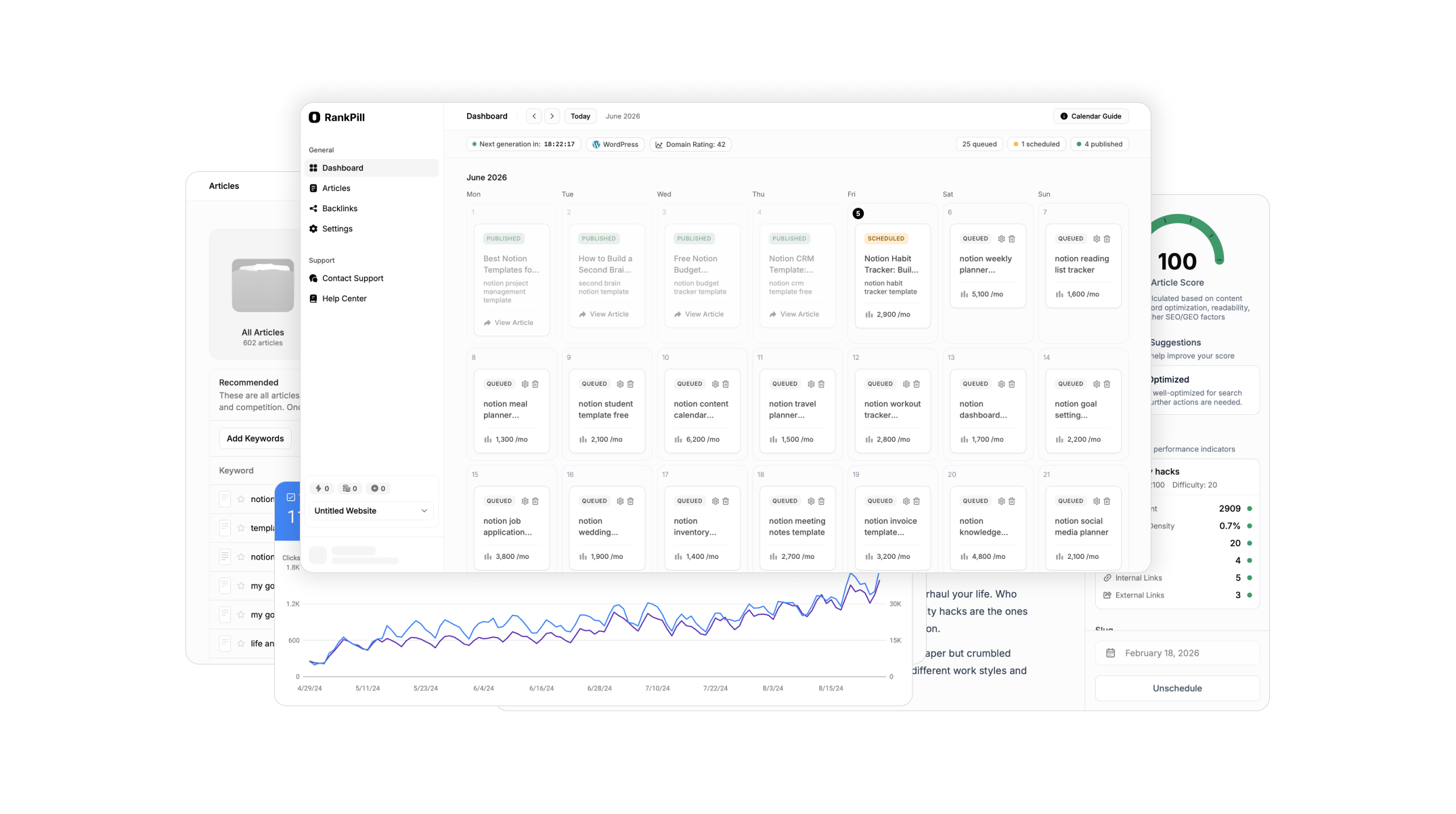
Building a successful SaaS business in 2026 requires more than just a great product. You need a systematic approach to organic visibility that compounds over time. A well-executed saas seo strategy differs fundamentally from traditional SEO because your buyers follow longer decision cycles, evaluate multiple solutions, and need education throughout their journey. This comprehensive guide walks through the essential components of SaaS SEO, from keyword architecture to content systems that scale, giving you a practical framework to grow organic traffic on autopilot.
Understanding the SaaS SEO Landscape
The SaaS industry presents unique challenges that generic SEO tactics can't address. Your potential customers typically research solutions for weeks or months before making a purchase decision. They compare features, read reviews, and evaluate multiple competitors simultaneously.
Traditional SEO approaches focus on transactional keywords and quick conversions. SaaS SEO requires a different mindset. You're building trust, educating prospects, and guiding them through awareness, consideration, and decision stages. Each stage demands specific content types and keyword targets.
Why SaaS Companies Need Specialized SEO
SaaS products solve complex problems that require explanation. Your ideal customers often don't know your solution exists until they discover it through content that addresses their pain points. This creates a fundamental challenge: how do you rank for problems when prospects search for solutions?
A robust saas seo strategy addresses this gap by mapping content to every stage of the buyer journey. It connects problem-aware searches with solution-aware content, building a pathway that guides prospects naturally toward your product.
The economics make this essential. Customer acquisition costs continue rising across paid channels, while organic search provides compounding returns. Content you publish today continues generating qualified traffic for years.
Building Your Keyword Architecture
Keyword research for SaaS requires a structured approach that goes beyond simple volume metrics. You need to organize keywords into clusters that align with your product structure, buyer journey stages, and content capabilities.
Product-Led Keyword Clusters
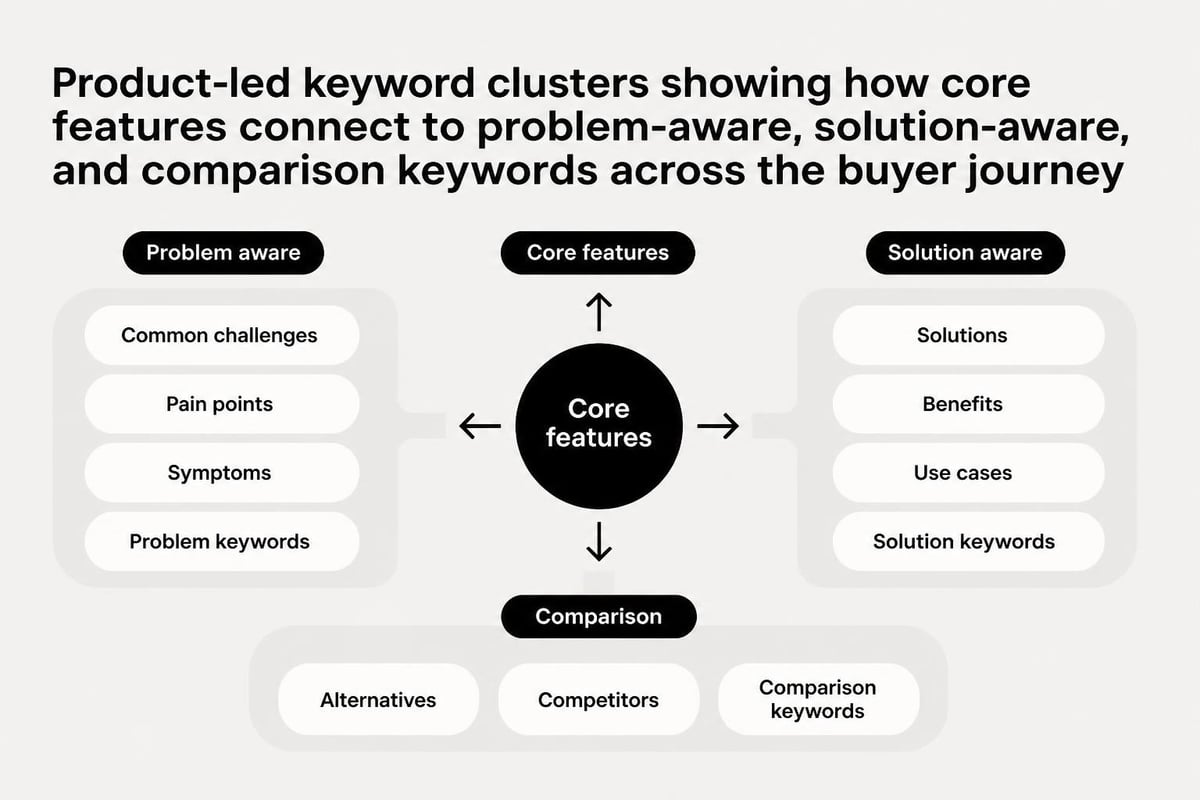
Start by mapping your core product features to search intent. Each major feature or capability should anchor its own keyword cluster. These clusters include:
- Direct product keywords: Terms that include your category name or solution type
- Feature-specific keywords: Searches focused on individual capabilities or use cases
- Comparison keywords: "[Your category] vs [competitor]" or "best [category] for [use case]"
- Alternative keywords: "Alternative to [competitor name]"
This structure ensures comprehensive coverage of commercial intent searches. When prospects evaluate solutions, your content appears at every decision point.
Informational Content Strategy
Beyond product keywords, build topical authority through informational content. Identifying low-competition keywords in your industry creates entry points for prospects who aren't ready to evaluate solutions yet.
Map informational keywords to business outcomes rather than features. For example, instead of "project management software," target "how to reduce project delays" or "improve team collaboration remotely." These problem-focused keywords attract earlier-stage prospects.
| Keyword Type | Search Intent | Content Format | Conversion Goal |
|---|---|---|---|
| Problem-aware | "How to solve [problem]" | Guide, tutorial | Email capture |
| Solution-aware | "Best [category] for [use case]" | Comparison, listicle | Free trial |
| Product-aware | "[Your product] vs [competitor]" | Feature comparison | Demo request |
| Brand | "[Your brand name] [feature]" | Documentation, help | Activation |
Technical SEO Foundations
Technical excellence separates successful SaaS SEO from mediocre efforts. Your site architecture, page speed, and crawlability directly impact how search engines understand and rank your content.
Site Architecture and Internal Linking
Design your site structure around keyword clusters and user journeys. Create hub pages for each major topic area, with supporting content linking back to these hubs. This architecture signals topical authority to search engines while helping users navigate related content.
Implement strategic internal linking that flows authority from high-ranking pages to important conversion pages. Product pages, pricing, and key feature pages should receive consistent internal links from blog content and documentation.
Your navigation should reflect how customers think about problems, not just how you organize features internally. Strategic content architecture helps both search engines and prospects understand your value proposition.
Page Speed and Core Web Vitals
SaaS applications often include interactive demos, chat widgets, and analytics scripts that slow page load times. Optimize aggressively:
- Lazy load images and videos below the fold
- Minimize third-party scripts on content pages
- Use a content delivery network for global performance
- Implement server-side rendering for dynamic content
Core Web Vitals now factor into rankings. Largest Contentful Paint under 2.5 seconds, First Input Delay under 100 milliseconds, and Cumulative Layout Shift under 0.1 represent the benchmarks for competitive performance.
Content Creation at Scale
Publishing consistently separates growing SaaS companies from stagnant ones. A comprehensive saas seo strategy requires producing high-quality content weekly, if not daily. This volume challenge pushes many teams toward automation.
The Case for SEO Automation
Manual content creation doesn't scale. Traditional agencies charge thousands per article, while in-house writers max out at 2-3 pieces weekly. SEO automation platforms solve this bottleneck by handling keyword research, content creation, optimization, and publishing automatically.
Automation works best when combined with human oversight. The system handles research, drafting, and technical optimization while your team focuses on strategy, editing, and unique insights only humans provide.
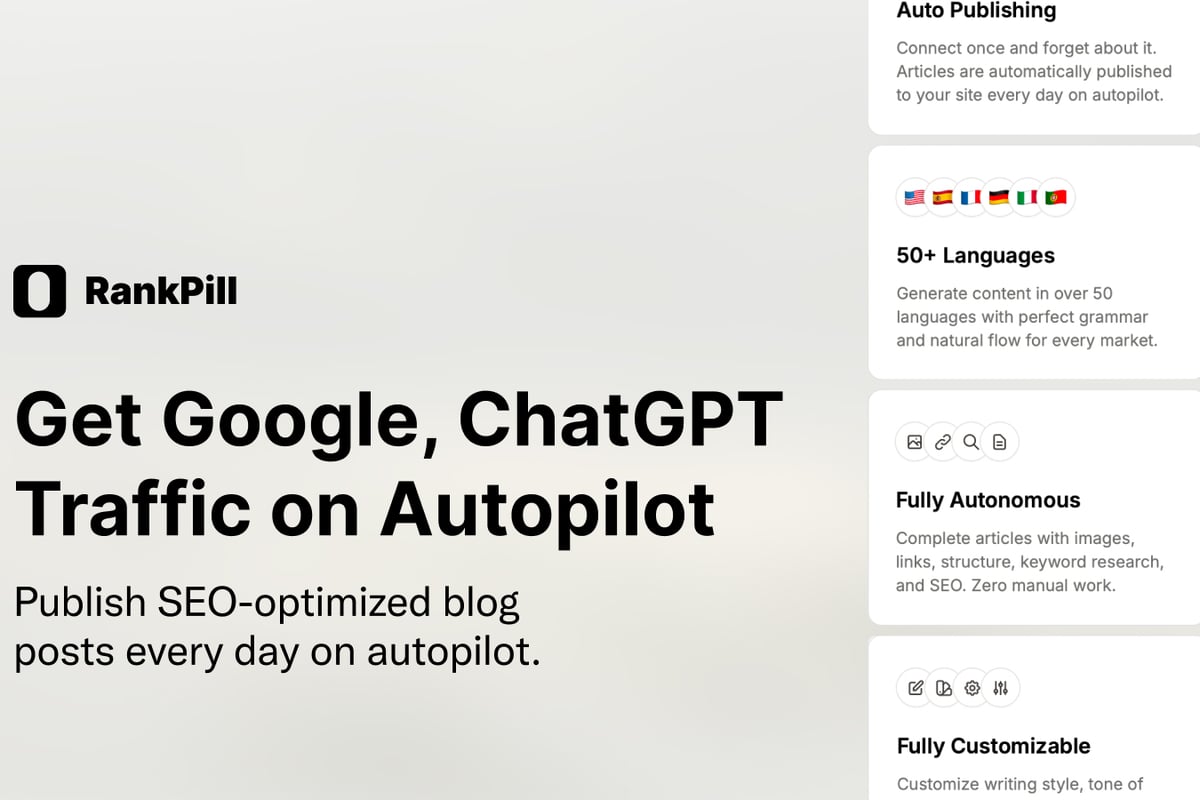
Modern automated systems can handle every aspect of the content workflow. They research keywords based on your specifications, generate comprehensive articles optimized for both traditional search and AI engines, add relevant internal and external links, and publish directly to your CMS. This approach lets small teams compete with enterprise content operations.
Content Types That Drive SaaS Growth
Different content formats serve different purposes in your saas seo strategy:
- Long-form guides: Comprehensive resources targeting competitive keywords
- Comparison articles: "[Your category] vs [Alternative]" capturing high-intent searches
- Use case studies: Specific scenarios showing how your product solves problems
- Feature deep-dives: Detailed explanations of individual capabilities
- Industry reports: Original research building authority and earning backlinks
Mix these formats based on keyword difficulty and conversion potential. Competitive keywords require comprehensive guides supported by strong technical SEO and backlinks. Lower-competition long-tail keywords work with shorter, more focused articles.
Link Building for SaaS
Backlinks remain a critical ranking factor, particularly for competitive SaaS keywords. Your link building strategy should focus on quality, relevance, and sustainability rather than volume.
Strategic Partnership Links
SaaS companies have natural link building advantages through integrations, technology partnerships, and ecosystem relationships. Each integration partner represents a potential backlink from a relevant, authoritative domain.
Create dedicated integration pages for each partnership, offering value to users of both platforms. These pages naturally attract links from partner directories, user communities, and review sites.
Content-Driven Link Acquisition
Publish research and data that others want to reference. Original surveys, industry benchmarks, and trend reports generate passive backlinks as other publishers cite your findings. A strategic approach to link building focuses on creating genuinely valuable resources rather than manipulative tactics.
Guest posting still works when done strategically. Target industry publications your prospects read, providing genuine expertise rather than thin promotional content. Each guest post should offer unique insights backed by data or experience.

Building Authority Through Community
Participate authentically in industry communities where your prospects gather. Answer questions on forums, contribute to open source projects, and engage in social platforms. While many community links include nofollow attributes, they drive referral traffic and brand awareness that supports your broader SEO efforts.
| Link Source | Domain Authority Impact | Referral Traffic | Difficulty |
|---|---|---|---|
| Integration partners | High | Medium | Low |
| Industry publications | High | High | High |
| Resource page links | Medium | Low | Medium |
| Community forums | Low | Medium | Low |
| Guest posts | Medium | Medium | Medium |
Optimizing for AI Search
The search landscape evolved dramatically with ChatGPT, Perplexity, and other AI search tools. Optimizing for AI engines requires different tactics than traditional Google SEO, though the two strategies complement each other.
AI search engines prioritize recent, factual content with clear structure and authoritative sources. They extract information from content rather than just linking to it, meaning your goal shifts from clicks to citations.
Structuring Content for AI Extraction
AI engines parse structured content more effectively. Use clear headings, bullet points, tables, and definitions that AI can extract and repurpose. Answer questions directly before providing supporting context.
Include specific data points, statistics, and examples AI systems can cite. Vague generalizations get ignored while concrete information gets referenced and attributed.
Understanding how AI and SEO intersect helps you create content that performs in both traditional and AI-powered search environments.
Measuring SaaS SEO Performance
Tracking the right metrics separates effective optimization from random activity. SaaS SEO success isn't just about traffic, it's about qualified traffic that converts into trials and customers.
Key Performance Indicators
Focus on metrics that connect to revenue:
- Organic traffic to key pages: Product pages, pricing, and high-intent content
- Keyword rankings for commercial terms: Solution and comparison keywords
- Trial signups from organic search: Direct attribution to SEO efforts
- Content-assisted conversions: Multi-touch attribution showing SEO's role
- Domain authority growth: Overall site strength trending upward
Avoid vanity metrics like total impressions or rankings for irrelevant keywords. Every metric should connect to business outcomes, even if the connection takes months to manifest.
Attribution and Revenue Tracking
Most SaaS purchases involve multiple touchpoints over weeks or months. Implement multi-touch attribution to understand how organic search contributes throughout the customer journey.
Tag UTM parameters consistently across all content. Connect your analytics to CRM data showing which organic visitors eventually convert to paying customers. This closed-loop tracking proves SEO ROI and guides strategic decisions about content priorities.
Advanced Technical Optimization
Beyond basic technical SEO, advanced tactics provide competitive advantages in crowded SaaS markets. These optimizations require more effort but deliver measurable improvements in visibility and rankings.
Schema Markup for SaaS
Implement organization schema, product schema, and FAQ schema across your site. Schema helps search engines understand your business structure, product features, and content topics more accurately.
SoftwareApplication schema specifically helps SaaS products appear in rich results for relevant searches. Include pricing, ratings, features, and system requirements in your schema markup.
JavaScript Rendering and SEO
Many SaaS sites rely heavily on JavaScript frameworks like React or Vue. Ensure search engines can crawl and render your JavaScript content properly:
- Implement server-side rendering or static site generation for critical pages
- Use dynamic rendering to serve pre-rendered HTML to search bots
- Test rendering in Google Search Console regularly
- Avoid blocking JavaScript resources in robots.txt
JavaScript rendering issues remain common in SaaS SEO. Regular testing prevents invisible technical problems from limiting your organic performance.
International and Multi-Language SEO
Expanding into international markets multiplies your addressable market but introduces complexity to your saas seo strategy. Each market requires dedicated keyword research, content creation, and technical implementation.
Market-Specific Keyword Research
Direct translation rarely works for international SEO. Search behavior varies significantly across markets. What works in English for US audiences may completely miss the mark in German, Japanese, or Spanish markets.
Conduct native keyword research for each target market. Understand local competitors, regional terminology, and cultural differences that affect search behavior. Automating multi-language SEO requires systems that handle proper keyword research and content creation for each market independently, not simple translation of existing content.
Technical Implementation for International Sites
Choose between subdirectories (example.com/es/), subdomains (es.example.com), or country-specific domains (example.es) based on your business structure and resources. Each approach has tradeoffs in terms of authority consolidation, user perception, and maintenance complexity.
Implement hreflang tags correctly to prevent duplicate content issues across language versions. These tags tell search engines which language versions to show to users in different regions.
Content Refresh and Maintenance
Published content isn't a one-time asset. It requires ongoing maintenance to sustain rankings and relevance. Search algorithms reward fresh, updated content, particularly for competitive keywords.
Strategic Content Updates
Prioritize updates based on performance and opportunity:
- Top-performing content: Update your best content quarterly with new data, examples, and insights
- Declining rankings: Identify content losing positions and refresh comprehensively
- Outdated information: Update year-specific content, statistics, and screenshots
- Keyword cannibalization: Consolidate or differentiate similar articles competing for the same terms
Track content performance systematically. Set alerts for ranking drops on important pages. Schedule regular audits identifying update opportunities before rankings decline significantly.
Removing or Consolidating Weak Content
Not all content deserves preservation. Low-quality pages with minimal traffic and no rankings dilute your site's overall authority. Regularly audit your content inventory:
- Redirect outdated content to newer, comprehensive versions
- Delete thin content that adds no value and earns no traffic
- Consolidate similar articles into comprehensive resources
- Improve or remove pages with high bounce rates and no conversions
This pruning focuses authority on your best content while improving overall site quality signals.

Competitive Analysis and Differentiation
Understanding competitor SEO strategies reveals gaps you can exploit and tactics worth emulating. Regular competitive analysis should inform your content priorities and technical optimizations.
Identifying Competitor Content Gaps
Use SEO tools to analyze which keywords competitors rank for that you don't. These gaps represent opportunities to create better, more comprehensive content targeting the same search intent.
Look beyond direct product competitors. Companies solving adjacent problems often rank for keywords your target audience searches. Studying their approach reveals content angles and keyword opportunities you might otherwise miss.
Differentiating Your Content
Simply matching competitor content rarely wins rankings. You need clear differentiation:
- Unique data and research: Original surveys, studies, or analysis competitors can't replicate
- Depth and comprehensiveness: More detailed, better-structured content than alternatives
- Better user experience: Faster loading, clearer formatting, more helpful visuals
- Fresher information: More recent data, current year examples, updated screenshots
Differentiation matters increasingly as AI-generated content floods search results. Quality and uniqueness stand out more than ever.
Building Topical Authority
Google increasingly rewards sites demonstrating comprehensive expertise in specific topics. Building topical authority requires systematic coverage of your core subject areas.
Creating Content Clusters
Organize content into topic clusters with a pillar page covering the broad topic and cluster content addressing specific subtopics. Each cluster page links back to the pillar, creating a strong internal linking structure.
For example, a project management SaaS might create a pillar page on "Project Management Best Practices" with cluster content covering:
- Agile project management
- Waterfall methodology
- Remote team project management
- Project management for startups
- Project management software selection
This structure helps search engines understand your expertise depth while providing users with comprehensive resources.
Establishing Author Authority
E-E-A-T (Experience, Expertise, Authoritativeness, Trustworthiness) factors increasingly influence rankings. Build author authority through:
- Consistent author bylines with biographical information
- Links to author social profiles and credentials
- Author pages showcasing experience and expertise
- Guest posts and mentions on authoritative industry sites
Don't underestimate the importance of demonstrating real human expertise. AI content detection focuses partly on whether content shows genuine experience and unique insights only humans provide.
Programmatic SEO Opportunities
SaaS companies often have data that enables programmatic SEO at scale. Product directories, integration listings, template libraries, and comparison pages can be generated programmatically while maintaining quality.
When Programmatic SEO Works
Programmatic approaches work best when you have:
- Structured data sources: APIs, databases, or spreadsheets with consistent information
- Repeatable templates: Page structures that work across many variations
- Unique value per page: Each generated page offers specific utility
- Quality control systems: Automated checks ensuring acceptable quality
Poor programmatic SEO creates thin, duplicate content that earns penalties. Successful programmatic SEO generates genuinely useful pages that happen to follow consistent patterns.
Implementation Best Practices
Start with a small test set before scaling programmatically. Verify that generated pages:
- Rank for target keywords
- Satisfy user intent
- Avoid duplicate content issues
- Maintain acceptable quality standards
Monitor performance closely and iterate templates based on results. Strategic automation combines programmatic efficiency with quality control that maintains SEO value.
Conversion Rate Optimization for Organic Traffic
Driving traffic matters little if visitors don't convert. Optimize organic landing pages specifically for search visitor behavior and intent.
Aligning Content with Search Intent
Different keywords represent different intents requiring different landing experiences:
- Informational queries: Educational content with email capture opportunities
- Comparison queries: Feature tables and clear differentiation with trial CTAs
- Solution queries: Product-focused pages with demo or trial signup
- Navigational queries: Direct access to features, pricing, or specific functionality
Match your conversion ask to visitor intent. Pushing aggressive sales CTAs on informational queries drives visitors away. Offering only educational content to high-intent comparison searches wastes opportunities.
Testing and Iteration
Systematically test headlines, CTAs, page layouts, and content structure. Even small improvements in conversion rate multiply the value of your SEO traffic.
Track organic traffic conversion rates separately from other channels. Search visitors often behave differently than social or paid traffic, requiring different optimization strategies.
A successful saas seo strategy in 2026 requires systematic execution across technical foundations, content creation, link building, and conversion optimization. The companies that win combine strategic thinking with consistent execution, building organic visibility that compounds month after month. RankPill automates the most time-intensive parts of this process, handling keyword research, content creation, and publishing while you focus on strategy and growth. Start building your organic traffic system today and watch it compound into your most valuable acquisition channel.
Unlock Traffic on Autopilot
Grow organic traffic on autopilot. RankPill will research, write, optimize, and publish articles to your website daily.